
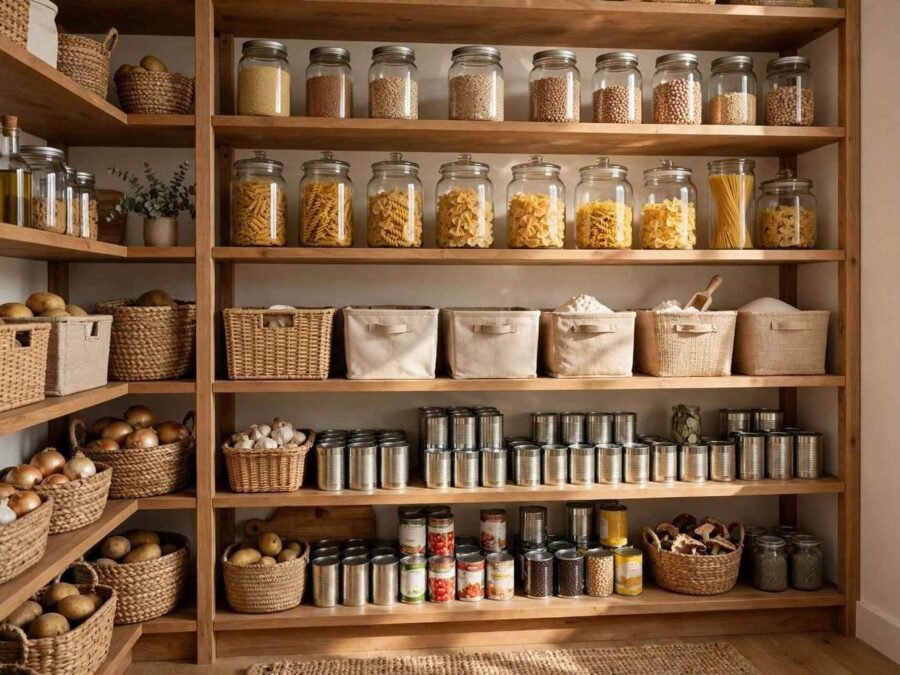
These pantry organization ideas are for real kitchens — the kind where the cereal box falls over, the cumin hides behind three bags of rice, and something expired is lurking at the back of a shelf. You do not need a walk-in pantry, a label maker collection, or a full set of matching containers to fix it. You need a system that survives a busy week, a grocery run, and everyone else in the house putting things away differently.
The ideas below work in big pantries and single cabinets alike. They are ordered the way a real reset goes: clear first, then zone, then store — and finally, keep it that way with a five-minute weekly habit.
Why Pantry Organization Pays Off
A disorganized pantry costs more than it looks. When food hides behind other food, it gets forgotten, expires, and gets bought twice. When every meal starts with a ten-minute hunt, cooking feels like a chore instead of a pleasure. An organized pantry flips that: groceries are visible, meals come together faster, and the weekly shop gets shorter because the grocery list starts from what is actually on the shelves.
None of this requires perfection. A pantry that is 80 percent organized and easy to maintain beats a picture-perfect one that collapses in a week.
12 Pantry Organization Ideas That Actually Work
1. Empty One Shelf at a Time
Pulling everything out at once feels productive, but it usually ends with groceries piled on the counter and motivation gone. Work shelf by shelf instead. Toss anything expired, combine duplicates, and set aside food nobody eats. Decluttering first means every organizer bought afterward actually fits a real need.
2. Group Food by How You Cook, Not by Type
Instead of one shelf for every tin and one for every box, build zones around meals. A weeknight pasta zone — pasta, canned tomatoes, olive oil, garlic — saves more time than a perfectly sorted row of cans. Breakfast together, baking together, snacks together. When a zone matches a real cooking habit, putting things back becomes automatic.
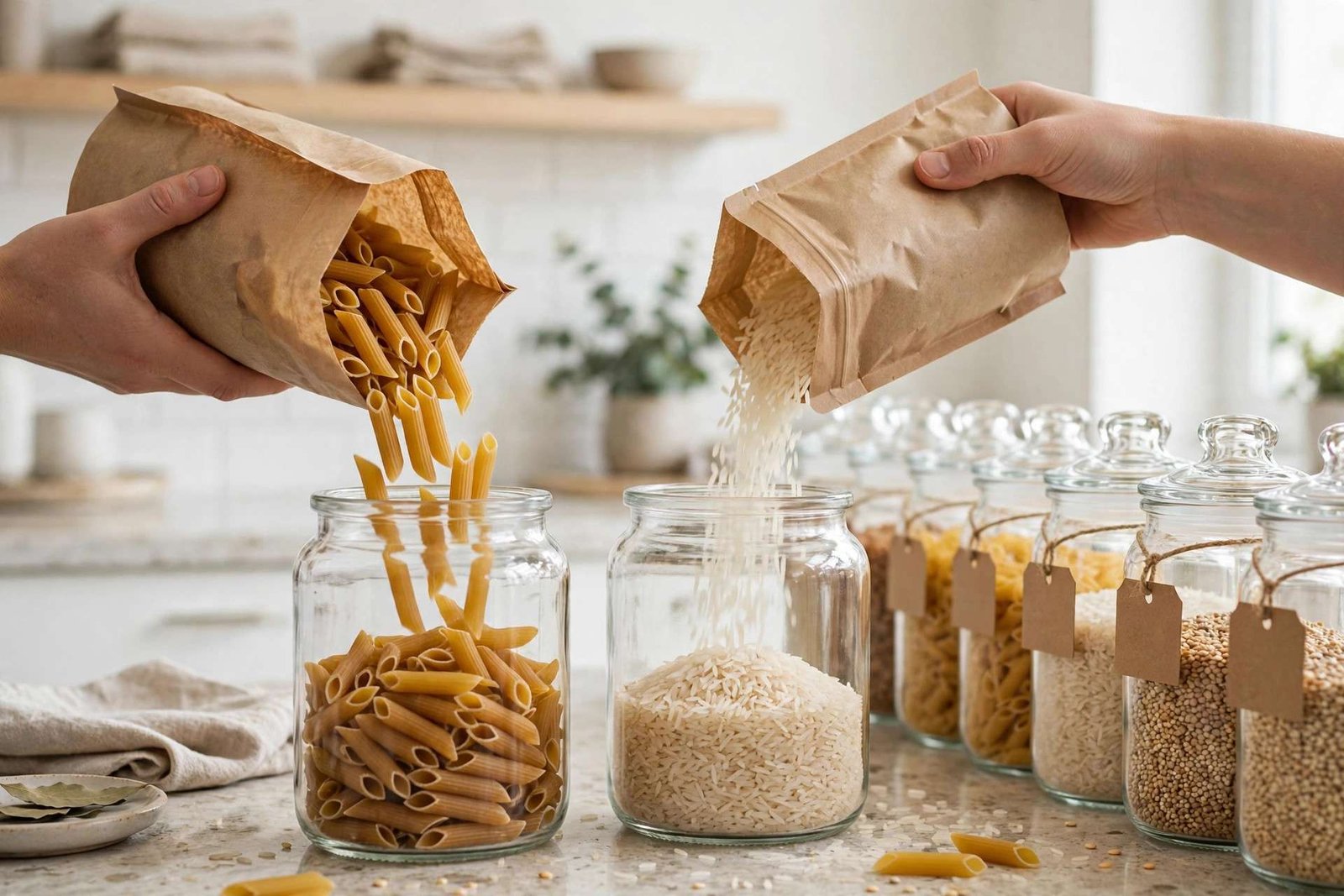
3. Decant Only the Staples You Use Often
Clear jars look beautiful, but decanting everything is a maintenance trap. Decant just the heavy-rotation staples: flour, sugar, rice, oats, and pasta. Everything else can stay in its box or bag. Uniform jars for staples make it obvious at a glance what is running low — and they stack far better than half-open bags.
4. Put a Riser on Every Deep Shelf
Deep shelves are where food goes to disappear. A simple shelf riser creates a second level, so the back row sits higher and stays visible. This one change alone rescues more lost jars than any other trick, and it works in a single cabinet just as well as a walk-in pantry.
5. Use a Turntable for Oils, Sauces, and Condiments
Small bottles are the worst offenders for getting lost at the back. A turntable (lazy Susan) on a shelf or inside a deep cabinet brings every bottle around with one spin. Keep one for cooking oils and vinegars, and another for sauces and condiments if space allows.
6. Hang Storage on the Inside of the Door
The inside of a pantry or cabinet door is free real estate. A slim door rack holds spice jars, small packets, or foil and wraps without taking a single inch of shelf space. Just check that jars clear the shelves when the door closes before loading it up.
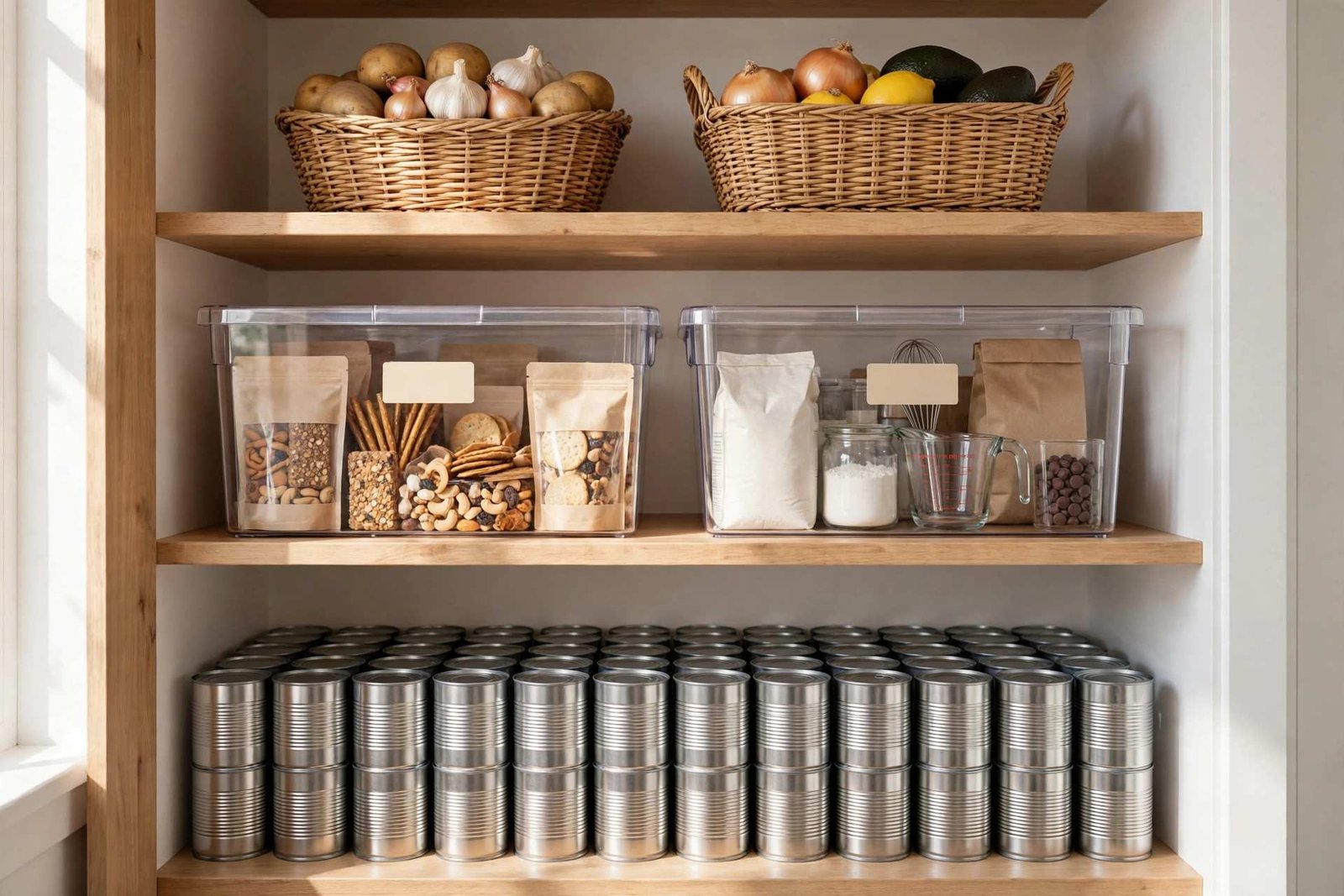
7. Label Bins, Not Every Jar
Labels help most where they mark a zone, not a single item. Label the bins — snacks, baking, breakfast — and let the contents inside stay flexible. Broad categories are easier for the whole household to maintain than a label for every single jar, and they survive the next grocery shop without relabeling.
8. Practice First In, First Out
Professional kitchens run on FIFO: new groceries go behind the older ones, so the oldest item gets used first. It takes two seconds at put-away time and quietly prevents the expired-can surprise. Face labels outward while you are at it, so a quick scan shows what is there.
9. Keep a Low, Easy Snack Zone
If kids — or hungry adults — grab snacks daily, give them one low, visible bin. When snacks have a single home at reachable height, they stop migrating to every shelf in the pantry. Restock that one bin after shopping and the rest of the system stays untouched.
10. Store Backstock Somewhere Else
An everyday pantry does not need to hold three months of everything. Keep the working supply in the pantry and the bulk extras in a separate spot — a higher shelf, a closet, or the garage. When a staple runs low, refill from backstock instead of letting bulk bags crowd the shelves you use daily.
11. Leave Breathing Room on Purpose
A pantry packed edge to edge on the day it is finished has nowhere to go but back to chaos. Leave one small gap on each shelf. That empty space is where new groceries land, where a tall bottle fits, and where the system absorbs a big shop without overflowing.
12. Run a Five-Minute Weekly Reset
Organization is not a one-time project; it is a tiny habit. Once a week — right before writing the grocery list is the natural moment — spend five minutes: toss anything expired, pull older items forward, wipe one shelf, and note what is running low. Small, regular resets beat a seasonal overhaul every time.
Small Pantry? Start Here
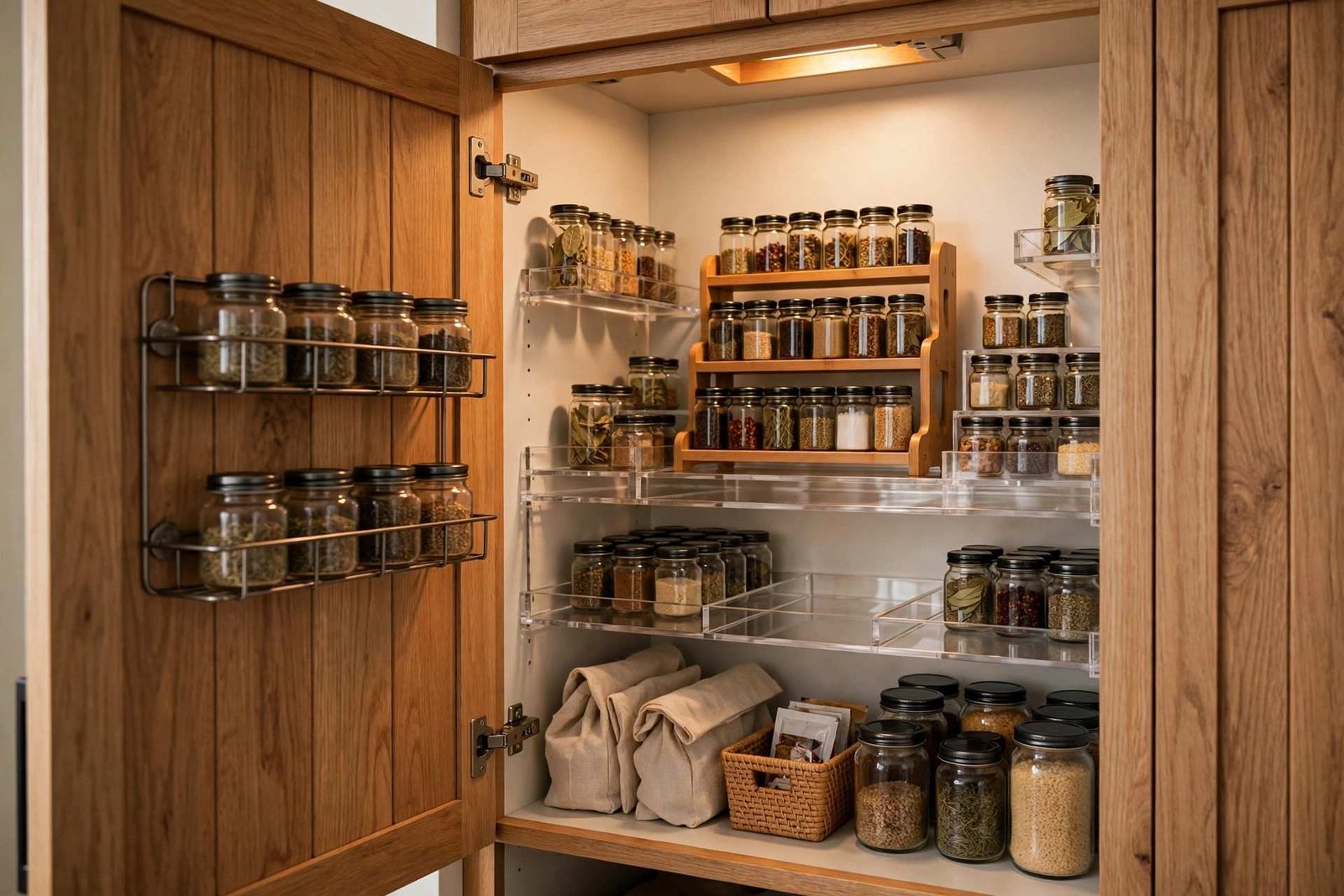
Small spaces do not need a different system — they need a stricter one. Pick three zones maximum (daily cooking, breakfast, snacks), use risers and a turntable to double visible space, and move backstock out entirely. A single cabinet organized this way outperforms a large pantry with no zones at all. Door racks and stackable bins matter even more here, because every inch has to earn its place.
5 Pantry Mistakes to Avoid
- Buying organizers before decluttering. It is impossible to know what storage is needed until the expired and duplicate food is gone.
- Decanting everything. Matching containers for every item look great on day one and become a chore by week three.
- Making categories too specific. Ten tiny categories confuse everyone; five broad zones stick.
- Overfilling bins. A bin stuffed full is just a messy shelf with walls. Leave room to add and remove items easily.
- Hiding food behind other food. If it cannot be seen, it will be forgotten. Risers, turntables, and front-facing labels exist to fix exactly this.
How Pantry Organization Connects to Easier Meals
Once zones exist, meal planning gets simpler. A visible pasta zone plus a stocked baking zone means weeknight dinners start from ingredients already on hand instead of a last-minute shop. That is why pantry systems pair so well with meal prep routines and a weekly dinner plan: the pantry stops being a storage problem and starts being the first step of cooking.
Frequently Asked Questions
How often should a pantry be reorganized?
A full reset once a season, plus the five-minute weekly tidy, keeps most pantries in shape. If the weekly reset starts taking longer than ten minutes, the zones probably need simplifying, not more containers.
Do pantry containers need to match?
No. Matching containers look tidy, but function and fit matter more. Clear containers for staples help visibility; for everything else, any clean bin or basket that fits the shelf works.
What is the best layout for a deep pantry?
Pull-out bins or baskets, a turntable for small bottles, and risers so the back row stays visible. Keep daily items at eye level and backstock up high or elsewhere.
How do I organize a pantry on a budget?
Start with what is already in the house: jars, baskets, and cardboard boxes as temporary bins. Add one riser and one turntable first — those two items fix the most common problems — and only buy more after living with the zones for a few weeks.
The Bottom Line
The best pantry organization ideas are the ones that survive real life: zones built around actual meals, a few staples decanted, risers and turntables for visibility, labels on bins rather than every jar, and a five-minute weekly reset. Start with one shelf today, and the rest of the pantry gets easier from there.