
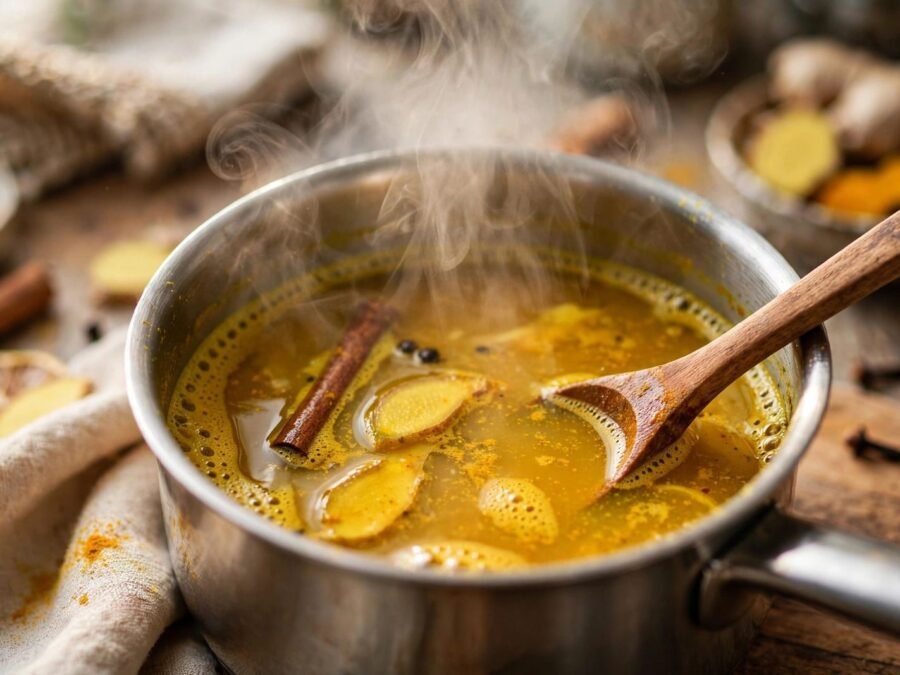
Quick answer: Turmeric — specifically the compound curcumin — has been studied for its potential role in inflammation, but according to the NIH’s National Center for Complementary and Integrative Health, there isn’t enough solid evidence yet to say definitively that it helps with any particular condition. That doesn’t mean it’s not worth cooking with: it’s a flavorful, low-risk spice with a long culinary history. Below are 8 ways to use it beyond the usual turmeric latte, plus what actually helps your body use it.
What turmeric actually does (and doesn’t) for inflammation
Turmeric is a root in the ginger family, and curcumin is the compound that gives it its bright yellow color. It’s been used for centuries in Ayurvedic, Chinese, and Southeast Asian cooking and traditional medicine, including for joint discomfort and digestive issues.
Here’s the honest version of the current research, based on the NIH’s own summary: many studies have looked at turmeric and curcumin for things like osteoarthritis and cholesterol, but the findings are hard to compare directly, because supplement products vary widely in how much curcumin they actually contain. Several meta-analyses have looked specifically at knee-pain measures in osteoarthritis, but the overall evidence isn’t strong enough yet to draw firm conclusions. The NIH is direct about this: “we don’t know enough to definitively conclude if turmeric or curcumin is beneficial for any health purposes.”
That’s a very different message than what a lot of wellness content implies. It doesn’t mean turmeric is useless — it means it belongs in your kitchen as a flavorful spice, not as a stand-in for medical treatment.
How to get more out of turmeric when you cook with it
Two practical points, backed by the same NIH summary:
- Pair it with black pepper. Piperine, the compound that makes black pepper pungent, is one of the better-studied ways to improve curcumin’s absorption. A pinch of black pepper in any of the recipes below is a simple, free addition.
- Cook it with fat. Curcumin is fat-soluble, so cooking turmeric in oil, ghee, or coconut milk (as several recipes below do) helps rather than hurts.
- Skip high-dose concentrated supplements unless a doctor recommends them. The NIH specifically flags that highly bioavailable curcumin formulations may carry liver-related risk. Using turmeric as a cooking spice is a different, much lower-risk situation than taking concentrated supplements.
1. Turmeric-Ginger Roasted Vegetables
A sheet-pan side dish that works with almost any vegetable you have on hand.
- Ingredients: 4 cups chopped vegetables (cauliflower, carrots, sweet potato), 2 tbsp olive oil, 1 tsp ground turmeric, 1 tsp grated fresh ginger, ¼ tsp black pepper, salt to taste
- Method: Toss vegetables with oil and spices, spread on a sheet pan, roast at 400°F (200°C) for 25–30 minutes, stirring once.
- Tip: The olive oil here isn’t just for flavor — it helps the fat-soluble curcumin get absorbed.
2. Golden Turmeric Lentil Soup
A warming, protein-rich soup that’s easy to batch-cook.
- Ingredients: 1 cup red lentils, 1 chopped onion, 2 cloves garlic, 1 tsp turmeric, ½ tsp cumin, pinch black pepper, 4 cups vegetable broth, 1 tbsp olive oil
- Method: Sauté onion and garlic in oil, add spices and toast briefly, add lentils and broth, simmer 20 minutes until lentils are soft.
- Storage: Keeps 4–5 days refrigerated; freezes well for up to 3 months.
3. Turmeric Scrambled Eggs
A five-minute breakfast upgrade.
- Ingredients: 2 eggs, ¼ tsp turmeric, pinch black pepper, 1 tsp butter or olive oil, salt to taste
- Method: Whisk eggs with turmeric, pepper, and salt. Cook gently in butter or oil over low heat, stirring until just set.
- Note: The turmeric mostly affects color and flavor here; this is a simple way to build the habit of cooking with it regularly.
4. Classic Golden Milk (for context)
Since most readers know this one, it’s included briefly rather than as the centerpiece.
- Ingredients: 1 cup milk of choice, ½ tsp turmeric, pinch black pepper, pinch cinnamon, ½ tsp honey (optional)
- Method: Warm milk gently, whisk in spices, sweeten if desired.
- See also: our full golden milk guide for dairy-free variations. [INTERNAL LINK OPPORTUNITY]
5. Turmeric Rice Pilaf
A simple side that pairs with almost any protein.
- Ingredients: 1 cup basmati or long-grain rice, 1½ cups broth, 1 tsp turmeric, 1 tbsp olive oil, pinch black pepper
- Method: Sauté rice briefly in oil with turmeric and pepper, add broth, bring to a boil, then simmer covered until liquid is absorbed (about 15–18 minutes).
6. Turmeric Chickpea Skillet
A one-pan dinner that’s naturally plant-based.
- Ingredients: 1 can chickpeas (drained), 1 chopped bell pepper, 1 chopped onion, 1 tsp turmeric, ½ tsp paprika, pinch black pepper, 2 tbsp olive oil
- Method: Sauté onion and pepper in oil, add chickpeas and spices, cook 8–10 minutes until heated through and lightly crisped.
- Serving suggestion: Serve over rice or with warm flatbread.
7. Turmeric-Spiced Roasted Chickpea Snack
A crunchy snack that doubles as a salad topper.
- Ingredients: 1 can chickpeas (drained, patted dry), 1 tbsp olive oil, 1 tsp turmeric, pinch cayenne (optional), pinch black pepper, salt to taste
- Method: Toss chickpeas with oil and spices, roast at 400°F (200°C) for 25–30 minutes, shaking the pan halfway.
- Storage: Best eaten within 1–2 days; they soften over time.
8. Turmeric-Coconut Curry Sauce
A versatile base sauce for vegetables, chicken, or tofu.
- Ingredients: 1 can coconut milk, 1 tbsp turmeric, 1 tsp ginger, 2 cloves garlic, pinch black pepper, 1 tbsp olive oil
- Method: Sauté garlic and ginger in oil, add turmeric and pepper, stir in coconut milk, simmer 10 minutes. Pour over cooked vegetables, chicken, or tofu.
- Note: The coconut fat, like the olive oil in other recipes, supports curcumin absorption.
Nutrition information is an estimate and should be calculated based on final ingredient quantities and serving size before publishing.
Safety notes and who should be cautious
Using turmeric as a cooking spice, in the amounts above, is low-risk for most people. A few groups should be more careful, especially with concentrated turmeric or curcumin supplements (not the spice amounts used in these recipes):
- People on blood-thinning medication, since turmeric may have mild blood-thinning properties
- People with gallbladder disease
- People who are pregnant, since medicinal (as opposed to culinary) amounts haven’t been well studied for safety
- Anyone considering a concentrated curcumin supplement, given the NIH’s caution about liver-related risk with some high-bioavailability formulations
If you take medication or manage a chronic condition, check with a healthcare provider before adding concentrated turmeric supplements — cooking with the spice in food amounts is a different, much lower-risk situation.
FAQ
Does turmeric actually reduce inflammation? The honest answer, per the NIH: we don’t know enough yet to say definitively. Lab studies suggest curcumin has anti-inflammatory activity, but human evidence for specific conditions remains limited and mixed.
Why do these recipes include black pepper? Piperine in black pepper is one of the better-studied ways to improve the body’s absorption of curcumin.
Can I use fresh turmeric root instead of ground turmeric? Yes — as a rough guide, about 1 inch of grated fresh turmeric root is roughly equivalent to 1 teaspoon of ground turmeric, though this can vary.
Is turmeric safe every day? Using it as a cooking spice in normal food amounts is considered low-risk for most healthy adults. Concentrated supplements are a different situation and are worth discussing with a doctor first, especially if you take medication.
Will turmeric stain things? Yes — it stains countertops, plastic containers, and light clothing easily. Wipe up spills quickly and consider glass storage containers.
Sources & Further Reading
- NIH National Center for Complementary and Integrative Health, “Turmeric” — nccih.nih.gov — supports all claims about curcumin’s studied status, absorption with piperine, and supplement-related liver caution.
Medical disclaimer
This article is for educational purposes only and is not a substitute for individualized medical advice. If you take medication, are pregnant or breastfeeding, or have a medical condition, speak with a qualified healthcare professional before making significant changes to your diet or trying concentrated supplements.
Related Soothe & Plate content
- [INTERNAL LINK OPPORTUNITY: Anti-Inflammatory Foods List: What to Eat and What to Limit]
- [INTERNAL LINK OPPORTUNITY: Top 5 Herbal Tea for Joint Pain Remedies]
- [INTERNAL LINK OPPORTUNITY: Best Tea for Arthritis Relief]
- [INTERNAL LINK OPPORTUNITY: The Ultimate Anti Inflammatory Diet Plan for Beginners]