

Raspberry leaf tea benefits have been whispered about in midwives’ circles for generations — long before it became the “pregnancy tea” of health-store shelves. This golden brew comes from the leaves of the red raspberry plant (Rubus idaeus), not the berries, and it tastes nothing like raspberries: more like a mild black tea, earthy and smooth. Honest caveat first: the research on its most famous claims is thin and mixed — so this article treats it as a gentle traditional tonic with real cautions, especially during pregnancy.

What Is Raspberry Leaf Tea, and What Does It Taste Like?
Raspberry leaf tea is brewed from the dried leaves of the red raspberry plant — the same plant that gives us the fruit, but the tea itself tastes nothing like berries. It brews golden-green and tastes mild, earthy, and slightly tannic, like a gentle black tea without the caffeine (Healthline’s raspberry leaf review). Midwives have traditionally recommended it as a uterine tonic, and today it’s one of the most popular herbal teas for women’s wellness — but its use in pregnancy comes with firm rules, which this article covers honestly.
8 Gentle Raspberry Leaf Tea Benefits Worth Knowing
Some of these rest on tradition and small studies, others on the leaf’s genuine nutrient content. Each is framed the way the evidence allows:
1. The Traditional Uterine Tonic
The headline claim: raspberry leaves contain fragarine, a plant compound traditionally believed to tone the muscles of the pelvic area, including the uterus — helping them contract and relax more efficiently. This is why it’s called a uterine tonic. The honest part: while 63% of midwives in one survey reported recommending it, a 2021 review of the literature found very little evidence to confirm easier childbirth from raspberry leaf use (Healthline). Tradition is strong; proof is not.
2. Possibly Fewer Interventions in Labor
A small 2024 study of 91 pregnant people found those using raspberry leaf needed fewer labor interventions (epidural, instrumental birth, cesarean) and had more vaginal births with shorter labor — though the researchers stressed more research is needed to confirm. An older 2001 randomized trial of raspberry leaf tablets found no adverse effects but did not significantly shorten labor. Takeaway: intriguing, not conclusive — and never a reason to skip medical care.
3. Anecdotal Relief for Menstrual Cramps
Many women brew it for PMS — cramping, nausea, and digestive upset around their cycle. This use is mostly anecdotal, but the fragarine-as-muscle-toner story is the rationale. If cramps are your main concern, pair this with a genuinely soothing evening cup like our chamomile tea for sleep ritual for a double-wind-down.
4. A Genuinely Mineral-Rich Cup
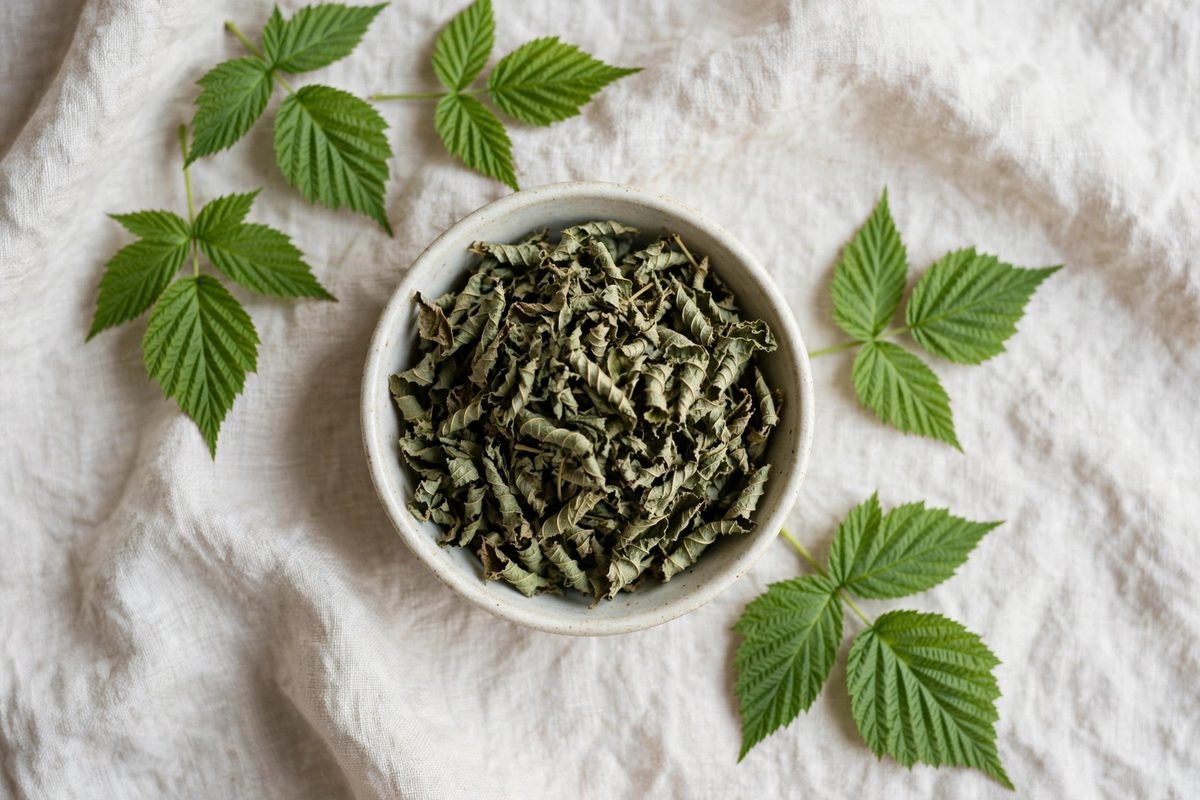
This one needs no caveat: red raspberry leaves are a solid source of minerals including iron, calcium, magnesium, and potassium, plus B vitamins and vitamin C. For women with heavy periods, the iron content is a small but real bonus — though tea is a diluted source, not a supplement. For iron-rich mornings, see our anti-inflammatory breakfast ideas.
5. Antioxidant Compounds
The leaves are rich in antioxidant compounds including ellagitannins, hydroxybenzoic acids, and anthocyanins, which help neutralize free radicals — plus small amounts of ellagic acid that showed anticancer effects in test-tube studies. Test-tube findings are the weakest form of evidence, but as a daily antioxidant sip, the tea is a reasonable habit.
6. Traditionally Used for Morning Sickness
Some women sip a small cup in early pregnancy for nausea — but guidance is cautious: limit to about one cup a day in the first trimester, if at all, and check with your doctor first. For nausea, ginger has stronger evidence behind it — see our ginger for nausea guide for the better-studied option.
7. Naturally Caffeine-Free — the Anytime Cup
Raspberry leaf tea has zero caffeine by nature. For pregnant women cutting back on coffee, or anyone winding down in the evening, it’s an easy swap — much like the caffeine-free comfort of tulsi tea for stress-heavy days.
8. Gentle Digestive Comfort
The leaf’s mild astringency (from tannins) has traditionally been used to soothe mild digestive upset and diarrhea — though too much can swing the other way and cause loose stools. One to three cups a day is the commonly cited range. For digestion-focused brews with more modern evidence, our peppermint tea benefits guide is worth a read.
How to Make Raspberry Leaf Tea (Hot + Iced)
Simple infusion — leaves, hot water, five minutes.

Hot Raspberry Leaf Tea (1 Serving)
Ingredients
- 1 teaspoon dried raspberry leaves (or 1 tea bag)
- 8 ounces (about 250 ml) boiling water
- Optional: honey or a squeeze of lemon
Steps
- Add the leaves or tea bag to your cup (use an infuser for loose leaf).
- Pour over the boiling water.
- Steep at least 5 minutes — longer gives a fuller, more tannic cup.
- Strain, sweeten lightly if you like, and sip.
Time: 5–7 minutes | Servings: 1
Iced Raspberry Leaf Tea (4 Servings)

Brew 4 teaspoons of leaves in 4 cups of boiling water for 10 minutes for a stronger base, strain, chill at least 2 hours, and serve over ice with lemon. Keeps 3–4 days refrigerated.
Raspberry Leaf Tea Safety: Read This Before Pregnancy Use
This is the most important section. The standard guidance from midwives and herbalists: don’t start raspberry leaf tea before the third trimester (around 32 weeks), begin with one cup a day and build to a maximum of 2–3 cups, and stop immediately if you experience contractions, spotting, or Braxton Hicks. Avoid it entirely if you have a history of preterm labor, placenta previa, a previous cesarean or uterine scar, are carrying twins, or have vaginal bleeding in the second half of pregnancy. It may also mimic estrogen’s effects, so check with a doctor if you have breast or ovarian cancer, endometriosis, or fibroids — and it can interact with metformin. In all cases: talk to your doctor or midwife first. This tea is a complement to care, never a replacement.
Raspberry Leaf Tea FAQ
When should I start drinking raspberry leaf tea in pregnancy?
The common guidance is from around 32 weeks (the third trimester), starting with one cup daily and increasing gradually to 2–3 cups — but only with your midwife or doctor’s approval, and stop if you feel contractions.
Does raspberry leaf tea actually induce labor?
No good evidence says it starts labor — it’s traditionally described as a uterine “toner,” not a trigger. It doesn’t cause contractions on its own in most accounts.
Can men drink raspberry leaf tea?
Yes — the minerals and antioxidants benefit everyone. It’s caffeine-free and mild; the “women’s herb” reputation is about tradition, not biology.
How much raspberry leaf tea per day is safe?
One to three cups a day is the commonly cited range for non-pregnant adults. More can cause digestive upset thanks to its mild laxative effect, so don’t overdo it.