
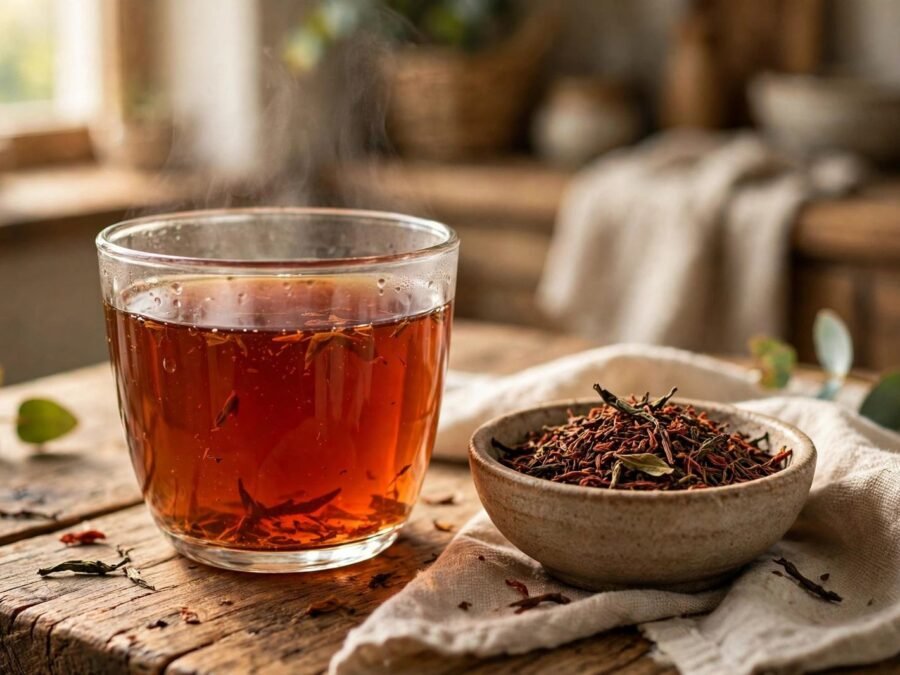
If your evening tea habit keeps clashing with your sleep schedule, rooibos tea benefits might be exactly what you’ve been missing. This ruby-red herbal tea is brewed from Aspalathus linearis, a South African shrub — and unlike black or green tea, it’s completely caffeine-free. Dutch settlers were brewing it in the 1700s, and commercial export began in the 1930s. Today it’s loved for its naturally sweet, earthy flavor and a gentle antioxidant profile that early research suggests may support everyday wellness. It won’t work miracles, and nothing here replaces your doctor’s advice — but if you want a cozy, low-calorie cup you can enjoy at any hour, rooibos is one of the kindest choices in the tea aisle.
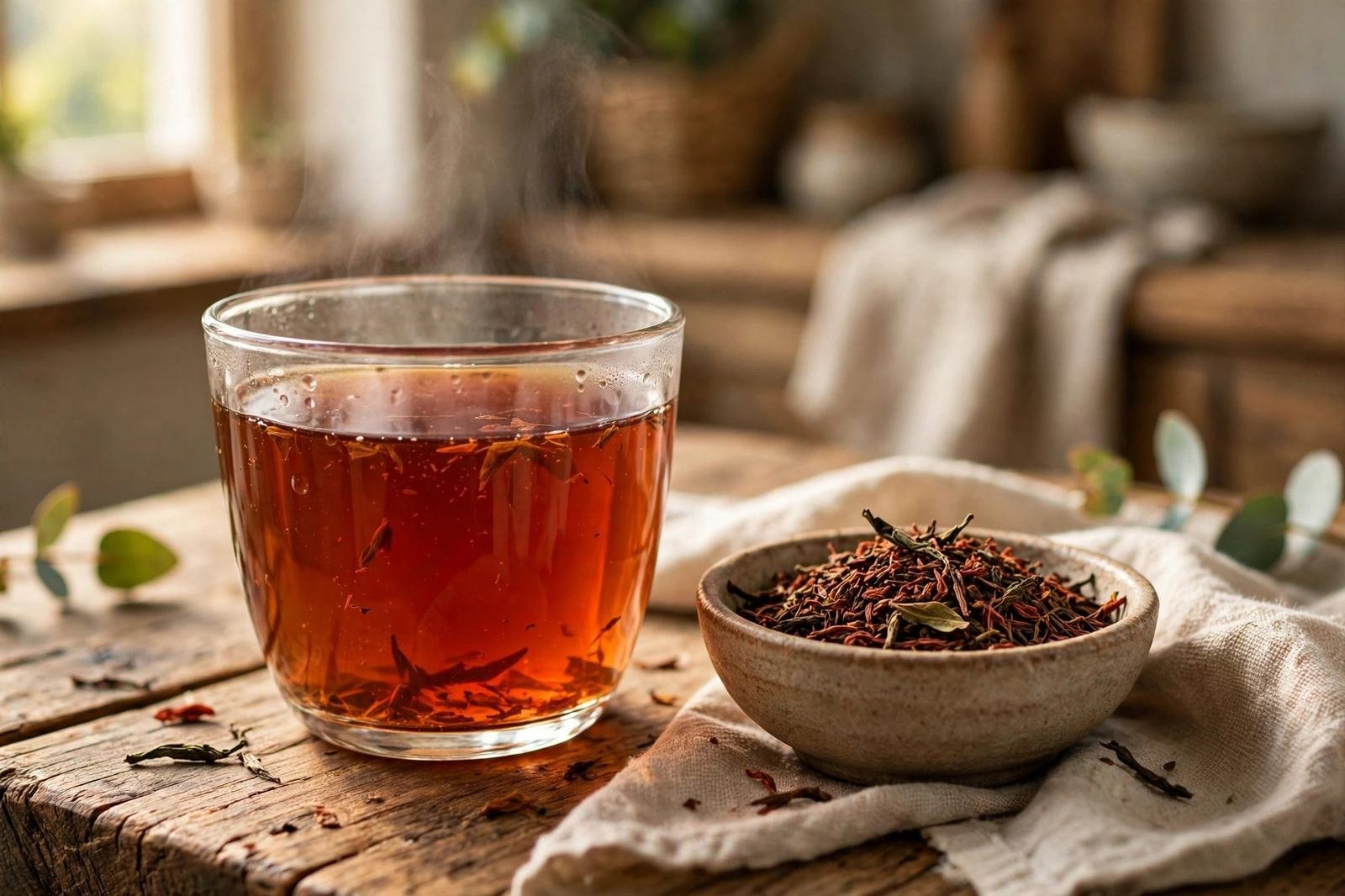
What Is Rooibos Tea, and What Does It Taste Like?
Rooibos — Afrikaans for “red bush” — comes from the fermented leaves of the Aspalathus linearis shrub, grown in South Africa’s Cederberg region. Fermentation gives it a sweet, earthy, slightly nutty flavor. Unlike black and green tea, rooibos is naturally low in tannins — the compounds that make other teas astringent and may interfere with iron absorption. Sold as bags, loose leaf, or extract, it’s enjoyed hot or iced, plain or with milk and honey (WebMD’s rooibos overview). Best of all, rooibos never turns bitter: steep 5–10 minutes in boiling water, and the longer it sits, the stronger it gets.
8 Gentle Rooibos Tea Benefits Worth Knowing
Most of what we know comes from small studies and early research — honest scientists still call the human evidence limited. With that caveat, here’s what the early signals look like:
1. Completely Caffeine-Free — the Evening Cup Without the Jitters
Rooibos contains no caffeine at all, naturally. Too much caffeine from coffee or black and green tea can bring on jitters or a restless night — so a cup after dinner is one habit your sleep won’t punish you for. If you’re building a wind-down routine, pair it with our chamomile tea for sleep guide.
2. A Rare Antioxidant You Won’t Find in Other Teas
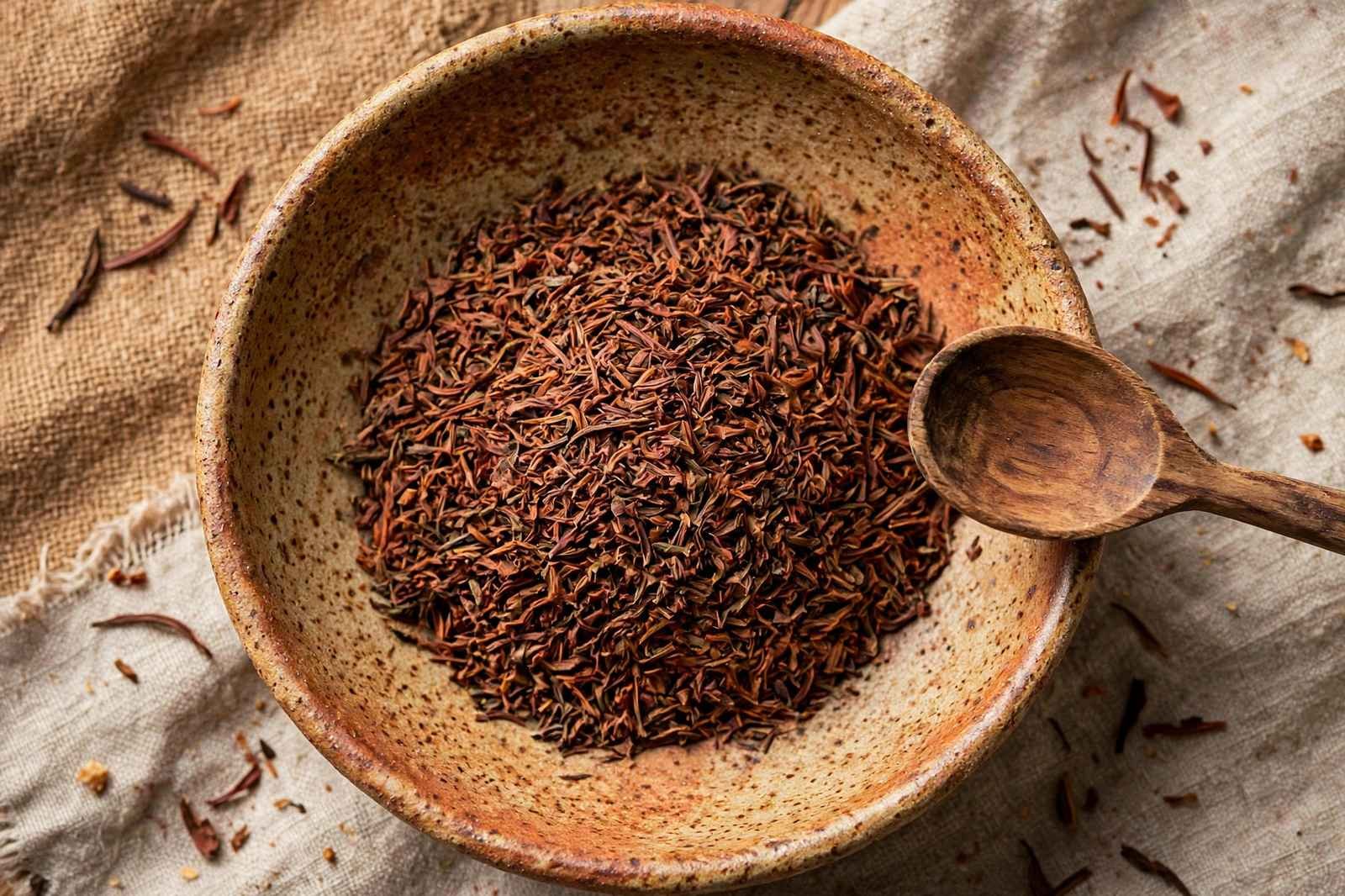
Rooibos contains aspalathin — an antioxidant found almost only in rooibos — along with nothofagin and quercetin. Antioxidants help the body handle everyday oxidative stress from normal metabolism, pollution, and sun exposure. Not a disease cure, but a genuinely unusual profile for a simple herbal tea.
3. Early Signs of Heart-Friendly Effects
In one small study, 17 volunteers drank about 13.5 ounces of rooibos, and their levels of angiotensin-converting enzyme (ACE) — involved in blood pressure regulation — dropped about an hour later. A tiny sample: an early signal, not proof. A 2023 scoping review of 18 publications (488 participants) found improved lipid profiles, antioxidant status, and lower blood glucose — but stressed human evidence is limited, doses varied, and results were inconsistent. Interesting, not settled.
4. A Cholesterol-Nudging Habit
In one six-week study, six daily cups of rooibos raised blood polyphenols and HDL (“good”) cholesterol while lowering LDL (“bad”) cholesterol. Six cups is a lot of tea, and one study doesn’t make a rule — but it hints a daily habit may support the numbers your doctor likes. Never swap prescribed medication for tea, though.
5. Blood Sugar Curiosity Worth Watching
Aspalathin has shown glucose-lowering effects in early research, and the 2023 scoping review noted rooibos lowered blood glucose in some studies. But much of the antidiabetic research so far is early or animal-based — too soon to say it works the same way in people. If you manage blood sugar, think of rooibos as a pleasant caffeine-free drink, not a diabetes strategy.
6. Low in Tannins and Easy on the Stomach
Low in tannins, rooibos brews smooth — without the astringent bite (or stomach grumble) of strong black tea. Tannins can interfere with iron absorption, so the lower-tannin cup is a small plus at mealtimes. If gentle drinks are your thing, our ginger lemon water benefits guide is another easy morning option.
7. An Almost Calorie-Free Sip for Lighter Days
A plain cup of rooibos carries only about 2–3 calories — roughly nothing. It won’t melt anything on its own: it becomes a weight-friendly choice only when it replaces something heavier, like a sugary latte or soda. Keep added sweeteners light, and pair it with fiber-rich mornings like these anti-inflammatory breakfast ideas.
8. A Calming Ritual in a Busy Day
Some benefits don’t need a study. The ritual of brewing, steeping, and sipping something warm and sweet-smelling is its own kind of stress relief — and rooibos, with its honeyed aroma, is built for it. If you enjoy herbal rituals, explore tulsi tea benefits too.
Red vs Green Rooibos: Which Should You Buy?
The rooibos you see everywhere is the red kind: fermented, sweet, and smooth. Green rooibos skips fermentation for a grassier, lighter flavor — and early research suggests it retains more aspalathin. Neither has caffeine, and human evidence is early for both, so buy the one you enjoy: red for beginners, green for experimenters. A pinch of warming spice pairs beautifully with rooibos’s sweetness — see our cardamom tea benefits guide for another cozy spiced brew.
How to Make Rooibos Tea (Hot + Iced)
Rooibos is nearly impossible to over-brew — here’s the simplest method.
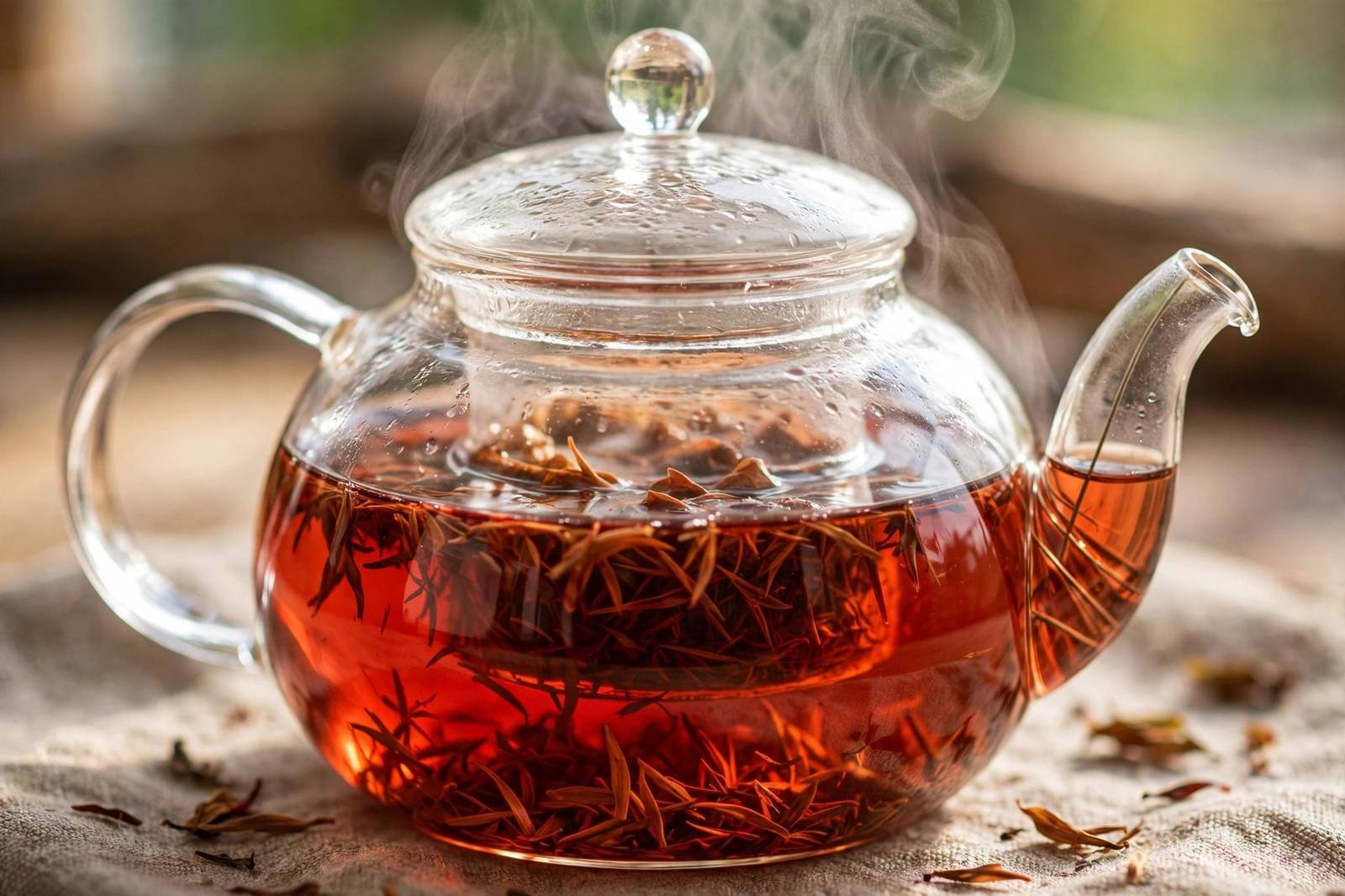
Hot Rooibos (1 Serving)
Ingredients
- 1 rooibos tea bag or 2 teaspoons loose-leaf rooibos
- 8 ounces (about 250 ml) freshly boiled water
- Optional: a splash of milk, a teaspoon of honey, a cinnamon stick
Steps
- Add the tea to your cup.
- Pour over boiling water.
- Steep 5–10 minutes — longer means stronger, never bitter.
- Strain (if loose), add milk or honey if you like, and sip.
Time: 5–10 minutes | Servings: 1
Iced Rooibos with Lemon (2 Servings)

Ingredients
- 2 rooibos tea bags or 4 teaspoons loose-leaf rooibos
- 16 ounces boiling water
- 1 cup cold water, plus ice
- Lemon slices and fresh mint, to serve
Steps
- Steep 8–10 minutes — a strong brew survives dilution.
- Strain, stir in cold water, and chill at least 1 hour.
- Pour over ice with lemon and mint.
Time: 10 minutes + chilling | Servings: 2
For a warming spiced twist, simmer the tea with a cinnamon stick and a few cloves — or check our turmeric tea recipe for another golden brew.
Rooibos Tea Side Effects and Safety
Rooibos is generally considered safe, and a few plain cups a day carry little risk. Three honest caveats: very large amounts are understudied (“natural” isn’t “unlimited”); data on pregnancy and breastfeeding is limited, so check with your doctor first; and rooibos won’t replace prescribed medication for blood pressure, cholesterol, or blood sugar — enjoy it as a drink, not a treatment. Rare allergies are possible; stop if you notice itching, swelling, or an upset stomach and talk to a clinician.
Rooibos Tea FAQ
Does rooibos tea have caffeine?
No — rooibos is naturally caffeine-free, which is why it’s a popular after-dinner drink.
Red vs green rooibos — which is healthier?
Green (unfermented) rooibos appears to retain more aspalathin, but evidence is early for both. Choose by taste: red is sweet and smooth, green is lighter and grassier.
Can rooibos tea help you lose weight?
Not directly — no solid human evidence says rooibos burns fat. A plain cup has just 2–3 calories, so it helps only by replacing sugary drinks.
How much rooibos tea can I drink a day?
A few plain cups a day is generally fine. Very large amounts are understudied, so there’s no official limit — moderation, as always.
Can I drink rooibos tea before bed?
Yes. With zero caffeine and a soothing aroma, it’s one of the best bedtime choices — far friendlier to sleep than black or green tea.
The Bottom Line
Rooibos tea benefits are gentle, early, and honest: a caffeine-free, low-calorie, antioxidant-rich cup with small studies hinting at heart, cholesterol, and blood sugar support — minus the wellness-fad hype. Brew it strong, drink it often, and keep your doctor in the loop. For more gentle herbal brews, our clove tea benefits guide is a warm place to continue.