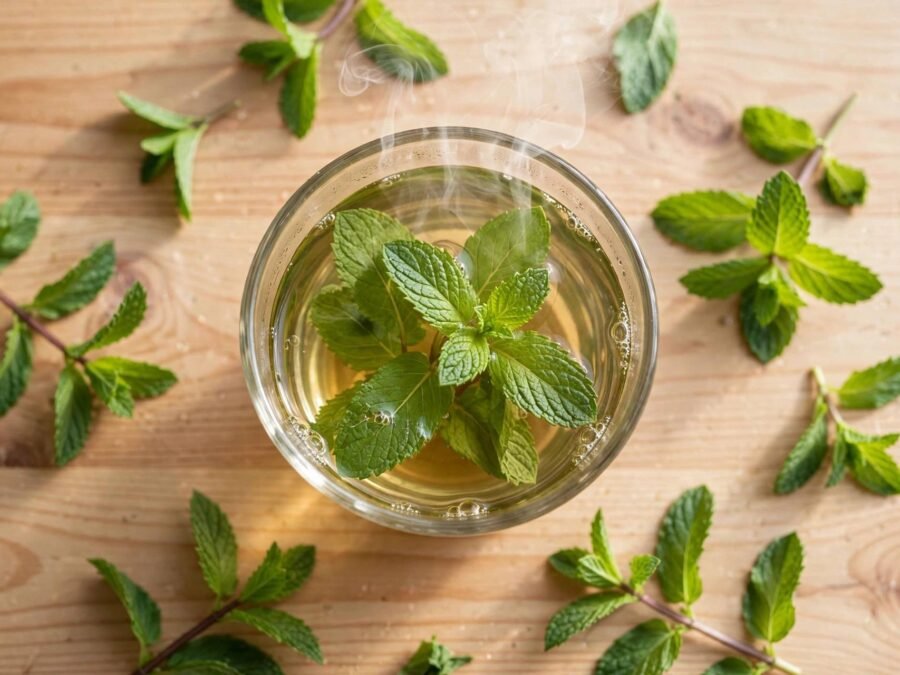
Spearmint tea benefits go well beyond fresh breath. If you only know spearmint as the flavour in chewing gum, you are missing one of the gentlest herbal teas there is — sweet, soft, naturally caffeine-free, and backed by a small but genuinely interesting body of research. Here are 7 honest, study-backed reasons to brew a cup, plus what spearmint tea will not do.
Spearmint tea is a simple infusion of the leaves of Mentha spicata, the mild-mannered cousin of peppermint, served hot or iced. It is naturally caffeine-free, so it works as an evening drink, and it has been used for centuries across the Middle East, North Africa, and South Asia as an after-meal and hospitality drink.
Its chemistry sets it apart from peppermint. Spearmint’s signature compound is carvone, which gives it its sweet, warm mintiness, while peppermint is dominated by menthol, which gives it its sharp cooling bite. In analysed samples, spearmint oil runs roughly 50–70% carvone with very little menthol, versus roughly 38–48% menthol in peppermint oil (UC eScholarship mint-oil study).
7 Spearmint Tea Benefits, With Honest Evidence
1. It may support hormone balance in women with PCOS
This is spearmint tea’s most distinctive claim, and it has a real randomised trial behind it. In a 30-day, two-centre randomised controlled trial, 42 women with polycystic ovarian syndrome (PCOS) drank spearmint tea twice a day or a placebo herbal tea. Free and total testosterone fell significantly in the spearmint group, and the women reported that their hirsutism (unwanted hair growth) felt better (Grant, 2010, PubMed PMID 19585478).
Caveat: objective hair-growth scores did not change significantly in 30 days — the authors noted the study was too short for hair-growth cycles to show it.
2. It may support working memory — with one big caveat
In a double-blind, placebo-controlled trial, 90 older adults with age-associated memory impairment took a spearmint extract high in polyphenols (including rosmarinic acid) for 90 days. The 900 mg/day group improved quality of working memory by 15% and spatial working memory accuracy by 9% versus placebo, and reported falling asleep more easily (Herrlinger et al., 2018, PMC5779242).
The caveat: that was a standardised extract, not a cup of tea. A brewed cup contains the same polyphenols but in far smaller, unstandardised amounts.
3. It may settle the stomach after meals
Spearmint has a long traditional use as an after-meal digestive, and its carvone content is antispasmodic in laboratory work. But the strongest clinical evidence for mint-family gut relief belongs to peppermint, especially peppermint oil, not spearmint alone. Think of spearmint as the gentler digestive option. If bloating after meals is a regular pattern, our peppermint tea after meals guide compares the two approaches.
4. It makes a calmer evening cup
Because spearmint tea is naturally caffeine-free, it fits an evening wind-down ritual without disturbing sleep. In the memory trial above, the extract group also reported falling asleep more easily — again, extract, not tea, so do not read that as “spearmint tea cures insomnia.” The realistic benefit is simpler: a warm, fragrant, caffeine-free cup that marks the end of the day. It pairs well with other gentle evening herbs such as lemon balm, chamomile, and lavender.
5. It offers antioxidant support
Spearmint tea contains antioxidant compounds including flavonoids and rosmarinic acid. Cleveland Clinic’s dietitian notes that spearmint tea carries a comparable amount of antioxidants to black tea, while staying naturally sugar-free and caffeine-free (Cleveland Clinic, spearmint tea benefits). A quiet, background benefit rather than something you will feel overnight.
6. It may freshen breath, naturally
This one needs no trial: spearmint is the classic breath-freshening mint for a reason. A warm cup after a garlicky meal, or chewing a few fresh leaves, leaves the mouth feeling clean. A small benefit, but a real, immediate one.
7. It is the gentler mint if peppermint feels too strong
Peppermint’s high menthol content is powerful — and for some people, too powerful. It can feel harsh on the stomach and may worsen acid reflux in sensitive people. Spearmint, with very little menthol, is the softer alternative: sweet rather than sharp, soothing rather than bracing.
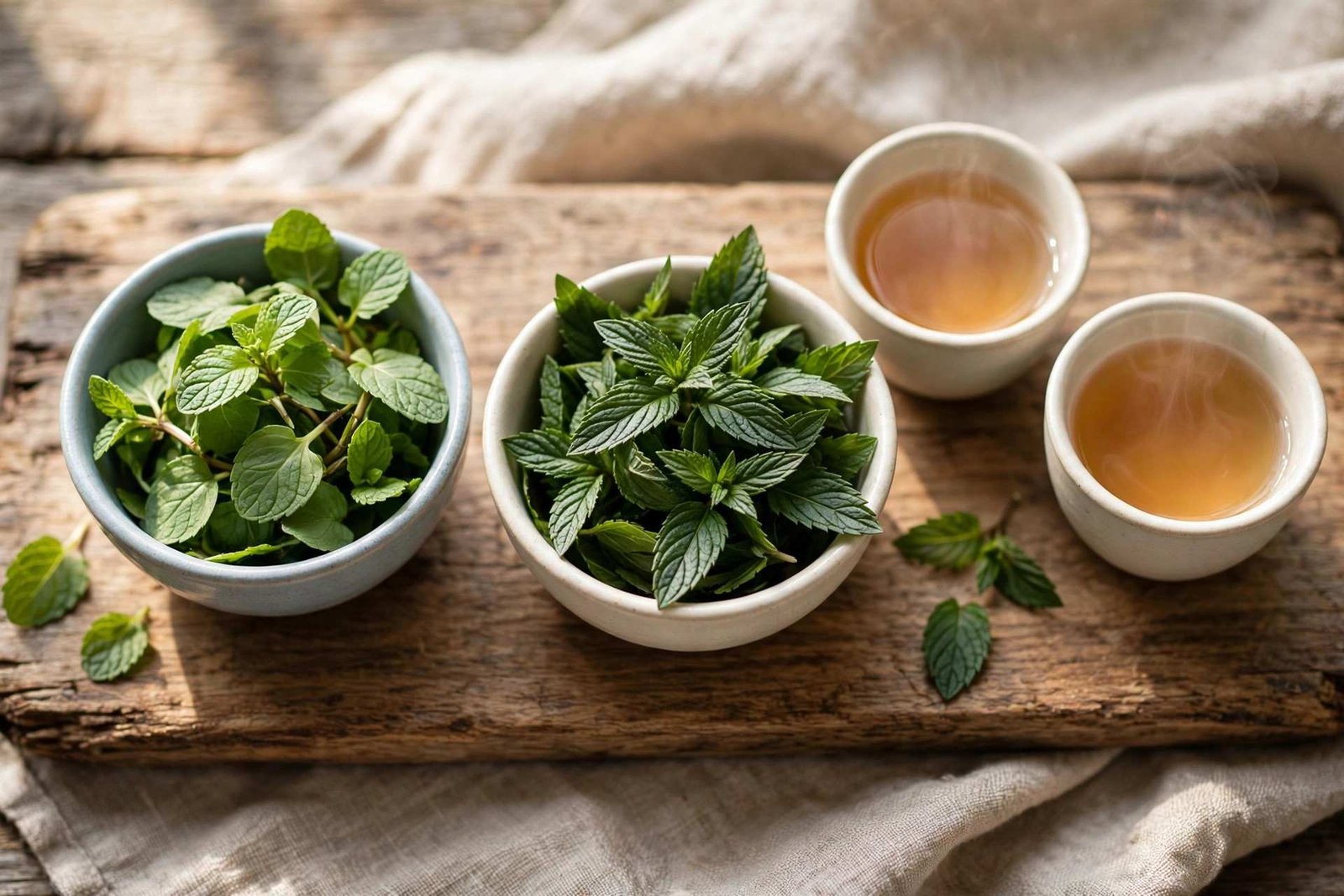
Spearmint vs Peppermint: What’s the Difference?
| Spearmint (Mentha spicata) | Peppermint (Mentha × piperita) | |
|---|---|---|
| Main compound | Carvone (~50–70% of oil) | Menthol (~38–48% of oil) |
| Flavour | Sweet, soft, warmly minty | Sharp, cool, intensely minty |
| Best for | Daily sipping, evenings, sensitive stomachs | Congestion, strong digestion support, headaches |
How to Make Spearmint Tea
Fresh leaves give the sweetest flavour, but dried leaves or tea bags work well too. Use water just off the boil, and cover the cup while it steeps.
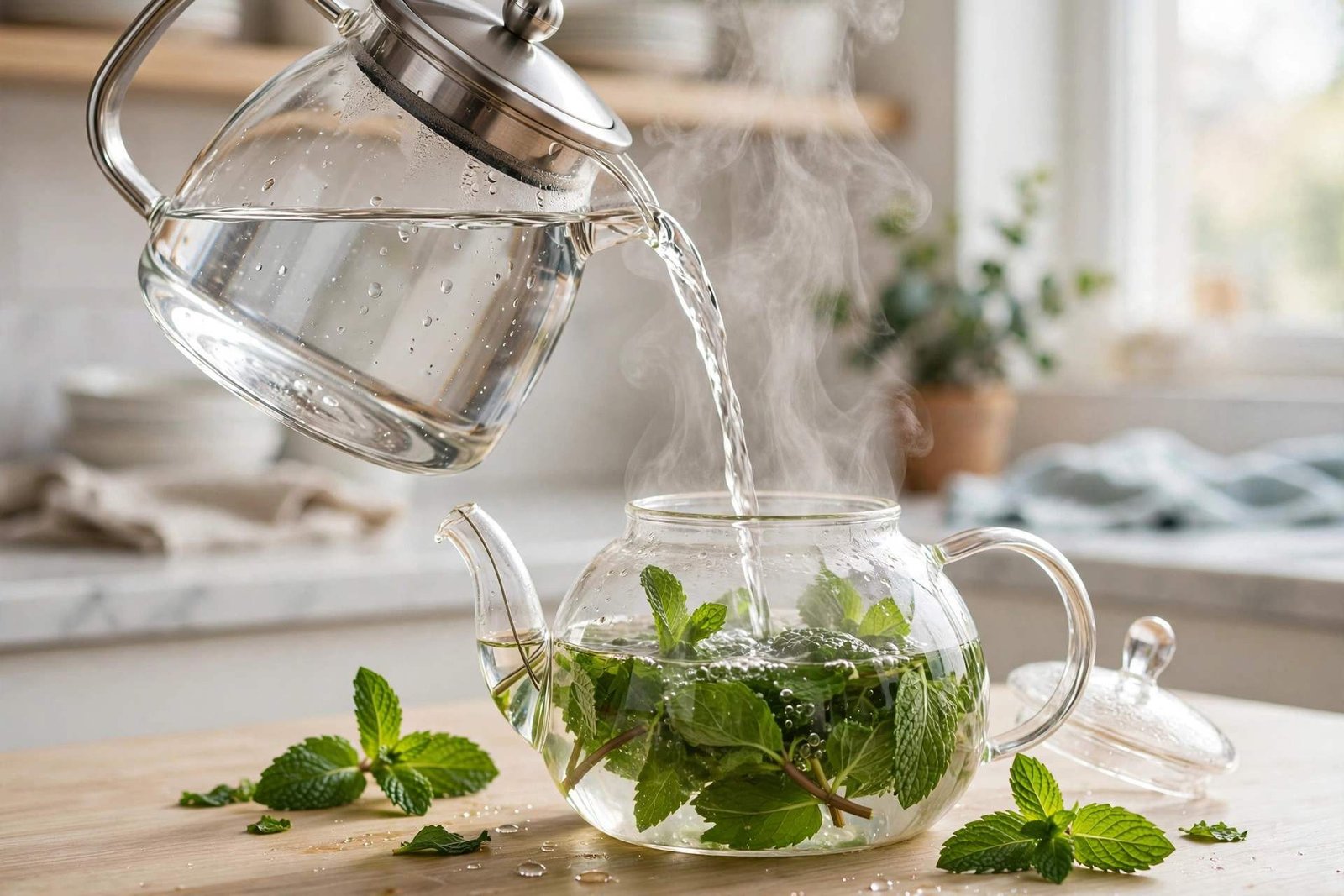
You need: 1 tablespoon fresh spearmint leaves (lightly packed), or 1 teaspoon dried leaves, or 1 tea bag; 1 cup (240 ml) just-boiled water; honey or lemon, if you like.
- Rinse the fresh leaves and lightly bruise them between your palms to release the oils.
- Place the leaves in a cup or teapot and pour over the just-boiled water.
- Cover and steep 5–10 minutes — 5 for light and sweet, 10 for stronger.
- Strain out the leaves and add honey or lemon if you like.
- Sip slowly, ideally after a meal or as part of an evening wind-down.
Variations: iced with lemon and ice on hot days; a spearmint-and-lemon-balm blend for evenings; or a few leaves muddled into sparkling water.

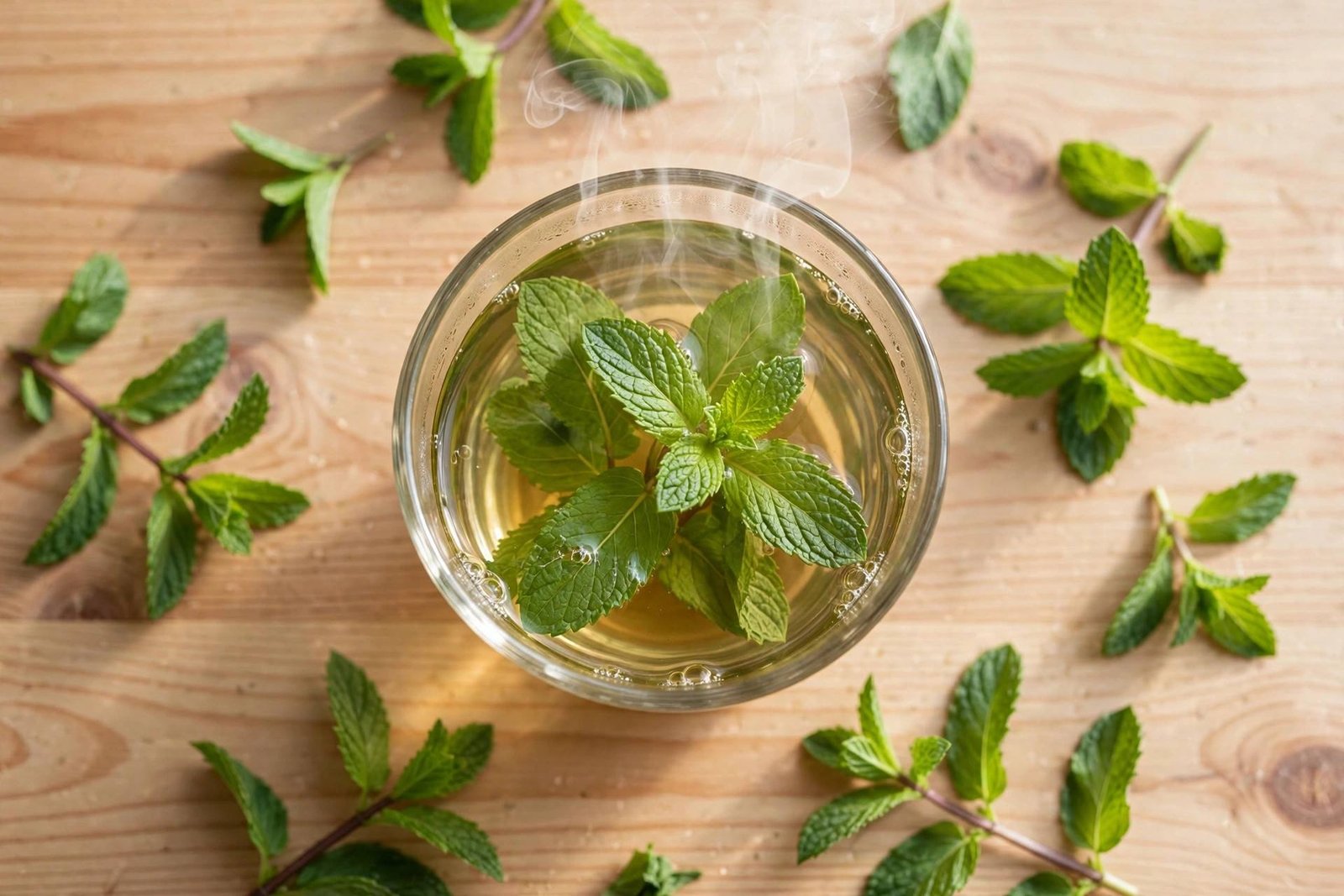
Simple Spearmint Tea
Ingredients
Method
- Rinse the fresh leaves and lightly bruise them between your palms to release the oils.
- Place the leaves in a cup or teapot and pour over the just-boiled water.
- Cover and steep 5–10 minutes — 5 for light and sweet, 10 for stronger.
- Strain out the leaves and add honey or lemon if you like.
- Sip slowly, ideally after a meal or as part of an evening wind-down.
What Spearmint Tea Won’t Do
- It won’t melt belly fat. No tea burns fat on its own. Spearmint tea is sugar-free and near-zero-calorie, but it is not a weight-loss treatment.
- It won’t “detox” you. Your liver and kidneys handle that.
- It won’t replace PCOS medication. The Grant trial showed a real hormonal signal, but it was small, short, and adjunctive. Keep your medical treatment.
- It won’t cure insomnia. The sleep finding came from a standardised extract trial — not a cure for a sleep disorder.
- It won’t slash testosterone in everyone. The antiandrogen finding was in women with PCOS. There is no good evidence that a cup or two of spearmint tea lowers testosterone in men.
Spearmint Tea Safety: Who Should Be Careful
- Pregnancy: Spearmint in food amounts is considered likely safe, but large or medicinal amounts in pregnancy are possibly unsafe — animal research has suggested uterine effects. Keep it to an occasional cup and check with your provider.
- Breastfeeding: There is not enough reliable information about spearmint in larger amounts while breastfeeding, so stay at food-level amounts.
- Hormone-related conditions and medicines: Because spearmint may influence androgen levels, talk to your doctor first if you have a hormone-sensitive condition or take hormone therapy.
- Sedatives and liver-affecting medicines: Natural Medicines data lists moderate interactions with CNS depressants and hepatotoxic drugs. If you take either, mention spearmint tea to your doctor or pharmacist.
- Acid reflux: Mint teas can relax the lower oesophageal sphincter. Spearmint is gentler than peppermint here, but if you have reflux, start with a small cup.
- Mint allergy: Avoid spearmint if you are allergic to mint-family plants.
This article is general information, not medical advice.
Frequently Asked Questions
Is spearmint tea the same as peppermint tea?
No. Spearmint (Mentha spicata) and peppermint (Mentha × piperita) are different species. Spearmint is sweeter and gentler, driven by carvone; peppermint is sharper and cooler, driven by menthol.
How much spearmint tea can I drink a day?
One to two cups a day is sensible — the PCOS trial used two cups daily for 30 days. There is no established medicinal dose for the tea itself.
Does spearmint tea lower testosterone in men?
There is no good evidence for that. The antiandrogen finding comes from a small trial in women with PCOS. Men should not expect a testosterone effect from a cup or two of tea.
The bottom line: spearmint tea is a sweet, gentle, caffeine-free brew with one genuinely distinctive study behind it (PCOS hormone support) and a promising, honestly-caveated memory signal from extract research. Brew it for the flavour and the ritual first — the research is a bonus, not a promise.