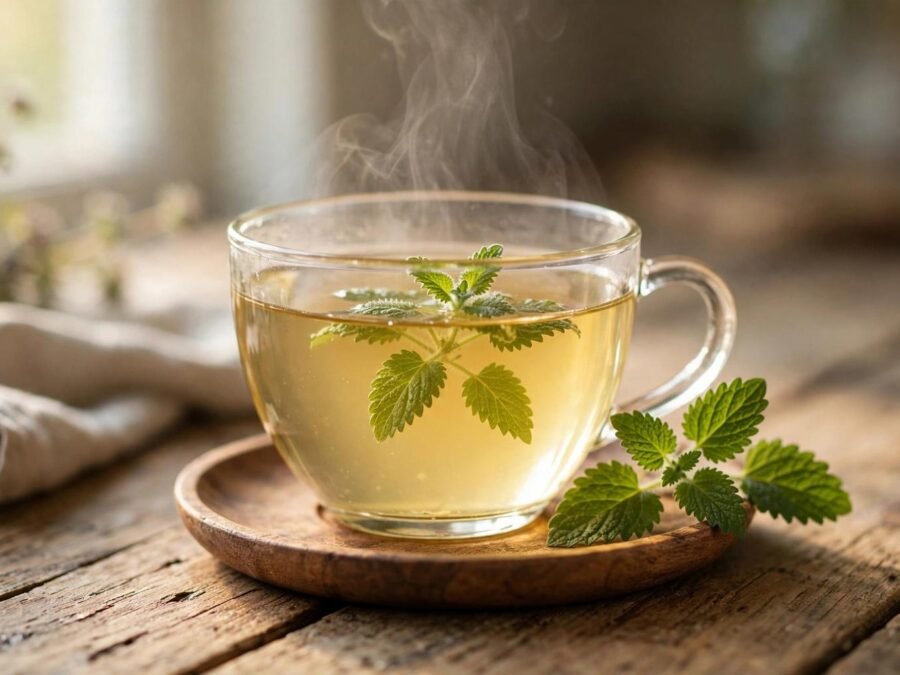
TikTok pitches lemon balm tea as a “nervous system reset” — but the real lemon balm tea benefits are gentler than the hype: this calming herb has centuries of traditional use plus small human trials on stress, sleep, and digestion. One rule shapes this article: most research tested concentrated lemon balm extracts, not home-brewed tea.
What Is Lemon Balm Tea, and What Does It Taste Like?
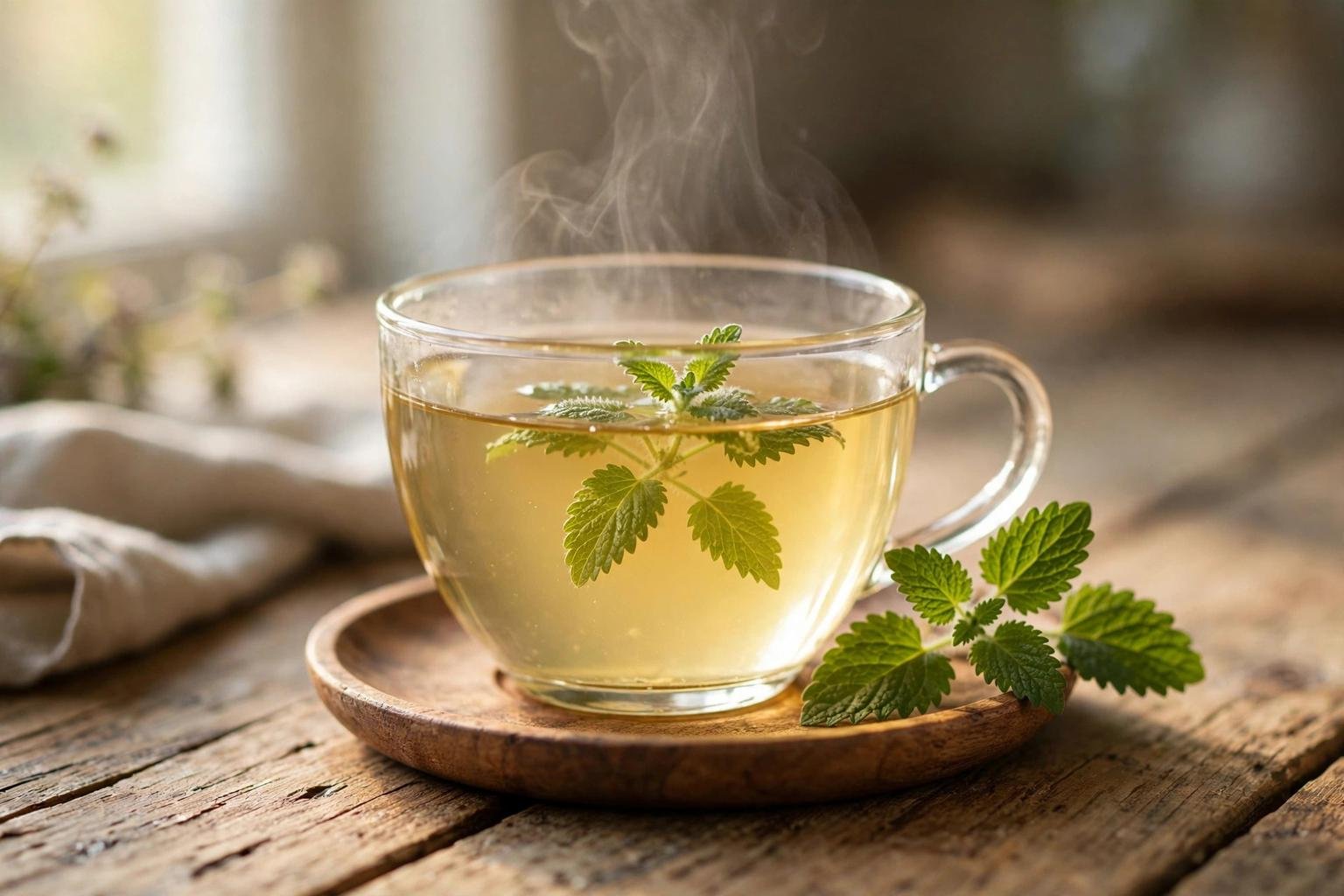
Lemon balm (Melissa officinalis) is a leafy, lemon-scented herb in the mint family, native to the Mediterranean. Despite the name, it’s a different plant from lemongrass and lemon verbena — its closer relatives are basil, oregano, and thyme (Dr. Axe’s lemon balm review). Crush a leaf and the lemon scent rises at once, from citral in its essential oil.

The tea brews pale gold and tastes like soft lemon with a whisper of mint — naturally caffeine-free at about 2 calories a cup.
Lemon Balm Tea Benefits and the TikTok Trend: An Honest Look
The top search result for this keyword is a personal story, not an evidence review — a Marie Claire writer who drank it daily for a week concluded the research behind it “isn’t conclusive,” noting most studies use extracts or higher doses than a cup of tea. A 2024 peer-reviewed review in Nutrients lands in the same place: lemon balm shows promise for anxiety, sleep, and cognition, but trials are small — and key mechanisms, like slowing GABA breakdown via rosmarinic acid, come from lab and animal studies, not human brains (Nutrients 2024 review). Promising, not proven.
9 Gentle Lemon Balm Tea Benefits Worth Knowing
1. A Calmer Mind When the Day Runs Hot
As a herbal tea for stress, lemon balm is unusually well studied. In crossover trials, single extract doses of 300–900 mg raised self-rated calmness within about an hour without dulling alertness, and a 2004 double-blind study found 600 mg blunted negative mood under lab stress (Nutrients 2024 review). A 3-week trial of 100 adults found daily extract cut anxiety scores from 22.2 to 6.7 versus 21.1 to 15.9 on placebo (Dr. Axe’s lemon balm review).
2. Better Sleep Without a Sleeping Pill
In a placebo-controlled trial of 30 adults with poor sleep, 87% said they slept better on the extract for two weeks, versus 30% on placebo. An open-label 2011 pilot reported better anxiety and sleep too — but with no placebo group and authors linked to the extract’s maker, take it as a hint, not proof. A lemon balm–valerian combo has also been studied for restlessness and sleep difficulty in children. For a dedicated bedtime tea ritual, see our chamomile tea for sleep guide.
3. Digestive Comfort After Heavy Meals
The European Medicines Agency recognizes the tea as a traditional remedy for mild complaints like bloating and gas (Dr. Axe’s lemon balm review). A 2013 German review found a nine-herb formula containing lemon balm beat placebo for dyspepsia and IBS symptoms — tested together, not lemon balm alone. It pairs well with our peppermint tea benefits guide, and our ajwain water guide goes deeper for heavier after-meal support.
4. Steadier Focus and a Lighter Mood
Early single-dose studies found lemon balm could sharpen attention accuracy and raise calmness within an hour or two, but memory results were mixed (Nutrients 2024 review). Fairest read: it may support calm focus during stressful tasks, not act as a brain booster.
5. Comfort for Tension Headaches
Folk tradition reaches for lemon balm at the first sign of a tension headache. No strong clinical evidence exists, so treat this as traditional comfort, not treatment.
6. A Traditional Seasonal-Support Cup
Lemon balm has a long folk history of use during cold season, and lab studies found its extracts can interfere with viruses before they enter cells — petri-dish work, not tea trials.
7. Gentle Comfort During Your Cycle
Emerging evidence, handled gently: trials of lemon balm capsules (about 1–1.2 g a day) found period pain scores fell from 7.63 to 2.00 versus 7.09 to 3.03 on placebo (Dr. Axe’s lemon balm review). The tea is weaker than the capsules, but a warm cup at that time of the month is low-stakes comfort.
8. The Caffeine-Free Cup for Any Hour
Zero caffeine by nature — no tea-plant leaf, nothing to keep you up. Late evenings, work nights, wind-downs: it fits anywhere, at roughly 2 calories a cup. Another gentle caffeine-free herb for irritated throats is marshmallow root tea, which is traditionally cold-brewed to preserve its soothing mucilage.
Spearmint is another gentle evening herb worth rotating in — sweeter and softer than peppermint tea, and like lemon balm it is naturally caffeine-free, so it suits a bedtime wind-down.
9. A Taste That Makes the Habit Stick
The least scientific benefit and maybe the most practical: lemon balm tastes good. Its bright citrusy-mint flavor needs no sweetener, and the easiest habit is the one you don’t have to force. Our tulsi tea benefits guide covers another gentle daily herbal worth rotating in.
How to Make Lemon Balm Tea
One tip: cover the cup while it steeps so the fragrant oils behind the lemon scent don’t escape with the steam.

Simple Lemon Balm Tea (1 Cup)
Ingredients
- 1 teaspoon dried lemon balm leaves (or 1 tablespoon fresh; traditional: 1.5–4.5 g dried per 150 mL)
- 1 cup (240 mL) freshly boiled water
- Raw honey or a lemon slice, optional
Steps
- Add the leaves to a cup or small teapot.
- Pour over freshly boiled water and cover immediately.
- Steep covered for 5–10 minutes.
- Strain out the leaves and add honey or lemon to taste.
Time: 10 minutes | Servings: 1
Iced Lemon Balm Tea (4 Servings)

Quadruple the recipe, brew stronger, chill 2 hours, and pour over ice with lemon balm sprigs and a lemon slice. Keeps sealed in the fridge up to 3 days.
Lemon Balm Tea vs Chamomile: Which Should You Brew?
Both are caffeine-free classics, but lemon balm is brighter and citrusy — the daytime-calm cup — while chamomile is softer, apple-like, and more overtly sleepy. Our chamomile tea for sleep guide covers that ritual in full. You don’t have to choose: a half-and-half blend is one of the most pleasant herbal teas you’ll brew. If sleep is the main goal, let chamomile take the bedtime slot and keep lemon balm for the daytime jitters.
Lemon Balm Tea Safety: Who Should Skip It
A 2013 European Medicines Agency review found no case reports of harm in the medical literature — but gentle isn’t risk-free for everyone:
- Sleep and anxiety medications: it may add to sedative effects — don’t combine with sleep or anti-anxiety drugs, or alcohol, without your doctor’s okay.
- Thyroid medications: it may change thyroid function and interfere with hormone replacement therapy — ask your doctor.
- Pregnancy and breastfeeding: not enough reliable data exists — check with your doctor rather than guessing.
- Surgery: stop at least 2 weeks before any scheduled surgery, since it may add to anesthesia drowsiness.
- Drowsiness: it can make some people sleepy; children under 12 are usually advised to avoid it.
Lemon Balm Tea Benefits FAQ
How much lemon balm tea can I drink per day?
The traditional amount is 1.5–4.5 g of dried leaf per 150 mL of boiling water, one to three times a day. Two cups daily is comfortable for most adults.
Fresh or dried leaves — which is better?
Both work. Use about three times as much fresh as dried, and cover while steeping either way.
Does lemon balm tea interact with medications?
Possibly with sedatives, sleep aids, and thyroid medications — and stop it 2 weeks before surgery. If you take daily medication, ask your doctor first.
Is lemon balm tea safe during pregnancy?
Not enough reliable research exists — check with your doctor rather than assuming it’s safe because it’s “just tea.”
Is lemon balm the same as lemon verbena or lemongrass?
No — different plants that share a lemony scent. Lemon balm is a mint-family herb; lemongrass is a tropical grass. Don’t swap them interchangeably.
Lemon balm or chamomile for sleep?
Both are caffeine-free and calming, but chamomile is the stronger bedtime pick — see our chamomile tea for sleep guide, and try lemon balm in the afternoon.
4 Comments