
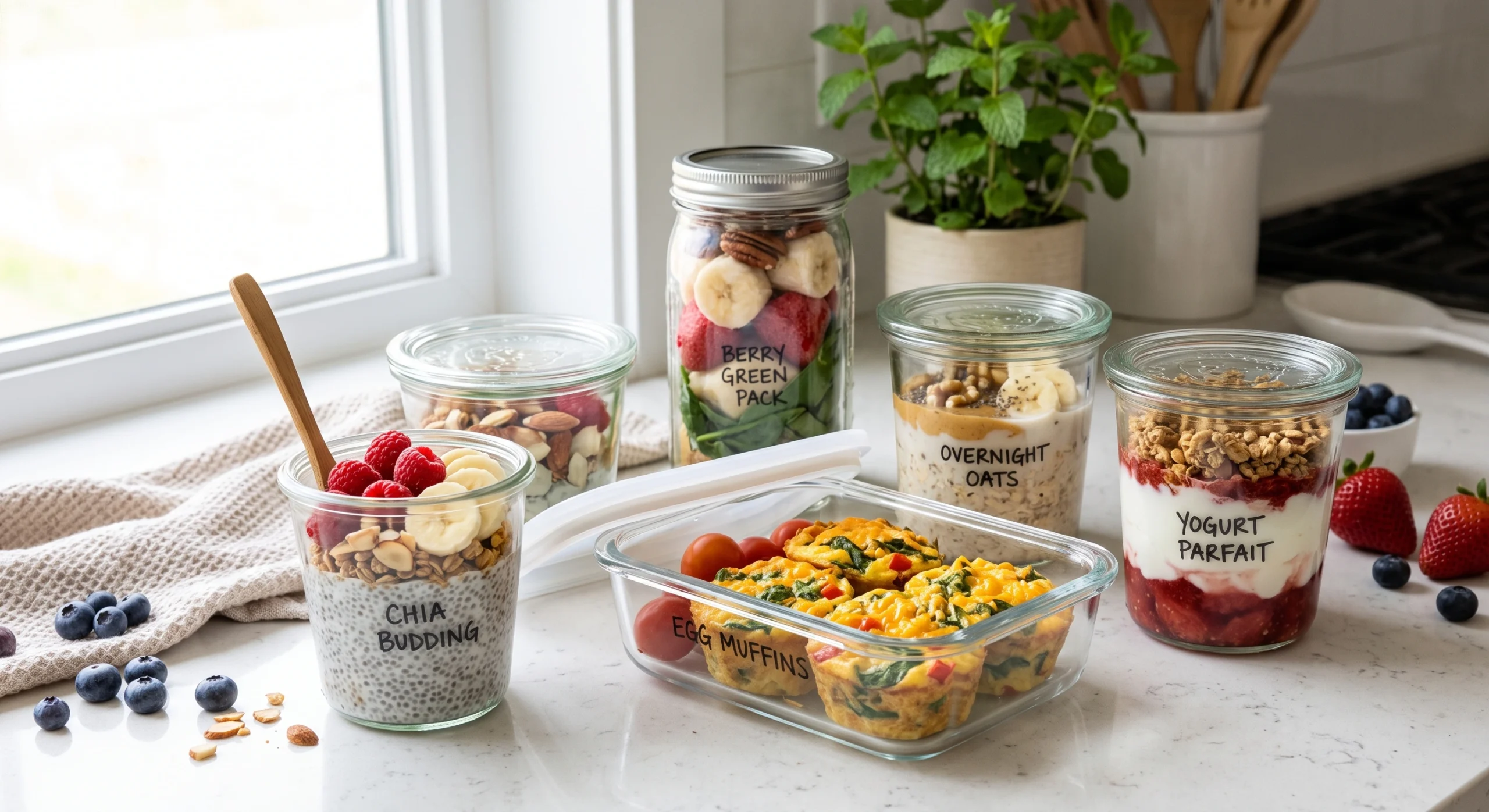
If you’re trying to eat in a more anti-inflammatory way, breakfast is one of the easiest meals to prep ahead — most of these ideas keep well for 3–5 days in the fridge, and a couple freeze. Below are seven make-ahead breakfasts built around fiber, plant-based fats, and whole foods, along with real storage windows, swaps, and a simple weekly routine.
What makes a breakfast “anti-inflammatory,” briefly
There’s no single food that flips inflammation on or off. What the research more consistently points to is a pattern: diets built around vegetables, fruit, whole grains, legumes, nuts, seeds, fish, and olive oil — similar to a Mediterranean-style way of eating — are associated with quieting chronic, low-grade inflammation, the kind linked to conditions like diabetes, cardiovascular disease, and cognitive decline. On the flip side, diets heavy in simple sugars, high-fructose corn syrup, and refined carbohydrates tend to work against that goal.
For breakfast specifically, that translates to a few practical habits:
- Lean on fiber — oats, chia, whole grains, vegetables, and fruit instead of refined flour and added sugar.
- Include a plant or fish source of healthy fat — walnuts, chia, flax, olive oil, or salmon.
- Add color — berries contain anthocyanins, the pigments behind their red and purple color, which have an anti-inflammatory effect on cells and are linked to lower risk of heart disease, cognitive decline, and diabetes.
- Go easy on ultra-processed, high-sugar options — pastries, sweetened cereals, and flavored coffee drinks are the breakfast items most at odds with this pattern.
None of this means a single “clean” breakfast undoes an otherwise inflammatory diet, and none of it replaces medical treatment for an inflammatory condition. It’s simply a useful frame for choosing what to prep.
Meal-prep basics: storage, containers, and safety
A few ground rules apply to everything below:
- Cool food before sealing containers. Letting hot food sit covered traps steam and speeds up spoilage.
- Use airtight glass or BPA-free plastic containers. Glass reheats more evenly in the microwave.
- Label with a prep date. It’s easy to lose track of which jar is day 2 versus day 5.
- Refrigerate promptly and follow the specific storage windows noted for each recipe below — they vary by ingredient (egg-based dishes, for example, are more time-sensitive than chia pudding).
- When in doubt, smell and look before eating. If a food shows visible mold, an off smell, or a slimy texture, discard it rather than reheating it.
7 Anti-Inflammatory Breakfasts You Can Prep Ahead
1. Chia Pudding with Berries and Walnuts
Chia seeds swell in liquid overnight, creating a pudding-like texture without any cooking. Chia is one of the healthy fats and fiber-rich foods commonly included in anti-inflammatory eating patterns, and it’s a plant source of omega-3 ALA (a different, generally less potent form than the EPA/DHA found in fatty fish — see the note in Sources below).
What you need (per jar): 3 tablespoons chia seeds, 1 cup milk of choice, a small handful of berries, a few chopped walnuts, and a light drizzle of honey or maple syrup if you want it sweeter.
How to prep: Whisk chia seeds into the milk, split into 4–5 jars, refrigerate for at least 4 hours (overnight is easiest), then top with berries and walnuts just before eating so the nuts stay crunchy.
Storage: Keeps well for up to 5 days in the fridge. Add toppings fresh each morning rather than in advance.
Swaps: Any milk works, including unsweetened plant milk. Swap walnuts for pumpkin seeds if you prefer, or use frozen berries thawed overnight in the fridge.
2. Greek Yogurt and Berry Parfait Jars
A layered parfait keeps the crunchy elements separate from the yogurt, so it doesn’t turn soggy.
What you need (per jar): 3/4 cup plain Greek yogurt, 1/3 cup mixed berries, 2 tablespoons rolled oats, a spoonful of ground flaxseed, and a few almonds.
How to prep: Layer yogurt, berries, and the oat-flax-almond mix in a jar. Repeat for a second layer if the jar is tall enough.
Storage: Best within 3–4 days. The oats will soften slightly over time but stay pleasant; if you prefer more crunch, store the dry mix separately and add it the morning you eat it.
Swaps: Use plain kefir or a plant-based yogurt if you avoid dairy. Choose unsweetened yogurt and let the fruit provide the sweetness.
3. Veggie and Egg Muffin Cups
These are essentially a frittata baked in a muffin tin, which makes portioning and reheating simple.
What you need (for 12 muffin cups): 8–10 eggs, a splash of milk, and 2–3 cups chopped vegetables — spinach, bell pepper, mushrooms, and onion all work well.
How to prep: Whisk eggs with milk and a pinch of salt and pepper, stir in the sautéed or raw chopped vegetables, pour into a greased or lined muffin tin, and bake at 350°F (175°C) for about 18–20 minutes, until set in the center.
Storage: Refrigerate up to 4 days. Reheat in the microwave in 20–30 second bursts, or freeze for up to 2 months and thaw overnight in the fridge before reheating.
Swaps: Add cooked chicken or turkey sausage for more protein, or leave out the egg yolks partially if you prefer a lighter version.
4. Turmeric-Spiced Baked Oatmeal Cups
Baked oatmeal turns easily into a grab-and-go muffin shape, and a small amount of turmeric and black pepper adds color and flavor. Keep expectations realistic here: turmeric is commonly listed among anti-inflammatory spices, but a pinch in a baked good is a flavor and color addition, not a therapeutic dose — see the evidence note in the FAQ.
What you need (for about 9–10 cups): 2 cups rolled oats, 2 eggs (or a flax egg for a vegan version), 1 1/2 cups milk of choice, 1 mashed ripe banana, 1/2 teaspoon turmeric, a pinch of black pepper, and cinnamon to taste.
How to prep: Mix all ingredients, pour into a greased muffin tin, and bake at 350°F (175°C) for 20–22 minutes.
Storage: Refrigerate up to 5 days, or freeze up to 2 months. Reheat from frozen in the microwave for about 60–90 seconds.
Swaps: Stir in chopped walnuts or pumpkin seeds for extra texture and healthy fat.
5. Savory Quinoa Breakfast Bowls
If you’d rather skip sweet breakfasts altogether, a savory grain bowl is an easy make-ahead option.
What you need (per bowl): 3/4 cup cooked quinoa, a handful of sautéed greens (spinach or kale), a soft- or hard-boiled egg, a few slices of avocado, and a drizzle of olive oil and lemon juice.
How to prep: Cook a batch of quinoa and greens at the start of the week. Store components separately and assemble bowls as needed, adding the egg and avocado fresh.
Storage: Cooked quinoa and greens keep for 4–5 days refrigerated. Add avocado just before eating, since it browns quickly.
Swaps: Brown rice or farro can replace quinoa. Swap the egg for baked tofu for a plant-based version.
6. Freezer Smoothie Packs
Pre-portioned smoothie bags mean you skip the morning chopping and just dump-and-blend.
What you need (per bag): A handful of spinach, 1/2 cup frozen berries, 1/2 a frozen banana, a tablespoon of chia or ground flaxseed, and optionally a scoop of nut butter.
How to prep: Portion each ingredient into a freezer bag or container, lay flat to freeze, and blend with milk or water in the morning.
Storage: Freezer packs keep well for up to 3 months.
Swaps: Swap spinach for kale, or add a small piece of ginger for flavor.
7. Sweet Potato and Spinach Hash Cups
A vegetable-forward alternative to the egg muffins above, built around roasted sweet potato.
What you need (for 12 cups): 2 cups diced, roasted sweet potato, 2 cups chopped spinach, 6 eggs, and your preferred spices (smoked paprika and garlic powder work well).
How to prep: Combine roasted sweet potato and wilted spinach, whisk in the eggs, pour into a muffin tin, and bake at 375°F (190°C) for about 18 minutes.
Storage: Refrigerate up to 4 days, or freeze up to 2 months.
Swaps: Butternut squash can replace sweet potato. Add black beans for extra fiber and protein.
Nutrition information for each recipe should be calculated based on the exact brands and quantities used before publishing exact figures.
A Simple Weekly Meal-Prep Routine
You don’t need to make all seven at once. A realistic starting routine looks like:
- Pick two recipes — one that keeps 4–5 days (like chia pudding or oatmeal cups) and one freezer option (like smoothie packs or muffin cups).
- Set aside about 45–60 minutes on a weekend day to prep both.
- Portion into single-serving containers immediately, rather than storing in one large batch and portioning each morning.
- Rotate which two recipes you make each week so breakfast doesn’t get repetitive.
Ingredient Swaps and Common Mistakes
- Adding crunchy toppings before storage. Nuts, seeds, and granola go soft when stored wet. Add them just before eating.
- Over-sweetening. It’s easy to add honey or maple syrup out of habit; try starting with less than you think you need, since the fruit already contributes sweetness.
- Skipping protein. A breakfast of only fruit and refined carbs tends to be less filling. Most of the ideas above include eggs, yogurt, or nuts for that reason.
- Freezing egg dishes in one large block. Portion before freezing so you can reheat one serving at a time.
Who Should Be Extra Thoughtful About These Choices
- People taking blood thinners: if you’re increasing turmeric or omega-3-rich foods substantially, mention it to your healthcare provider, since some herbs and high-dose supplements can interact with blood-thinning medication. Ordinary food amounts in these recipes are unlikely to be a concern, but check with your provider if you’re unsure.
- People with egg or tree nut allergies: several recipes above use eggs, walnuts, or almonds; swaps are noted for each.
- Pregnant readers: stick to pasteurized dairy and fully cooked eggs, and avoid raw batter.
- Anyone managing a diagnosed inflammatory condition: these ideas are general eating suggestions, not a treatment plan. Food changes are not a substitute for medical care.
FAQ
Can I meal prep breakfast for the entire week at once? For most of these, 4–5 days is a safer refrigerator window than a full 7 days. Freezer options (smoothie packs, muffin cups, oatmeal cups) can be made further ahead.
Is turmeric in a recipe actually going to reduce inflammation? A pinch of turmeric in baked oatmeal adds flavor and color. Turmeric is often listed among anti-inflammatory spices, but evidence for a meaningful effect from typical food-level amounts is limited; most research uses concentrated curcumin supplements, which is a different exposure than a spice pinch in a recipe.
Do I need to buy special “anti-inflammatory” products? No specific packaged product is required. The overall approach is about the pattern of foods you eat regularly, not a single ingredient or supplement.
Can I substitute the dairy in these recipes? Yes — unsweetened plant milk or yogurt works in any of the recipes above; check that any plant yogurt has a similar protein content if you’re using it for satiety.
How do I know if my meal-prepped breakfast has gone bad? Trust your senses: an off smell, visible mold, or slimy texture means it’s time to discard it, even if it’s within the general storage window listed above.
Sources & Further Reading
- Fighting inflammation with food — Harvard Health Publishing. Supports the claims about Mediterranean-style eating patterns, berries/anthocyanins, and plant-based fats. https://www.health.harvard.edu/nutrition/fighting-inflammation-with-food
- Foods you should eat to help fight inflammation — Harvard Health Publishing. Supports the claim that refined carbs/added sugar work against an anti-inflammatory pattern while fruits, vegetables, nuts, fish, and healthy oils support it. https://www.health.harvard.edu/nutrition/foods-you-should-eat-to-help-fight-inflammation
- Anti-inflammatory diet 101 — background overview referencing commonly included foods (used only for general food-list context, not as the primary evidentiary source). https://healthline.com/nutrition/anti-inflammatory-diet-101
- [SOURCE NEEDED — verify before publishing]: a direct NIH Office of Dietary Supplements or peer-reviewed citation specifically on ALA omega-3s from chia/walnuts versus EPA/DHA from fish, to support the nuance given in recipe #1 and the turmeric FAQ answer.
Medical disclaimer
This article is for educational purposes only and is not a substitute for individualized medical advice. If you have a medical condition, take medication, or have concerns about a specific food or supplement, speak with a qualified healthcare professional.
A tidy pantry makes this routine easier — keep your jars, oats, and toppings in order with these pantry organization ideas.
1 Comment