
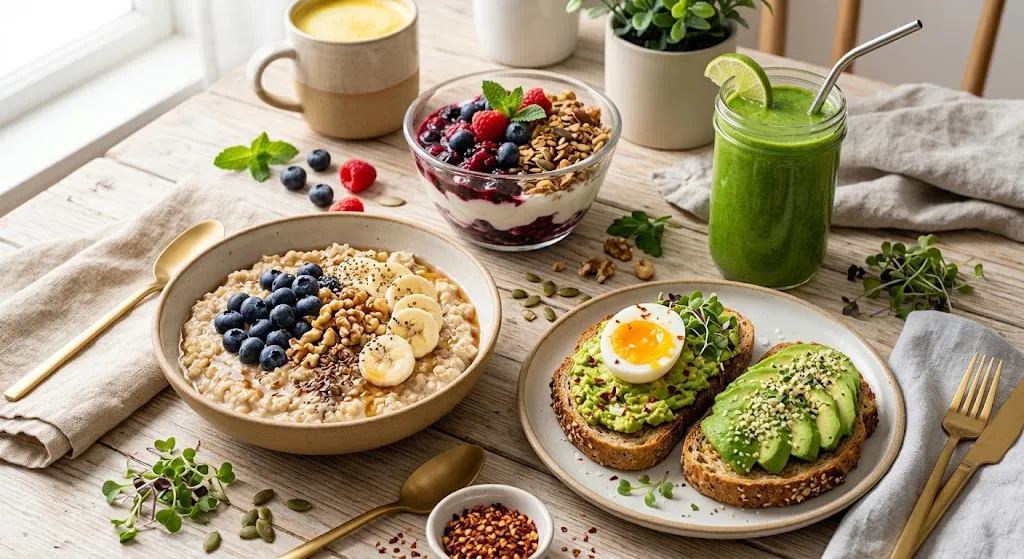
Most breakfasts are built around refined carbs — cereal, pastries, white toast — that offer almost no fiber and little else to slow digestion. That gap matters more than it seems: fiber is one of the more direct levers you have over gut bacteria and inflammation, and skipping it at breakfast means skipping it for a third of the day. Below are 10 high-fiber, anti-inflammatory breakfasts, plus the fiber science behind them and how to add more without stomach upset. If you want more general, faster options beyond fiber specifically, see our easy anti-inflammatory breakfast ideas.
Why fiber and inflammation are connected
Fiber does more than move things along. When gut bacteria ferment fiber, they produce short-chain fatty acids, compounds that have been studied for their role in regulating immune and inflammatory activity in the gut. A fiber-poor diet gives those bacteria less to work with, which some research links to a less favorable gut environment over time.
There are two types worth knowing:
- Soluble fiber (oats, chia, flax, beans, fruit) dissolves in water and forms a gel. It’s the type most associated with steadier blood sugar and cholesterol, and it’s a favorite food source for beneficial gut bacteria.
- Insoluble fiber (whole grains, vegetable skins, nuts, seeds) adds bulk and supports regularity, helping move waste — and inflammatory byproducts — through the gut more efficiently.
A breakfast that includes both types, rather than relying on just oats or just fruit, gives gut bacteria a wider range of material to ferment. Some observational research has also associated regularly skipping breakfast with higher levels of C-reactive protein, a marker linked to inflammation — though this doesn’t prove skipping breakfast causes inflammation, and individual results vary. Pairing fiber with plant compounds found in olive oil, leafy greens, berries, and fatty fish rounds out the pattern most anti-inflammatory eating research points toward.
None of this means one breakfast changes anything by itself. It’s the pattern over weeks and months that matters, not any single morning — see our broader anti-inflammatory breakfast for gut health guide if you want to focus on the gut side specifically.
How much fiber should a breakfast have?
General dietary guidelines put total daily fiber needs at roughly 25 to 38 grams, depending on age and sex. Spread evenly across three meals, that works out to somewhere around 8 to 12 grams per meal — a reasonable target for breakfast, though there’s no strict cutoff you need to hit every day.
A few practical notes:
- Increase fiber gradually. Jumping from a low-fiber diet to a high-fiber one in a single week is the most common reason people feel bloated or gassy. Add one higher-fiber breakfast a few times a week before making it a daily habit.
- Drink more water as fiber goes up. Fiber absorbs water as it moves through the gut; without enough fluid, the same foods that normally support regularity can contribute to constipation instead.
- Pay attention to your own response. People with IBS, Crohn’s disease, or ulcerative colitis sometimes tolerate cooked, peeled, or blended forms of fiber (like smoothies or well-cooked oats) better than raw vegetables or fruit skins, especially during flares.
10 high-fiber anti-inflammatory breakfast ideas
These ten combine soluble and insoluble fiber with the fats, protein, and plant compounds most anti-inflammatory eating patterns emphasize. Swap ingredients freely based on what’s in your kitchen.
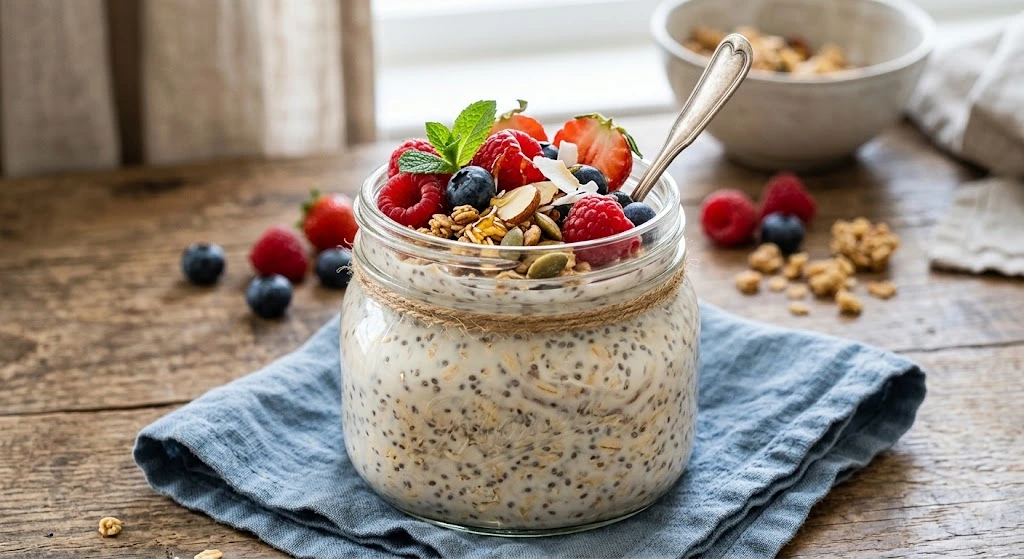
1. Overnight chia and oat jar
Combine rolled oats, chia seeds, and your milk of choice in a jar, then refrigerate overnight. Oats and chia both contribute soluble fiber, and the overnight soak makes the texture creamy without any cooking. Top with berries and a spoon of nut butter in the morning. For a chia-forward version with exact measurements, see our anti-inflammatory chia pudding recipe.
2. Berry walnut oatmeal
Cook oats with water or milk, then stir in ground flaxseed once off the heat. Top with mixed berries and chopped walnuts. Oats provide beta-glucan, a soluble fiber studied for its role in blood sugar and cholesterol regulation, while walnuts add alpha-linolenic acid, a plant-based omega-3.
3. Savory lentil and egg bowl
Warm cooked lentils in a pan with a drizzle of olive oil, then top with a fried or poached egg and a handful of sautéed greens. Lentils are one of the higher-fiber legumes, and pairing them with egg protein makes this bowl filling enough to skip the mid-morning snack.
4. Avocado toast with two eggs
Mash avocado onto whole-grain or sourdough toast, then top with two eggs cooked any style. Whole-grain bread contributes insoluble fiber that white bread lacks, and avocado adds both fiber and monounsaturated fat, the same fat category found in olive oil.
5. Greek yogurt parfait with berries and seeds
Layer plain Greek yogurt with mixed berries, hemp seeds, and pumpkin seeds. Plain yogurt supplies probiotics that support the gut lining, and the seeds add fiber and healthy fats without needing any cooking. Choose unsweetened yogurt to avoid the added sugar found in flavored varieties.
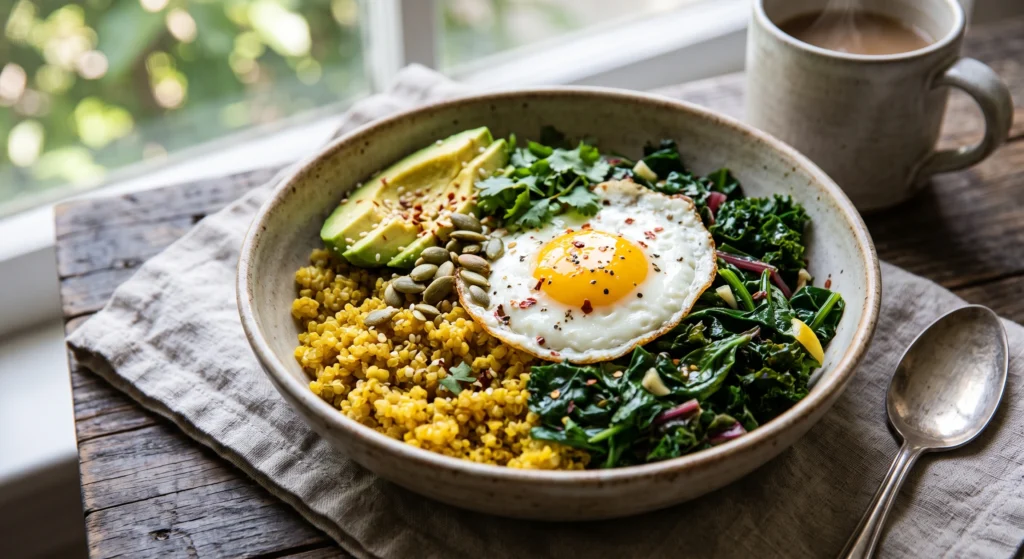
6. Turmeric quinoa breakfast bowl
Toss cooked quinoa with a pinch of turmeric, top with sautéed greens and a fried egg. Quinoa is a complete plant protein and a source of fiber that holds up better than most grains as leftovers, making this one easy to batch on a Sunday.
7. Chickpea and veggie breakfast fritters
Mash chickpeas and mix with grated zucchini, egg, and a spice of your choice, then pan-fry in olive oil until golden. Chickpeas are a fiber-dense legume, and the vegetables add another layer of fiber and antioxidants. Serve with a plain yogurt dipping sauce. For more ways to use the zucchini, our gut-friendly zucchini recipes roundup has other ideas beyond breakfast.
8. Green smoothie with chia and almond butter
Blend spinach, a banana, chia seeds, almond butter, and your milk of choice. This is the fastest option on the list and still delivers fiber from the greens, banana, and chia, plus plant-based omega-3s from the chia and almond butter. Our gut healing smoothie recipes has four more blends built the same way.
9. Sweet potato and black bean hash
Roast or pan-cook cubed sweet potato with black beans, bell pepper, and onion, then top with a fried egg. Sweet potatoes bring beta-carotene and fiber in place of the refined starches found in a typical hash brown, and black beans add another fiber source alongside plant protein.
10. High-fiber breakfast muffins
Batch a tray of oat and flax muffins with grated carrot or zucchini folded in, then freeze individually for grab-and-go mornings. Made once, they cover several breakfasts without needing a blender or stove on a busy weekday. If make-ahead mornings are the goal, our anti-inflammatory breakfast meal-prep guide covers exact storage windows for freezing and reheating.
Quick comparison
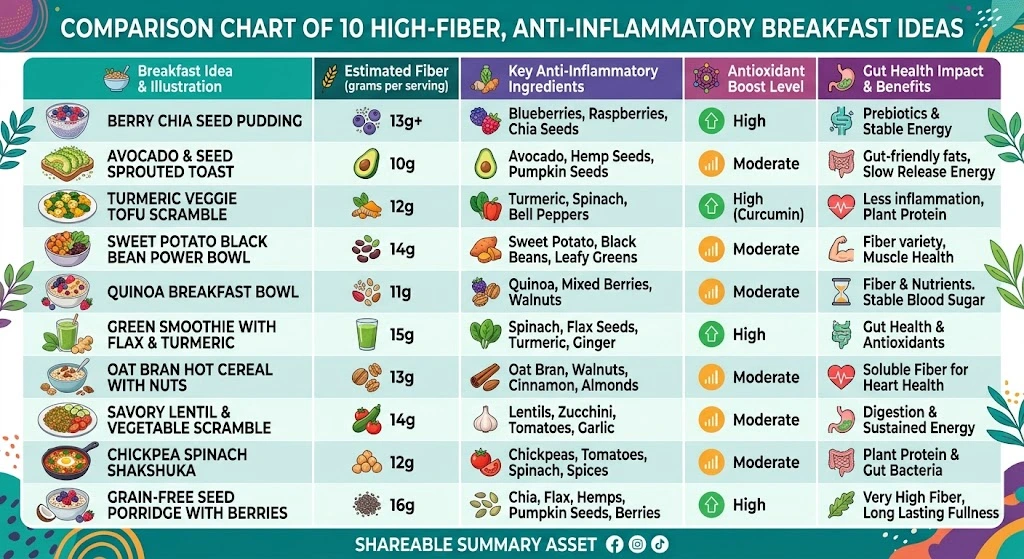
| Idea | Prep time | Make-ahead? | Fiber sources |
|---|---|---|---|
| Overnight chia and oat jar | 5 min (+ overnight) | Yes | Oats, chia seeds, berries |
| Berry walnut oatmeal | 10 min | Partial (oats can be prepped) | Oats, flaxseed, walnuts, berries |
| Savory lentil and egg bowl | 10 min | Lentils can be batch-cooked | Lentils, greens |
| Avocado toast with two eggs | 8 min | No | Whole grain bread, avocado |
| Greek yogurt parfait | 5 min | No | Berries, hemp seeds, pumpkin seeds |
| Turmeric quinoa bowl | 10 min | Quinoa can be batch-cooked | Quinoa, greens |
| Chickpea veggie fritters | 20 min | Yes, freezes well | Chickpeas, zucchini |
| Green smoothie | 5 min | No | Spinach, chia, banana |
| Sweet potato black bean hash | 20–25 min | Yes, reheats well | Sweet potato, black beans |
| High-fiber breakfast muffins | 30 min (batch) | Yes, freezes well | Oats, flaxseed, carrot or zucchini |
Substitutions for common dietary needs
- Gluten-free: Use certified gluten-free oats, quinoa, or corn tortillas in place of wheat bread or standard oats, which can carry cross-contamination. See our gluten-free morning swaps guide for more options.
- Dairy-free: Swap Greek yogurt for a plain, unsweetened coconut or soy yogurt, and use any plant-based milk in the oat and smoothie recipes.
- Vegan: Replace eggs with a flax egg (1 tablespoon ground flax plus 3 tablespoons water) in the fritters and muffins, and use plant-based yogurt in the parfait.
- Lower-FODMAP: Keep portions of chickpeas, lentils, and black beans smaller, favor firm tofu or eggs for protein, and choose blueberries or strawberries over higher-FODMAP fruits like apples or pears.
Frequently asked questions
Can I eat a high-fiber breakfast every day? For most people, yes — but the increase should happen gradually, with enough water intake, to avoid bloating or discomfort. People with a diagnosed digestive condition should check with a healthcare provider or dietitian before making a significant change.
Does a high-fiber breakfast replace medication for inflammation-related conditions? No. Food choices are not a substitute for prescribed medical treatment. Anti-inflammatory eating patterns are a supportive habit, not a treatment, and any changes to medication should go through a healthcare provider.
What’s the fastest high-fiber anti-inflammatory breakfast on this list? The green smoothie and the Greek yogurt parfait both take about 5 minutes with no cooking, making them the two fastest options here.
Is oatmeal the best high-fiber anti-inflammatory breakfast? Oatmeal is a strong option because of its soluble fiber content, but it’s not the only one. Rotating between legumes, whole grains, seeds, and vegetables gives gut bacteria a wider variety of fiber to work with than relying on oats alone.
A note on special populations
Pregnant or breastfeeding readers, older adults, and anyone managing a chronic digestive condition should introduce new high-fiber foods gradually and mention any significant dietary changes to their healthcare provider, particularly if taking medication that could interact with a higher fiber or supplement intake.
This article is for informational purposes only and is not a substitute for personalized medical or nutritional advice. Speak with a doctor or registered dietitian before making significant changes to your diet, especially if you have a digestive condition or take prescription medication.
Related Soothe & Plate content
- Anti-Inflammatory Breakfast Meal Prep: 7 Easy Ideas
- The Ultimate Anti-Inflammatory Chia Pudding Recipe (5-Min)
- Anti-Inflammatory Breakfast for Gut Health: 7 Soothing Morning Recipes
- Gut Healing Smoothies: 5 Powerful Anti-Inflammatory Recipes for Bloating Relief
- 5 Gluten Free Swaps for Morning Joint Stiffness
- 7 Effortless Zucchini Recipes Healthy: Gut-Friendly Dishes
- Easy Anti-Inflammatory Breakfast Ideas: 10 Best Recipes for Joint Pain — a faster, lower-fiber-focused companion piece
- The Ultimate Anti-Inflammatory Diet Plan for Beginners — good pillar-page link if Soothe & Plate wants this article to sit under a topic cluster
Sources & Further Reading
- Harvard Health Publishing — “Foods That Fight Inflammation” (Harvard Medical School). Supports the list of anti-inflammatory staples (olive oil, leafy greens, berries, fatty fish) and the note on refined carbs. https://www.health.harvard.edu/healthy-aging-and-longevity/foods-that-fight-inflammation
- PMC / National Library of Medicine — review on dietary fiber and short-chain fatty acids. Supports the mechanism connecting fiber fermentation, gut bacteria, and inflammatory regulation. https://pmc.ncbi.nlm.nih.gov/articles/PMC4863265/
- PMC / National Library of Medicine — study on breakfast skipping and C-reactive protein. Supports the association (not causation) between skipping breakfast and a higher inflammation marker. https://pmc.ncbi.nlm.nih.gov/articles/PMC9884755/
What is the best high-fiber anti-inflammatory breakfast?
Oatmeal with berries and flaxseed, or chia pudding, are excellent choices; fiber supports gut health, which is linked to inflammation balance. Try our anti-inflammatory chia pudding recipe or browse easy anti-inflammatory breakfast ideas for more options.
Is oatmeal anti-inflammatory?
Oats contain beta-glucan fiber and antioxidants; they are generally considered part of anti-inflammatory eating patterns. For mornings with stiffness, see our anti-inflammatory breakfasts for morning stiffness.
October 2026 Refresh: What Top Guides Cover That This Post Now Adds
Updated October 17, 2026. This refresh adds the details readers most often ask for: estimated fiber grams for each of the 10 ideas, a short list of 7 foods that fight inflammation, what to drink first thing in the morning, how to add protein so breakfast keeps you full, breakfasts to limit, a simple 7-day rotation with a shopping list, and expanded safety notes. The original 10 ideas are unchanged.
Quick answer: A high-fiber, anti-inflammatory breakfast pairs fiber-rich plants (oats, chia, lentils, beans, berries, and greens) with healthy fats and some protein. The highest-fiber options below are the savory lentil and egg bowl, the sweet potato and black bean hash, and the overnight chia and oat jar.
How Much Fiber Is in Each Idea? Estimated Fiber per Serving
These figures are estimates based on typical portions and common nutrition data. They are not lab-tested values, and your totals will vary with portion sizes and brands. Use them to compare ideas, not as exact counts.
- Overnight chia and oat jar: about 10–12 g
- Berry walnut oatmeal: about 8–10 g
- Savory lentil and egg bowl: about 10–12 g
- Avocado toast with two eggs: about 7–9 g
- Greek yogurt parfait with berries and seeds: about 5–7 g
- Turmeric quinoa breakfast bowl: about 6–8 g
- Chickpea and veggie breakfast fritters: about 8–10 g
- Green smoothie with chia and almond butter: about 6–8 g
- Sweet potato and black bean hash: about 10–12 g
- High-fiber breakfast muffins (2 muffins): about 6–8 g
The highest-fiber breakfasts on this list are the savory lentil and egg bowl, the sweet potato and black bean hash, and the overnight chia and oat jar. If you are working toward the Mayo Clinic general guidance of roughly 21–38 grams of fiber per day (depending on age and sex), one of these breakfasts may cover about a third of your day. See the Mayo Clinic guide to dietary fiber for the full ranges.
7 Foods That Fight Inflammation — Your Breakfast Short List
Harvard Health Publishing lists several of these staples among foods that may help fight inflammation. Keep this short list in mind when you build a breakfast:
- Berries — blueberries, strawberries, and raspberries add fiber and plant compounds with antioxidant activity.
- Leafy greens — spinach and kale blend easily into smoothies or sit well beside eggs.
- Fatty fish — salmon, sardines, and mackerel are rich in omega-3 fats; they fit lunch or dinner better than most breakfasts, but they anchor the overall pattern.
- Olive oil — a drizzle over lentils, eggs, or hash adds monounsaturated fat.
- Nuts and seeds — walnuts, chia, flax, hemp, and pumpkin seeds add fiber, healthy fats, and crunch.
- Whole grains and oats — oats, quinoa, and whole-grain bread supply soluble and insoluble fiber.
- Turmeric and ginger — traditionally used in cooking; a pinch of turmeric in the quinoa bowl is a gentle way to include it.
What to Drink First Thing in the Morning
- Water first. A glass of water after waking may help with hydration and is a gentle start before any other drink.
- Green tea — unsweetened green tea may offer plant compounds with antioxidant activity, with modest caffeine.
- Turmeric tea — a warm, caffeine-free option; see our turmeric tea recipe for a simple 10-minute version.
- Clove tea — another caffeine-free herbal option; see our clove tea benefits guide for brewing and safety notes.
- Limit sugary drinks. Sweetened juices and sugary coffee drinks may add sugar without fiber, which may work against your goals.
If you drink coffee, keeping it simple — black or with a splash of milk — avoids the sugar load of flavored drinks. If caffeine bothers you, an herbal tea may be a gentler morning choice.
Add Protein to Stay Full
Pairing fiber with protein may help you feel full longer and may support steadier blood sugar than a carb-only breakfast. The ideas above already use several protein sources: eggs (lentil bowl, avocado toast, quinoa bowl), plain Greek yogurt (parfait), and lentils or beans (lentil bowl, hash, fritters). If your breakfast leans heavily on fruit or grains, adding an egg, a spoonful of nut butter, or a serving of yogurt may help it last until lunch.
Breakfasts to Limit When Inflammation Is a Concern
No single food causes inflammation on its own, but a pattern heavy in the following may work against your goals:
- Processed meats such as bacon and sausage
- Pastries, danishes, and other refined baked goods
- Sugary cereals and sweetened granola
- Sweetened drinks and juices
- Heavily fried breakfast foods
These foods tend to be low in fiber and high in added sugar, refined flour, or processed fats. Swapping even one of them for an option above — for example, oatmeal instead of a pastry — is a gentle step in a better direction.
A Simple 7-Day Rotation + Shopping List
- Monday: Overnight chia and oat jar
- Tuesday: Savory lentil and egg bowl
- Wednesday: Berry walnut oatmeal
- Thursday: Greek yogurt parfait with berries and seeds
- Friday: Sweet potato and black bean hash
- Saturday: Turmeric quinoa breakfast bowl
- Sunday: High-fiber breakfast muffins, or a green smoothie if you want something lighter
Shopping list: rolled oats, chia seeds, ground flaxseed, quinoa, lentils, chickpeas, black beans, sweet potatoes, mixed berries, bananas, spinach, eggs, plain Greek yogurt, walnuts, pumpkin seeds, avocado, whole-grain bread, olive oil, and turmeric. For make-ahead planning, see our anti-inflammatory breakfast meal-prep guide and the anti-inflammatory chia pudding recipe. For the gut-health angle, see our anti-inflammatory breakfast for gut health guide.
Safety: Turmeric, Fiber, and Who Should Check First
Turmeric. Culinary amounts of turmeric in food are generally considered safe for most people. The NCCIH notes that oral turmeric may cause stomach upset, nausea, or diarrhea in some people, that liver damage has been reported with high-bioavailability curcumin products, and that turmeric supplements during pregnancy may be unsafe. If you take medicines, talk with your clinician before using turmeric supplements. See the NCCIH page on turmeric.
Fiber. Increase fiber gradually and drink plenty of water. The Mayo Clinic notes that fiber may need to be limited after certain surgeries, during Crohn disease or ulcerative colitis flares, with narrowed intestines, during radiation therapy, with gastroparesis, or before a colonoscopy. If any of these apply, check with your clinician first.
Blood sugar and medicines. If you take diabetes medicines, a higher-fiber breakfast may affect blood sugar. Talk with your clinician about how changes in fiber intake may fit with your medicines.
This post is for informational purposes only and is not a substitute for personalized medical advice.
More FAQs (Added in the October 2026 Refresh)
What is the best anti-inflammatory breakfast to eat?
There is no single best choice. A strong option pairs fiber (oats, chia, lentils, beans, berries), healthy fat (olive oil, nuts, seeds, avocado), and some protein (eggs, yogurt, lentils). The savory lentil and egg bowl and the overnight chia and oat jar are two of the highest-fiber examples on this list.
What 7 foods fight inflammation?
Berries, leafy greens, fatty fish, olive oil, nuts and seeds, whole grains and oats, and turmeric and ginger are among the foods most often listed in anti-inflammatory eating patterns. See the short list above for how each one fits breakfast.
What should I drink first thing in the morning to reduce inflammation?
Start with water. After that, unsweetened green tea or a caffeine-free herbal tea such as turmeric tea or clove tea may be gentle choices. No drink alone reduces inflammation; the overall eating pattern matters more.
What is the highest-fiber breakfast on this list?
The savory lentil and egg bowl, the sweet potato and black bean hash, and the overnight chia and oat jar each come in at an estimated 10–12 grams of fiber per serving, the highest of the 10 ideas.
Can a high-fiber breakfast help with weight loss?
Fiber-rich breakfasts may help you feel full longer, which may make it easier to avoid mid-morning snacking. Weight loss depends on overall eating patterns, activity, sleep, and health conditions — no single breakfast guarantees it.
Can I eat these breakfasts every day if I have IBS?
Many people with IBS tolerate cooked, peeled, or blended forms of fiber better than raw vegetables or fruit skins. Start with small portions, keep a simple symptom note, and check with your clinician or dietitian if symptoms persist.
Sources Added in the October 2026 Refresh
- Mayo Clinic — “Dietary fiber: Essential for a healthy diet” — https://www.mayoclinic.org/healthy-lifestyle/nutrition-and-healthy-eating/in-depth/fiber/art-20043983
- NCCIH — “Turmeric: Usefulness and Safety” — https://www.nccih.nih.gov/health/turmeric
The original sources (Harvard Health Publishing and the PMC reviews) remain in the Sources & Further Reading section above. Note: This post does not use a WP Recipe Maker card; it is a list of breakfast ideas, not a single recipe, so no recipe-card fix applies.
3 Comments