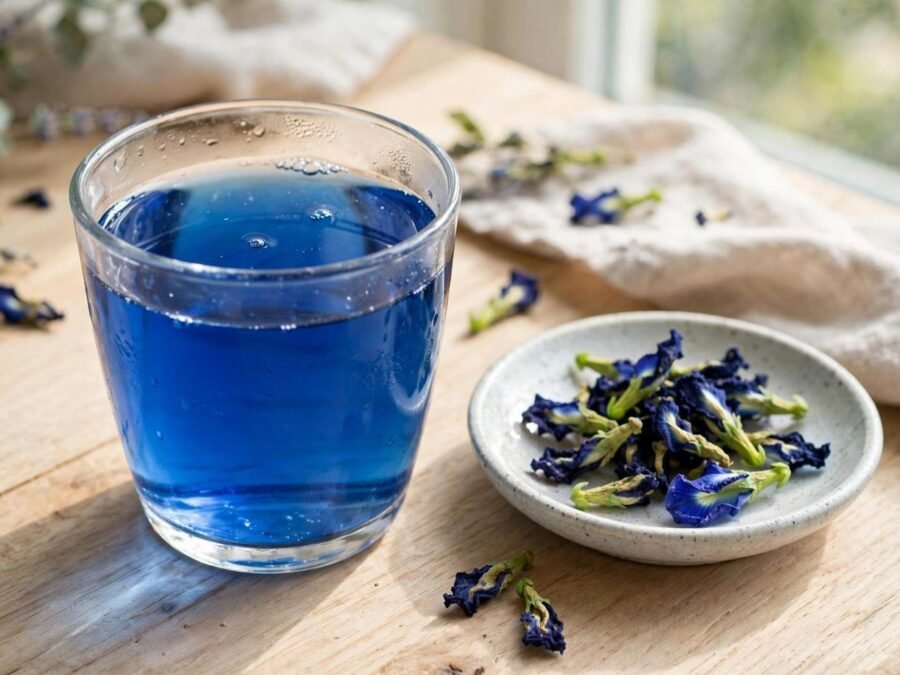
Few drinks are as fun to watch as they are to sip. Butterfly pea flower tea benefits have been talked about in traditional wellness circles for centuries, but this vivid blue brew earned its fame for something more playful: squeeze in a little lemon and it swirls from blue to violet right in your cup. It’s completely caffeine-free, so you can enjoy it at midnight as easily as at noon.
In this guide we’ll cover what blue tea is, why it changes color, what research actually says about butterfly pea flower tea benefits, and two easy ways to make it — including an iced lemonade. No wild promises — an honest look at a delightful herbal tea.
What Is Butterfly Pea Flower Tea?
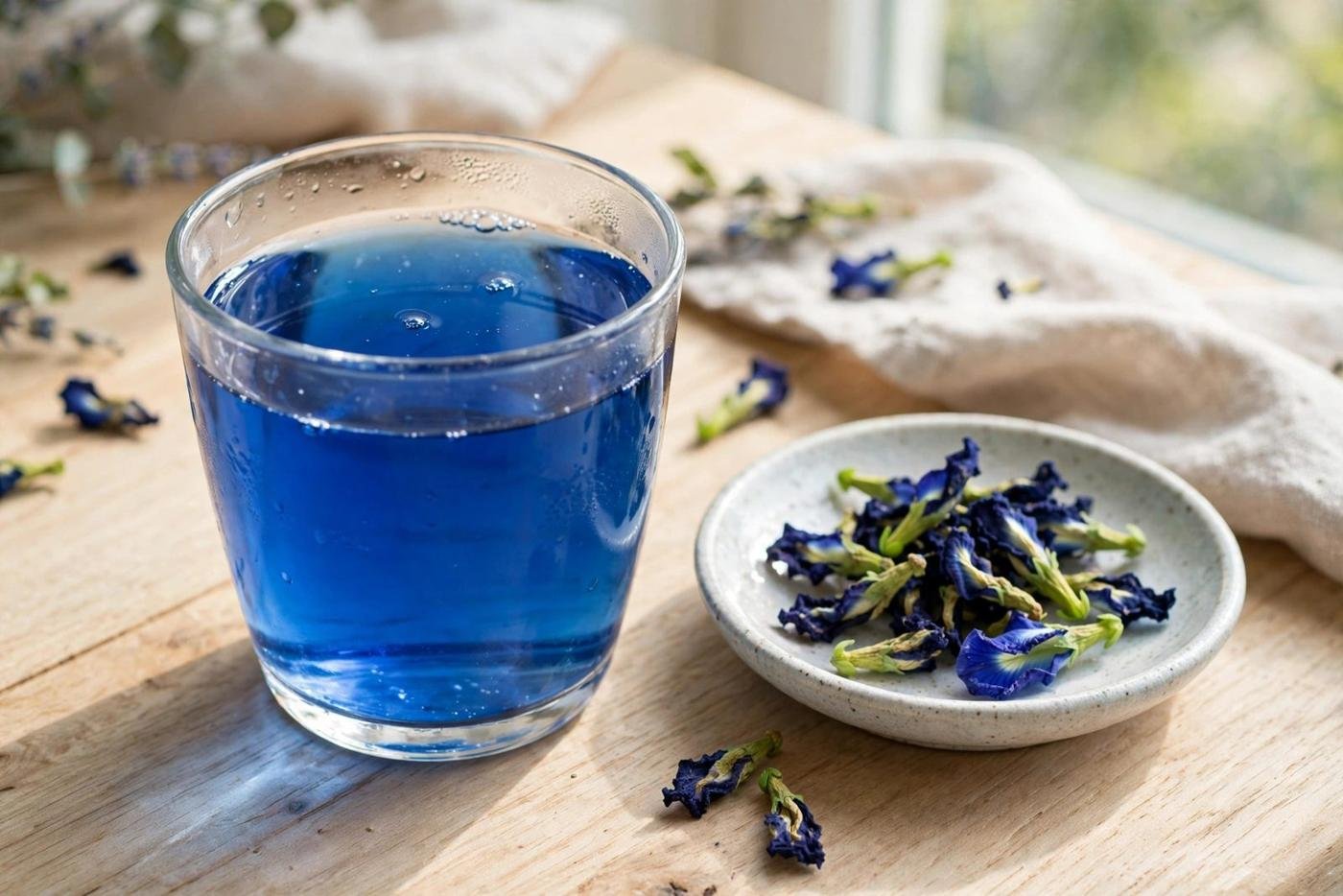
Butterfly pea flower tea — often called blue tea — is a caffeine-free herbal infusion made from the dried petals of Clitoria ternatea, a flowering plant native to South Asia. It doesn’t come from the Camellia sinensis plant that gives us green and black tea, which is why it contains no caffeine — much like our favorite chamomile tea for sleep.
The intense blue comes from anthocyanins, antioxidant pigments also found in blueberries and purple cabbage. In Ayurvedic tradition, butterfly pea (aparajita/shankhpushpi) has been used for centuries as a calming, mind-supporting herb — traditional use, not proven effect.
The Color-Changing Magic: Why Does Blue Tea Turn Purple?
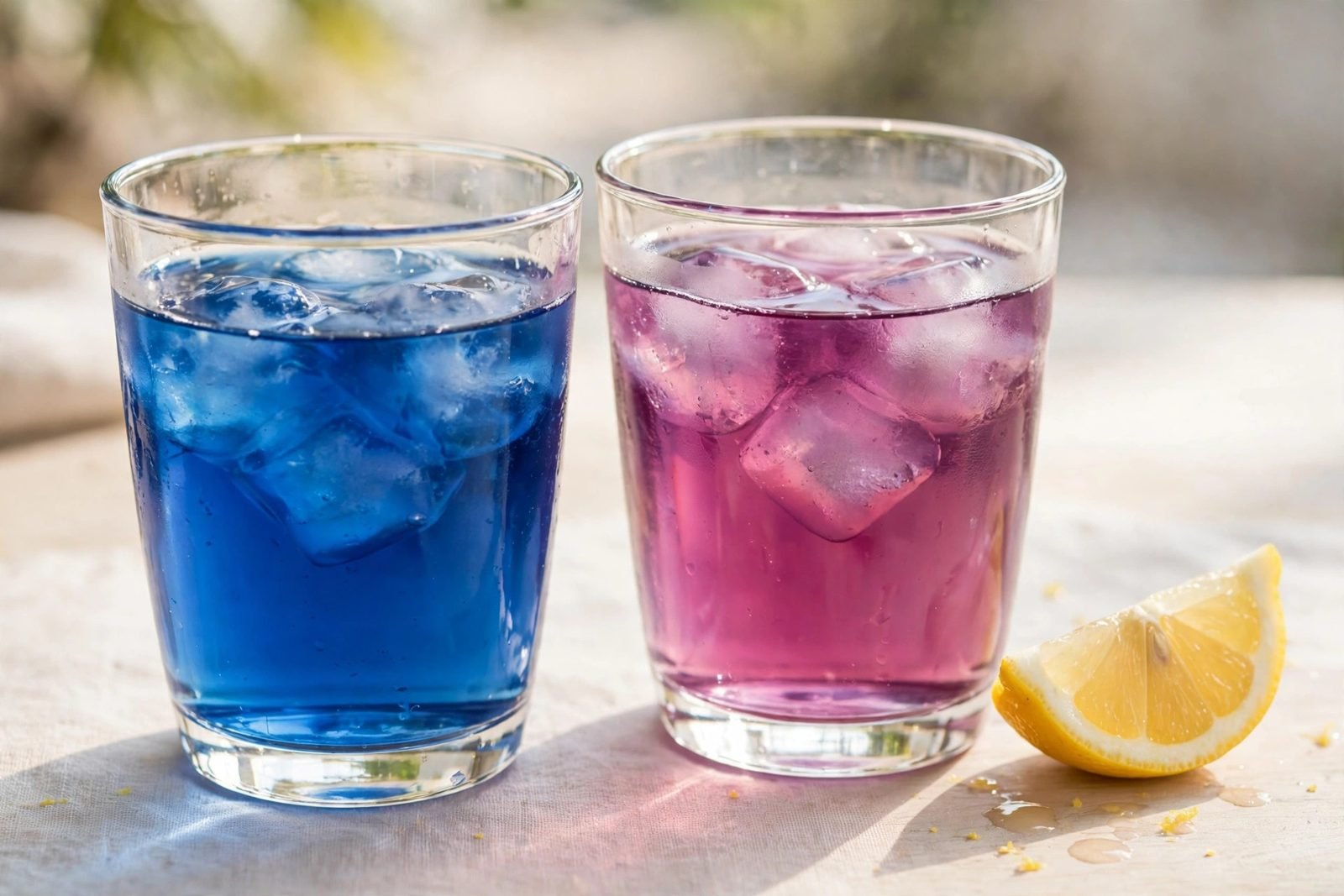
Brew the flowers and you get a brilliant cobalt blue. Add lemon or lime juice and it shifts to violet in seconds — a simple pH reaction, since anthocyanins change color as acidity rises. No food dye involved.
This is also why butterfly pea is used as a natural blue food colorant — an alternative to artificial dyes in rice, desserts, and viral color-changing café drinks. The science is the same every time: anthocyanins shifting with acidity.
What Does Blue Tea Taste Like?
Expect something mellow: butterfly pea tea tastes earthy and mild, with a slightly woody flavor. Most people dress it up with honey, mint, ginger, or lemongrass (pairing ideas in our lemongrass tea benefits guide). The lemon that triggers the color change adds a bright tang too — it’s one of the easiest herbal teas to love.
7 Gentle Butterfly Pea Flower Tea Benefits Worth Knowing
One honest note: most research uses concentrated extracts, not brewed tea, and human studies are limited. Think of these as gentle, plausible benefits — reasons to enjoy the tea, not medicine.
1. Rich in Antioxidant Anthocyanins
The star is delphinidin, the anthocyanin behind the deep blue color. Antioxidants help the body handle everyday oxidative stress, and a cup is a pleasant way to enjoy them — alongside a colorful diet like our anti-inflammatory breakfast ideas.
2. A Truly Caffeine-Free Evening Ritual
With zero caffeine, blue tea is a lovely swap for your evening cup when you want something warm without wrecking your sleep — try the wind-down ideas in our chamomile tea for sleep guide.
3. A Tradition of Calm and Focus
Butterfly pea has a long folk history as a calming, mind-supporting herb. Animal studies hint at possible memory effects, but no human studies confirm them. Still, the ritual counts: a warm, unhurried cup has its own reputation for helping people unwind, much like tulsi tea.

4. Possible Blood-Sugar Support (Early Evidence Only)
Some extract research suggests butterfly pea compounds may slow certain carb-digesting enzymes, possibly nudging post-meal blood sugar. Human findings are mixed, and studies used extracts, not brewed tea — firmly “watch this space.”
5. Skin and Collagen Interest
Anthocyanins draw skin-research interest for their antioxidant activity, and some wellness writers link butterfly pea with anti-glycation (a process tied to skin aging). Evidence is very early — for glowing skin, a whole-diet approach plus classics like ginger lemon water is the surer path.
6. A Natural, Dye-Free Food Colorant
This needs no caveat: butterfly pea is genuinely used worldwide as a natural blue food colorant — in rice, desserts, and cocktails. If you’re avoiding artificial dyes, it’s one of the few sources of true blue in the natural pantry.
7. A Folk Favorite for Hair and Scalp
Butterfly pea has a long folk tradition in hair-care rinses and oils for the scalp — unproven, but harmless. Enjoy it like saffron tea: for the ritual as much as anything.
Where the Evidence Actually Stands
Plainly: most promising research focuses on concentrated extracts, not brewed tea, and comes from test-tube and animal studies. Human studies confirming benefits in tea drinkers are lacking — Healthline’s review of blue tea makes the same point. Enjoy it for what it is: a beautiful, caffeine-free, antioxidant-rich drink with fun kitchen chemistry.
How to Make Butterfly Pea Flower Tea
Brewing is wonderfully simple. Here’s the classic method, plus the show-stopping iced lemonade.
Classic Hot Butterfly Pea Tea
Ingredients: 1 cup (240 ml) freshly boiled water; 1 tsp dried butterfly pea flowers (or 3–5 flowers, or 1 tea bag); honey or sugar to taste (optional); juice of half a lemon or lime (optional).
Steps: Steep the flowers in boiling water about 5 minutes, until vividly blue. Strain, sweeten if you like, then add the lemon juice and watch it shift to violet. Serve hot.
Time: 5–7 minutes. Servings: 1 cup.
Color-Changing Iced Butterfly Pea Lemonade
Ingredients: 2 cups strong brewed butterfly pea tea, cooled (steep 2 tsp dried flowers in 2 cups hot water for 7 minutes, strain, cool); 2 cups cold or sparkling water; juice of 2 lemons; 2–3 tbsp honey or sugar, dissolved; ice; lemon slices.
Steps: Fill tall glasses with ice and lemon slices. Pour in the cooled blue tea, then the water and sweetener; stir. Add the lemon juice last — pour slowly and watch the gradient shift from blue to purple. Serve immediately.
Time: 15 minutes plus cooling. Servings: 2–3 glasses. For another citrus cooler, try our turmeric tea recipe iced variation.

Possible Side Effects and Safety
Blue tea is generally considered safe in moderation, with no widely reported side effects from normal drinking. Some anecdotal reports mention nausea, stomach ache, or diarrhea with large amounts — so stick to a cup or two a day, especially the first time.
Sensible cautions: data on pregnancy and breastfeeding is limited, so check with your doctor first. Introduce it slowly if you have flower or pollen allergies — and remember it’s a beverage, not a treatment.
Frequently Asked Questions
Is butterfly pea flower tea caffeinated?
No. It comes from Clitoria ternatea flowers, not the Camellia sinensis tea plant, so it’s completely caffeine-free — fine for an evening cup.
Why does butterfly pea tea change color?
Its blue comes from anthocyanin pigments, which react to pH. Adding lemon or lime juice lowers the pH and shifts the color from blue to violet or pink-purple.
Can I drink butterfly pea tea every day?
A daily cup in moderation is considered fine for most people — one or two cups, and skip it if you notice stomach discomfort. If you’re pregnant, breastfeeding, or managing a health condition, check with your doctor first.
Does butterfly pea tea help with weight loss?
Honestly, no solid human evidence says so — early extract research studied concentrates, not tea. It can still be a pleasant caffeine-free swap for sugary drinks, which is a genuinely useful habit.
Where can I buy dried butterfly pea flowers?
Look for food-grade dried butterfly pea flowers or tea bags at health food stores, tea shops, or reputable online tea sellers, and store them airtight away from light like any dried herb.
The Bottom Line
Butterfly pea flower tea delights before you even taste it. The gentle butterfly pea flower tea benefits — antioxidant anthocyanins, a caffeine-free ritual, a long tradition of calm, and a genuinely useful natural blue colorant — earn it a spot in your tea cupboard. Brew it hot on a quiet evening, or pour the iced lemonade and let the color change do the talking.