

When cold season rolls around, the same dark-purple berry shows up everywhere — syrups, gummies, lozenges. Elderberry tea benefits are worth a closer look though, because this is the simplest way to enjoy Sambucus nigra: dried berries simmered into a deep-purple, tart-sweet brew. Honest caveat first: most elderberry research used concentrated extracts and syrups, not home-brewed tea — so a cup is a pleasant, low-stakes habit, not medicine. And one safety rule matters more than everything else in this article: always cook elderberries; raw berries are not safe to eat.
What Is Elderberry Tea, and What Does It Taste Like?
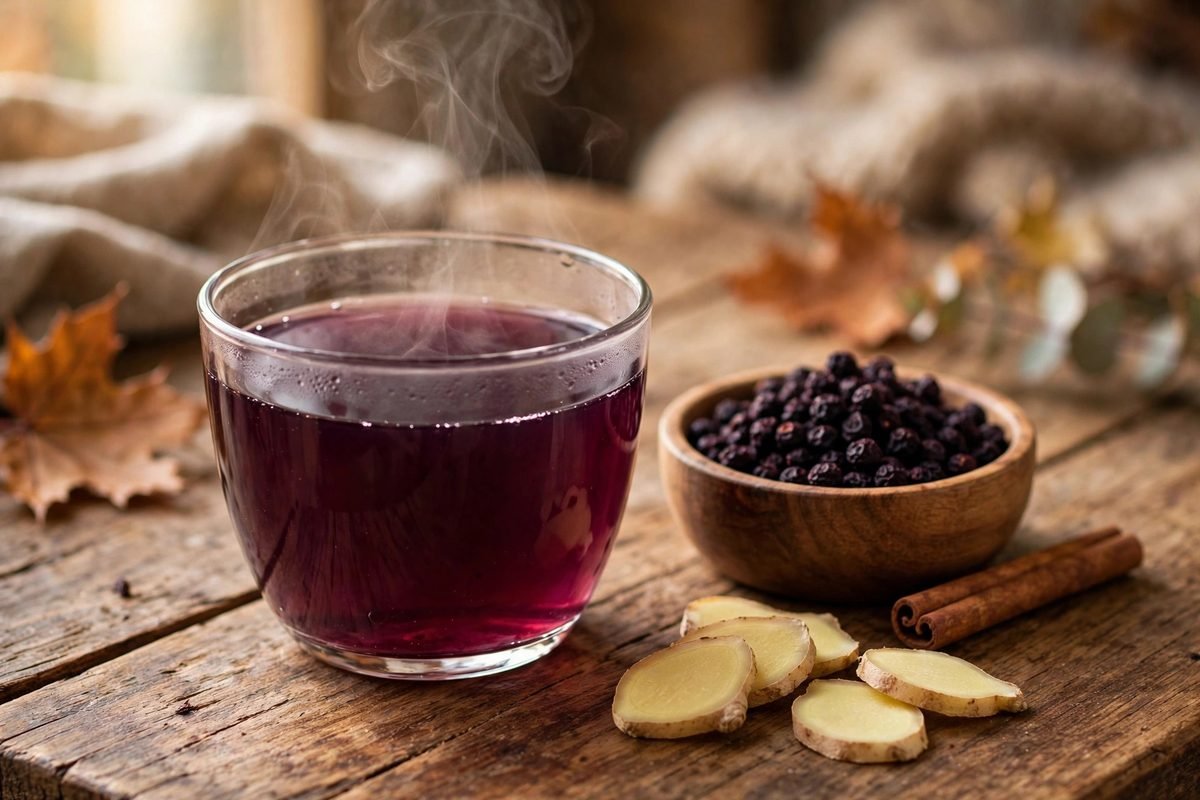
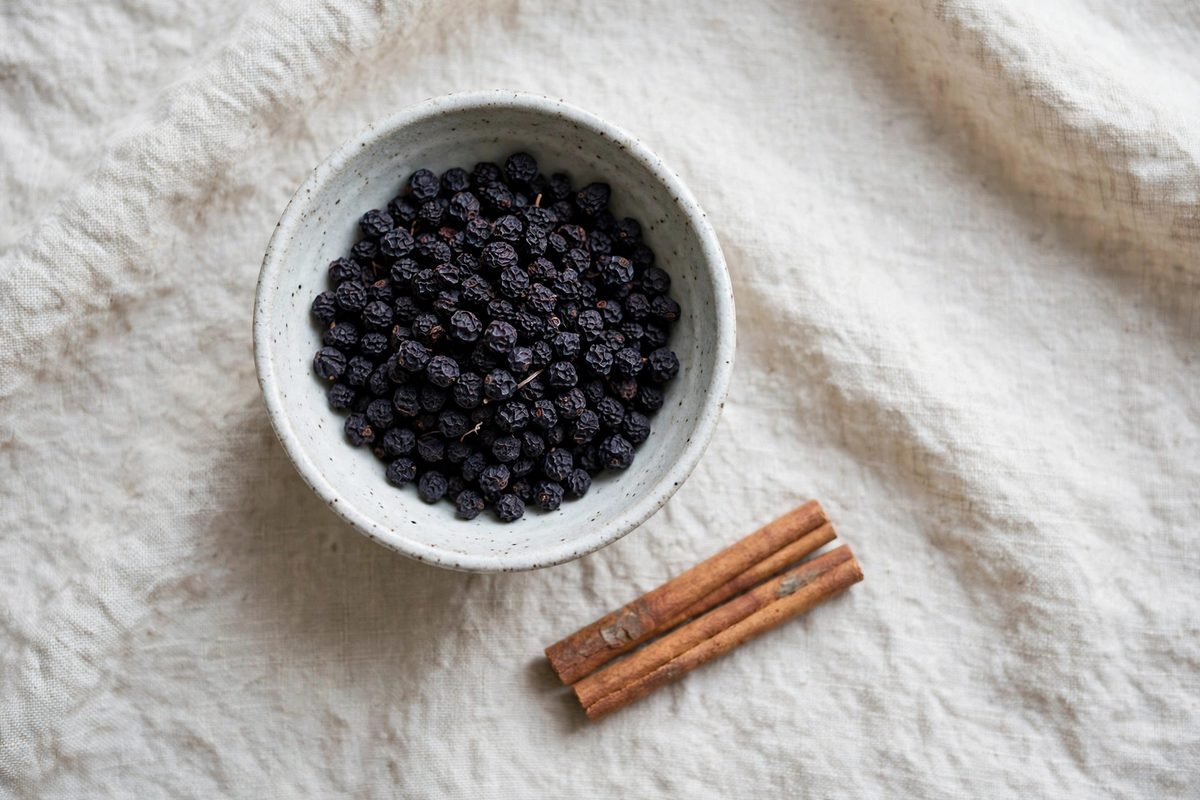
Elderberry tea is made from the dark purple-black berries of the European elder tree (Sambucus nigra), long used in folk medicine across Europe and North America for colds and flu (NCCIH’s elderberry overview). The berries are too tart to eat raw — and, more importantly, raw or unripe berries contain cyanide-producing substances, so they must always be cooked. Properly prepared from dried or simmered berries, the tea brews a rich purple, tastes tart and earthy like a less-sweet blackcurrant, and is naturally caffeine-free. Pairing it with ginger makes it even cozier — see our ginger for nausea guide for more ways to brew with fresh ginger.
7 Gentle Elderberry Tea Benefits Worth Knowing
Here’s where the evidence stands — mostly promising early research, honestly framed:
1. The Most-Studied Reason: Cold and Flu Symptom Relief
Elderberry has more human research behind it than most herbal teas. A 2004 study of 60 people with influenza found those taking elderberry syrup improved in 2 to 4 days versus 7 to 8 days for the control group, and a 2019 meta-analysis of randomized trials concluded black elderberry supplementation effectively eased upper respiratory symptoms (Healthline’s elderberry review). The honest caveat: these studies used commercial extracts and syrups, not cups of home-brewed tea — so think of the tea as a weaker cousin of what’s been studied.
2. A Genuinely Impressive Antioxidant Cup
Elderberries rank among the most antioxidant-rich berries studied — one berry comparison found elderberry among the most effective antioxidants of 15 berries tested, thanks to its anthocyanins, the pigments that give the tea its deep purple color. A small study found antioxidant status improved in people one hour after drinking 400 mL of elderberry juice. Processing can reduce antioxidant activity, so a gently simmered home brew is a reasonable way to get some of it.
3. Early Signals for Heart Health
Some studies found elderberry juice may reduce blood fat levels and cholesterol, and diets rich in anthocyanin flavonoids are linked with lower heart disease risk — though one small human trial (34 people, 2 weeks) found no significant cholesterol drop. Modest takeaway: elderberry tea may be a sensible addition to a heart-healthy diet, not a heart treatment. For a spiced heart-friendly habit, our turmeric tea recipe pairs well with the same warming spices.
4. Traditional Digestive Support
Folk traditions have long used elderberry preparations as a mild diuretic and to ease constipation — the dried berries’ fiber and mild laxative reputation show up in older herbal texts. Evidence is traditional rather than clinical, so treat this as a gentle habit, not a remedy for real digestive trouble. For digestion-focused brews with more modern evidence, our ajwain water guide goes deeper.
5. Naturally Caffeine-Free — the Anytime Cup
Elderberry tea has zero caffeine by nature, since it contains no tea-plant leaf at all. Sick days, late evenings, slow Sunday mornings — it fits anywhere, much like our chamomile tea for sleep ritual does at bedtime.
6. Vitamin C and Immune-Nutrient Content
Elderberries are high in vitamin C — about 52 mg per cup of fresh berries, over half the daily value — plus dietary fiber and phenolic acids. Dried berries used for tea carry a diluted share of these, but the vitamin C survives simmering better than many nutrients. It’s a nutrient-dense cup compared with most herbal teas — pair it with vitamin-C-rich mornings like the ones in our warm lemon water comparison.
7. A Tart, Satisfying Alternative to Sugary Drinks
Unsweetened elderberry tea is essentially a zero-calorie drink with real flavor — tart, fruity, warming. During cold season it replaces sugary “immune” drinks without the sugar load, which matters when you’re sipping all day.
How to Make Elderberry Tea (Simmered, Not Just Steeped)
Unlike leaf teas, elderberries need simmering to release their flavor — and cooking is also what makes them safe.
Simple Simmered Elderberry Tea (2 Servings)
Ingredients
- 2 tablespoons dried elderberries (never raw or fresh-picked unless cooked)
- 3 cups water
- 1 cinnamon stick
- 2–3 thin slices fresh ginger
- Raw honey to taste (add only after cooling slightly)
Steps
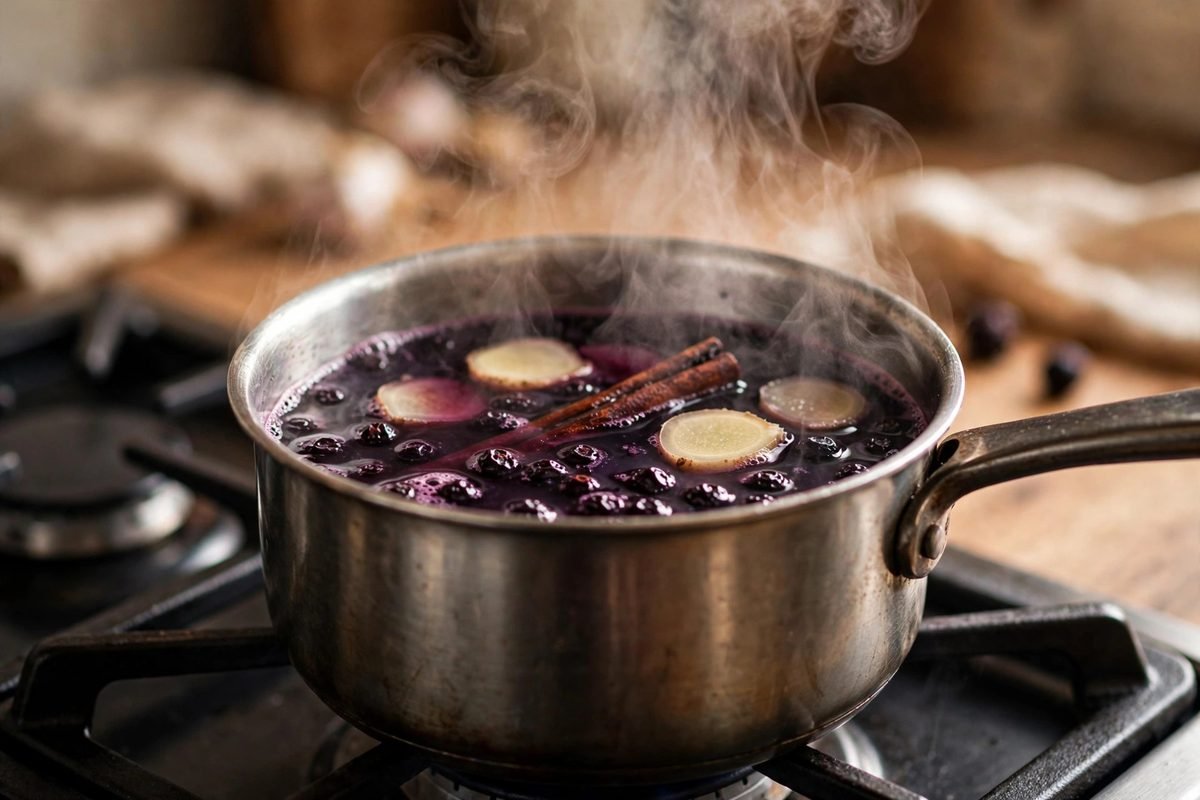
- Add water, elderberries, cinnamon, and ginger to a small saucepan.
- Bring to a boil, then reduce heat and simmer, covered, for 15–20 minutes.
- Remove from heat and strain out the berries, cinnamon, and ginger.
- Press the berries gently with a spoon to release more juice, then discard.
- Once the tea is no longer steaming hot, stir in honey to taste.
Time: 20 minutes | Servings: 2
Iced Elderberry Tea (4 Servings)
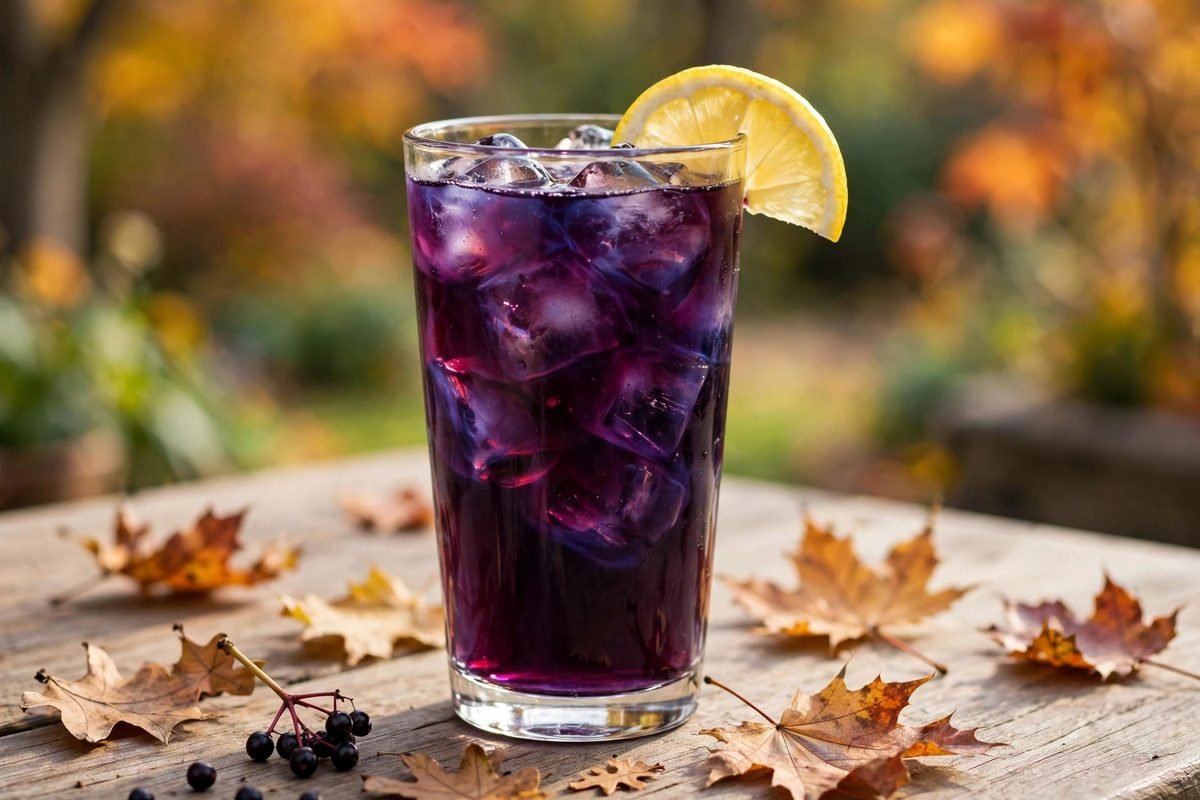
Double the recipe above, skip the honey, chill for at least 2 hours, and pour over ice with a lemon wedge. Leftovers keep in a sealed jar in the fridge for up to 5 days.
Elderberry Tea Safety: The Rules That Matter
This is the section to read twice. Raw or unripe elderberries — plus the leaves, bark, and stems — contain cyanide-producing substances that can cause nausea, vomiting, and severe diarrhea; cooking eliminates the toxin (NCCIH). So: buy dried berries from a reputable source, always cook them, and never juice or brew raw foraged berries casually. Beyond that: little is known about elderberry safety during pregnancy or breastfeeding — talk to a doctor first. If you take medications, check with your healthcare provider too, since herbs and drugs can interact. And don’t rely on elderberry for COVID-19 or serious illness — there’s no good evidence for that, and the FDA has acted against companies claiming otherwise.
Elderberry Tea FAQ
Can you drink elderberry tea every day?
Many people drink 1–3 cups daily during cold season. There’s no official guidance, so moderation is sensible — and anyone pregnant, breastfeeding, or on medication should get a doctor’s okay first.
Does elderberry tea taste good?
Tart, fruity, and earthy — like a less-sweet blackcurrant with spice notes. Cinnamon, ginger, and a little honey (added after cooling) make it genuinely enjoyable.
Can I use fresh elderberries from a bush?
Only if you’re certain of the identification and you cook them thoroughly — raw berries, leaves, and stems are not safe. Dried berries from a trusted seller are the safer choice.
Is elderflower tea the same thing?
No — elderflower tea is made from the white blossoms and has a delicate, muscat-like flavor; it’s gentler and doesn’t carry the raw-berry toxicity concern. Both are caffeine-free.