
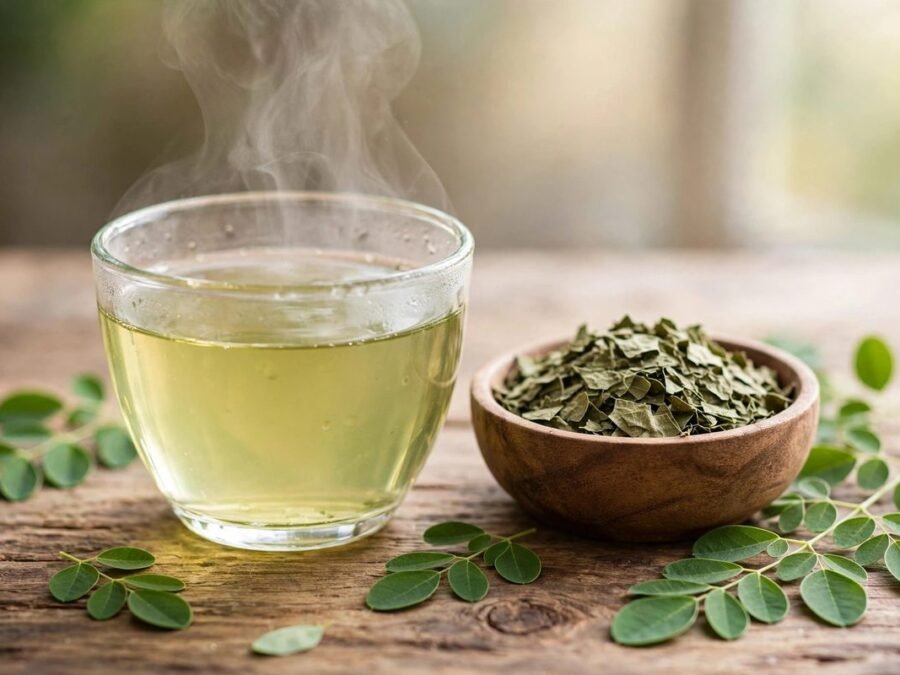
Walk down any health-food aisle today and you’ll spot a bright green powder that wasn’t there five years ago. Moringa tea benefits are getting the same buzz — this gentle green brew comes from Moringa oleifera, the “drumstick tree” native to northern India, where almost every part of the plant has been eaten or brewed for centuries. Honest caveat first: most moringa research so far comes from lab and animal studies, not big human trials — so think of this tea as a pleasant daily habit, not a medicine.
What Is Moringa Tea, and What Does It Taste Like?
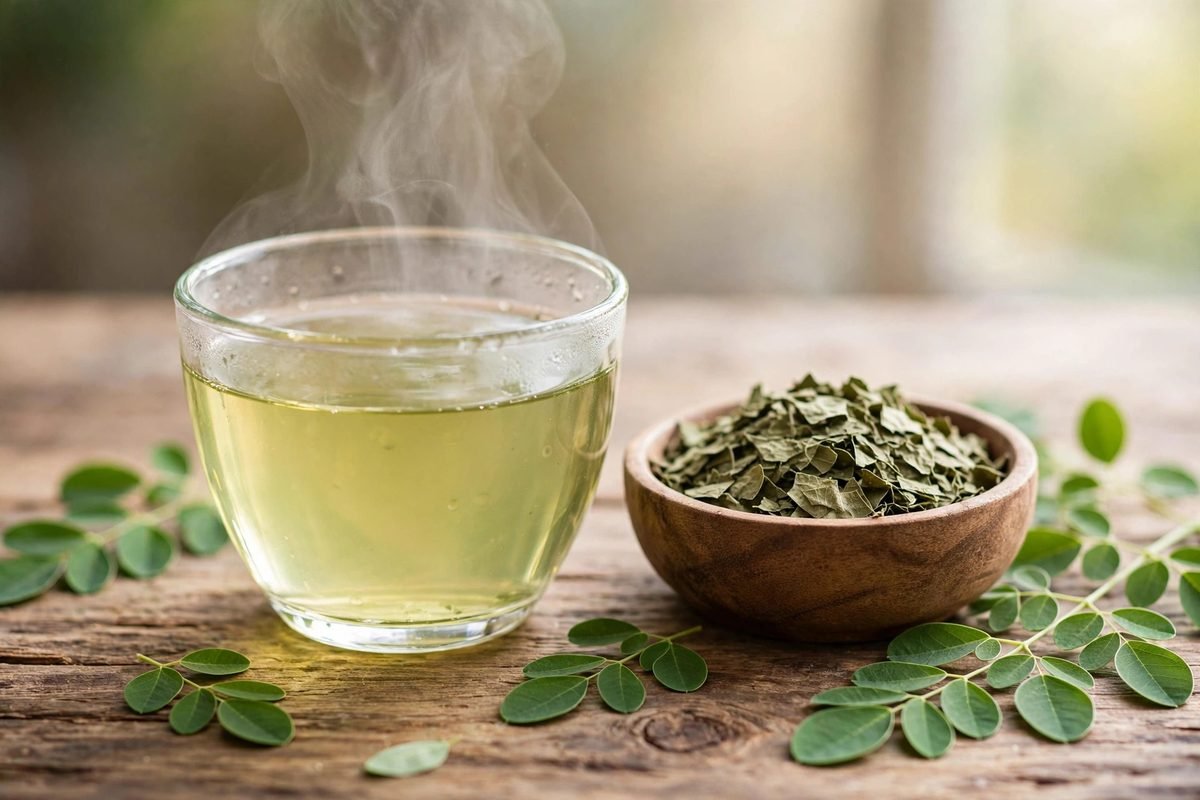
Moringa tea is brewed from the dried leaves of Moringa oleifera — the drumstick tree, nicknamed the “miracle tree” because nearly every part of it is eaten or brewed in South Asia and Africa. Sold as loose leaf, tea bags, or powder, it brews mild and earthy — softer than green tea, pale green in the cup, and never bitter when steeped 3–5 minutes. Because the leaf has no tea-plant camellia in it, this green herbal tea is completely caffeine-free — fine after dinner, much like our chamomile tea for sleep ritual. For a quick nutrition overview, Healthline’s moringa overview covers the leaf’s vitamins and minerals well.
8 Gentle Moringa Tea Benefits Worth Knowing
Most of what follows comes from early research — small human studies plus a larger body of animal and lab work. Promising, but human evidence is limited. Here’s why people reach for this cup:
1. Naturally Caffeine-Free — the Anytime Cup
Moringa tea has zero caffeine by nature, not by decaffeination. If coffee leaves you wired or afternoon tea steals your sleep, this is one of the easiest swaps in the tea aisle — and a fitting partner for evening wind-down routines the way rooibos tea benefits are for its fans.
2. A Broad Spectrum of Antioxidants
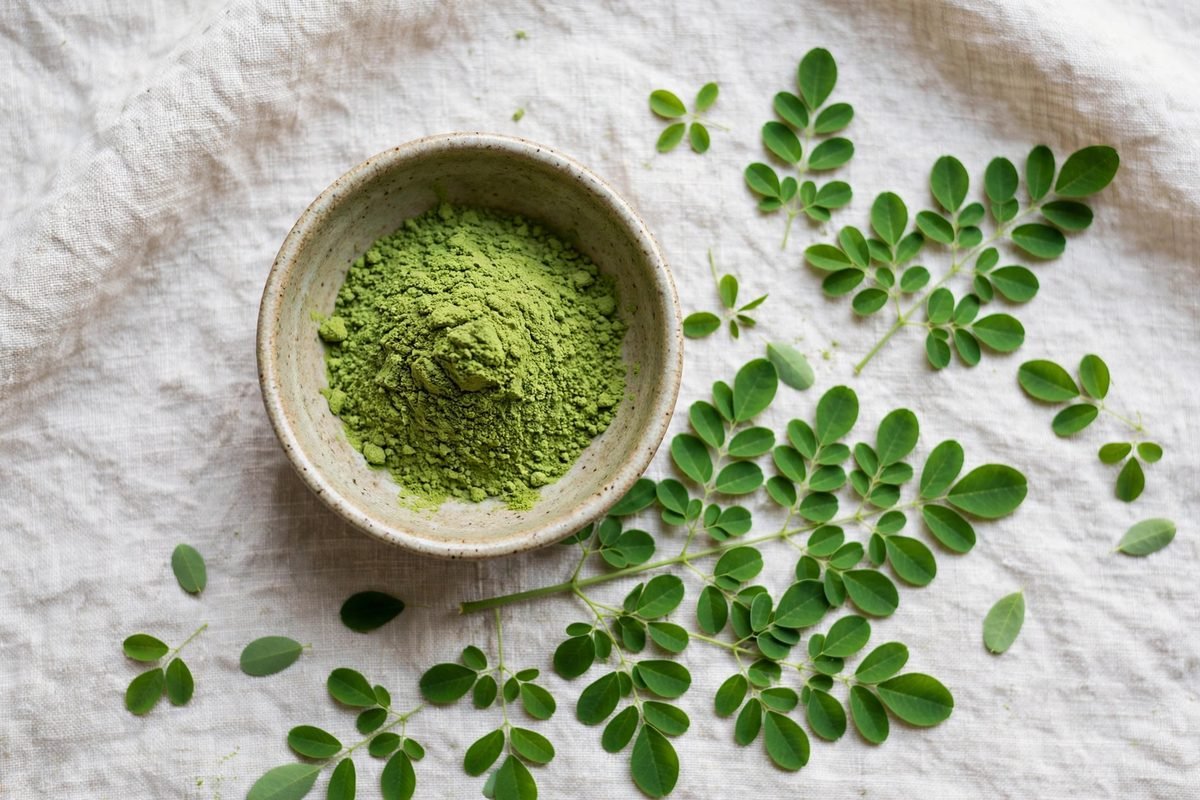
Moringa leaves are a notable source of antioxidant compounds including vitamin C, beta-carotene (a source of vitamin A), and the flavonoid quercetin, plus chlorogenic acid — also found in coffee and linked in early research to blood-sugar support. One honest note from WebMD: fresh leaves hold much more vitamin C than dried ones, since the vitamin fades during drying (WebMD’s moringa tea guide).
3. Anti-Inflammatory Compounds That Caught Researchers’ Eyes
Moringa contains isothiocyanates — sulfur-containing plant compounds also found in broccoli and mustard — along with phenolic glycosides that early studies link with anti-inflammatory activity. But nearly all the strong findings are from test-tube and animal work; no one can say a cup of tea measurably changes inflammation in people.
4. Early Signals for Blood Sugar Support
A 2020 review of human and animal studies found moringa helped lower blood sugar levels in many of them — though most evidence is animal-based and human results are less consistent. Some human studies did show lower post-meal glucose. Modest takeaway: moringa tea may be a sensible drink choice alongside an already-healthy diet, never a replacement for medication. If blood sugar matters to you, our cinnamon tea for blood sugar guide is another gentle habit to explore — with the same medical caveats.
5. Gentle Support for Digestion
Traditionally, moringa leaves have been used to settle the stomach, and early research notes antibacterial properties that may help keep gut bacteria in balance — though the evidence is still preliminary. The tea is also low in tannins compared with black tea, so it brews smooth and rarely brings the stomach grumble strong teas can cause.
6. Heart-Health Hints Worth Watching
In animal studies, moringa extract lowered cholesterol and reduced plaque formation in arteries. Human evidence is thin: reviews note cholesterol-lowering potential in both animal and human studies, but stress that more human research is needed. Treat this as an interesting early signal, not a heart-health plan — real heart care stays with your doctor, diet, and movement.
7. Traditional Liver Support, Still Under Study
Folk traditions across India and Africa have long used moringa for liver complaints, and early animal studies suggest protective effects on liver tissue. But “traditionally used for” is not “proven to work” — no solid human evidence exists yet. If liver health is a real concern, that’s a doctor conversation, not a tea decision.
8. A Nutrient-Dense, Near-Zero-Calorie Sip
A single moringa tea bag carries essentially no calories (WebMD lists about 0 calories, 1 gram of carbs, 1 gram of fiber), while the leaves themselves bring iron, calcium, vitamin A, thiamine, and all nine essential amino acids — impressive for a plant. Dried-leaf tea is a diluted echo of the leaf’s full nutrition, but it’s one of the few near-zero-calorie drinks that contributes anything at all — pair it with a nourishing breakfast.
How to Make Moringa Tea (Hot + Iced)
Moringa is forgiving — use water just off the boil and keep steeps short.

Hot Moringa Tea (1 Serving)
Ingredients
- 1 moringa tea bag, or 1 teaspoon dried moringa leaves
- 8 ounces (about 250 ml) water, heated to just below boiling
- Optional: a squeeze of lemon, a teaspoon of honey, a thin slice of fresh ginger
Steps
- Add the tea bag or loose leaves to your cup (use an infuser for loose leaf).
- Pour over the hot water.
- Steep 3–5 minutes — longer leans grassier; shorter stays milder.
- Strain if needed, add lemon or honey if you like, and sip.
Time: 3–5 minutes | Servings: 1
Iced Moringa Tea with Lemon (2 Servings)

Ingredients
- 2 moringa tea bags or 2 teaspoons dried moringa leaves
- 16 ounces water, heated to just below boiling
- 1 cup cold water, plus ice
- Lemon slices and fresh mint, to serve
Steps
- Steep 5 minutes in the hot water — a stronger brew survives dilution.
- Strain, stir in the cold water, and chill at least 1 hour.
- Pour over ice with lemon and mint.
Time: 5 minutes + chilling | Servings: 2
For a spicier cup, simmer the hot brew with a slice of fresh ginger — or browse our tulsi tea benefits guide for another caffeine-free Indian classic.
Moringa Tea Side Effects: Who Should Be Careful
Moringa leaf is generally considered safe in food amounts, with few side effects reported in human studies. Still, three groups should check with a doctor first: people taking diabetes, blood pressure, or thyroid medications (moringa may interact with them); anyone pregnant or breastfeeding — reviews specifically flag that moringa is best avoided in pregnancy; and anyone on chemotherapy, since it can interact with some cancer drugs. Stick to a cup or two a day, buy from reputable brands, and never swap prescribed treatment for tea.
Moringa Tea FAQ
Does moringa tea have caffeine?
No — moringa tea is naturally caffeine-free, so it’s a good choice any time of day, including before bed.
What does moringa tea taste like?
Mild, earthy, and slightly grassy with a faint nuttiness — softer than green tea and never bitter when steeped 3–5 minutes. Lemon or honey brightens it nicely.
Is moringa tea or moringa powder better?
Powder delivers far more nutrition per spoonful and can be added to smoothies, while tea is a gentle, hydrating way to enjoy the leaf. A cup of tea is milder and easier to drink daily.
Can I drink moringa tea every day?
Most healthy adults can enjoy a cup or two daily. Long-term human safety data is still limited, so moderation is wise — and if you’re pregnant, nursing, or on medication, check with your doctor first.
When is the best time to drink moringa tea?
Anytime — it’s caffeine-free. Many people enjoy it after meals, or in the evening as a wind-down ritual.
The Bottom Line
Moringa tea benefits are gentle, early, and honest: a caffeine-free green herbal tea with an interesting antioxidant and nutrient profile, traditional digestive and liver uses, and early research hints at blood-sugar and heart support — but almost no big human trials yet. Brew it well and enjoy it as a habit rather than a remedy. For more gentle brews in this family, our lemongrass tea benefits guide is a fragrant place to continue.