
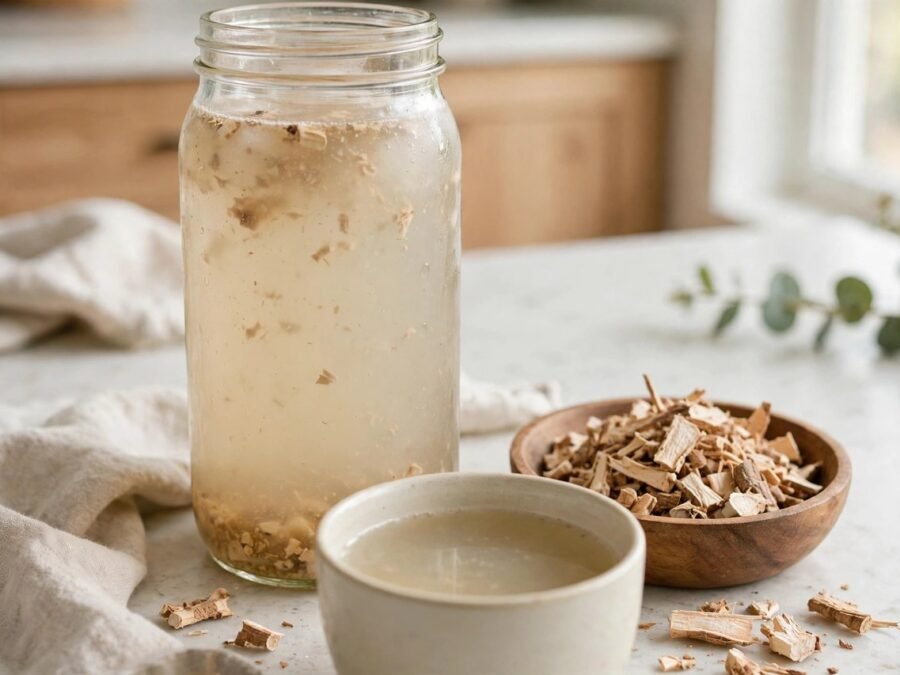
When your throat feels scratchy or your stomach feels unsettled, the instinct is often to reach for a hot cup of tea. But marshmallow root tea benefits are built on a very different idea: this is the one herbal tea that gets better when you skip the kettle entirely. Marshmallow root is rich in a gel-like substance called mucilage, and traditional herbal practice says that mucilage survives best in a slow, cold infusion — the result is a silky, soothing cup unlike any tea you have had before.
Before you ask: no, it has nothing to do with the sugary candy. The marshmallow plant (Althaea officinalis) is a real medicinal herb, and its root has been used to soothe irritated throats and guts for centuries. In this guide, you will learn exactly what the evidence says (and does not say), how to cold-brew it properly, and the safety fine print everyone should read first.
What Is Marshmallow Root Tea?
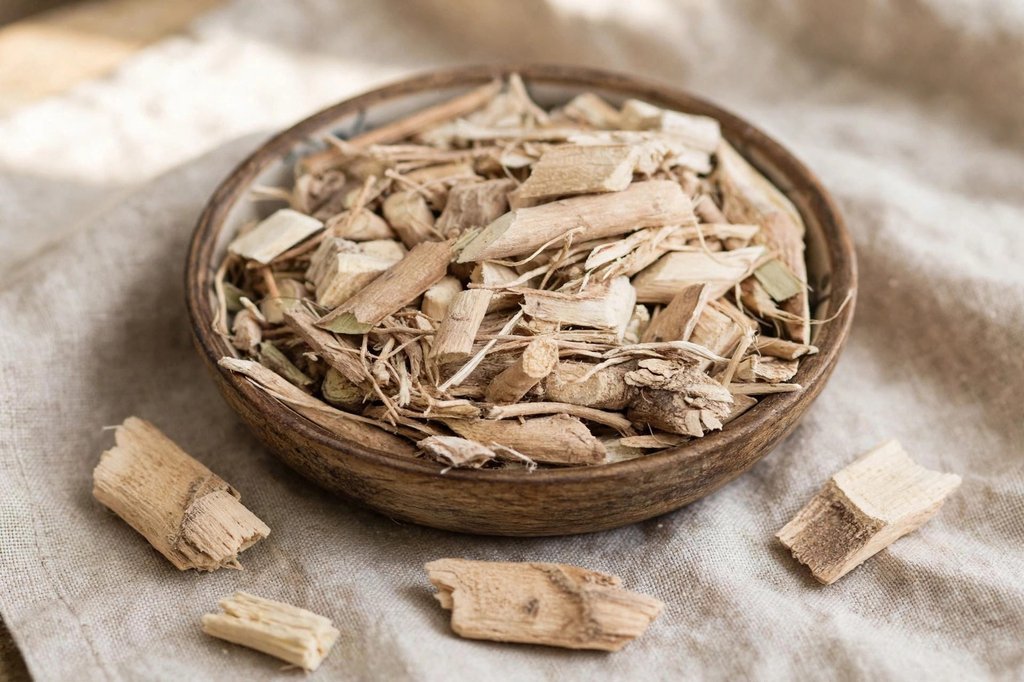
Marshmallow root is the dried root of Althaea officinalis, a tall plant native to Europe, Western Asia, and North Africa. Herbalists have valued it for generations as a demulcent — a substance whose mucilage coats and soothes irritated mucous membranes in the mouth, throat, and digestive tract.
What makes this herb unusual in the European herbal-medicine world is how formally it is recognized: the European Medicines Agency’s Committee on Herbal Medicinal Products (HMPC) concluded that, on the basis of its long-standing use, marshmallow root preparations can be used to treat irritation of the mouth or throat and associated dry cough, and to relieve mild discomfort of the stomach and gut (EMA — Althaeae radix). That conclusion rests on traditional use — meaning plausibility plus at least 30 years of documented safe use — rather than large modern clinical trials, a distinction worth keeping in mind.
Why Cold-Brewing Changes Everything
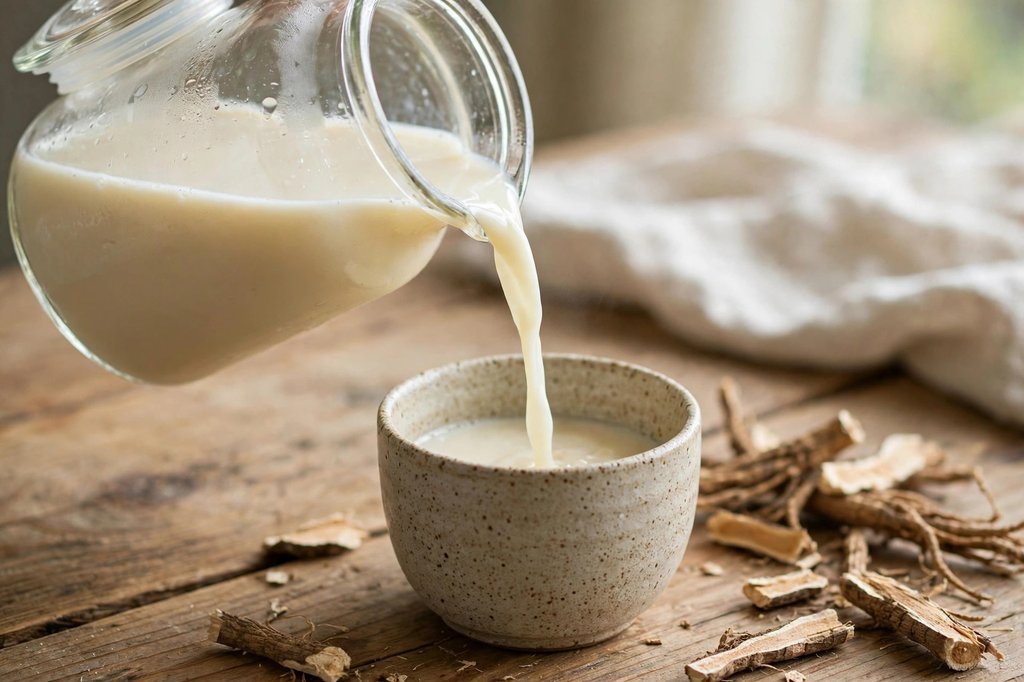
Here is the detail that separates marshmallow root from nearly every other herbal tea: heat, especially boiling water, breaks down the mucilaginous compounds that give the tea its signature silky texture and traditional value. Traditional herbal practice therefore uses a cold macerate — the root steeped in cold or room-temperature water for several hours.
The European herbal monograph’s dosage tradition reflects exactly this: the tea is traditionally prepared as a cold-prepared infusion, a cupful taken a few times a day. The result is a noticeably silkier cup than any hot steep produces, with a mild, faintly sweet, almost creamy flavor. If you have tried marshmallow root tea with boiling water and found it thin and underwhelming, the method — not the herb — was likely the problem.
7 Gentle Reasons to Try Marshmallow Root Tea
1. It may soothe an irritated throat
This is the use with the deepest roots — literally. The mucilage in marshmallow root is understood to coat the lining of the mouth and throat, which is why the European Medicines Agency includes “irritation of the mouth or throat” among the traditional uses of marshmallow root preparations (EMA — Althaeae radix). Herbalists traditionally reach for it at the first dry, scratchy feeling in the throat — including the scratchiness that follows a long day of talking. It is a comfort measure, not a cure, and if a sore throat comes with fever or lasts more than a few days, see a clinician.
2. It is traditionally used for dry cough
Dry, tickly coughs are the second pillar of marshmallow root’s traditional profile. The HMPC assessment notes that marshmallow root preparations can be used for “associated dry cough,” while being transparent about the evidence: two studies of marshmallow root syrup in around 900 children suggested less coughing but had no comparison group, and one small study of 63 adults found cough reduction versus placebo — though the preparation was not well described, so the agency still bases its conclusions on long-standing use (EMA — Althaeae radix). Honest framing: this is tradition-backed comfort for a tickly cough, not proven medicine.
3. It may ease mild stomach and gut discomfort
The same coating action herbalists describe for the throat is traditionally applied further along the digestive tract. The EMA’s traditional-use conclusion covers “mild discomfort of the stomach and gut,” for use in adults and adolescents over 12 (EMA — Althaeae radix). A cold-infused cup before or between meals is the traditional way to take it for an unsettled stomach. If gut discomfort persists beyond two weeks, the agency says to consult a doctor — good advice for any herbal approach.
4. It can comfort an irritated mouth
Mouth irritation gets less attention than throats and stomachs, but it is explicitly part of the traditional-use picture — irritation of the mouth lining is named alongside throat irritation in the European herbal assessment (EMA — Althaeae radix). A cool sip of cold-brewed marshmallow root tea can feel calming against a tender mouth, which is why some people keep it on hand alongside other gentle soothing drinks like lemon balm tea.
5. It is a genuinely caffeine-free evening drink
Marshmallow root contains no caffeine and no stimulating compounds — it is simply a mild, pleasant, caffeine-free herb. That makes the cold brew a sensible pick for the evening wind-down hours, in the same soothing-drink family as chamomile tea for sleep or lavender tea. It will not make you sleepy — there is no sedative claim here — but it also will not keep you awake the way an afternoon tea can.
6. It pairs well with other soothing herbs
On its own, marshmallow root tea is mild to the point of plainness — which is actually a feature. Its silky body blends beautifully with brighter herbs: lemon balm, chamomile, spearmint, or a little licorice root for sweetness. If you already brew peppermint tea after meals, adding a spoon of marshmallow root to the cold infusion is a traditional way to give the cup a softer, more coating character. Experiment in small batches until you find your ratio.
7. It supports a gentle daily hydration ritual
This last one is the least “medicinal” and possibly the most valuable: preparing a cold brew the night before and sipping it through the next day is an easy, pleasant hydration habit. Plain-water drinkers who get bored will find the faint sweetness and silky mouthfeel of marshmallow root tea a genuine upgrade — no sugar, no calories to speak of, and a reason to keep a glass jar on the counter. Small rituals like this are what make nightly tea routines stick.
How to Cold-Brew Marshmallow Root Tea
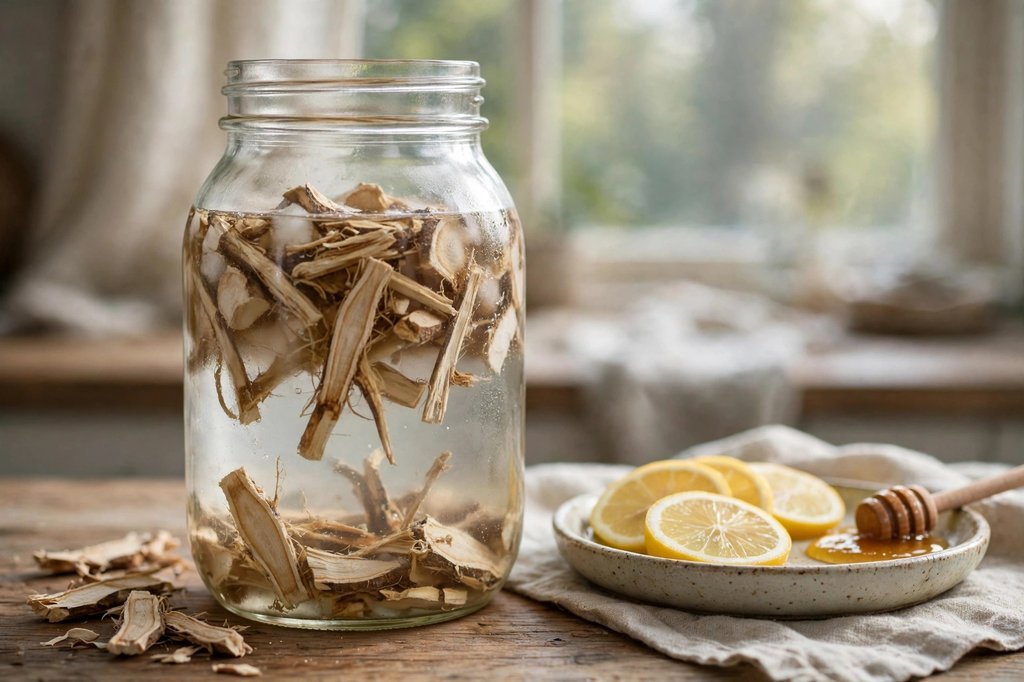
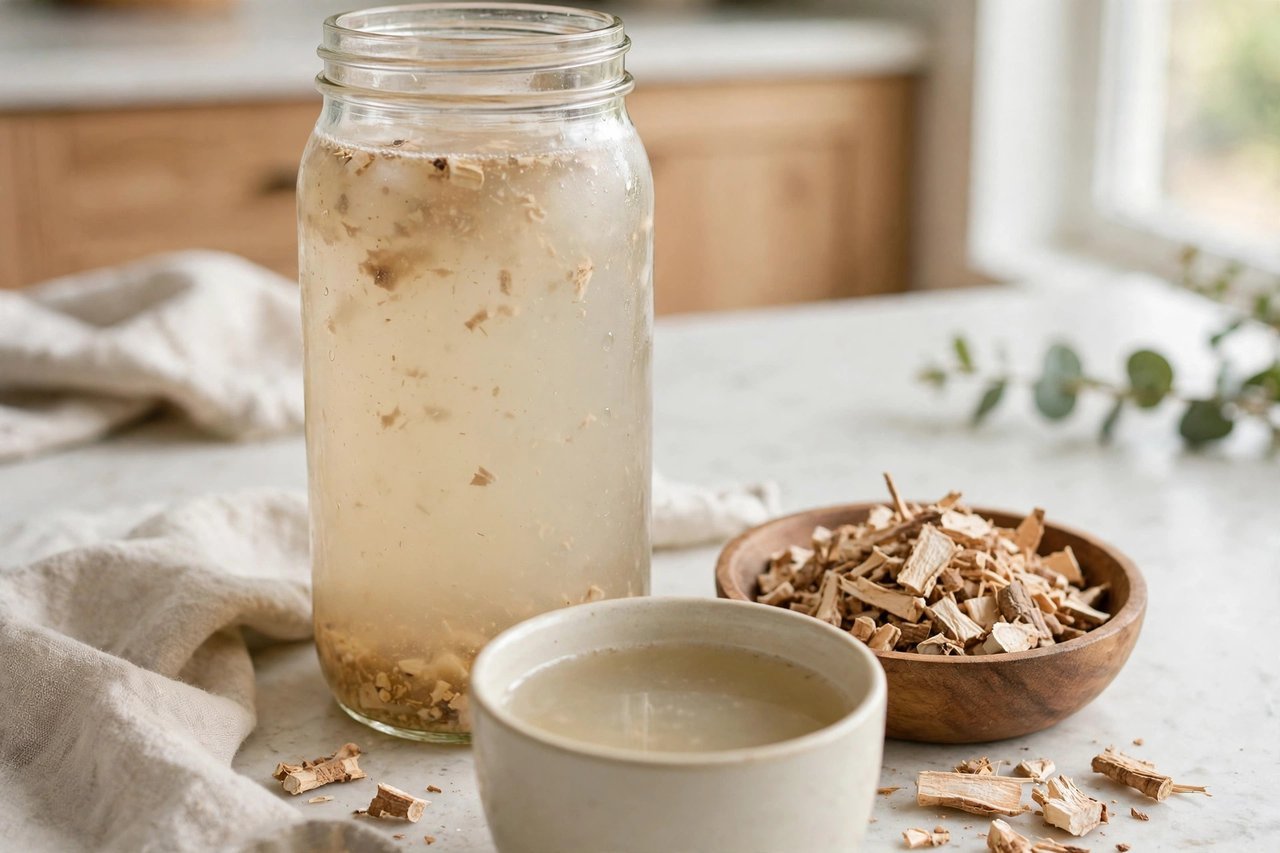
The recipe card below has the exact method. A few practical notes: use dried, cut marshmallow root (not powder, which makes a cloudy, hard-to-strain cup), cold filtered water, and a clean glass jar. Four to eight hours of steeping — or overnight in the fridge — gives the best silky texture. Strain through a fine-mesh sieve, and add honey or lemon only after straining, to taste.
Cold-Brew Marshmallow Root Tea
Ingredients
Method
- Add 1 tablespoon of dried, cut marshmallow root to a clean glass jar.
- Pour 2 cups of cold filtered water over the root.
- Cover and let steep 4 to 8 hours at room temperature, or overnight in the refrigerator.
- Strain through a fine-mesh sieve, pressing gently on the root.
- Stir in honey or lemon if you like; drink cool or at room temperature. Refrigerate leftovers and use within 24 to 48 hours.
Safety First: Who Should Be Careful
Marshmallow root has a reassuring traditional safety record — at the time of the HMPC assessment, no side effects had been reported with these medicines — but “traditional” is not the same as “proven safe for everyone.” Here is the fine print:
- Pregnancy and breastfeeding: there is not enough reliable safety information, so it is best to avoid marshmallow root during pregnancy and while breastfeeding unless your doctor specifically approves (HelloPharmacist — Marshmallow monograph, based on the Natural Medicines database).
- Oral medications: the mucilage may slow the absorption of other drugs, so take marshmallow root at least 30 to 60 minutes apart from any oral medication (HelloPharmacist — Marshmallow monograph).
- Lithium and blood thinners: marshmallow may affect lithium levels and interacts with anticoagulant/antiplatelet drugs — anyone on these should check with their doctor or pharmacist first (HelloPharmacist — Marshmallow monograph).
- Diabetes: animal studies suggest marshmallow may lower blood sugar; people on diabetes medication should use caution and monitor, in consultation with their provider.
- Allergies: hypersensitivity or allergic reactions are the one adverse effect documented in the official European herbal monograph (frequency not known).
- Children: the EMA notes throat/cough uses are usually for adults, adolescents, and children over 3 — check a product’s leaflet and ask a pediatrician before giving it to a young child.
- Duration: if throat symptoms last longer than a week, or stomach/gut discomfort longer than two weeks, see a doctor rather than continuing to self-treat (EMA — Althaeae radix).
An Honest Note on What’s Not Proven
You will find bolder claims about marshmallow root online — that it melts belly fat, “flushes toxins,” or replaces medication. None of that is supported. The honest summary: this is a traditionally used soothing drink with a plausible mechanism (mucilage coating irritated membranes) and a long safety record, but almost no modern clinical trials. Drink it for comfort and ritual, not for cures — and keep any medication exactly as your doctor prescribed it.
Frequently Asked Questions
Is marshmallow root tea the same as the marshmallow candy?
No. The fluffy candy was originally made with this plant’s root long ago, but today’s marshmallow candy is just sugar, gelatin, and flavorings with no real marshmallow plant in it. The tea is brewed from the dried root of Althaea officinalis.
Can I drink marshmallow root tea every day?
Traditional use is typically a cup of cold-prepared infusion a few times a day. It is generally considered gentle for short-term use, but human safety studies are limited, so keep it as a comfort drink rather than a permanent daily medicine — and take the medication-spacing and pregnancy cautions above seriously.
Hot or cold — which is better?
Cold, by traditional consensus. Boiling water breaks down the mucilage that makes this tea distinctive; a 4 to 8 hour cold infusion preserves it and produces the characteristic silky cup.
What does it taste like?
Mild, faintly sweet, and slightly creamy or silky in texture — not strongly flavored at all. Most people add lemon, honey, or blend it with a brighter herb like lemon balm or chamomile.
How long does cold brew keep?
Treat it like any fresh cold infusion: refrigerate and use within 24 to 48 hours. Make small batches — a jar a day — rather than a week’s supply.
Does marshmallow root tea contain caffeine?
No. It is naturally caffeine-free, which is why it fits well into evening routines.