
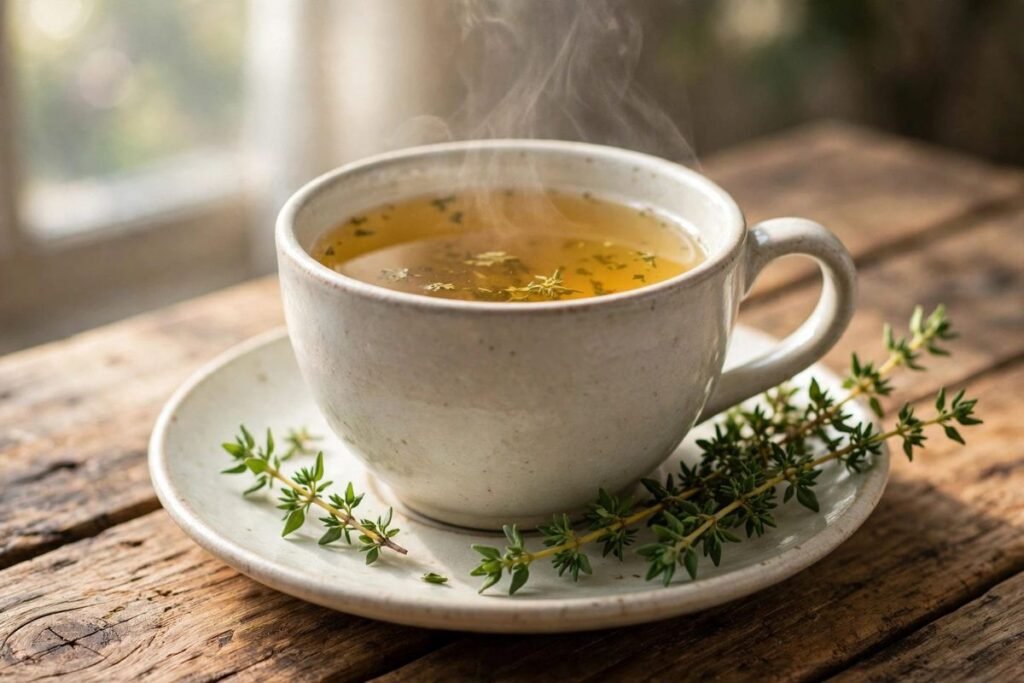
Thyme tea benefits are easy to oversell. Thyme is the same herb you probably already cook with, and as a tea it is a warm, caffeine-free infusion with a real traditional record for coughs — but most of the dramatic claims online come from concentrated extracts, not from the cup in your hand. This guide separates the two: what thyme tea may plausibly help with, what the trials actually studied, and the safety fine print most blogs skip.
What Is Thyme Tea?
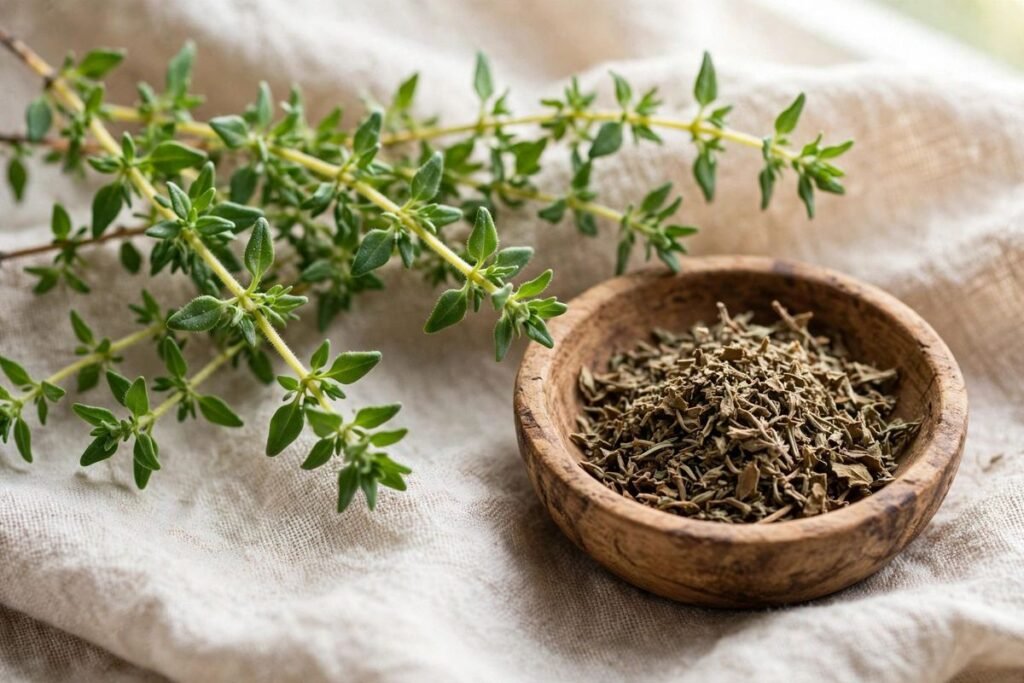
Thyme tea is an infusion made by steeping the leaves of common thyme (Thymus vulgaris), a mint-family herb native to the Mediterranean, in hot water. Its two best-known compounds are thymol and carvacrol, phenols that give thyme its sharp, earthy aroma and much of its laboratory antimicrobial and antioxidant activity. Unlike black or green tea, thyme tea contains no caffeine, which makes it a natural evening cup.
Europe’s herbal medicines committee, the HMPC at the European Medicines Agency, concluded that thyme preparations can be used, on the basis of longstanding traditional use, for productive (chesty) coughs associated with colds — while being clear that this conclusion rests on traditional use, not on clinical trials of thyme tea itself. EMA thyme summary
For the cup, common thyme (Thymus vulgaris) is the standard choice — the same plant sold as English or French thyme. Lemon thyme brews a lighter, citrus-scented cup and wild thyme works too, but the traditional cough record belongs to common thyme, so start there if you are buying specifically for tea.
7 Possible Benefits of Thyme Tea
1. Support for a productive cough
This is thyme’s best-supported traditional use. The EMA’s conclusion covers productive coughs linked to colds, and most thyme preparations are intended for adults and adolescents over 12. If a cough lasts longer than a week or gets worse, the EMA says to see a doctor — tea is a comfort measure, not a diagnosis. EMA thyme summary
2. Sore-throat comfort
Warm thyme tea — and a cooled cup used as a gargle — has a long folk history for sore throats. Thymol, one of thyme’s main compounds, is also used in antiseptic mouthwashes, which is part of why the gargle tradition persists. That is a plausibility argument, not proof that a cup of tea treats throat infections, and a sore throat with high fever or trouble swallowing still deserves medical attention.
3. Digestion after heavy meals
Thyme has traditionally been used as a carminative herb — one that may ease bloating and gas — and it pairs naturally with after-dinner drinking. The evidence here is traditional use plus laboratory work on gut-muscle relaxation, not clinical trials of thyme tea for digestion, so keep expectations modest. For another mint-family digestive herb, see our guide to peppermint tea benefits.
4. Menstrual cramp relief — with one honest caveat
A triple-blind trial in 84 university students compared thyme with ibuprofen and placebo for primary dysmenorrhea: both thyme and ibuprofen reduced pain severity significantly versus placebo, with no significant difference between the two. The catch is that the trial used thyme essential-oil drops and capsules, not brewed tea — so this is evidence for the herb’s compounds, not a promise about a teacup. Salmalian et al. 2014, PMC
5. Antioxidant and antimicrobial compounds
Thymol and carvacrol show strong antioxidant and antimicrobial activity in laboratory studies. That makes thyme tea a reasonable antioxidant-rich drink, but lab results on concentrated compounds do not translate into “kills infections” claims for a brewed cup. Think of it as a supportive pantry staple, not a natural antibiotic.
6. A genuinely caffeine-free evening cup
Because thyme tea has no caffeine, it fits an evening wind-down routine in a way true teas cannot. There is no direct evidence that thyme tea improves sleep — the benefit here is simply what it does not contain. For an evening herb with actual sleep research behind it, see chamomile tea for sleep.
7. A cold-season companion
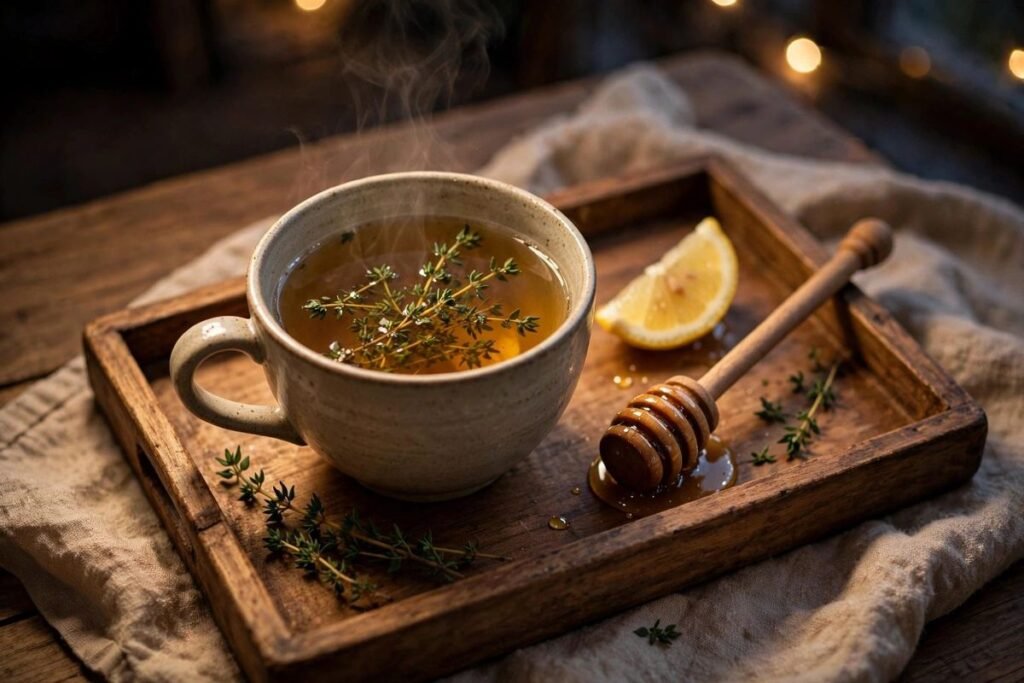
Thyme’s cough and sore-throat traditions make it a natural cold-season cup alongside other kitchen herbs. It combines well with honey and lemon, and it sits comfortably next to elderberry tea in a winter rotation — elderberry for the flu-season tradition, thyme for the chesty cough.
What Thyme Tea Won’t Do
- Cure bronchitis or pneumonia. The strongest bronchitis trial tested a thyme-and-primrose extract combination (150 patients, 7–9 days), not plain tea — and even that was a licensed preparation, not a home brew. Gruenwald et al. 2005, abstract Never replace prescribed treatment with tea.
- Replace antibiotics. Lab antimicrobial activity is not clinical proof against bacterial infection.
- Regrow hair. The hair-growth studies people quote used rosemary oil on the scalp, not thyme tea.
- Balance hormones or “detox” you. Thyme shows weak estrogen-like activity in lab studies — which is a caution for hormone-sensitive conditions (see Safety), not a benefit to advertise.
How to Brew Thyme Tea
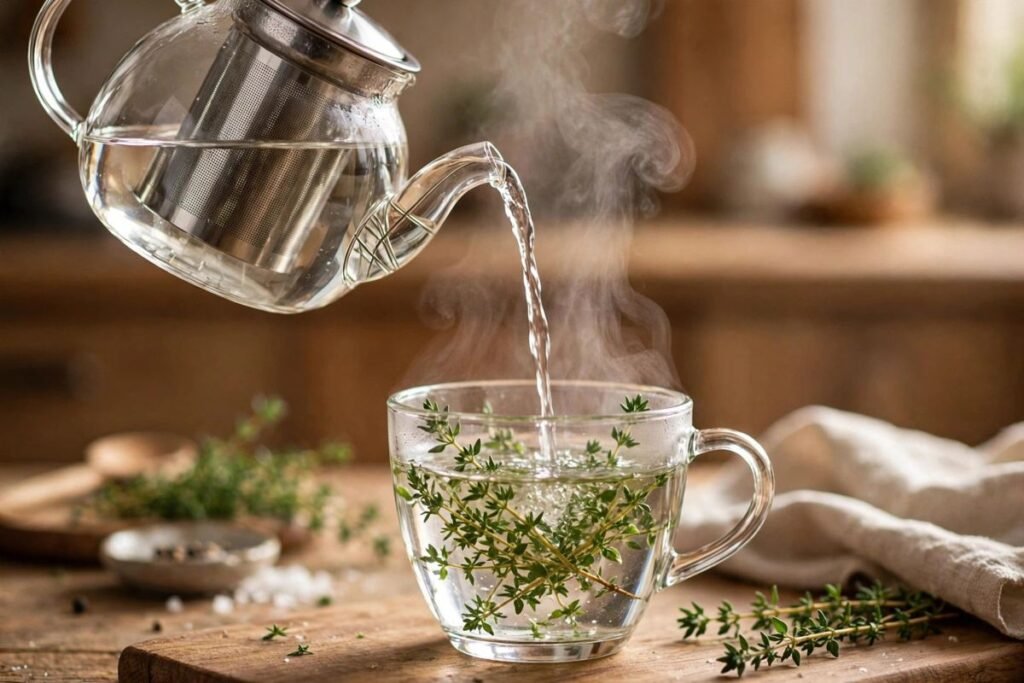
Use 1 teaspoon of dried thyme, or 2–3 fresh sprigs, per cup. Pour over freshly boiled water, cover, and steep 5–10 minutes, then strain. Add honey or lemon if you like. A covered steep matters: it keeps the aromatic oils in the cup instead of letting them escape with the steam.
Two easy variations: for an iced summer cup, brew double-strength, cool, and pour over ice with a lemon slice; for a stronger cold-season cup, add two thin slices of fresh ginger to the steep. In both cases the same cautions apply — ginger adds its own interactions, and honey should never be given to children under 12 months.

Simple Thyme Tea
Ingredients
Method
- Place the thyme in a cup or infuser.
- Pour boiled water over it and cover.
- Steep for 5–10 minutes.
- Strain, and add honey or lemon if desired.
Thyme Tea Safety: The Fine Print
- Pregnancy and breastfeeding: thyme in normal food amounts is generally recognized as safe, but there is insufficient reliable information about medicinal amounts in pregnancy or breastfeeding — avoid medicinal-strength use. HelloPharmacist / Natural Medicines thyme safety
- Blood thinners: thyme may slow blood clotting, so it may add to the effect of anticoagulant or antiplatelet drugs (warfarin, aspirin, clopidogrel and similar). Talk to your clinician first if you take one. HelloPharmacist / Natural Medicines thyme safety
- Hormone-sensitive conditions: because thyme may act like estrogen in the body, people with breast, uterine or ovarian cancer, endometriosis or uterine fibroids should avoid medicinal use.
- Mint-family allergy: if you react to oregano, mint or other Lamiaceae herbs, be cautious with thyme.
- Children: the EMA notes most thyme preparations are for adults and adolescents over 12; a few are licensed from age 4. Do not give medicinal-strength thyme tea to young children without professional advice.
- Essential oil is not tea: concentrated thyme essential oil should never be swallowed undiluted — it can cause nausea, dizziness and breathing problems. Only the brewed leaf infusion belongs in a cup.
- When to see a doctor: a cough lasting longer than a week, worsening symptoms, chest pain, difficulty breathing, coughing blood, or a high or prolonged fever all need medical attention, not another cup.
Frequently Asked Questions
How much thyme tea can I drink per day?
There is no established medicinal dose for brewed thyme tea. One to three cups a day, made with food amounts of the herb, is the range most guides use — and that is a kitchen habit, not a prescription.
Can I drink thyme tea every day?
Occasional and short-term daily use in food amounts is the traditional pattern. For daily medicinal use over weeks, the evidence thins out and the interaction cautions above matter more — check with a clinician.
Fresh or dried thyme — which is better for tea?
Both work. Fresh sprigs give a brighter, greener cup; dried thyme is more concentrated, so a teaspoon is enough. Avoid very old dried thyme — when the aroma fades, so does much of the point.
Is thyme tea the same as oregano tea?
No, though they are mint-family cousins with overlapping compounds. Thyme tea is milder and earthier, and its traditional record centers on coughs; oregano tea has a sharper, more pungent profile and a different folk history.
Does thyme tea help you sleep?
Not directly — there is no good evidence for a sleep effect. Its real evening advantage is that it is caffeine-free, so it will not keep you awake the way true tea can.
Thyme tea earns its place the honest way: a pleasant, caffeine-free cup with a genuine traditional record for chesty coughs, interesting (but extract-based) cramp evidence, and a safety list worth respecting. Brew it for comfort, not for cures — and if a cough lingers past a week, let a clinician, not a teapot, have the next word.


