

Herbal Tea Benefits: 25 Healing Teas and What Each One Is Good For
Herbal tea benefits are real — but smaller, slower, and more honest than most blogs claim. A cup of chamomile will not cure insomnia, and a cup of peppermint will not fix a gut disorder. What these teas can do is gentler: settle a stomach after a heavy meal, mark the end of a long day, and replace a sugary drink.
This guide covers 25 healing teas, grouped by what people actually drink them for: digestion, calm and sleep, women’s health, immunity, and caffeine-free everyday swaps. Each tea gets a short, honest summary plus a link to its full guide, where the studies and safety notes are spelled out. Nothing here is medical advice — if you are pregnant, take medication, or live with a medical condition, check with your doctor first.
What Counts as Herbal Tea?
True tea — green, black, white, and oolong — comes from one plant, Camellia sinensis, and contains caffeine. Herbal tea is an infusion of leaves, flowers, roots, fruits, or spices — a tisane — and is usually naturally caffeine-free. That is why most teas below work as evening drinks.
One honest distinction runs through this guide: many of the strongest results for these plants come from concentrated extracts or powders, not from a brewed cup. A cup holds the same compounds in smaller amounts — and the gap between “studied in a trial” and “works in a teacup” is where most tea blogs mislead you.

25 Herbal Teas at a Glance
| Group | Best for | Good first cup |
|---|---|---|
| Digestion | After-meal comfort, bloating, nausea | Peppermint or ginger |
| Calm and sleep | Evening wind-down, restless nights | Chamomile or lemon balm |
| Women’s health | Cycle support, traditional women’s tonics | Raspberry leaf or rose |
| Immunity and everyday health | Vitamin C, antioxidants, winter colds | Elderberry or rosehip |
| Caffeine-free swaps | Flavour without caffeine | Rooibos or butterfly pea |
Teas for Digestion
After-meal teas are the oldest use of herbal tea. These six are the ones people reach for when food sits heavy or nausea strikes.
1. Peppermint Tea
Peppermint is the strongest digestive tea here. Its menthol relaxes gut muscle, and peppermint oil has the best trial evidence of any mint for irritable bowel symptoms — though that evidence is for the oil, not a brewed cup. A cup after a meal may still ease bloating and nausea. Read the full guide: peppermint tea benefits.
2. Ginger Tea
Ginger is the best-studied nausea remedy in the herbal world, covering motion sickness, morning sickness, and post-meal queasiness. It also contains gingerol, a compound with genuine anti-inflammatory activity. Read the full guide: ginger tea benefits.
3. Spearmint Tea
Spearmint is peppermint’s gentler cousin — sweet and soft where peppermint is sharp and cool, because it runs on carvone instead of menthol. It is the better choice if peppermint feels too strong or worsens reflux — and it has one distinctive study behind it, a small randomised trial in women with PCOS. Read the full guide: spearmint tea benefits.
4. Lemongrass Tea
Lemongrass is a light, citrusy after-meal tea with a long traditional use for digestion and bloating in South and Southeast Asian cooking. Human trial evidence is thin — this is a traditional-use tea — but it is caffeine-free, gentle, and easy to drink daily. Read the full guide: lemongrass tea benefits.
5. Cinnamon Tea
Cinnamon tea is warm, sweet without sugar, and traditionally used to settle the stomach and support blood sugar balance. Blood-sugar research mostly uses cinnamon extract in supplement doses, so do not expect a cup to move your numbers — but as a sugar-free, warming drink, it earns its place. If you take blood-sugar medication, ask your doctor first. Read the full guide: cinnamon tea benefits. For a stronger warming brew, our turmeric ginger lemon honey tea pairs cinnamon’s cousins in one cup.
6. Dandelion Tea
Dandelion tea is brewed from the root or leaf of a plant most people call a weed. It has a traditional reputation as a liver and digestion tonic and a mild diuretic — which also means it can make you urinate more, so do not drink it late at night. Clinical evidence is limited; treat it as a traditional bitter digestive, not a detox cure. Read the full guide: dandelion tea benefits.
Teas for Calm and Sleep
These seven share one thing: no caffeine, and a ritual that tells your body the day is ending. None cures insomnia. What they offer is a warm, fragrant cup that fits a wind-down routine — and, for a few, a modest body of sleep research.
7. Chamomile Tea
Chamomile is the classic bedtime tea, and it has the most sleep research of any herb in this guide. A 2024 review suggests it may help people stay asleep and wake less often — a modest effect, not a knockout. Mild, apple-scented, and the safest first choice for a sleep tea. Read the full guide: chamomile tea benefits.
8. Lemon Balm Tea
Lemon balm is a gentle mint-family herb with a lemon scent and a long traditional use for calm and low mood. Early small studies suggest it may ease restlessness and support sleep. It blends well with chamomile and spearmint for an evening cup. Read the full guide: lemon balm tea benefits.
9. Lavender Tea
Lavender tea is floral, fragrant, and traditionally used for relaxation. Most strong lavender research is about the scent, not the tea. As a calming evening ritual it works well; as a treatment for anxiety, it is not one. Read the full guide: lavender tea benefits.
10. Tulsi Tea (Holy Basil)
Tulsi, or holy basil, is a central herb in Ayurvedic tradition, used for stress resilience and general balance. Modern trials are small but encouraging for stress. It tastes peppery and slightly sweet — a good next step beyond chamomile. Read the full guide: tulsi tea benefits.
11. Skullcap Tea
Skullcap is a traditional calming herb, used for nervous tension and restless evenings. Trial evidence is thin — this is a tradition-backed tea — and it can interact with sedatives, so check with your doctor if you take any. Start with one weak cup. Read the full guide: skullcap tea benefits.
12. Passionflower Tea
Passionflower has a long folk history as a sleep and anxiety herb, and a few small trials suggest it may help with mild anxiety and sleep quality. It tastes earthier than chamomile and may add to the effect of sedatives, so do not mix it with sleeping pills without asking your doctor. Read the full guide: passionflower tea benefits.
13. Valerian Root Tea
Valerian root is the most “serious” sleep herb in this guide, with the most trial evidence for shortening the time it takes to fall asleep — though the effect is modest and varies a lot between people. It smells earthy, so many people blend it with lemon balm or chamomile. Do not combine it with alcohol or sedatives. Read the full guide: valerian root tea benefits.
Teas for Women’s Health
These four have long histories in women’s health traditions. The honest picture is mixed: one has a real trial behind it, the others rest mostly on traditional use. All four deserve extra care in pregnancy.
14. Raspberry Leaf Tea
Raspberry leaf is the classic women’s tonic herb, traditionally used to tone the uterus and support the menstrual cycle, and best known as a late-pregnancy tea. The evidence is traditional, not trial-based, and it should only be used in pregnancy with a clinician’s agreement — not on a blog’s say-so. Read the full guide: raspberry leaf tea benefits.
15. Red Clover Tea
Red clover is traditionally used for menopause-related symptoms, because it contains isoflavones — plant compounds that weakly resemble oestrogen. Trial evidence is limited, and because of those isoflavones, women with hormone-sensitive conditions should ask their doctor before drinking it regularly. Read the full guide: red clover tea benefits.
16. Rose Tea
Rose tea is brewed from rose petals — fragrant, calming, and light. Do not confuse it with rosehip tea, which comes from the fruit and carries different compounds. Rose petal tea is about scent and calm: a gentle, caffeine-free cup for evenings. Read the full guide: rose tea benefits.
17. Hibiscus Tea
Hibiscus is the tart red tea with the strongest heart-health evidence in this guide: trials have found it may help reduce blood pressure in people with high blood pressure. It is also very high in vitamin C. But it may interact with blood-pressure medicines and diuretics, and it should be avoided in pregnancy. Read the full guide: hibiscus tea benefits.
Teas for Immunity and Everyday Health
These four are the ones people drink to stay well — for vitamin C, antioxidants, and winter colds. Useful daily drinks, not treatments, and their best evidence comes with a dose caveat.
18. Elderberry Tea
Elderberry has the best cold-and-flu evidence of any tea in this guide: clinical studies suggest elderberry preparations may shorten the duration of cold and flu symptoms when taken early. Most of that evidence is for syrups and extracts, so a cup is a gentler version of the studied dose — still a sensible winter drink. Read the full guide: elderberry tea benefits.
19. Moringa Tea
Moringa is often called a superfood leaf, and it is genuinely rich in nutrients — iron, calcium, and vitamin A among them — but a cup of tea is a small dose of leaf, not a multivitamin. Traditional use covers energy and blood sugar; human trial evidence for the tea is still thin. Think of it as a nutritious green-tasting brew, not a medicine. Read the full guide: moringa tea benefits.
20. Rosehip Tea
Rosehip tea is a tart, ruby-red brew made from the fruit of the rose — not the petals. Its best evidence is for joint pain, from powder trials, and it is one of the richest plant sources of vitamin C. The honest catch: the powder trials used about 5 grams a day, far more than a cup of tea delivers. Read the full guide: rosehip tea benefits.
21. Green Tea
Green tea is the one true tea in this guide — it comes from Camellia sinensis and contains caffeine, so it belongs in the morning, not at bedtime. Its evidence base is the largest here, covering antioxidants, heart markers, and metabolism — though one daily cup has a modest effect. If you want the benefits without the buzz, the rest of this guide is caffeine-free. Read the full guide: green tea benefits.
Caffeine-Free Swaps and Flavour Favourites
These four you drink because they taste good and fit anywhere in the day. Their main job is pleasure, and there is nothing wrong with that.
22. Rooibos Tea
Rooibos is a red, naturally sweet, caffeine-free tea from South Africa, rich in antioxidants. Early studies suggest heart and blood-sugar support, but human evidence is still preliminary. It is one of the easiest herbal teas to drink daily, hot or iced, with or without milk. Read the full guide: rooibos tea benefits.
23. Butterfly Pea Flower Tea
Butterfly pea flower tea is the blue tea that turns purple with a squeeze of lemon — the most beautiful cup in this guide. Traditional uses cover eye health and memory; it contains anthocyanins, the pigments behind blueberries. Human trial evidence is thin, so drink it for the colour and the calm ritual first. Read the full guide: butterfly pea flower tea benefits.
24. Clove Tea
Clove tea is warm, spicy, and strongly flavoured — a little goes a long way. Cloves contain eugenol, a compound with genuine antimicrobial and pain-relieving activity (it is why clove oil is used for toothache). As a tea it suits winter colds and sore throats, but keep it to one small cup: large amounts can irritate the stomach and affect blood clotting. Read the full guide: clove tea benefits.
25. Cardamom Tea
Cardamom tea is fragrant, slightly sweet, and a staple of spiced chai and Middle Eastern hospitality. Traditionally used for digestion and fresh breath, it contains antioxidant compounds — though, like most spice teas, its trial evidence is limited. It is best as a flavour-first tea, often blended with green or black tea. Read the full guide: cardamom tea benefits.
How to Brew Herbal Tea
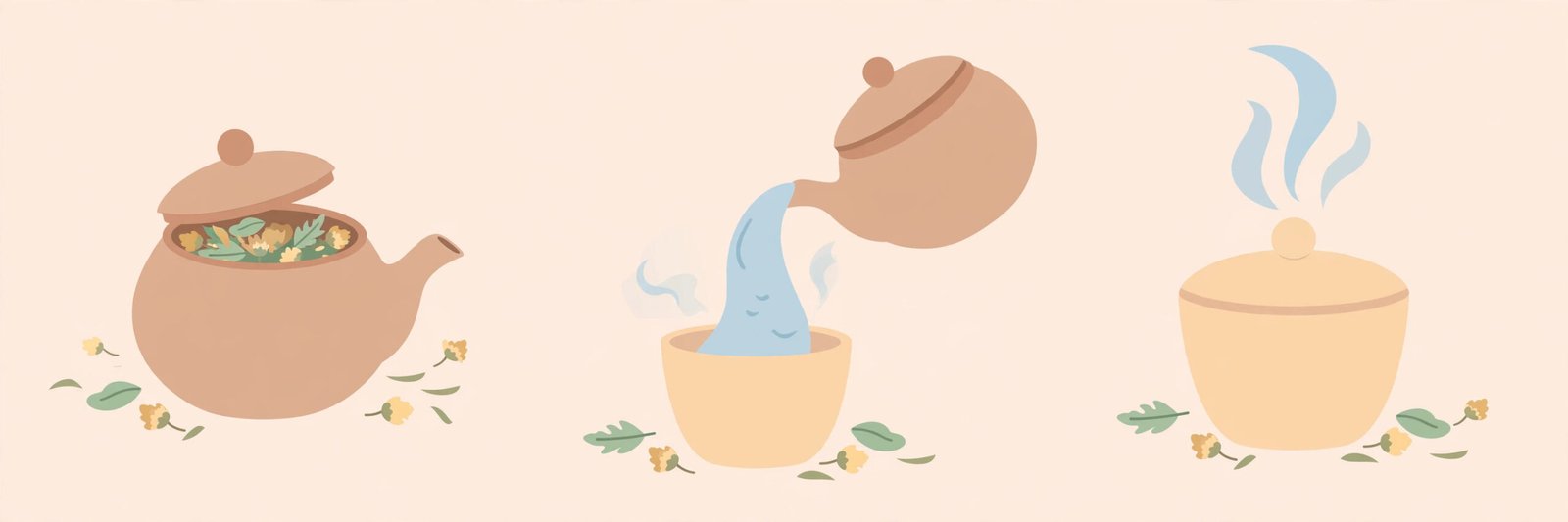
Most herbal teas brew the same way: 1 teaspoon of dried herb (or 1 tablespoon fresh) per cup of just-boiled water. Cover the cup while it steeps to keep the aromatic compounds in. Steep 5–10 minutes — 5 for light and sweet, 10 for stronger — then strain and add honey or lemon if you like.
Two exceptions: roots and barks (valerian, dandelion root, ginger) benefit from a longer steep or a gentle simmer, and delicate flowers (chamomile, lavender) prefer slightly cooler water so they do not turn bitter.
What Herbal Tea Won’t Do
- It won’t melt fat. No tea burns fat on its own — a sugar-free tea can replace a sugary drink, and that swap is the real benefit.
- It won’t “detox” you. Your liver and kidneys handle that. Teas that claim to detox are selling a story, not a mechanism.
- It won’t replace medication. The strongest results here come from extracts and powders at supplement doses, not teacups. Keep your medical treatment.
- It won’t cure insomnia, anxiety, or any disease. A calming cup supports a good routine, but a sleep or anxiety disorder needs proper care.
- It won’t work overnight. The honest benefits build over weeks of regular cups, not one mug.
Herbal Tea Safety: Who Should Ask First
One to two cups a day of normally brewed tea is likely safe for most healthy adults. But “natural” is not the same as “safe for everyone.” The cautions below apply across this guide; each tea’s full article has its own list.
- Pregnancy and breastfeeding: raspberry leaf, red clover, and hibiscus need a clinician’s agreement before daily use in pregnancy. For other teas, stay at food-level amounts and ask your provider first.
- Blood-pressure and diabetes medicines: hibiscus may add to blood-pressure medicines and diuretics; cinnamon may add to blood-sugar medicines. Tell your doctor if you drink either daily.
- Blood thinners: large amounts of clove, cinnamon, and vitamin-C-rich rosehip may interact with warfarin and other blood thinners.
- Sedatives and sleeping pills: valerian, skullcap, and passionflower may add to the effect of sedative medicines and alcohol. Do not combine them without asking your doctor.
- Hormone-sensitive conditions: spearmint, red clover, and raspberry leaf can influence hormone pathways. Check with your doctor if you have a hormone-sensitive condition or take hormone therapy.
- Allergies: chamomile belongs to the daisy family — avoid it if you are allergic to ragweed, daisies, or chrysanthemums. Mint allergy means avoiding spearmint and peppermint.
- Children: most herbal teas are not studied in children. Keep children’s cups weak and infrequent, and ask a paediatrician first.
One cup a day of normally brewed tea is a food-level amount. Supplement-strength doses are a different thing — do not treat the tea and the capsule as interchangeable.
Frequently Asked Questions
Is herbal tea the same as green tea?
No. Green tea is a true tea from Camellia sinensis and contains caffeine. Herbal tea is an infusion of other plants — leaves, flowers, roots, or spices — and is usually caffeine-free.
Which herbal tea is best for sleep?
Chamomile has the most sleep research and is the safest first choice. Lemon balm and passionflower are good second choices. Valerian has the most trial evidence for falling asleep faster, but it smells strong and can interact with sedatives. None cures insomnia — they support a wind-down routine.
Can I drink herbal tea every day?
For most healthy adults, one to two cups a day of a normally brewed tea is a food-level amount and is generally fine. Rotate your teas rather than drinking the same strong herb daily for months, and check with your doctor if you are pregnant, take medication, or live with a medical condition.
Is herbal tea safe in pregnancy?
Some teas are fine in food amounts, but several need care: raspberry leaf and red clover only with a clinician’s agreement, and hibiscus is best avoided. Ask your provider about each specific tea rather than trusting a general list.
What about ashwagandha and saffron tea?
Both are popular calming teas with small but growing bodies of research. Ashwagandha is an adaptogen traditionally used for stress resilience, and saffron tea has early evidence for mood support — but large amounts of saffron are unsafe in pregnancy. Read our ashwagandha tea benefits and saffron tea benefits guides for the full evidence and safety notes.
Medical Disclaimer: This article is for general information only and is not medical advice. Herbal teas can interact with medications and medical conditions. If you are pregnant, breastfeeding, taking medication, or living with a medical condition, talk to your doctor before using herbal tea regularly.
Sources
- Healthline — “10 Healthy Herbal Teas You Should Try” (chamomile, peppermint, ginger, hibiscus, rooibos, lemon balm, rosehip evidence summaries).
- U.S. National Center for Complementary and Integrative Health (NCCIH) — “Chamomile” and “Green Tea” monographs.
- Grant, P. — Spearmint tea and PCOS hormones, randomised controlled trial, 2010 (PubMed PMID 19585478).
- Christensen R et al. — Meta-analysis of rosehip powder for osteoarthritis, Osteoarthritis and Cartilage, 2008.
- Individual herb claims are documented in each linked Soothe guide, with study-level sources cited there.


