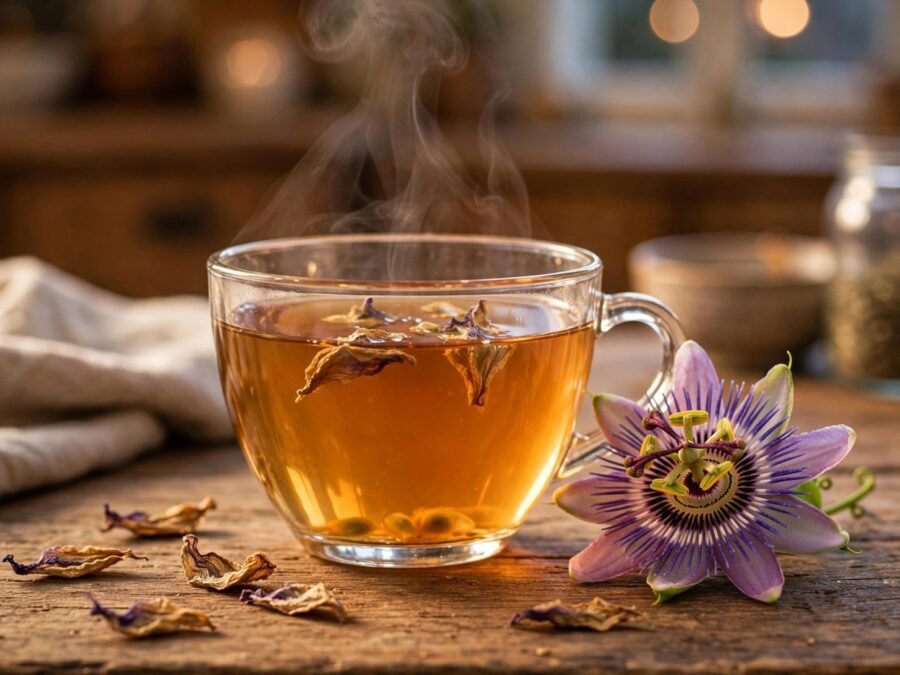
Some evenings need more than a warm mug — they need your mind to stand down. Passionflower tea benefits are worth knowing if your thoughts race long after lights-out: this unassuming herbal tea carries one of the strongest calming reputations in herbal medicine. Honest caveat first: most research used concentrated extracts, not home-brewed tea — so think of it as a gentle nightly habit, not a treatment. And respect the flip side: passionflower is a genuine herbal sedative, so its safety rules matter as much as its benefits.
What Is Passionflower Tea, and What Does It Taste Like?
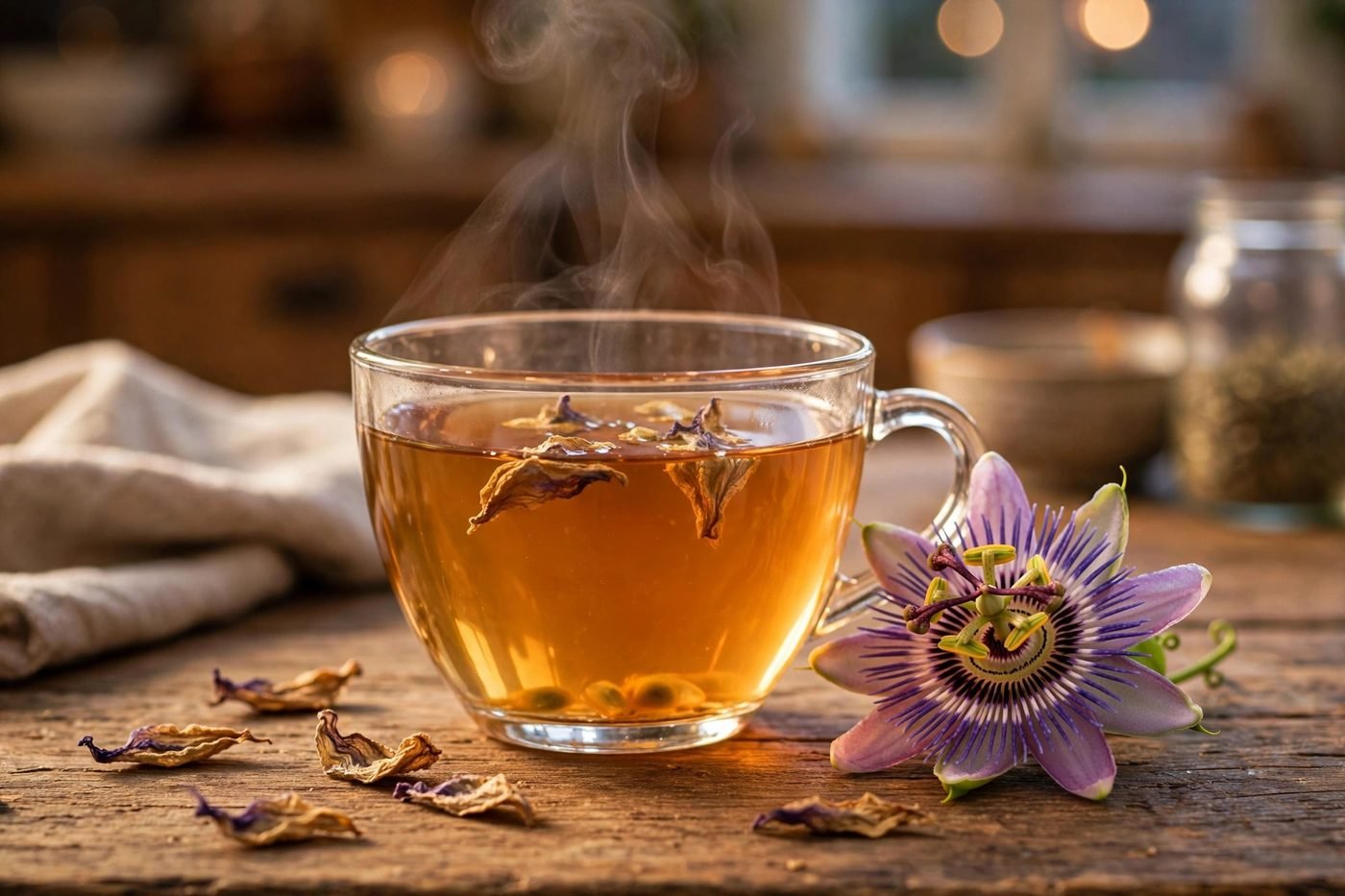
Passionflower tea is brewed from the dried aerial parts of Passiflora incarnata, a climbing vine native to the southeastern United States with striking white-and-purple flowers. It has a long history as a folk remedy — in Brazil, Turkey, Iraq, and North America — and European herbal regulators recognize it as a traditional remedy for mild mental stress and sleeplessness, while Germany’s Commission E listed it for restlessness and nervous tension. In the cup, it’s mild and pleasantly grassy with an earthy note — sweeten it with honey if you like. Like most herbal teas, it’s naturally caffeine-free: no tea-plant leaf, no caffeine.

8 Gentle Passionflower Tea Benefits Worth Knowing
Here’s the evidence, honestly framed:
1. A Genuinely Calming Cup for Everyday Anxiety
Research suggests passionflower raises GABA — the brain’s main calming signal, bringing relaxation, steadier mood, and better sleep (Healthline’s passionflower review). The standout: a 2001 trial in 36 people with generalized anxiety found Passiflora extract as effective as the drug oxazepam over four weeks, with less impairment of job performance. Small trial, concentrated extract — but it explains this calming tea’s serious reputation for anxiety relief. For another stress-focused cup, our tulsi tea benefits guide covers a different tradition’s answer.
2. May Support Better Sleep Quality
A rare thing: an actual tea study. A double-blind, placebo-controlled trial found passionflower herbal tea modestly improved subjective sleep quality versus placebo — not only borrowed from extract research (MedicineNet). Plausible mechanism: in mice, a single dose raised blood melatonin, the sleepiness hormone (Healthline). Think “drifts you off more easily,” not “knocks you out” — mild, and consistency beats strength.
3. Traditionally Used for Nervous Restlessness
Long before trials, passionflower was the herb for the wired-but-tired feeling: mental chatter, restlessness, the inability to settle. European herbal regulators formally recognized that traditional use — the EMA/HMPC monograph documents it for mild mental stress and sleeplessness, and Germany’s Commission E cited it for restlessness with difficulty falling asleep. Tradition isn’t proof, but centuries of consistent use is a meaningful signal.
4. May Help Unwind Everyday Physical Tension
Stress settles into shoulders, jaws, and backs too. Herbal tradition has long used passionflower as a gentle relaxant for that wound-up physical feeling, likely via the same GABA-mediated calming action. Keep it soft: a “noticeably easier to unclench” cup, not a muscle treatment. For a different unwinding brew, our peppermint tea benefits guide covers another tension-easing favorite.
5. A Respectable Antioxidant Cup
Not just about calm: its flowers and leaves contain flavonoids (vitexin, chrysin), maltol, indole alkaloids, and coumarins — compounds described as powerful antioxidants that help protect cells from oxidative stress and free-radical damage (MedicineNet). You’d drink this tea for calm, not antioxidants — but it’s a quiet bonus in every cup.
6. Naturally Caffeine-Free — the True Bedtime Cup
Made from a flower and vine rather than the tea plant, it has zero caffeine by nature — a genuine lights-out drink with no afternoon cutoff. It’s the stronger-calming cousin to our gentler chamomile tea for sleep ritual: chamomile is mild, passionflower is the one for restless nights.
7. May Ease Menopause-Related Restlessness
Firmly “promising but early”: studies on passionflower products have reported improvements in several menopausal complaints — night sweats, hot flashes, headaches, irritability, and the restless, anxious edge that ruins nights (MedicineNet). The proposed link is the same GABA-raising calming action. Treat it as early-evidence support for restful nights, not a therapy. For another women’s-health herbal staple, our raspberry leaf tea benefits guide is worth a look.
8. A Calming Bedtime Ritual Worth Building
Never underestimate the ritual. Brewing a cup, covering it to steep, sitting down away from screens — that sequence tells your nervous system the day is over, and passionflower’s mild sedative character gives the ritual something real. Give it a week: one cup per night for at least seven days is the suggested pattern before judging the effect.
How to Make Passionflower Tea
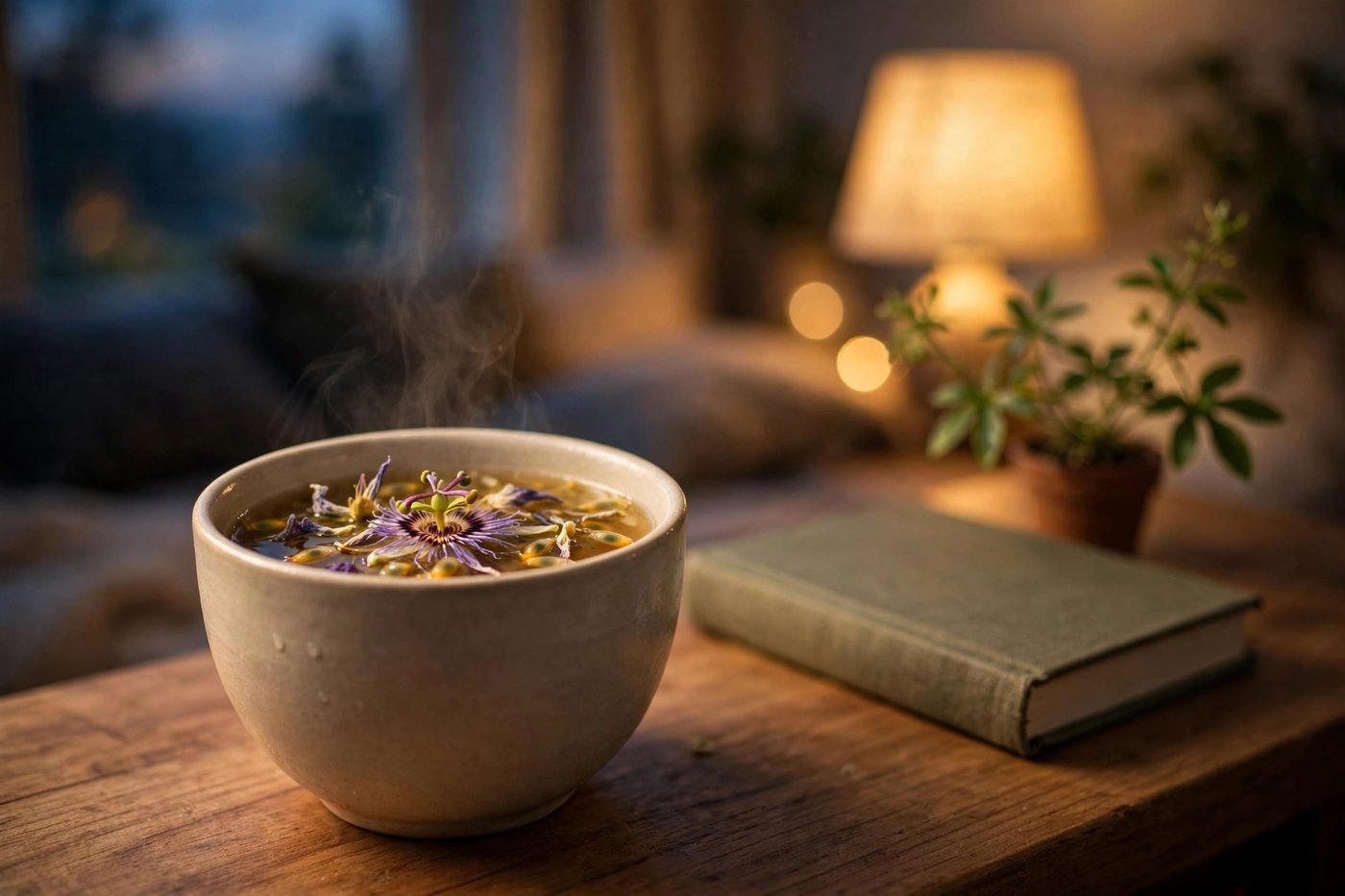
Simple steeping — no simmering needed. Cover the cup while it steeps to keep the delicate aromatics in.
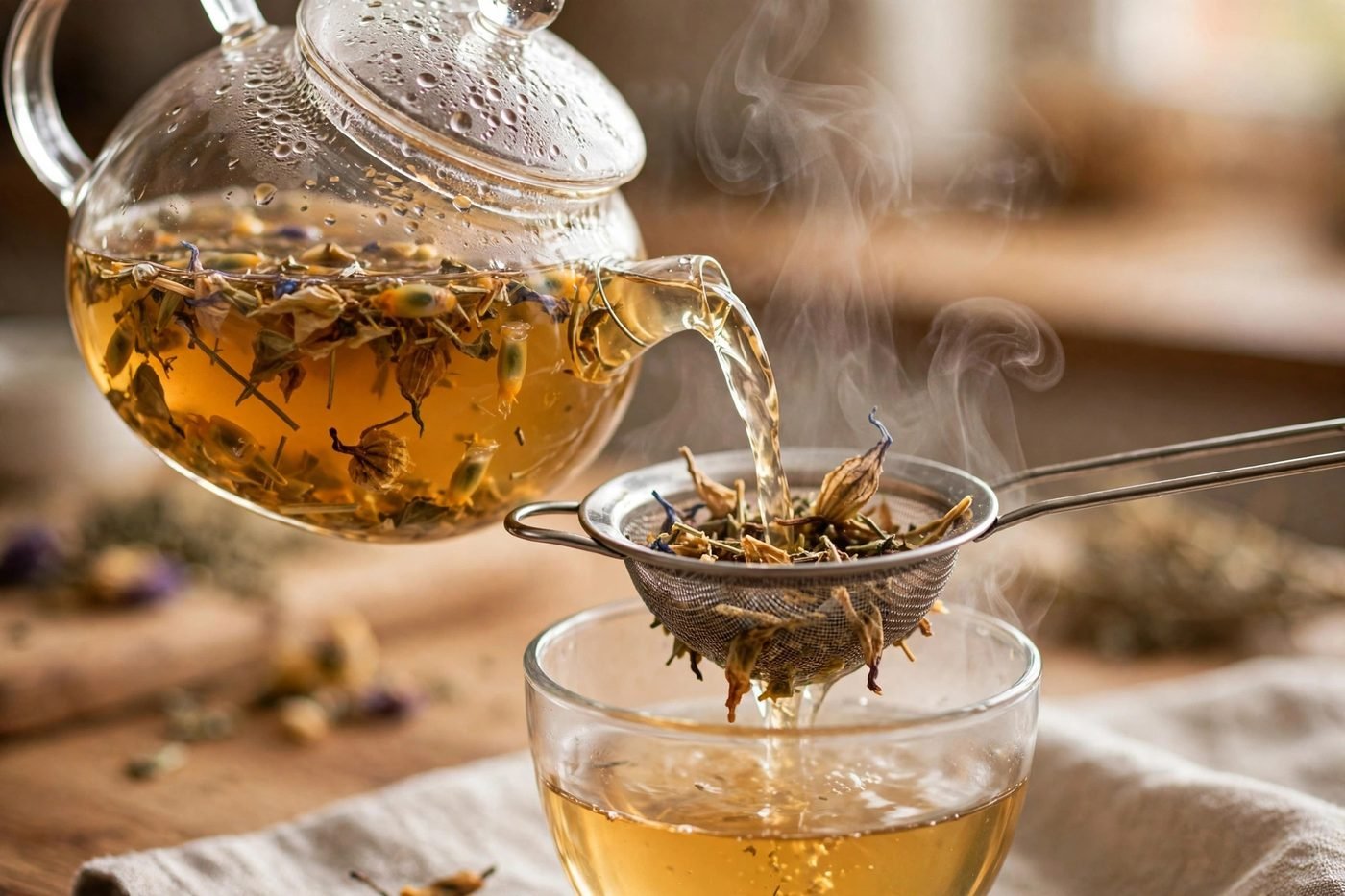
Simple Passionflower Tea (1 Serving)
Ingredients
- 1 tablespoon dried passionflower (about 2 grams) or 1 passionflower tea bag
- 1 cup boiling water
- Raw honey to taste (optional)
Steps
- Place the dried passionflower or tea bag in a mug.
- Pour the boiling water over it and cover the mug.
- Steep 5–10 minutes — 6–8 is the sweet spot; a full 10 makes a stronger cup.
- Strain out the herb or remove the tea bag.
- Stir in honey if you like, and drink 1–2 hours before bed.
Time: 10 minutes | Servings: 1
Evening-Ritual Variation with Chamomile
For a softer bedtime blend, steep 1 teaspoon of dried passionflower with one chamomile tea for sleep bag in the same cup — chamomile’s gentle mellowness with passionflower’s deeper calm. A thin slice of lemon works nicely, though purists keep it plain.
Passionflower Tea Safety: Who Should Skip It
Passionflower is a real herbal sedative, so read this carefully. Do not combine it with benzodiazepines, prescription sleep medications, or other sedatives without your doctor’s say-so — the calming effects can stack. A 2023 study did find dry passionflower extract helped people tapering off benzodiazepines manage withdrawal symptoms, but that was a supervised clinical setting, not a reason to mix herbs and prescriptions at home. It causes drowsiness — don’t drive or operate machinery after a strong cup. Avoid it in pregnancy — plant compounds may stimulate uterine contractions, and safety data for breastfeeding is insufficient (MedicineNet). Stop using it before surgery, since it may amplify anesthesia’s effects. Europe’s herbal monograph does not recommend it for children under 12. More than the recommended amount may cause dizziness, nausea, vomiting, or confusion. On any medication, check with your doctor first — herbal products aren’t held to pharmaceutical quality standards. None of this makes a nightly cup dangerous for a healthy adult; it just makes passionflower an herb that deserves respect.
Passionflower Tea FAQ
How long before bed should I drink it?
About 1–2 hours before bed. And give it time: one cup every night for at least a week before judging the effect.
Will passionflower tea make me drowsy?
It can — that’s the GABA-mediated sedative action at work, and it’s the point of the tea. Brew it when you’re done for the day, and don’t drive afterward.
Passionflower vs chamomile: which is better for sleep?
Chamomile is gentler; passionflower has the stronger sedative research (GABA mechanism, oxazepam-comparison trial). If chamomile alone hasn’t quieted your restless nights, passionflower is the next step — or blend both, as in the recipe above.
Can I drink it every day?
A nightly cup for a week-plus is the studied pattern; European guidance allows the tea several times daily for short periods. Anyone pregnant, under 12, or on medication should get medical advice first.
Is it safe during pregnancy?
Avoid it. Compounds in passionflower may stimulate uterine contractions, and there isn’t enough safety data for pregnancy or breastfeeding. Talk to your doctor about alternatives.
Does it contain caffeine?
None at all. It’s made from the passionflower vine, not the tea plant — naturally caffeine-free, as noted above.
For a brighter-tasting alternative with a similar calming role, see our lemon balm tea benefits guide.
1 Comment