

Lemon balm tea every evening sounds like the simplest wind-down ritual in the world: one warm cup, thirty quiet minutes, then bed. If you are thinking of trying lemon balm tea every evening for 2 weeks, it helps to know what the research actually supports, what is just marketing, and how to run the experiment honestly.
Here is the honest headline: lemon balm (Melissa officinalis) has promising but modest evidence for easing mild stress and sleep complaints, mostly from small trials using extracts rather than tea. A two-week evening trial is a sensible, low-risk way to see whether the ritual helps you — with expectations in the “gentle nudge” range, not the “life-changing cure” range.
Why Evening? And Why 2 Weeks?
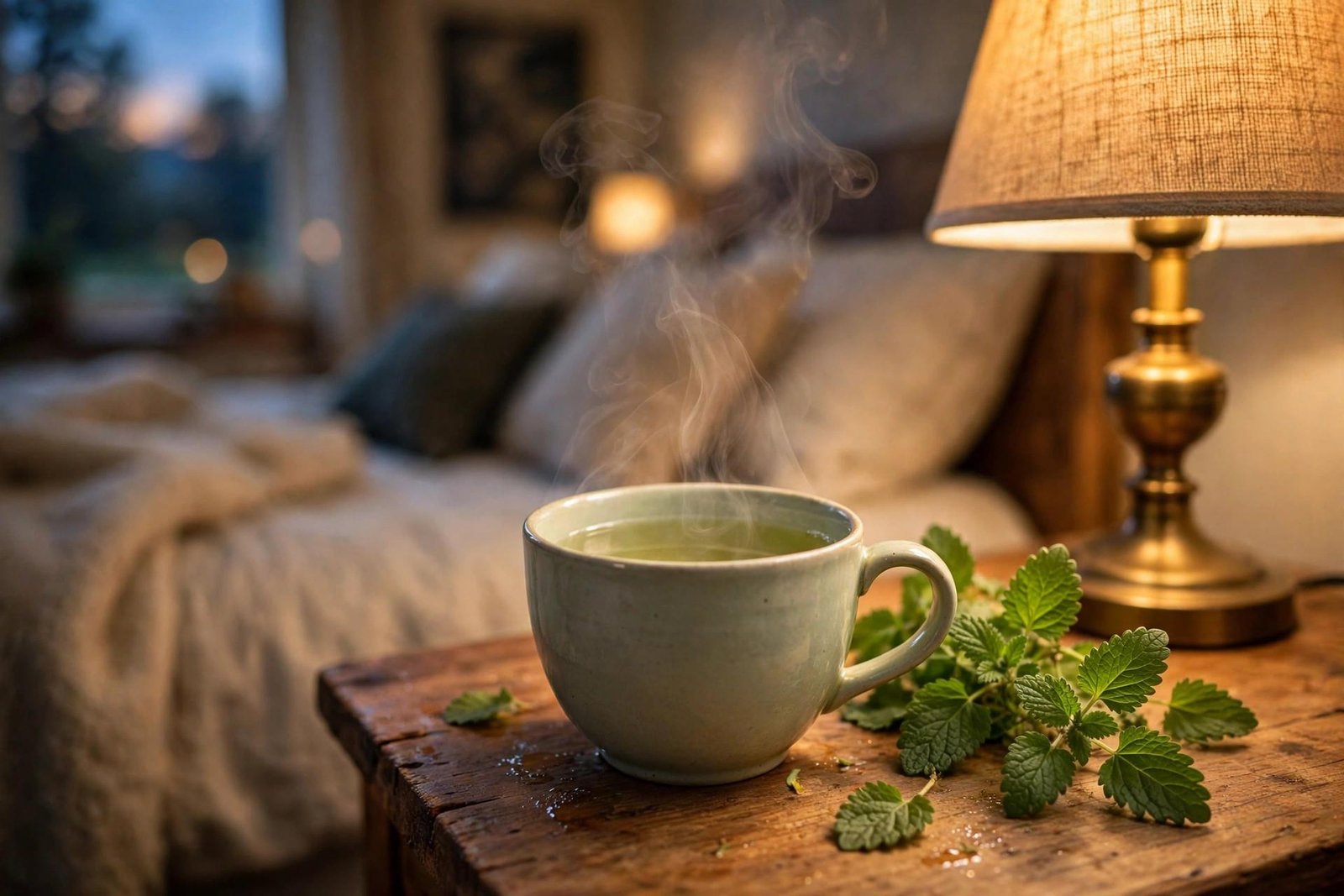
Evening is the natural slot for lemon balm because its traditional use is calming, not energizing. The herb is caffeine-free and pairs naturally with a wind-down routine: dim lights, screens off, a warm cup in hand.
Two weeks is a practical trial window. The most directly relevant modern trial — a 2024 double-blind, placebo-controlled crossover study of a lemon balm phytosome (a concentrated extract) in 30 adults — ran in two-week blocks, with participants taking two tablets each evening about 30 minutes before bed. A 2024 review in Nutrients found short trials of up to about three weeks reported good tolerability, while evidence for longer daily use is thinner.
One caveat: the 2024 trial used a standardized extract, not brewed tea. Extracts deliver a more concentrated, predictable dose. Tea is milder — fine for a gentle nightly ritual, but do not expect extract-strength results from a teacup.
What the Research Actually Says
Di Pierro and colleagues (2024, Nutrients) gave 30 adults (ages 18–65) either a lemon balm phytosome or a placebo each evening for two weeks, then swapped after a one-week washout. Insomnia severity scores improved significantly on the extract, deep slow-wave sleep increased (at the expense of some REM sleep), and 87% reported improved sleep quality on the extract versus 30% on placebo.
A 2024 review in Nutrients found reasonable evidence that lemon balm may reduce mild stress and sleep complaints, while stressing that studies vary widely in dose, form, and length. It also summarized a small trial in 36 burn patients who drank lemon balm tea (about 5 g of leaf per day) for 20 days: half of those with sleep problems in the lemon balm group moved into the no-problem range, versus one patient in the control group.
Other evidence is thinner. A 1999 trial of a valerian-plus-lemon-balm preparation found sleep quality improved in 33% of the combination group versus 9% of placebo — but combination results cannot be credited to lemon balm alone. And in a 2024 trial of a multi-herb sleep formula containing lemon balm, both groups improved by about three points on the Pittsburgh Sleep Quality Index, a reminder that sleep trials carry strong placebo responses.
5 Things That May Change in 2 Weeks
Plausible, modest changes — things you may notice, not promises. Track them with a one-line note each morning.
1. An easier wind-down. The most realistic benefit is the ritual itself: a fixed cue that tells your nervous system the day is over. The 2024 review supports lemon balm as a gentle aid for mild stress, not a sedative.
2. Less evening rumination. A warm cup plus ten screen-free minutes gives a busy mind somewhere to land. Often the chatter quiets simply because the evening now has a pause in it.
3. A calmer stomach after dinner. Lemon balm has a long traditional use for mild digestive discomfort. If heavy evening meals leave you uneasy, a gentle cup after dinner may feel soothing.
4. Gentler sleep onset. The change the extract trial supports most directly: people fell asleep more easily and rated their sleep better. With tea, expect a softer version — drifting off a little more easily, not being knocked out.
5. A clearer sense of what actually helps you. Two weeks of notes — sleep onset, night wakings, morning grogginess — gives you real personal data. Even “no change” is useful: it tells you to try a different wind-down tool.

The Evening Recipe: Simple Lemon Balm Tea
Keep it plain for the trial. Fancy blends make it impossible to tell what helped.
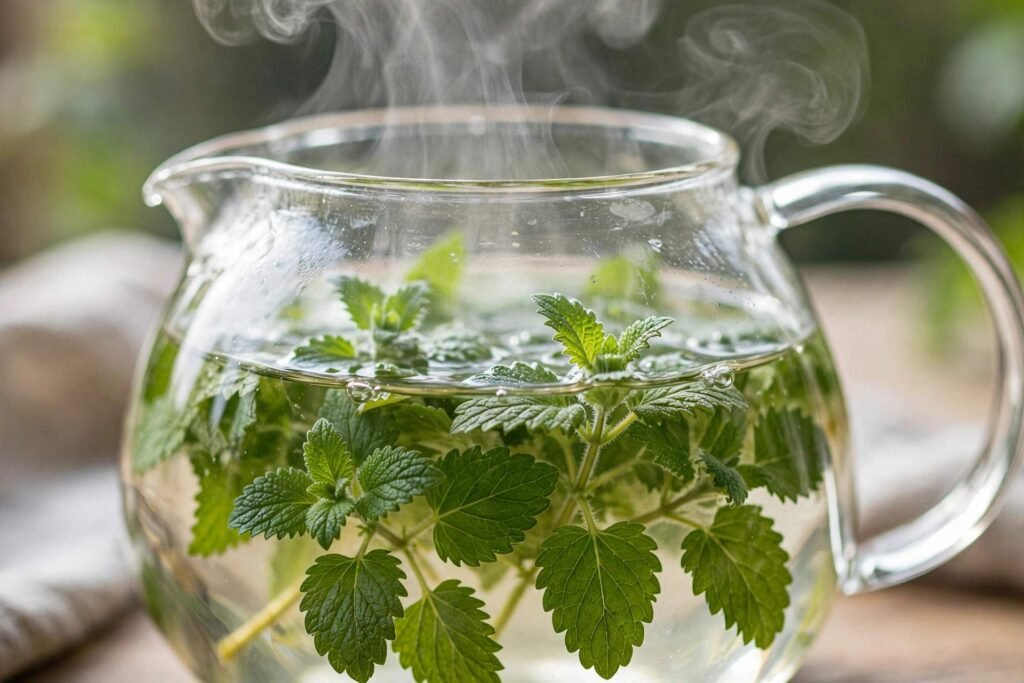
You need (1 cup): 1–2 teaspoons dried lemon balm leaves (or 1 tablespoon fresh leaves, lightly bruised); 1 cup (about 240 ml) freshly boiled water; optional: a thin slice of lemon or a small drizzle of honey.
Steps:
- Place the leaves in a cup or teapot. Pour over the just-boiled water.
- Cover and steep for 5–10 minutes. Covering keeps the aromatic oils in the cup.
- Strain, then sip slowly over 10–15 minutes.
- Drink 30–60 minutes before bed, as part of your wind-down — not in bed, not while scrolling.
Practical notes: Dried leaf from a reputable herb seller is more consistent than a random garden cutting, and tea bags work fine. Standard references put crude lemon balm herb at roughly 1.5–4.5 g per day — one or two cups sits comfortably in that range. Store leaves airtight and away from light.
Run it as a real trial: same time nightly, track sleep onset, night wakings, and morning grogginess, then take a week off after two weeks before deciding whether to resume.
Simple Lemon Balm Tea
Ingredients
Equipment
Method
- Place the leaves in a cup or teapot. Pour over the just-boiled water.
- Cover and steep for 5–10 minutes. Covering keeps the aromatic oils in the cup.
- Strain, then sip slowly over 10–15 minutes.
- Drink 30–60 minutes before bed, as part of your wind-down — not in bed, not while scrolling.
Lemon Balm vs. Chamomile vs. Valerian at Night
Chamomile is the gentlest and best-studied for general relaxation (see our chamomile every night guide and chamomile tea for sleep). Lemon balm sits in the middle — more overtly calming than chamomile for a busy, tense mind. Valerian root is the strongest and most sedative-leaning (see valerian root tea benefits). For the full picture of this herb, see our lemon balm tea benefits guide and passionflower tea benefits for another gentle option.

Safety: Who Should Skip It or Check First
Lemon balm tea in normal food amounts is considered likely safe for most healthy adults, with mostly mild side effects in trials. Still, “natural” is not “safe for everyone”:
- Pregnancy and breastfeeding: not enough reliable information to confirm safety — avoid regular medicinal use and ask your clinician.
- Thyroid conditions: lemon balm may interfere with thyroid hormone levels and replacement therapy. Avoid daily use unless your doctor approves.
- Sedative medications: may add to drowsiness from sleep aids or anti-anxiety medicines. Do not combine without medical advice.
- Upcoming surgery: stop lemon balm at least two weeks before a scheduled surgery.
- Low blood pressure or glaucoma: traditional cautions exist for both; check with a clinician.
- Children: regular medicinal use is not established for young children. This trial is written for adults.
- Driving: if the tea makes you drowsy, save it strictly for the evening.
If you notice persistent nausea, dizziness, or unusual drowsiness, stop the trial. If you have chronic insomnia — trouble sleeping three or more nights a week for three months or longer — a nightly tea is not a substitute for proper evaluation.
Hype to Ignore
- “Lemon balm melts belly fat.” No credible trial supports weight-loss claims for lemon balm tea. A calmer evening may reduce stress-snacking — that is the honest version, and it is a maybe, not a promise.
- “It flushes toxins / detoxes your body.” Your liver and kidneys handle that. Tea does not detox you.
- “It replaces sleep medication.” It does not. Lemon balm is a gentle herbal ritual, not a substitute for prescribed treatment.
Frequently Asked Questions
Can I drink lemon balm tea every night?
For a two-week trial, yes, if none of the safety cautions above apply. For longer daily use, take breaks (two weeks on, one week off) and check in with a clinician.
What if nothing changes after two weeks?
Then you have a clean answer: this ritual is not your sleep tool. Try a different wind-down approach — a lavender tea ritual, a consistent lights-out time, or, for persistent insomnia, CBT-I with a professional.
The Bottom Line
Lemon balm tea every evening for 2 weeks is a low-cost, low-risk experiment with genuinely promising — but modest and mostly extract-based — evidence behind it. Brew it plain, keep the timing consistent, and judge it against your own baseline.
This article is for general information only and is not medical advice. Talk to your healthcare provider before starting any daily herbal habit, especially if you are pregnant, take regular medication, or have a thyroid condition.