
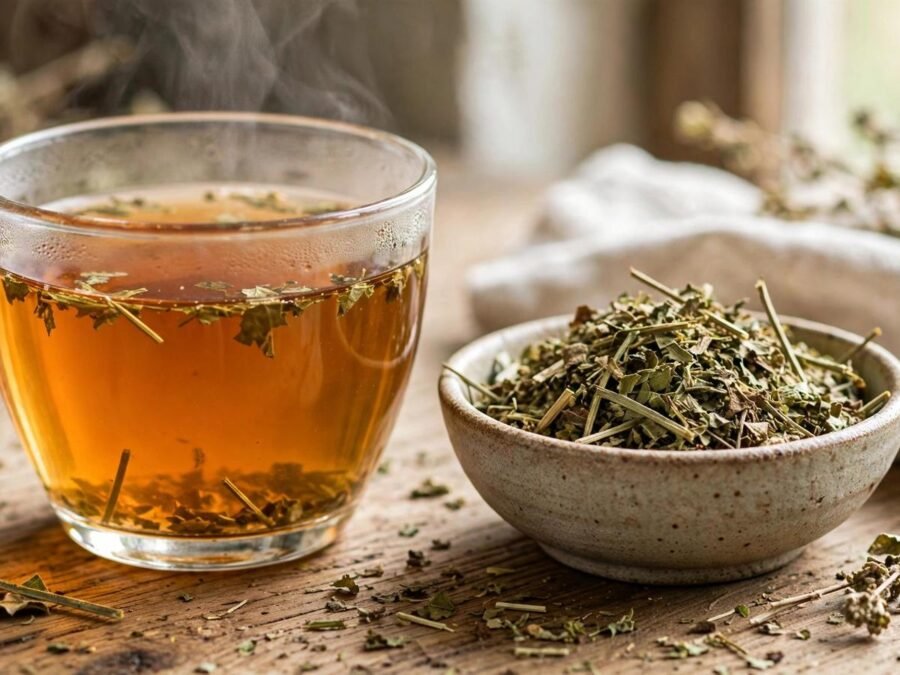
Chamomile gets all the bedtime glory, but herbalists have a quieter favorite for wired-but-tired evenings: skullcap. The real skullcap tea benefits are gentler than any miracle cure — a mild, earthy, naturally caffeine-free cup that traditional herbalism has long reached for to take the edge off nervous tension and ease restless nights. Human research is thin: most of what we know comes from centuries of traditional use plus early lab work.
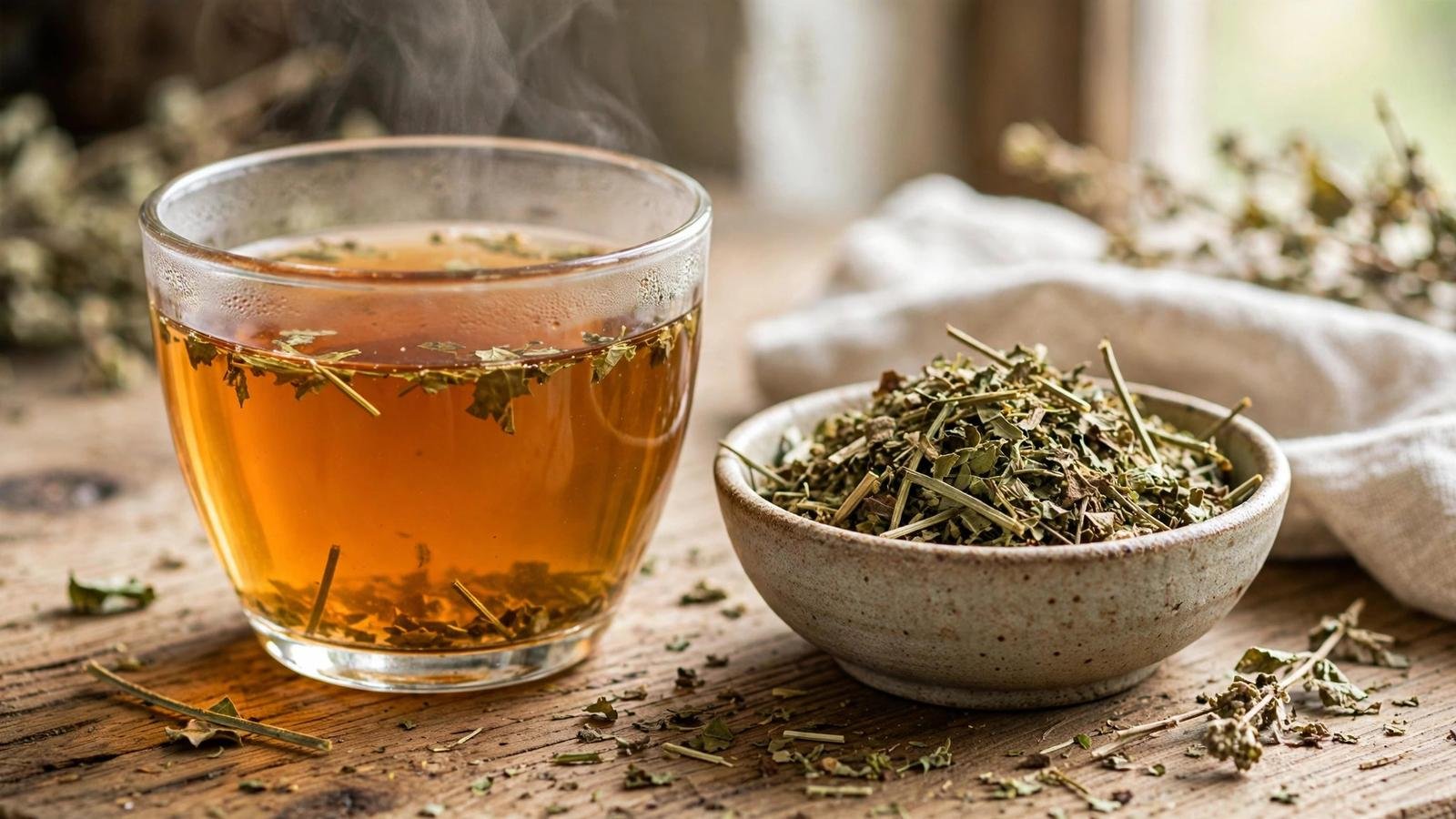
What Is Skullcap Tea, and What Does It Taste Like?
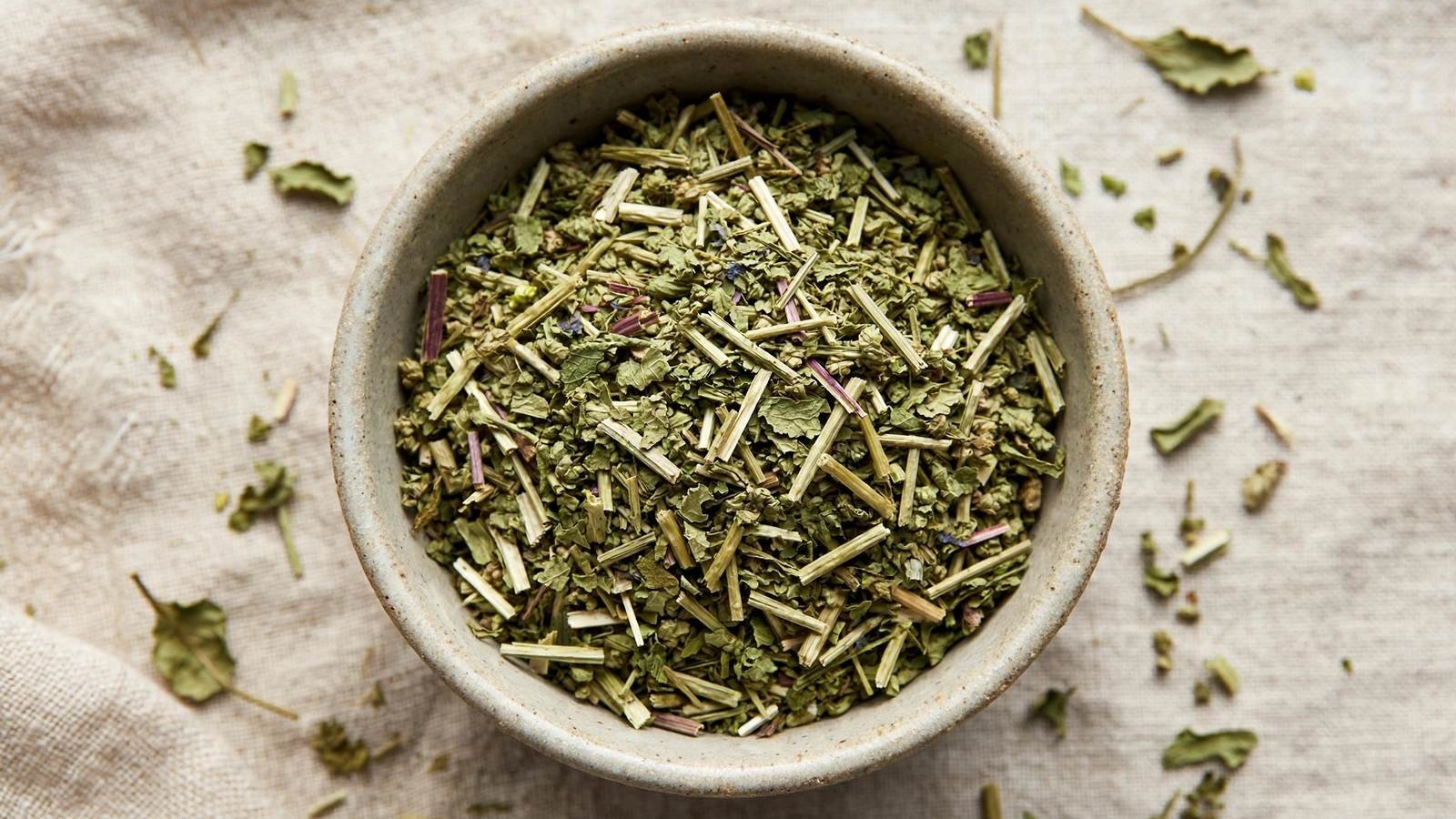
Skullcap tea is brewed from the dried aerial parts — leaves, stems, and flowers — of Scutellaria lateriflora, a North American plant in the mint family. Herbalists call it a nervine: an herb traditionally used to relax the nervous system rather than sedate it (WebMD’s skullcap overview).
The taste is plain: mild, earthy, a little bitter — the tea you drink for what it does, not for dessert. Blending (recipe below) fixes that.
One old folk name is “mad dog skullcap” — a 1700s folk remedy given for rabies after dog bites. That says more about 18th-century desperation than about the herb; the nervine reputation is the one that survived.
1. May Calm “Wired but Tired” Evenings
Skullcap’s signature role: the evening when your body is exhausted but your mind won’t stop. Herbalists reach for it for frayed nerves. Early lab research found some skullcap flavonoids interact with the GABA-A receptor — the same general area where calming medicines act — which may explain the traditional calm, though human evidence is limited (WebMD).
2. May Support a Calmer Path to Sleep
A classic “wind-down” herb, sipped an hour before bed to quiet the mental noise that delays sleep. It doesn’t tend to knock you out — the reputation is easing toward sleep without morning grogginess. If sleep is the whole mission, our chamomile tea for sleep guide is the heavy hitter; skullcap is the gentler partner.
3. Traditionally Used to Ease Muscle Tension
Long used as an antispasmodic — an herb traditionally believed to ease tight, twitchy muscles, from a clenched-jaw tension headache to the neck-and-shoulder knot of a stressful week. A warm cup plus a few shoulder rolls is the traditional pairing — gentle tradition, not proof of pain relief.
4. May Build Calm With Consistent Use
Not a one-cup transformation: give it one to two weeks of consistent daily use before judging its effect on baseline tension. That slow build is part of the nervine reputation: less a sedative hit, more a steadying of frazzled nerves.
5. A Gentle Daytime Option for Tense Nerves
At modest strength, skullcap is traditionally sipped during the day for frayed nerves without the drowsiness stronger sedatives bring — clear-headed calm, not couch-lock. For a stronger traditional sleep herb, see our passionflower tea benefits guide.
6. Flavonoid Antioxidants
Like many mint-family plants, skullcap contains flavonoids — plant compounds studied in early lab work. An honesty note: the headline flavonoids you may read about — baicalin and wogonin — come mainly from Chinese skullcap root, a different species with different research (see below). American skullcap’s evidence is mostly traditional use, not human trials.
7. A Naturally Caffeine-Free Evening Ritual
With zero caffeine and essentially no calories per cup, skullcap is one of the kindest things to sip at 9 p.m. — a warm, bitter-herb pause that replaces doomscrolling or a late sugary drink. For a more floral evening option, see our lavender tea benefits guide.
American vs Chinese Skullcap: Don’t Mix Them Up
“Skullcap” on a label can mean two different species with different parts, uses, and safety:
- American skullcap (Scutellaria lateriflora): the aerial parts — leaves, stems, flowers. The traditional nervine tea herb of this article: calm, sleep, tension. Native to North America.
- Chinese or Baikal skullcap (Scutellaria baicalensis): the root, used in traditional Chinese medicine. Rich in the well-studied flavonoids baicalin and wogonin, and used for different purposes — mostly as capsules or decoctions, not the gentle tea here.
Always check the label’s Latin name before buying. If it says Scutellaria baicalensis root, it’s not the calming tea herb — and its safety profile differs (WebMD).
How to Make Skullcap Tea (Hot + Iced Blend)
Skullcap needs a longer steep than most teas — cover the cup to keep the delicate aromatics in.
Hot Skullcap Tea (makes 2 cups)
- 2 teaspoons dried American skullcap herb (about 1 teaspoon per cup)
- 2 cups (500 ml) water, just off the boil
- Optional: 1 teaspoon lemon balm or peppermint + 1 teaspoon honey per cup (tames the bitterness)
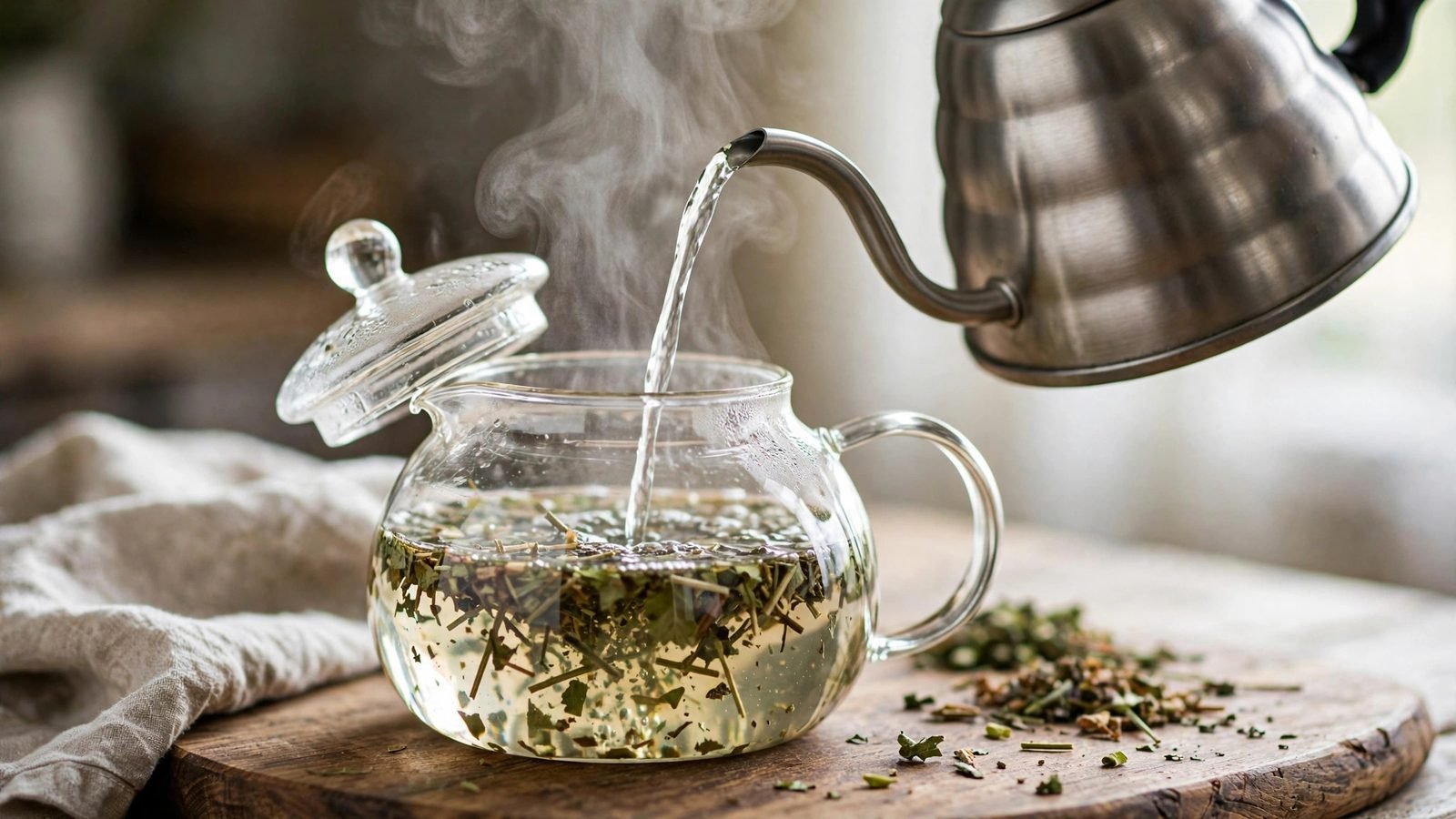
- Bring the water to a boil, then rest it a minute so it’s just off the boil. Add the skullcap (and lemon balm or peppermint, if using) to a teapot or infuser and pour the water over.
- Cover and steep 10–15 minutes — longer than most teas (10 minutes minimum for tea bags).
- Strain, stir in honey if you like, and sip warm. For daytime calm, use 1 teaspoon per cup and steep 8–10 minutes for a lighter cup.
Iced Skullcap–Lemon Balm Blend (makes about 1 quart)
- 4 teaspoons dried skullcap + 2 teaspoons dried lemon balm (double strength — ice dilutes)
- 2 cups (500 ml) hot water + 2 cups cold water or ice
- 1–2 teaspoons honey, stirred in while warm
- Steep the herbs in the hot water, covered, for 15 minutes, then strain.
- Stir in the honey while warm, pour over ice, and finish with fresh lemon balm or peppermint leaves.

Skullcap Tea vs. Chamomile Tea: Which Calming Cup?
chamomile tastes apple-like and owns the bedtime-sleep reputation (chamomile tea for sleep); skullcap tastes earthier and carries the stronger nervine tradition for wired nerves and muscle tension. Skullcap for tense evenings; chamomile when sleep is the whole mission — or blend half-and-half.
Safety: Who Should Skip Skullcap Tea or Check First
Human research is thin, so caution rules:
- Liver injury: rare case reports link skullcap products to liver damage — some cases may have involved products adulterated with the unsafe plant germander (WebMD). Buy reputable product; stop use and call your doctor with dark urine, yellowing skin or eyes, or unusual fatigue.
- Sedative stacking: don’t mix skullcap with sleep or anxiety medications, prescription pain medicines, or alcohol — it may increase drowsiness. Don’t drive until you know how it affects you.
- Pregnancy and breastfeeding: safety is not established — avoid it.
- Mint-family allergies: skullcap is in the mint family — avoid it if you’re allergic to mint, basil, or related plants.
- Amount: stick to 1–3 modest cups a day of the real tea herb (S. lateriflora aerial parts), and give it 1–2 weeks of consistent use before judging it.
Skullcap Tea FAQs
Is American skullcap the same as Chinese skullcap?
No. American skullcap (S. lateriflora) is the aerial-part nervine tea herb; Chinese skullcap (S. baicalensis) is the root used in traditional Chinese medicine. Check the Latin name on the label.
How long does skullcap tea take to work?
Herbalists treat it as a cumulative herb: give it 1–2 weeks of consistent daily use before judging its effect on baseline tension.
How many cups of skullcap tea can I drink per day?
1–3 modest cups daily. More is not better with skullcap — keep it moderate.
Is skullcap tea caffeine-free?
Yes — pure skullcap herb tea is naturally 100% caffeine-free.
Can skullcap damage the liver?
Rare case reports link skullcap products to liver injury, some possibly involving adulterated products (WebMD). Stop and see your doctor if you notice dark urine, yellowing skin or eyes, or unusual fatigue.
Can I drink skullcap tea during pregnancy?
No — safety during pregnancy is not established, and skullcap is generally not recommended while pregnant or breastfeeding. Ask your doctor about alternatives.
The Bottom Line
Skullcap tea won’t cure anything — but as a gentle, caffeine-free nervine with centuries of traditional use, it earns its place for wired-but-tired evenings. Brew the right species, steep it long, blend the bitterness, and respect the safety rules.