
Search hibiscus tea after 30 days and you’ll find some of the wildest claims on the wellness internet: melted liver fat “while you shower,” arteries “scrubbed clean,” doctors left “speechless.” Let’s set those aside — not because hibiscus tea does nothing, but because what it may actually do is interesting enough without the hype. Of all the herbal teas, hibiscus has one of the more respectable research trails: human trials on blood pressure, small studies on cholesterol, and a clear antioxidant profile from its deep-red anthocyanins. Here’s an honest look at what a month of daily hibiscus tea may realistically change, what the viral claims get wrong, and how to brew it safely for 30 days.
What the Research Actually Supports
Before the list, the evidence baseline — drawn from Healthline’s reviewed summary of hibiscus research, which is admirably careful about what was studied in humans versus test tubes:
- Blood pressure: the strongest human evidence. A 2015 review of five studies found hibiscus tea lowered systolic and diastolic blood pressure by an average of 7.58 and 3.53 mmHg respectively. A small trial of 46 people with high blood pressure found greater BP decreases after one month of hibiscus tea versus placebo.
- Cholesterol: mixed. A small 2009 study of 60 people with diabetes found one month of hibiscus tea raised HDL (“good”) cholesterol and lowered total cholesterol, LDL, and triglycerides — but a review of 7 studies (362 participants) concluded it did not significantly reduce total cholesterol or triglycerides. Conflicting, in other words.
- Liver and weight: the exciting-sounding results (improved liver steatosis in 19 people over 12 weeks; reduced body weight and fat in 36 people over 12 weeks) all used concentrated hibiscus extract, not brewed tea. Extract ≠ tea. Don’t let anyone sell you the extract results as tea results.
- Antioxidants and bacteria: hibiscus is rich in polyphenols and anthocyanins (that’s the ruby color), and test-tube studies show antibacterial and cell-protective effects of extracts. No human studies confirm these translate to brewed tea.
The honest summary: one month of hibiscus tea has real, modest, human-trial support for blood pressure — and everything beyond that ranges from “mixed” to “extract-only, don’t extrapolate.” Now, what might that actually feel like over 30 days?
7 Honest Things That May Happen

1. Your blood pressure readings may trend downward
This is the change with the best evidence. If you track your BP at home, a month of 1–3 daily cups is the regimen most studied — and the average drops in the trials (around 7–8 points systolic) are meaningful, roughly comparable to some lifestyle interventions. It is not a replacement for medication, and if you’re on BP drugs, hibiscus can interact with them (more in the safety section). But as a dietary addition, this is hibiscus’s headline act.
2. Your cholesterol numbers may budge — or may not
Honesty requires the mixed verdict: one small diabetic-population trial showed improved HDL, LDL, and triglycerides after a month, while a larger pooled review found no significant effect on total cholesterol or triglycerides. If your lipids improve, consider it a bonus, not a promise. Diet-wide changes — like the ones in our anti-inflammatory breakfast ideas — move cholesterol more reliably than any single tea.
3. The soda (or second coffee) gets replaced
The most underrated 30-day effect is substitution. Hibiscus tea is tart, vivid, and satisfying iced — it makes a genuinely good stand-in for soda, sweetened iced tea, or that afternoon coffee. If your current habit is a daily sugary drink, swapping in unsweetened hibiscus quietly removes a meaningful amount of sugar over a month. The tea deserves some credit; the missing soda deserves more.
4. Your antioxidant intake quietly rises
Those deep-red anthocyanins are potent plant antioxidants, and a daily cup or two adds them to your diet with zero effort. Will you “feel” antioxidants? No — nobody feels antioxidants. But as part of a colorful diet (berries, leafy greens, spices like the ones in our drinking turmeric tea every day guide), it’s a legitimate contribution to the pattern that research links to better long-term health.
5. Afternoons may feel steadier
Hibiscus is naturally caffeine-free. If your 30-day experiment replaces an afternoon coffee, you may notice fewer late-day jitters and easier evenings — the same substitution logic behind our green tea every day for 30 days experiment, minus the caffeine entirely. Don’t expect an energy “boost”; expect the absence of a crash.
6. Hydration gets easier (and skin may thank you)
Viral pages promise “glowing skin in weeks.” The honest version: hibiscus tea is water with flavor and vitamin C, and people who enjoy their drinks simply drink more fluid. Better hydration shows up in skin, energy, and digestion before anything exotic does. It’s the boring mechanism behind half the “miracle” testimonials.
4 Viral Myths to Ignore
“It melts liver fat while you shower.” The liver-steatosis study used concentrated extract for 12 weeks in 19 people with overweight — not brewed tea, not overnight, not “while you shower.” Tea may support the same pathways, but nobody has shown it.
“More anti-inflammatory than 10 cups of green tea.” This comparison appears on spammy pages with no cited measurement. Both teas contain anti-inflammatory polyphenols; ranking them by invented multiples is marketing, not science.
“It scrubs your arteries clean.” Arteries don’t work like pipes with buildup you can scrub, and no tea reverses atherosclerotic plaque. Hibiscus may modestly improve BP and possibly lipids — that’s the real, unglamorous claim.
“So effective you can drop your BP meds.” Dangerous. Healthline explicitly warns hibiscus may interact with blood pressure medications. Never adjust prescribed medication because of a tea — that’s a conversation for your doctor, full stop.
How to Brew It for the 30 Days
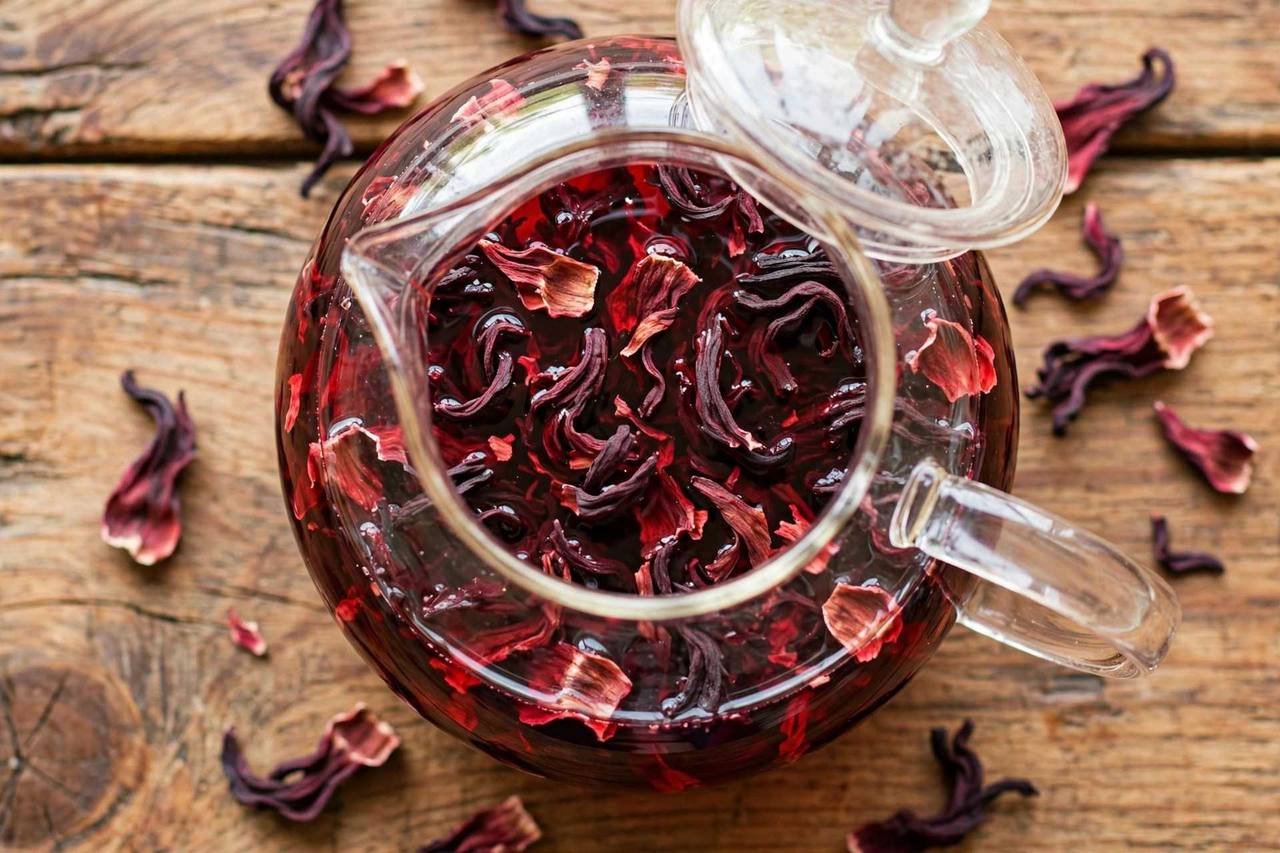

Daily Hibiscus Tea (Hot or Iced)
You need: 2 tablespoons dried hibiscus petals (Hibiscus sabdariffa) or 2 tea bags · 2 cups just-boiled water · optional: lime wedge, 1 tsp honey, a cinnamon stick, fresh mint
- Steep 5 minutes in just-boiled water, covered. The water turns a spectacular deep ruby — that’s the anthocyanins.
- Strain and choose your lane: drink hot as-is, or cool and pour over ice with lime for the classic agua de jamaica style.
- Sweeten lightly or not at all. Hibiscus is tart like cranberry; a little honey or lime balances it. Skip the sugar if blood sugar is your concern — see our cinnamon tea for blood sugar notes on keeping drinks low-glycemic.
- Timing: 1–3 cups daily, spread through the day. Many people like one mid-morning and one iced in the afternoon as the coffee replacement.
Buying tip: look for whole dried hibiscus flowers (often sold as “flor de jamaica”) rather than dusty tea-bag fannings — better flavor, and you can see what you’re getting.
The Safety Fine Print (Especially Read This)
Hibiscus tea is a food-level drink for most people, but it has more real cautions than most herbal teas. Blood pressure medications: hibiscus may interact with antihypertensive drugs — Healthline cites MedlinePlus on this — so anyone on BP meds should talk to their doctor first and monitor readings. Diabetes medications: possible blood-sugar effects mean the same caution applies. Pregnancy: hibiscus has traditionally been used in ways that affect menstruation, and safety in pregnancy isn’t established — most sources advise avoiding it while pregnant. Low blood pressure: if yours already runs low, a BP-lowering tea can push it lower; watch for dizziness. Surgery: stop 2 weeks before scheduled surgery as a general herbal precaution. Start with one cup a day and see how you feel before going to three.
Frequently Asked Questions
How much hibiscus tea should I drink per day for 30 days?
Most studied regimens used the equivalent of 1–3 cups daily. Start with one cup for a few days, then build to 2–3 if you tolerate it well and aren’t on interacting medications.
How fast does hibiscus tea lower blood pressure?
In trials, meaningful differences appeared over weeks, not hours — the 46-person trial measured at one month, the 2015 review pooled multi-week studies. Anyone promising overnight results is selling something.
Can I drink hibiscus tea at night?
Yes — it’s caffeine-free. Some people find the tart flavor refreshing in the evening; just note its mild diuretic reputation and don’t chug a quart right before bed.
Is hibiscus tea good for weight loss?
The weight-loss studies used concentrated extract, not brewed tea, and were small. As a zero-calorie soda replacement, though, it can absolutely support a weight goal — the honest mechanism is substitution, not fat-melting.
Who should avoid hibiscus tea?
Pregnant people, anyone on blood pressure or diabetes medication (without doctor approval), and people with already-low blood pressure should be cautious or avoid it.
Bottom line: hibiscus tea after 30 days is one of the more evidence-backed tea experiments you can run — with real human-trial support for blood pressure and an honest “mixed” on everything else. It also happens to taste great, which is why day 31 actually happens. Brew it well, ignore the miracle claims, and respect the medication interactions.