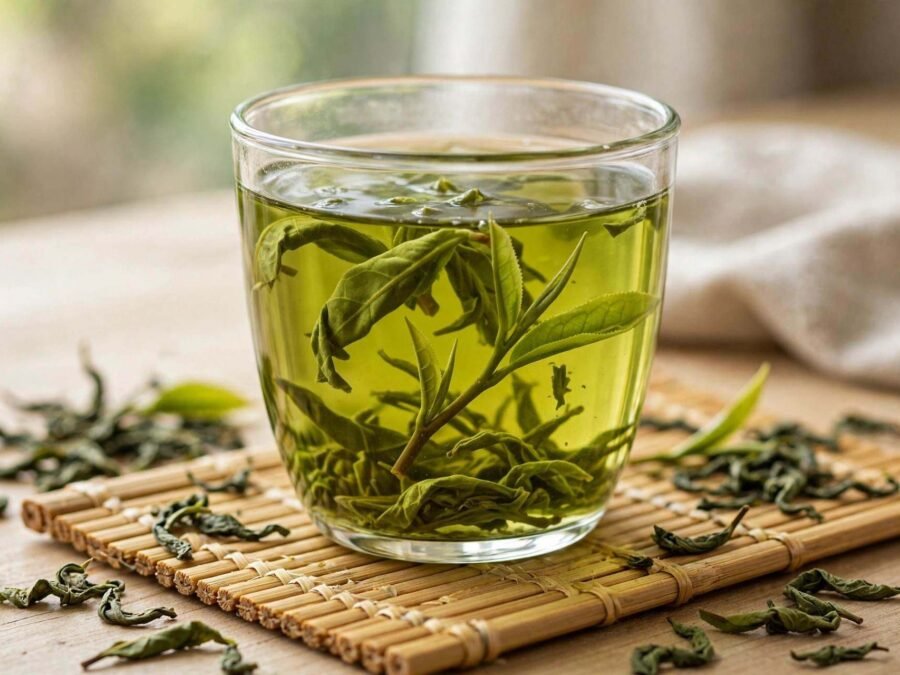
What happens when you drink green tea every day for 30 days? It is one of the world’s most-studied beverage habits — and the evidence is genuinely mixed in useful ways. The National Center for Complementary and Integrative Health (NCCIH) reports no safety concerns for green tea consumed as a beverage, modest effects on body weight, and slight reductions in total and LDL cholesterol — while warning that liver-injury reports involve concentrated extracts, not your cup. Here are seven honest things a month of daily green tea may change — starting with the coffee swap, which is where most of the magic quietly happens.
Why the Coffee Swap Is the Real Story
Before the seven: the single biggest change most people feel in 30 days of green tea isn’t the tea — it’s what the tea replaced. A standard cup of coffee delivers roughly 95 mg of caffeine in one sharp spike; a cup of green tea delivers roughly 30–50 mg alongside L-theanine, an amino acid associated with calm, focused alertness. Swap the afternoon coffee for green tea and the classic 3pm crash often softens — not because green tea is magic, but because you removed the spike-and-crash cycle. Keep that lens on for everything below.
7 Honest Things That May Change in 30 Days
1. Steadier energy, fewer jitters
The caffeine-plus-L-theanine combination is green tea’s signature: moderate stimulation without coffee’s edgy peak. Daily drinkers often describe it as “awake but not wired” — a steadier plateau through the morning instead of a rocket launch and a landing. If coffee makes you jittery or anxious, this is the change you’ll feel first, usually within the first week.
2. Afternoon focus without the crash
L-theanine is widely studied for the calm, focused feeling tea drinkers associate with it — the opposite of coffee’s wired-then-tired arc. A 2–3pm cup often carries focus through the late afternoon without wrecking the evening wind-down, provided you stop by mid-afternoon. For the evening half of the day, our chamomile tea for sleep is the caffeine-free handoff.
3. A modest metabolic nudge — not a fat burner
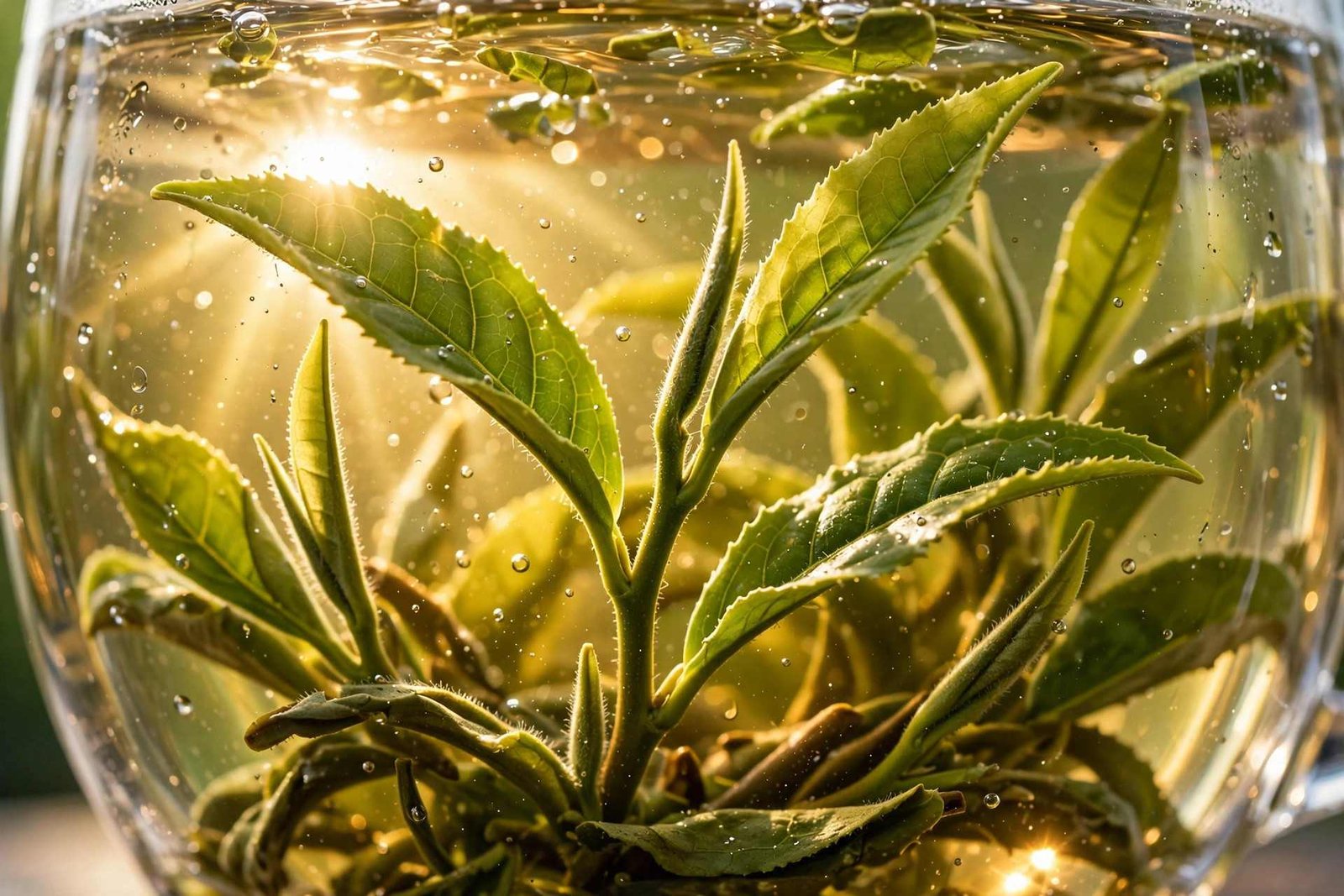
Honesty first, because this is where hype lives: the NCCIH states that the catechins and caffeine in green tea may have a modest effect on body weight, and its tea review states plainly that green tea has not been shown to be effective for weight loss. What the habit can do: as a near-zero-calorie replacement for sugary drinks, plus a small thermogenic nudge, it can support a sensible plan. Anyone promising “green tea melts belly fat in 30 days” is selling you something — usually extract pills.
4. Quiet antioxidant support for skin
Green tea is rich in catechins — notably EGCG — genuine antioxidants that help counter oxidative stress, which plays a role in skin aging. Thirty days of consistent intake plus better hydration may leave skin looking a little brighter and more even. The honest boundary: no beverage remodels skin in a month, and brewed tea delivers far less EGCG than the concentrated extracts used in skin studies. Support, not transformation.
5. Digestion settles when coffee leaves
Coffee is acidic and stimulates gastric acid — a known trigger for reflux and stomach upset in sensitive people. Many who swap the second or third coffee for green tea find their digestion calms within a couple of weeks. Green tea isn’t caffeine-free, but it’s gentler on the stomach for most people — and the swap removes the bigger irritant.
6. Cholesterol may dip slightly
One of the better-supported findings: the NCCIH reports that in randomized trials, green tea reduced total cholesterol and LDL (“bad”) cholesterol to a small extent (HDL and triglycerides were unaffected) — though most trials tested extract supplements rather than brewed tea. “Small extent” is the key phrase: a pleasant side benefit of a daily habit, not a treatment. Keep your statin; enjoy your tea.
7. You build a ritual that survives month two
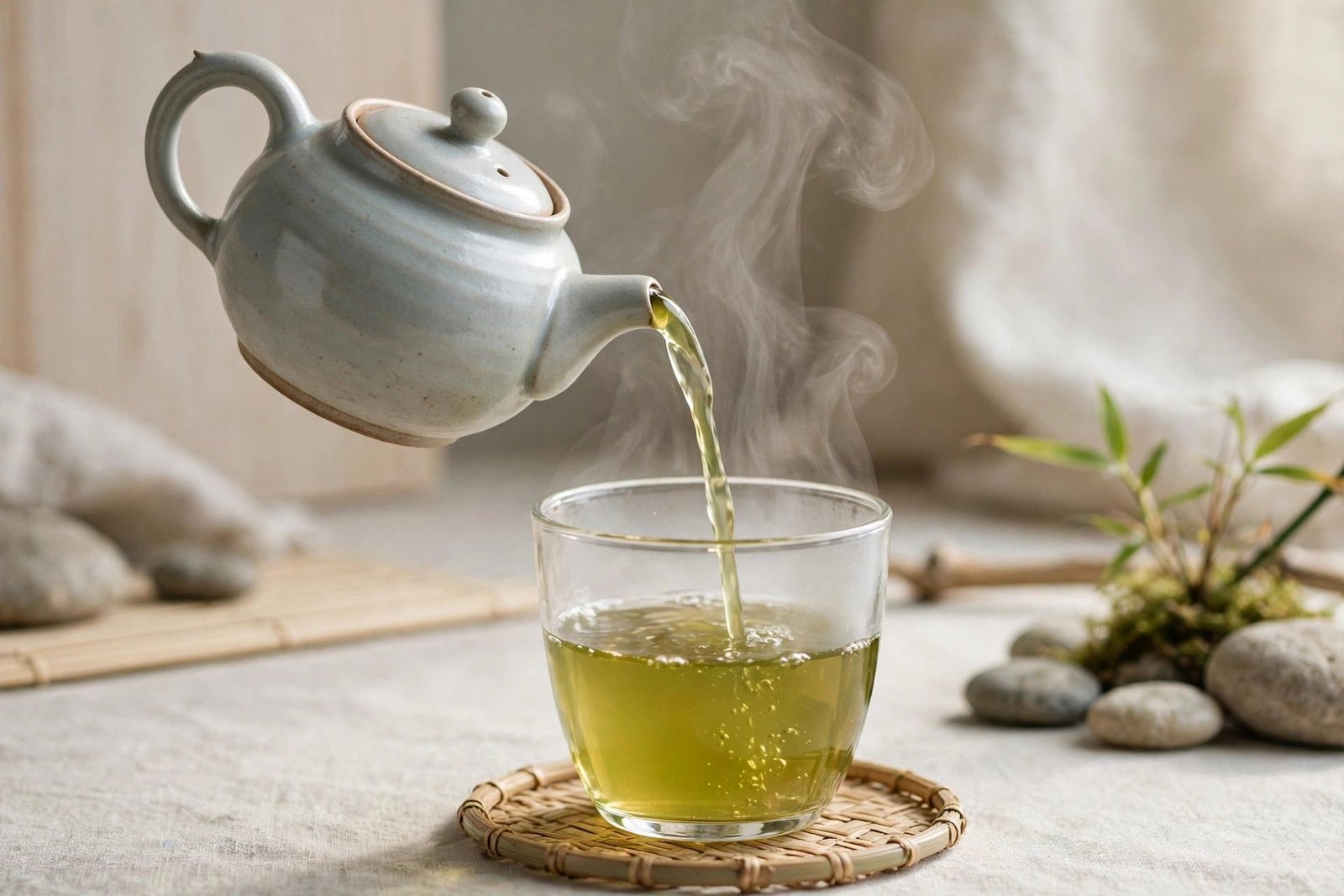
The underrated outcome: green tea is cheap, quick, and pleasant enough to keep doing. Most health habits die in week three; a 2-minute brew that tastes good has genuine staying power. And staying power is where compounding lives — the cholesterol nudge, the hydration, the calmer afternoons all accrue to people who are still brewing in month six. The best habit is the one you don’t quit.
Brew It Right: The Science of a Good Cup
The 30-Day Green Tea Method
Prep: 1 min | Steep: 2–3 min | Servings: 1 cup | Daily amount: 2–3 cups
Ingredients:
- 1 teaspoon loose-leaf green tea (or 1 quality tea bag) per cup
- 1 cup water at 70–80°C (160–175°F) — not boiling
Steps:
- Heat water until small bubbles form, then let it sit 1–2 minutes off the boil (boiling water scorches the leaves and makes the tea bitter).
- Warm the cup, add the tea, pour the water over, and steep 2–3 minutes — longer steeping extracts more tannins (bitterness) without more benefit.
- Strain fully (leaves left sitting keep extracting bitterness) and drink plain — skip the sugar to keep the habit near-zero-calorie.
The 30-day schedule: one cup mid-morning, one early afternoon; stop by 3pm if you’re caffeine-sensitive. Evenings belong to caffeine-free brews — see our peppermint tea.
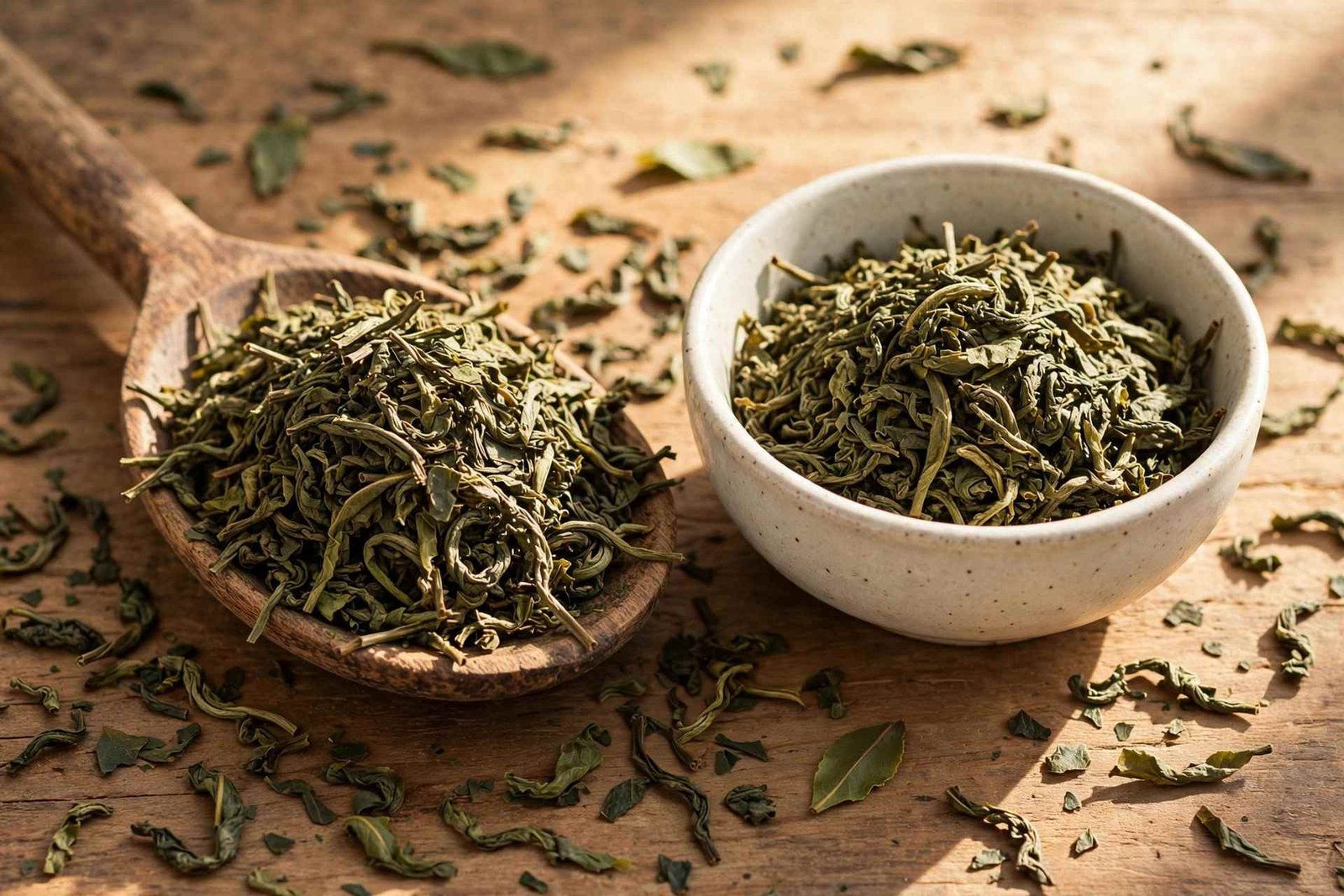
The Extract Trap: Your Cup Is Not a Supplement Pill
The most important safety distinction in this entire article: brewed green tea and green tea extract are different products with different risk profiles. The NCCIH reports no safety concerns for green tea consumed as a beverage by adults — but notes that liver injury, though uncommon, has been reported in people using green tea products, primarily extracts in tablet or capsule form, and that extract supplements can cause nausea, abdominal discomfort, and increased blood pressure. The 30-day habit in this article is cups of brewed tea. Leave the concentrated pills on the shelf — or discuss them with your doctor.
Safety: The Honest Fine Print
- Caffeine counts: 2–3 cups is moderate for most adults, but if you’re sensitive, pregnant, or breastfeeding, the NCCIH advises keeping caffeine moderate and checking with your provider. Stop by mid-afternoon if sleep suffers.
- Iron absorption: tea tannins can reduce non-heme iron absorption — drink your tea between meals rather than with them if iron matters for you.
- Medications: the NCCIH flags interactions — high doses reduced blood levels of the beta-blocker nadolol and the cholesterol drug atorvastatin. On daily medication? Mention the habit to your doctor.
- Empty stomach: green tea on an empty stomach can cause nausea in some people — have it with or after food.
- Kids: the caffeine makes green tea a poor choice for children; the habit in this article is for adults.
Read the NCCIH’s full green tea usefulness and safety review for the complete picture.
FAQs About Drinking Green Tea Every Day for 30 Days
How many cups of green tea per day is safe?
Two to three cups of brewed tea is the comfortable daily range for most adults — the NCCIH reports no safety concerns for green tea as a beverage. More cups mostly means more caffeine, not more benefit.
Does green tea burn belly fat?
The NCCIH states green tea has not been shown to be effective for weight loss; catechins plus caffeine may have only a modest effect on body weight. It supports a plan as a zero-calorie drink swap — it doesn’t melt fat.
Morning or evening — when should I drink it?
Morning and early afternoon. The caffeine (30–50 mg a cup) can disturb sleep if drunk late — evenings are for caffeine-free teas like chamomile or peppermint.
Is matcha better than regular green tea?
Matcha is whole-leaf powder, so you ingest the entire leaf — more caffeine and more EGCG per serving than steeped green tea. It’s a stronger version of the same habit, not a different one; start with regular green tea if you’re new.
Can I drink green tea on an empty stomach?
Some people get nausea or stomach discomfort from tea tannins on an empty stomach. With or after food is the gentler choice.
Keep the daily-cup habit going: our drinking turmeric tea every day for the golden alternative, lemon water every morning for 30 days for the caffeine-free morning option, tulsi tea as a gentler adaptogen brew, and chamomile tea for the evening handoff.
For a caffeine-free evening brew with genuine clinical research behind it, hibiscus tea is a tart, ruby-red option worth trying.