
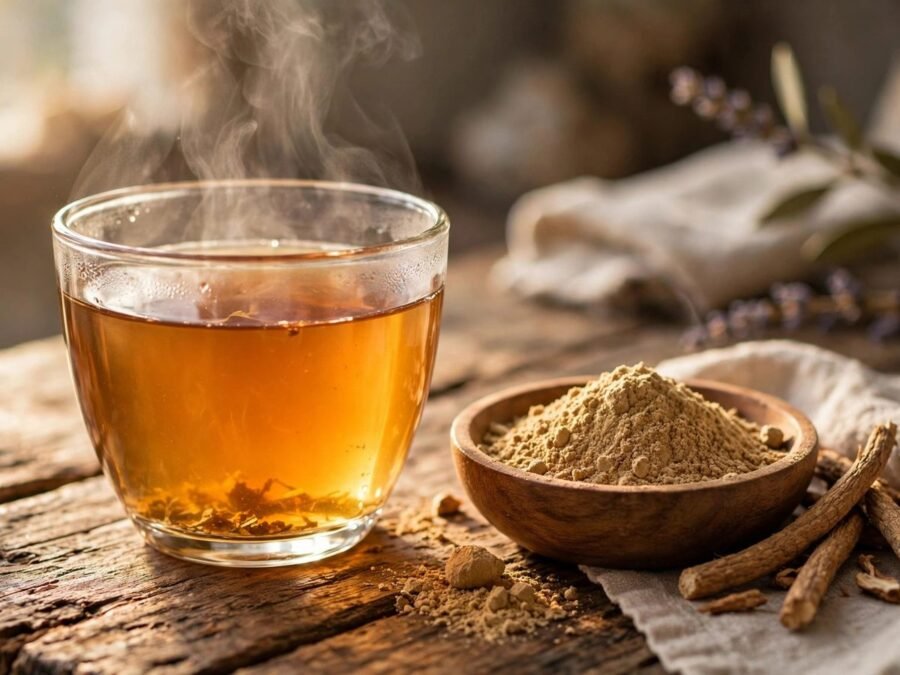
Ayurvedic practitioners have prescribed the bitter ashwagandha root for worn-out bodies and racing minds for 3,000 years. The honest ashwagandha tea benefits story: a warm, caffeine-free cup that may help you feel calmer, sleep deeper, and face busy days with more steadiness. But nearly every impressive trial used concentrated root extract capsules — not brewed tea. This guide keeps both truths in view.
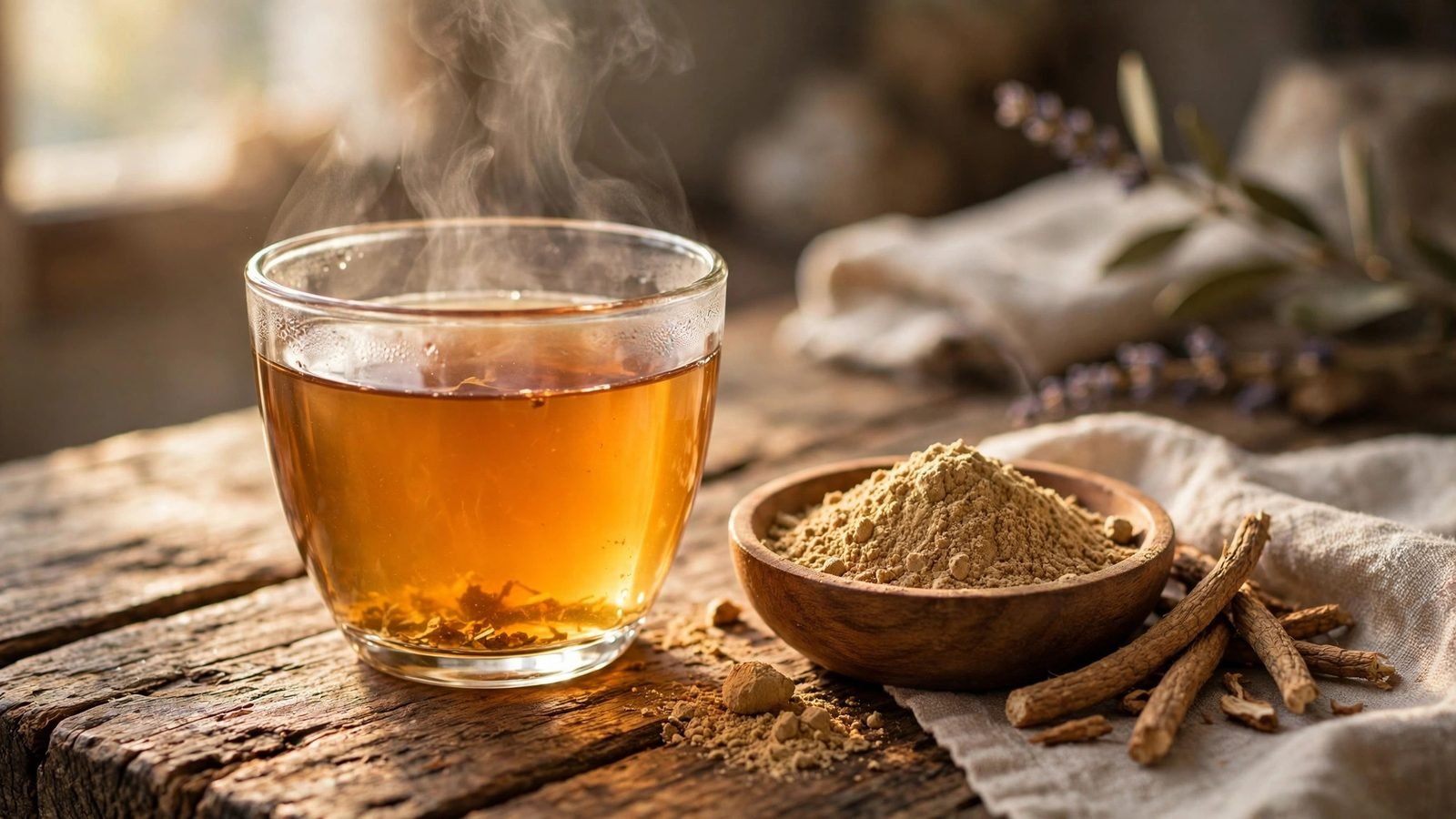
What Is Ashwagandha Tea, and What Does It Taste Like?
Ashwagandha (Withania somnifera) is a small shrub with yellow flowers native to India and Southeast Asia, and one of the most important herbs in Ayurveda — Sanskrit calls it “smell of the horse,” a nod to its scent and traditional reputation (Healthline’s evidence review).
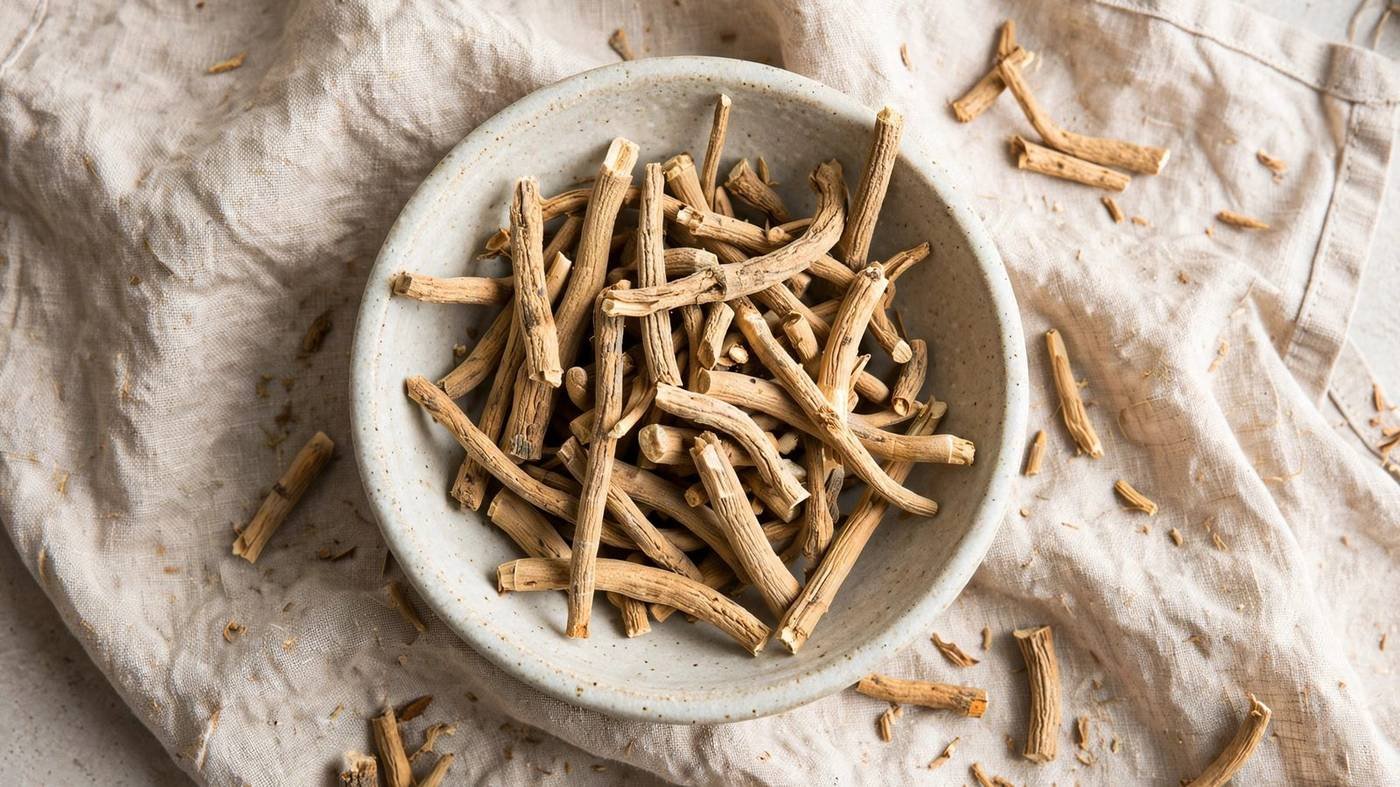
Shops sell loose root powder (simmered, not steeped) and tea bags (often spiced). Honest taste report: earthy, bitter, slightly musky — which is why the golden-milk recipe exists. Note: almost all clinical evidence comes from extracts, not tea — keep each claim at “may help,” never “will fix.”
1. May Help You Wind Down From Stress
In a small study of 58 participants, those taking 250 or 600 mg of ashwagandha extract daily for 8 weeks had reduced perceived stress and cortisol versus placebo (Healthline). A warm cup may mark the boundary between work stress and rest — though a 2021 review cautions the evidence can’t settle the best form or dose.
2. May Support Better Sleep
The NCCIH reports some ashwagandha preparations may be effective for insomnia and stress — its most solid evidence territory (NCCIH’s usefulness and safety page). One trial found 50 adults aged 65–80 taking 600 mg daily for 12 weeks reported better sleep quality and morning alertness than placebo (Healthline). A cup an hour before bed fits the tradition; see our chamomile tea for sleep guide for a two-tea rotation.
3. Steadier Energy, Without the Jitters
Ashwagandha is a rare two-directional herb in tradition: calming, yet used against weakness and fatigue. Early research links it to better oxygen use during exercise and greater strength gains (Healthline) — promising, but from extract doses. The tea is the slow, gentle cousin: no caffeine spike, no crash.
4. May Sharpen Focus and Memory
A review of five clinical studies found early evidence for support of attention, reaction time, and task performance, especially in older adults (Healthline). Many drinkers describe clearer, less-frazzled afternoons — likely owed to the calming effect as much as anything.
5. May Support Immune Balance and Healthy Inflammation Levels
Ashwagandha’s withanolides have shown anti-inflammatory activity in lab research, and one 2021 study of an Ayurvedic formula containing it saw reduced inflammatory markers — though the formula had other herbs too (Healthline). Traditionally, adaptogens are prized for keeping defenses balanced during stressful seasons rather than “boosting” immunity. For a stronger cold-season ally, see our turmeric tea recipe.
6. Naturally Caffeine-Free and Easy on the Evening
Not every benefit needs a study. Pure ashwagandha tea has zero caffeine — one of the few genuinely calming drinks you can sip at 9 p.m. without paying for it at 2 a.m. Swapping a late-night sugary drink for a warm herbal ritual has big wind-down payoffs.
7. A Mindful Ritual That Slows You Down
Brewing it properly takes patience — simmering, straining, warming milk. That 15-minute process is part of the medicine: a forced pause in a day that never pauses.
8. Pairs Beautifully With Sleep-Friendly Spices
The root’s bitterness blends naturally with cinnamon, cardamom, ginger, and turmeric. The golden-milk variation below turns an acquired taste into genuine comfort.
9. A 3,000-Year Tradition Behind Every Cup
Ashwagandha has been used in Ayurveda for thousands of years, and the NCCIH notes it may be safe short-term (up to 3 months) for most people — long-term safety is unknown. The caveat throughout: tea is gentler and less studied than trial extracts — brew it as a wellness ritual, not a prescription.
How to Make Ashwagandha Tea (Hot + Golden Milk + Iced)
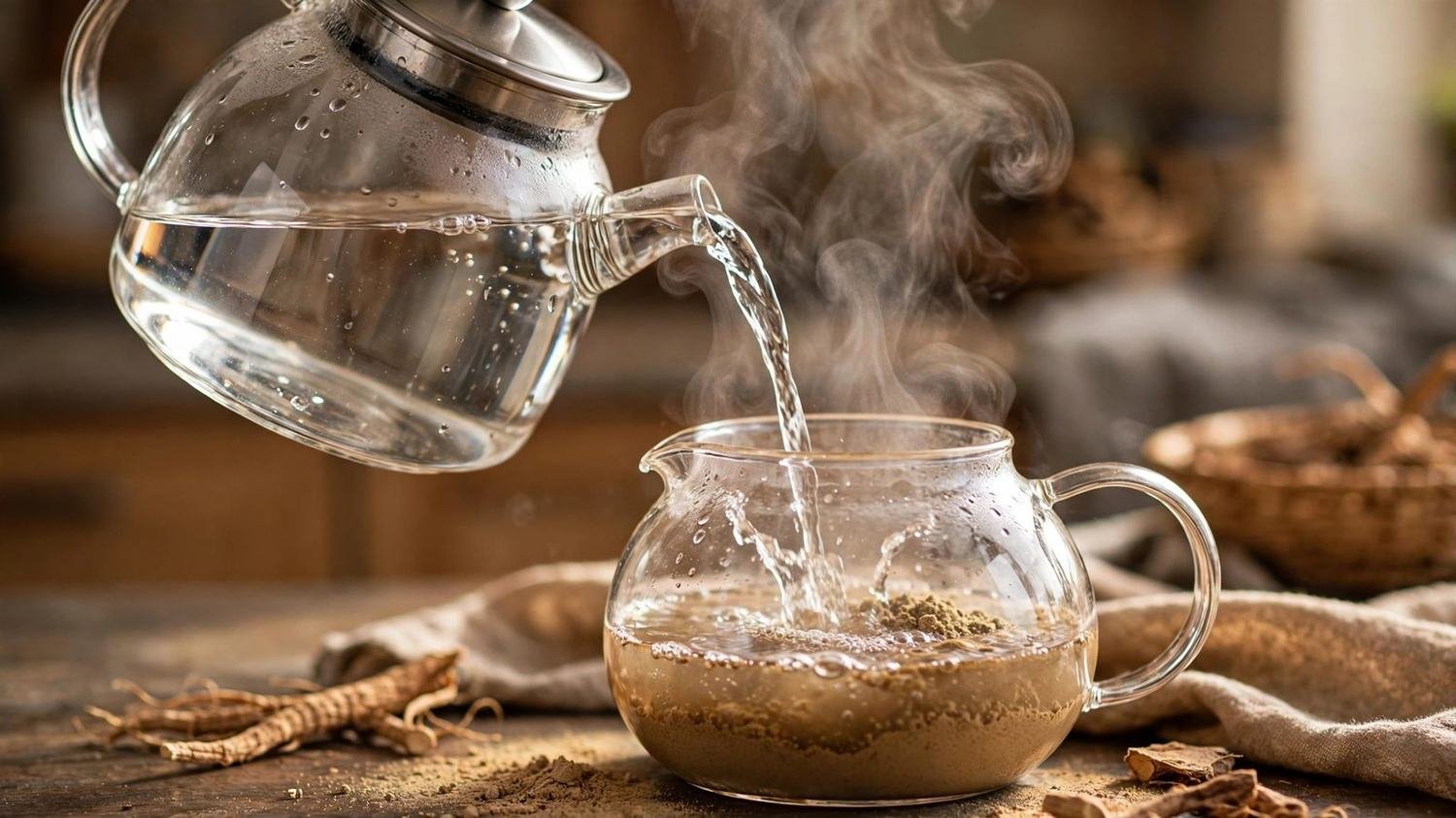
Root powder doesn’t dissolve, so the classic method is a gentle simmer. The golden milk version is the friendliest way in for bitterness-shy beginners.
Classic Root-Powder Tea (makes 2 cups)
- 1 tsp ashwagandha root powder (~2–3 g), 2 cups (500 ml) water, 1 cinnamon stick; optional honey and warm milk
- Simmer the water; whisk in the powder and cinnamon and simmer 10–15 minutes.
- Strain through a fine mesh sieve — the powder won’t dissolve; sweeten once drinkable-warm.
Quick Tea-Bag Version (makes 1 cup)
- 1 ashwagandha tea bag, 1 cup (250 ml) just-boiled water, honey and lemon to taste
- Steep in a covered mug for 5–7 minutes (longer is stronger but more bitter), then sweeten.
Golden Milk Ashwagandha (the bitterness fix — makes 1 mug)
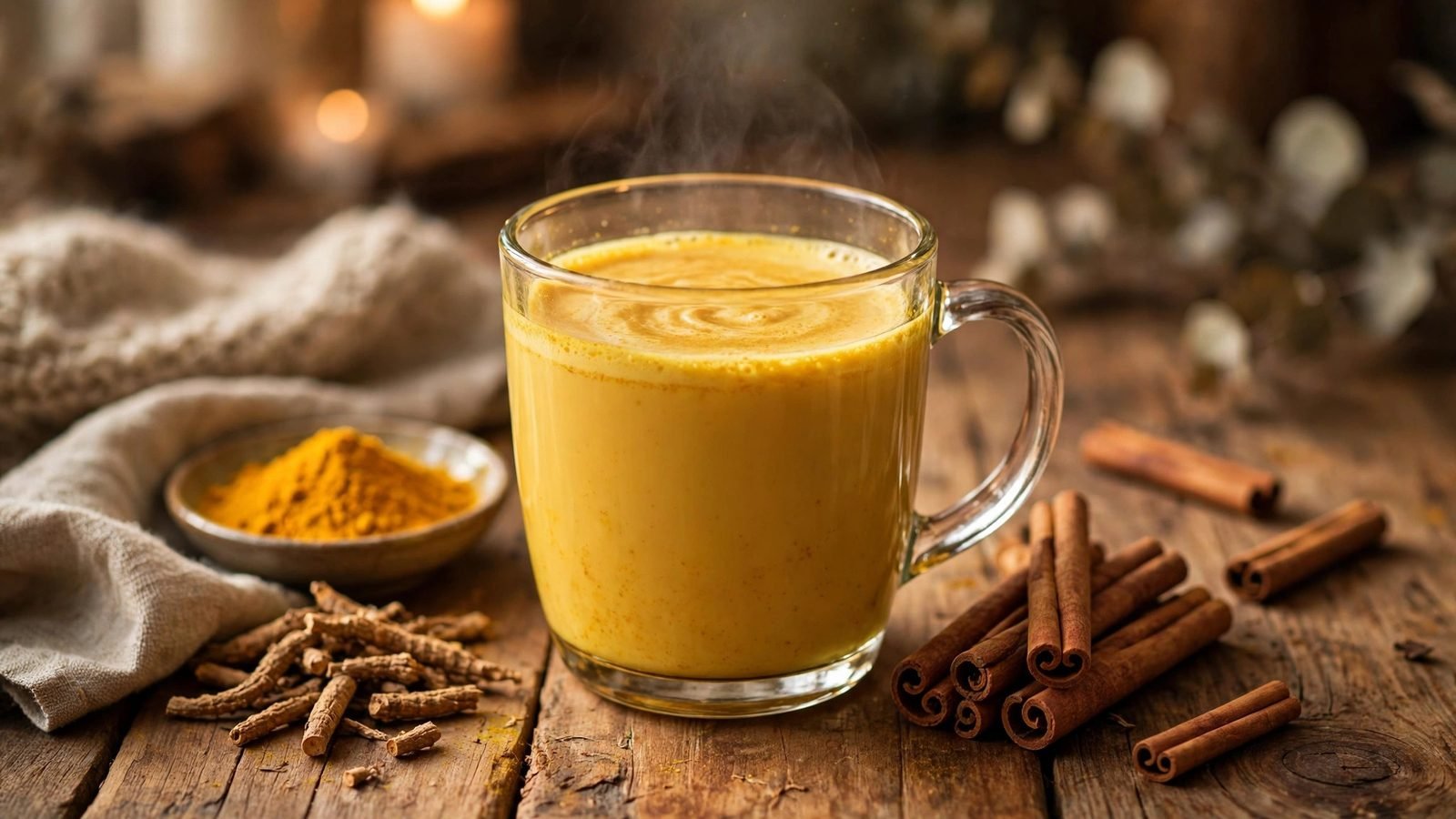
- ½ tsp ashwagandha root powder, 1 cup (250 ml) warm milk, ¼ tsp turmeric, a pinch of black pepper, 1 tsp honey
- Warm the milk gently — don’t boil. Whisk in the powders until smooth; stir in honey off the heat.
- Drink 30–60 minutes before bed.
Iced Ashwagandha Tea (makes about 1 quart)
- 2 tsp ashwagandha root powder (double strength — ice dilutes), 2 cups (500 ml) hot water + 2 cups ice, honey and lemon
- Simmer the powder in the hot water 15 minutes, strain well, stir in honey while warm, and pour over ice.
Ashwagandha vs. Chamomile: Which Calming Cup?
Chamomile is the gentler, apple-scented bedtime classic — the better pick if falling asleep is your whole mission (chamomile tea for sleep). Ashwagandha is the earthier adaptogen, traditionally aimed at daytime stress resilience as well as evening wind-down. Many people keep both: ashwagandha for tense afternoons, chamomile for the last hour before bed. Other gentle options: lemon balm tea benefits and passionflower tea benefits.
Safety: Who Should Skip Ashwagandha Tea
Ashwagandha has the strictest safety profile of any calming tea on this site. Trials used concentrated extracts, so a brewed cup is gentler — but these cautions still apply:
- Pregnant or breastfeeding: avoid — linked to pregnancy loss in high doses; traditional abortifacient.
- Liver: rare case reports link ashwagandha to liver injury — stop and see a doctor if you feel unwell.
- Thyroid: may raise thyroid hormone levels — check with your doctor if you take thyroid meds.
- Sleep/anxiety meds and alcohol: possible mild sedative effects — don’t stack without medical guidance.
- Surgery: stop at least 2 weeks before surgery — it may interact with anesthesia.
- Autoimmune conditions: may stimulate immune activity — get a doctor’s say-so first.
- Diabetes and blood pressure medications: the NCCIH notes possible interactions.
How much is reasonable? About 1 teaspoon of root powder (2–3 g) daily — one to two cups — matches traditional use. Check with your doctor or pharmacist before starting, especially with prescription meds.
Ashwagandha Tea FAQs
Is ashwagandha tea as strong as capsules?
No. Trials used concentrated extract capsules (typically 250–600 mg/day), not brewed tea — a gentler, less-studied dose.
How long until it works?
In extract trials, effects appeared after 8+ weeks of daily use. Take occasional breaks — long-term safety is unknown.
How much tea per day?
One to two cups (1 teaspoon of root powder each) is sensible. Higher doses bring side effects — stomach upset, drowsiness, diarrhea.
Does it have caffeine?
No — pure ashwagandha root tea is 100% caffeine-free. Check labels on blended tea bags, since some add green or black tea.
Can it hurt your liver?
Rare liver-injury cases are linked to ashwagandha supplements — real enough that the NCCIH flags it. Avoid with liver problems.
Is it safe during pregnancy?
No — avoid it. High doses are linked to pregnancy loss and traditional use included it as an abortifacient.
The Bottom Line
Ashwagandha tea won’t melt stress away in twenty minutes — but as a caffeine-free, centuries-old evening ritual, it may help you feel calmer, sleep a little better, and face busy days with steadier nerves. Keep the extract-vs-tea honesty in mind and respect the safety list.