
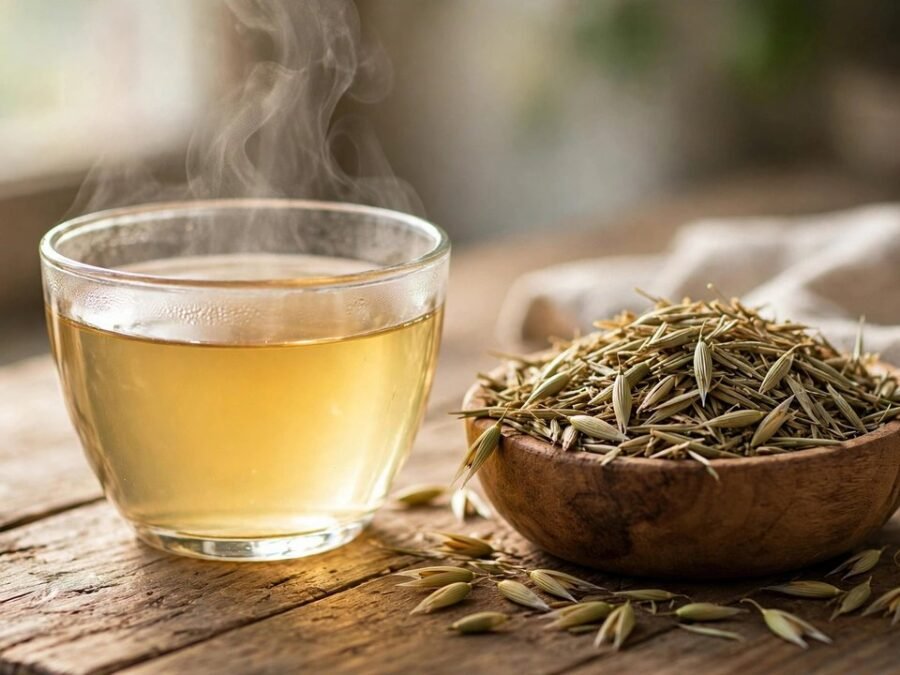
Meet the other half of the oat plant. The real oat straw tea benefits come not from the breakfast grain, but from the green, grassy tops and stems of Avena sativa — harvested young and sweet, then brewed into a pale golden tea herbalists have used for centuries as a gentle nerve tonic. Here’s what it is, what it may help with, and how to brew it so it actually works.
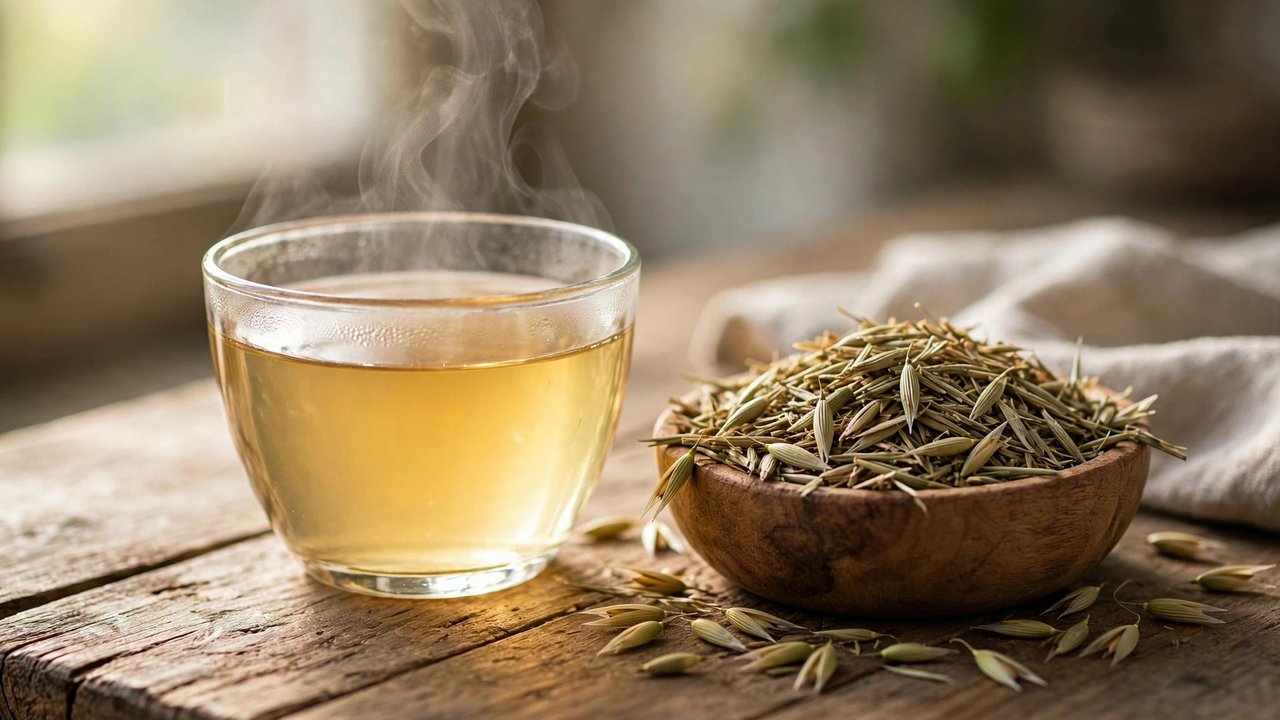
What Is Oat Straw? (It’s Not Oatmeal)
First, the confusion most websites skip: oat straw is not the oat grain. It’s the green, unripe stems and tops of the oat plant, harvested while still young — before the seeds mature into oatmeal. WebMD’s oats overview draws the same line: the seeds are eaten as food, while the leaves and stems are used as oat straw (WebMD’s oats overview).
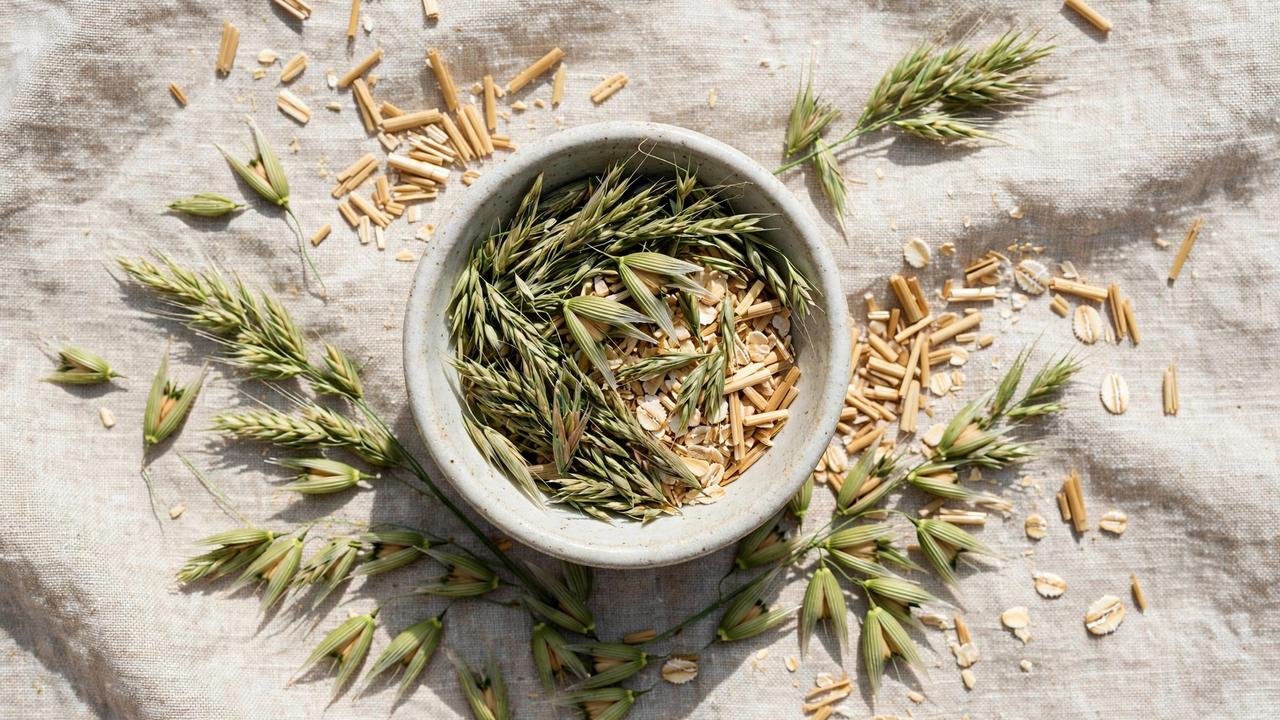
That distinction is everything. Oatmeal’s fame rests on fiber; oat straw tea’s rests on folk herbalism, where it’s prized as a nervine — an herb that nourishes and steadies the nervous system (“food for frazzled nerves”). One rule changes the cup: minerals need 20–30 minutes (or overnight) to move from straw into water — a five-minute dunk gives you green water; patience gives you the real thing. Read each benefit as “may help,” not “will fix”: most of this herb’s reputation comes from traditional use, not big trials.
1. Mineral Nourishment, the Herbalist Way
Oat straw’s oldest reputation is as a nutritive herb — herbalists describe it as rich in silica, calcium, magnesium, iron, and B vitamins. That’s traditional nutritional description, not proof one cup fixes a deficiency. What the tea may offer is gentle, steady nourishment in the “nourishing herbal infusion” tradition, where the long steep is the whole point.
2. May Steady Wired, Tired Nerves
For the exhausted-yet-buzzing “wired but tired” state, herbalists have traditionally reached for oat straw as a trophorestorative nervine — an herb that feeds the nervous system over time rather than sedating it on the spot. It pairs well with the other classic calming herbs — see our lemon balm tea benefits and lavender tea benefits guides.
3. May Support Easier Sleep
Oat straw has a long folk tradition as a bedtime herb for restless minds. It’s no sedative — it lowers the volume rather than flipping a switch. Traditional pattern: a warm cup an hour or two before bed, often from the overnight infusion below. If sleep is the main mission, our chamomile tea for sleep guide is the stronger single herb — and the two blend nicely.
4. May Support Focus — The Extract Caveat
Where other websites get sloppy: the attention and memory research used concentrated green oat extract (sold as Neuravena), not brewed tea. Healthline’s review reports trials giving 800–1,600 mg of green oat extract to middle-aged adults found improved memory, attention, and concentration (Healthline’s oat straw extract review). That’s extract research — standardized, concentrated, maker-funded in some cases — not proof your teacup sharpens memory. Fairer claim: a calm, caffeine-free morning cup may help you settle into focused work without jitters.
5. A Soothing Soak for Dry, Itchy Skin
You know the oatmeal bath for itchy skin — oat straw shares the same folk pedigree in liquid form. European herbal tradition adds strong oat straw infusions to baths for dry or irritated skin (the bath variation is in the recipe below). Keep expectations soft: comfort, not treatment. Rinse the tub after — the infusion leaves a faint tint.
6. May Soften Everyday Stress and Low Mood
Old herbals reached for oat straw as a gentle mood tonic during stretches of stress and exhaustion — folk medicine’s “nervous debility” is today’s burnout. Animal studies hinted at stress-coping effects, but those weren’t replicated in humans, so treat this as folk use: a warm cup in a hard week, with a ritual that forces you to slow down. Our linden tea benefits guide covers another comfort tea.
7. A Caffeine-Free Ritual That Actually Tastes Good
Sometimes the benefit is the cup itself. Oat straw tea is naturally caffeine-free with a mild, grassy-sweet flavor — closer to light green tea than to the medicinal punch of some herbal brews. For anyone cutting back on coffee, a pot of oat straw is one of the easiest swaps: warm, pleasant, no jitters.
8. The Slow Brew Is the Benefit
Few herbs reward patience like oat straw: short steeps extract flavor, while long steeps (20–30 minutes, or overnight) extract the minerals and the deep, rounded body that make the tea worth drinking. Building the patient brew into your routine is itself the nourishing habit — the recipe below shows the exact method.
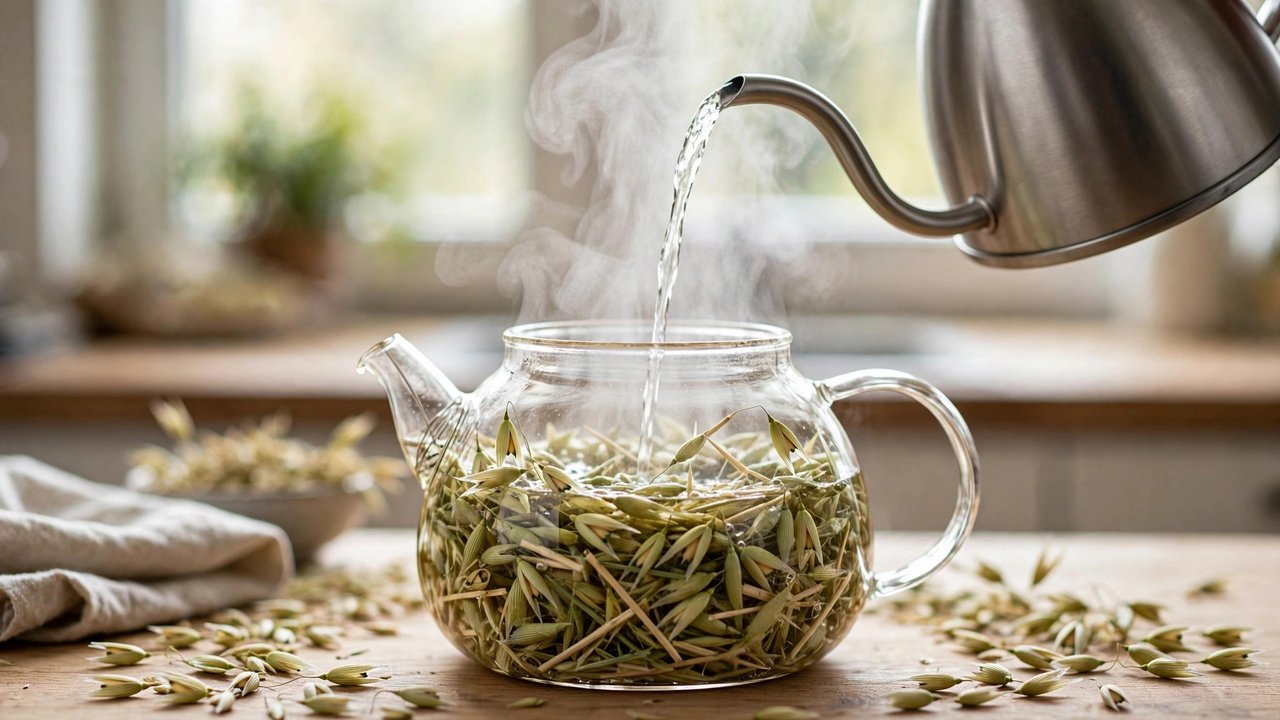
How to Make Oat Straw Tea (Long-Infusion Hot + Overnight + Bath)
Oat straw is forgiving, with one non-negotiable: give it time. Under-steeped, it tastes like grassy water; properly steeped, it’s golden, silky, and faintly sweet.
Long-Infusion Hot Oat Straw Tea (makes 1 quart / ~4 cups)
- 1 oz (about 1 cup, loosely packed) dried oat straw
- 1 quart (about 1 liter) water
- Optional: 1 teaspoon honey, squeeze of lemon
- Boil the water, then rest a minute — just off the boil.
- Add oat straw to a teapot, French press, or jar; pour the water over.
- Cover and steep 20–30 minutes for a daily cup — or overnight (8–10 hours) for the full mineral-rich infusion.
- Strain through a fine sieve or coffee filter. Stir in honey if you like; sip warm.
Overnight Iced Oat Straw Tea (makes 1 quart)
- Brew the hot method at double herb strength, or strain your overnight infusion in the morning
- Ice cubes and lemon slices
- Chill the strained infusion, or pour the warm brew over ice.
- Add lemon and honey while slightly warm so it dissolves. Refrigerate; drink within 2 days.

Oat Straw Bath Variation
- 2 oz dried oat straw + 2 quarts hot water
- Steep 30 minutes, strain, and pour into a warm bath.
- Soak 15–20 minutes. Rinse the tub after — the infusion can leave a faint tint.
Oat Straw vs. Oatmeal: The Honest Comparison
Quick version: oatmeal is the cooked grain, famous for beta-glucan fiber that supports cholesterol and blood-sugar goals. Oat straw tea is the brewed green tops, famed in folk herbalism for minerals and nervous-system calm. Same plant, almost nothing else in common — one is breakfast, the other a bedtime ritual. For the grain side, our anti-inflammatory breakfast ideas show where oatmeal shines — save the straw for evening.
Safety: Who Should Skip It or Check First
One of the gentlest herbal teas — but “gentle” isn’t “for everyone”:
- Oat allergy: skip the straw too — same plant, same proteins.
- Celiac / gluten sensitivity: oats are naturally gluten-free, but often processed near wheat or barley — buy certified gluten-free oat straw (WebMD notes the same caution).
- Pregnancy and breastfeeding: safety data is thin — the standard herbalist caution is to avoid it.
- Medications: no major interactions are documented for the tea, but check with your doctor if you take daily medication.
How much? Traditional use: 1–3 cups daily of the long infusion, or one quart of overnight infusion. No clinical dose exists — moderate beats heroic.
Oat Straw Tea FAQs
Is oat straw the same as the grain in oatmeal?
No. Oat straw is the green stems and tops of Avena sativa, harvested unripe; oatmeal is the mature seed. Different parts, different uses.
Is oat straw tea gluten-free?
The plant is naturally gluten-free, but cross-contamination with wheat or barley is common. With celiac disease, buy certified gluten-free oat straw.
How much can I drink per day?
1–3 cups of long-steeped infusion daily, or up to a quart of overnight infusion. No clinical dose exists — keep it moderate.
Does it have caffeine?
No — naturally 100% caffeine-free, which is why herbalists favor it for evenings.
How long should I steep it?
20–30 minutes minimum; 8–10 hours overnight for the full mineral-rich infusion.
Is it safe during pregnancy?
Safety data is limited and the extract hasn’t been studied in pregnancy — herbalist guidance is to avoid it while pregnant or breastfeeding.
The Bottom Line
Oat straw tea won’t cure anything — but as a patient, golden, caffeine-free brew with centuries of folk use for frazzled nerves and restless evenings, it earns its place in the cupboard. Brew it long, keep expectations honest, and respect the cautions.