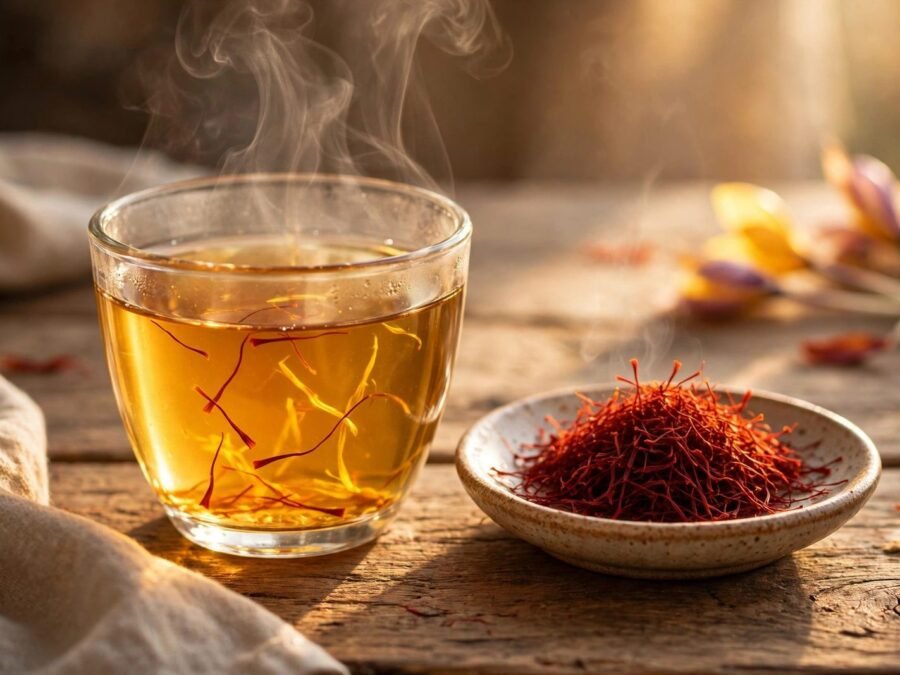
Few drinks look as luxurious as saffron tea — a pinch of red threads turns plain hot water into a glowing golden cup that smells earthy and lightly sweet. This guide to saffron tea benefits covers what it is, what research suggests it may do for mood, sleep, and comfort, how to make it at home with a few threads, and how to enjoy it safely.
One honest note up front: many websites make dramatic promises about saffron. The real story is gentler. Saffron tea is a naturally caffeine-free herbal infusion with a long traditional history, and early research suggests small, supportive benefits for everyday wellness — not miracle cures.
What Is Saffron Tea?
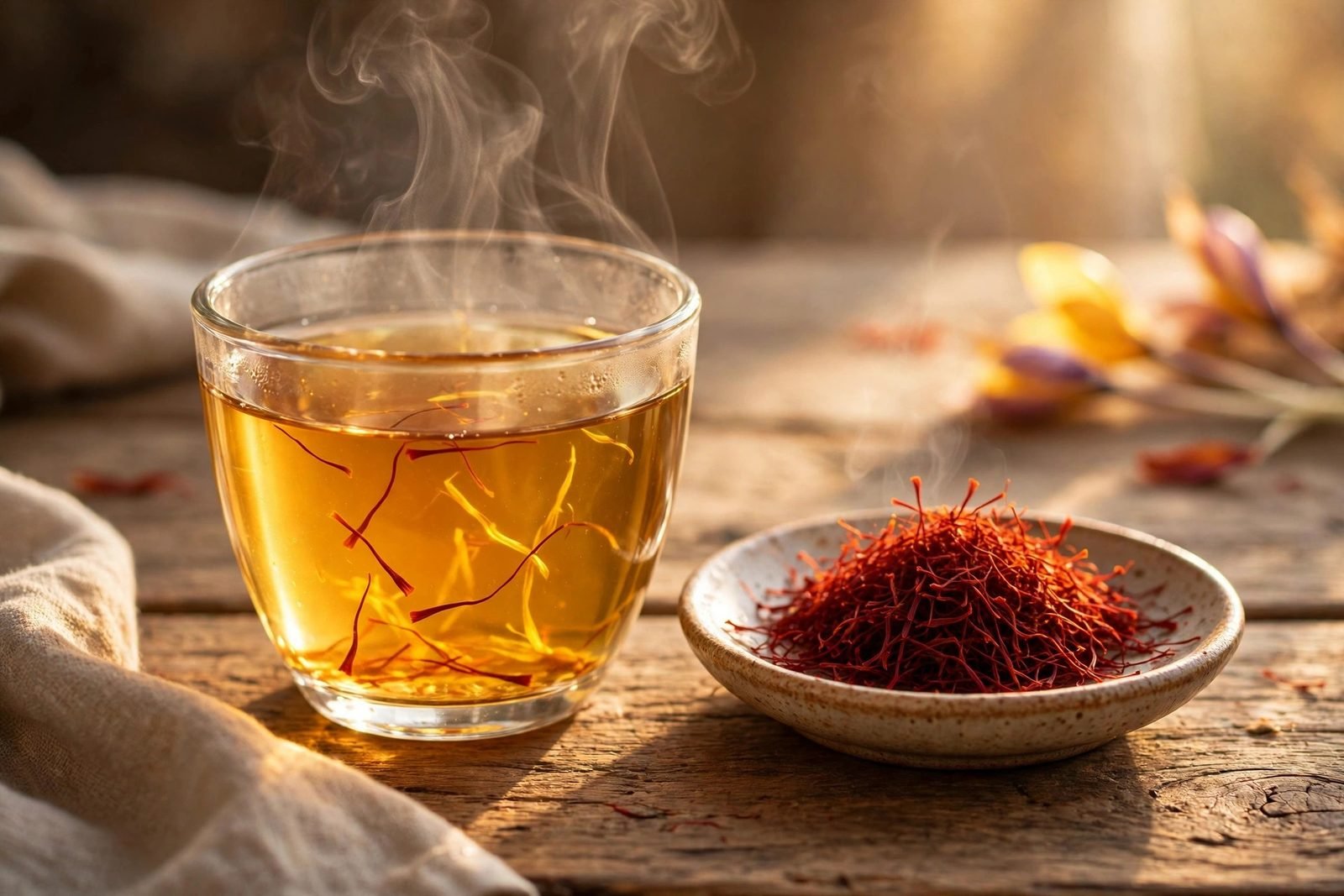
Saffron tea is hot water steeped with saffron threads — the dried stigmas of the Crocus sativus flower. Each flower yields only three threads, and roughly 75,000 flowers make a single pound — which is why saffron is the world’s most expensive spice by weight. A small jar may cost around $15–20 for a fraction of an ounce, but you only need a few threads per cup, so it stretches far.
As a drink, it tastes mild and elegant — earthy and slightly sweet with a hint of pepper, with an aroma of freshly mowed grass and a touch of honey. It is widely enjoyed in Moroccan and Persian culture as a warming, calming drink.
Key Compounds: Crocin, Crocetin, and Safranal
Saffron’s color, aroma, and flavor come from a small family of plant compounds:
- Crocin — a water-soluble carotenoid pigment that gives saffron tea its golden-red color. Carotenoids act as antioxidants that help protect cells from everyday oxidative stress.
- Crocetin — a related carotenoid that researchers have studied for its possible role in heart and blood-vessel health.
- Safranal — the volatile compound behind saffron’s distinctive aroma, linked in early research to relaxation and better sleep quality.
Saffron also contains small amounts of iron, potassium, calcium, and riboflavin. Like turmeric tea, it is one of those drinks where the golden color signals the antioxidants in your cup.
8 Potential Saffron Tea Benefits
Here they are, described the way the evidence actually supports them — with the reminder that a cup of tea is wellness support, not medicine.
1. May Support a Better Mood
This is saffron’s most studied area. Small clinical trials suggest saffron extract may help ease symptoms of mild low mood in some adults, with fewer reported side effects than standard options. But the studies were small, results vary, and saffron is not a substitute for professional care or medication. Think of saffron tea as a small, comforting ritual — never as treatment for depression. For persistent low mood, please talk to a healthcare professional.
2. May Bring Comfort During PMS
Saffron has a long traditional reputation for soothing women’s cycles, and early research is encouraging — one study found a majority of women taking saffron reported meaningful reductions in common PMS symptoms. A warm cup in the days before your period may offer gentle comfort, though it will not erase cramps.
3. May Encourage Restful Sleep
Safranal, saffron’s aroma compound, has been associated in early studies with improved sleep quality. A small, warm, caffeine-free evening cup fits naturally into a wind-down routine — see also our chamomile tea for sleep guide.
4. May Support Memory and Brain Health
Crocin and crocetin have been studied for brain-supportive effects, including early research into memory and age-related cognitive changes. This is early, small-scale research — not a treatment for memory disorders — but as a daily antioxidant habit, saffron tea is a pleasant way to care for your brain.
5. May Support Heart Wellness
Saffron’s antioxidant and anti-inflammatory properties may be kind to the cardiovascular system, and crocetin has been studied for its potential to support healthy cholesterol balance. No drink replaces diet, movement, or medication — but saffron tea can be a small heart-friendly habit, much like cinnamon tea.
6. May Settle the Stomach
Traditionally sipped after rich meals to ease digestion, its warm, bittersweet flavor may help the stomach feel settled — see also our peppermint tea benefits guide.
7. Contains Protective Antioxidants
Crocin and crocetin belong to the carotenoid family of plant antioxidants, and saffron tea is one of the most concentrated sources of them in any drink.
8. Traditionally Used for Skin and Eye Comfort
From Cleopatra’s saffron baths to modern cosmetics, saffron has a long beauty tradition, and antioxidant-rich diets are broadly linked to healthier-looking skin. Its carotenoids have also drawn early research interest for eye health. These are preliminary areas — drink it for gentle support and let your skincare do the heavy lifting.
How to Make Saffron Tea: Simple Recipe
Wondering how to make saffron tea? It is one of the simplest teas in the world — three ingredients, and how much saffron in tea is easy to remember: just a few threads per cup.
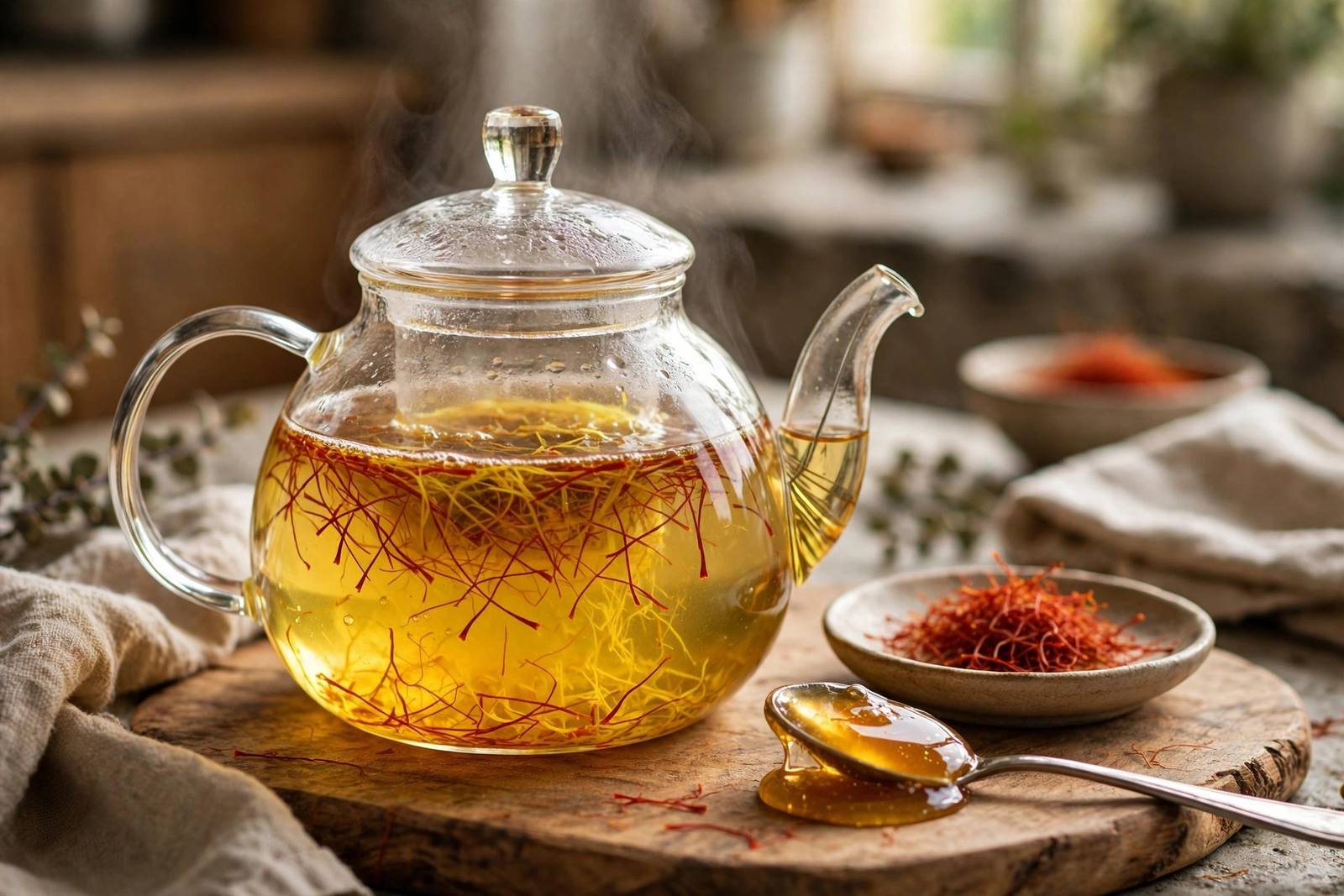
Ingredients (1 serving)
- 1 cup (240 ml) filtered water
- 3–5 saffron threads (a small pinch)
- 1 teaspoon honey or a lemon wedge (optional)
Steps
- Bring the water just to a boil, then remove it from the heat. Never boil the threads themselves — very high heat dulls their delicate flavor.
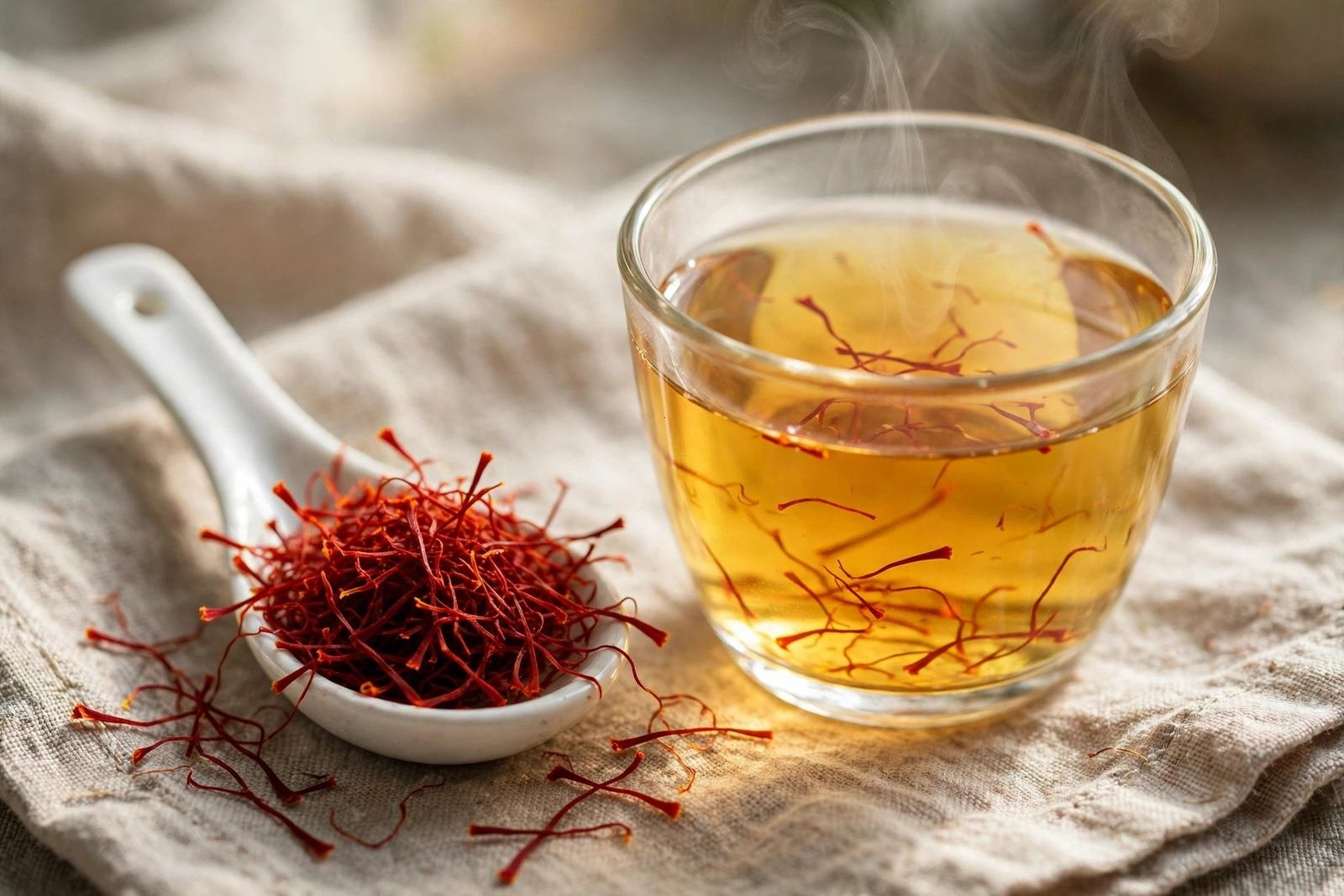
- Drop in the 3–5 saffron threads and stir gently until the water turns bright yellow-gold.
- Steep for 5–7 minutes so the threads release their full color and compounds.
- Stir, strain the threads if you like (they are edible), and add honey or lemon to taste. Total time: about 10 minutes.
Variations
- With cardamom: Lightly crush one green cardamom pod and steep it with the threads for a warm, fragrant twist — a classic pairing (see our cardamom tea benefits guide).
- Saffron milk: Warm a cup of milk, steep 4–5 threads for 10 minutes, and sweeten lightly with honey — a cozy bedtime version popular in South Asia.
- Iced: Brew double-strength with 6 threads, cool, and pour over ice with a splash of lemon.
How Much and When to Drink
One cup a day, made with 3–5 threads, is a sensible, traditional amount — there is no need for more. A warm cup in the evening, about 30–60 minutes before bed, makes a lovely caffeine-free wind-down ritual. For PMS comfort, many women enjoy it daily in the week before their period.
Saffron Tea Safety and Side Effects
Saffron is safe in the small amounts used in food and tea — 3–5 threads per cup is well within normal culinary use. A few cautions still matter:
- Pregnancy and breastfeeding: Avoid amounts larger than normal food use — larger amounts can cause uterine contractions and may increase miscarriage risk. Check with your doctor first.
- Bipolar disorder: Because saffron appears to affect mood, it may trigger excitability in people with bipolar disorder. Avoid medicinal use if this applies to you.
- Medications and surgery: Saffron may interact with certain medications, including antidepressants and blood-pressure drugs. Talk to your doctor if you take prescription medication, and stop saffron at least two weeks before scheduled surgery.
- Large doses: High doses (5 grams or more — hundreds of times what goes into tea) can be unsafe. Tea-strength amounts are nowhere near this range.
- Quality: Saffron is famously faked. Buy threads, not powder, from a trusted source — real threads are deep red, and a tiny pinch should color water golden within minutes.
For a medically reviewed overview of saffron’s properties, safety profile, and supplement research, WebMD’s guide to saffron’s health benefits, safety, and dosage is a solid reference.
The Bottom Line
Saffron tea is a rare thing: a drink that is genuinely luxurious yet remarkably simple. A few threads, hot water, five minutes — a golden, caffeine-free cup that may gently support your mood, sleep, and daily comfort. It will not cure anything and should never replace medical care. But as a small, beautiful ritual in your day, it is worth every thread.