
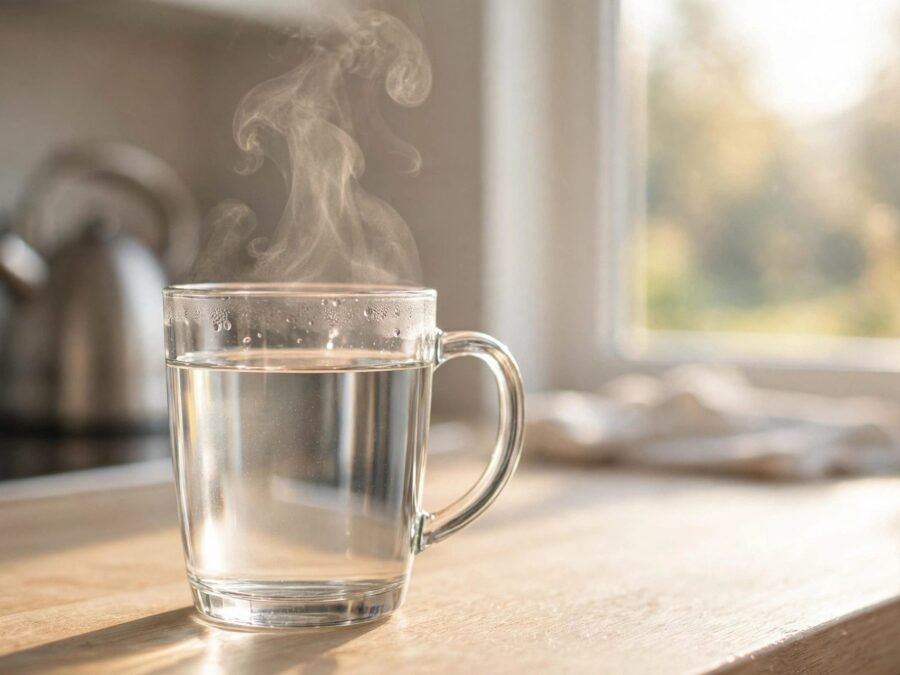
Warm Water Every Morning: 7 Real Benefits (and What’s Just Hype)
No powders. No gadgets. No 12-step ritual. Just a glass of plain warm water, first thing in the morning. It’s one of the oldest morning habits in the world — and also one of the most overhyped online, where it’s credited with everything from melting belly fat to “flushing toxins.”
So what does drinking warm water every morning actually do? The honest answer is refreshingly simple: most of the benefit comes from hydration, a few small perks come from the warmth, and a couple of viral claims are pure fiction. Here’s a clear-eyed look at the 7 real benefits, the hype to ignore, and the one temperature rule that actually matters.
1. It rehydrates you after a night without water
You lose water all night — through breathing, light sweating, and your morning bathroom trip. The Mayo Clinic notes that the body loses water every day through breath, perspiration, urine, and bowel movements, and that even mild dehydration can drain your energy and leave you tired (Mayo Clinic). A glass of warm water on waking simply replaces that overnight deficit before coffee, tea, or breakfast arrive.
This is benefit number one, and it’s the foundation everything else rests on. Warm or cold — the rehydration is the point.
2. Mornings may feel easier on your digestion
Many people find a warm drink gentler on an empty stomach than ice-cold water, and warm fluids are a traditional way to “wake up” the gut before the first meal. Drinking water on an empty stomach can also help encourage the gastrocolic reflex — your body’s natural signal that nudges the colon into action after overnight rest — which is why a morning glass often precedes a morning bathroom visit.
Honest caveat: there’s no strong evidence that warm water digests food better than room-temperature water. The digestive edge of warm water is mostly about comfort and routine, not chemistry. That still counts — a habit you find pleasant is a habit you’ll keep.

3. It may help keep things regular
Constipation’s most underrated fix is simply drinking enough fluid. Mayo Clinic’s hydration guidance notes that water aids the digestive system and helps prevent constipation (Mayo Clinic). Pairing that fluid with the morning — when your gut is primed to move anyway — is a sensible, zero-cost strategy if your mornings tend to feel sluggish.
Think of it as supporting a natural rhythm rather than forcing one. Warm water doesn’t “cleanse your colon” (a persistent myth — your colon cleanses itself); it just gives a well-hydrated body what it needs to do its job.
4. The steam may comfort a stuffy nose
Here’s the one benefit with a real, measured study behind it. In a 1978 experiment published in Chest, 15 healthy volunteers drank hot water, cold water, or chicken soup while researchers measured nasal mucus velocity. Hot water sipped normally increased nasal mucus velocity from 6.2 to 8.4 mm per minute — while cold water actually decreased it. The authors concluded that hot fluids transiently speed nasal mucus clearance, partly through inhaled water vapor (PubMed: Saketkhoo et al., 1978).
The effect faded within 30 minutes, so warm water won’t cure a cold — but on a congested winter morning, sipping it slowly and breathing in the steam is a genuinely evidence-backed comfort.
5. Warmth feels calming — and ritual has its own power
Wrapping your hands around a warm mug for two quiet minutes before the day’s noise starts is a small act of self-care. Warmth is inherently soothing to the nervous system, and an intentional morning pause — no phone, just the water — sets a calmer tone than bolting straight into email.
This won’t show up in a lab test, but behavioral researchers consistently find that tiny, pleasant morning rituals improve how people rate their whole day. If warm water becomes your “pause button,” that’s a real quality-of-life win.

6. It may support weight goals — modestly
Let’s be precise here, because this is where the hype runs wildest. A small 2003 study in the Journal of Clinical Endocrinology & Metabolism found that 500 ml of water raised metabolic rate by about 30% for 30–40 minutes in 14 subjects — but the water was room temperature, about 40% of the effect was just the body warming the water, and the total extra burn was roughly 100 kJ (about 24 calories) (Boschmann et al., 2003). Later reviews have questioned how large this effect really is.
So warm water is not a fat-melter. What it can do is far more practical: a glass before breakfast takes the edge off morning hunger, and swapping a sugary morning drink for zero-calorie warm water saves real calories every single day. That’s the mechanism — appetite and substitution, not magic thermogenesis.
7. It’s the habit you’re most likely to keep
The best health habit is the one you actually do. Warm water costs nothing, takes 30 seconds, has no side effects at the right temperature, and doesn’t require a grocery run. People abandon complicated wellness routines; almost nobody abandons a glass of water. If your goal is simply drinking more water, starting with a warm morning glass is one of the easiest on-ramps there is.
Warm vs. hot vs. cold: the honest breakdown
Since temperature is the whole question, here’s the straight version:
- Warm (comfortable to sip, roughly 40–50°C / 104–122°F): the sweet spot for this habit — soothing, easy to drink quickly, no burn risk.
- Hot (steaming, fresh from the kettle): fine for tea you’ll sip slowly, but see the safety section below before gulping it.
- Cold: hydrates exactly as well. If you genuinely prefer cold water, drink cold water — you’ll drink more of it, and that’s what matters most.
The wellness internet treats temperature like a superpower. The evidence says it’s a preference. Choose what you’ll stick with.
What’s just hype (skip these claims)
- “It melts belly fat.” No. Nothing you drink melts fat. See the weight section above for what actually happens.
- “It flushes toxins.” Your liver and kidneys flush toxins around the clock; warm water doesn’t add a detox function. Staying hydrated supports those organs — that’s the accurate version.
- “It alkalizes your body.” Your blood pH is tightly regulated by your lungs and kidneys, not by your morning drink.
- “It boosts metabolism massively.” The measured effect is small and mostly from the water itself, not the warmth.
- “You’ll see results in 14 days.” You may feel better (hydrated, regular, calmer) within two weeks — but anyone promising visible transformation from water alone is selling something.

How to do the 14-day warm water habit
Keep it boring — boring is sustainable:
- Heat, then cool: Boil or heat water, then let it sit a few minutes until it’s comfortably warm, not steaming. If you can hold the glass easily, it’s ready.
- One to two glasses on an empty stomach, right after waking, before anything else.
- Wait 20–30 minutes before breakfast or your morning tea/coffee — this gives the “wake up” effect a clean window.
- Plain first: Do the first week with nothing added, so you know what the water itself does for you.
- Optional week-two upgrade: A squeeze of lemon if you want flavor. Our 30-day lemon water guide covers that path in detail, and the warm lemon vs. ginger lemon comparison helps you pick.
That’s the whole protocol. If mornings feel better after two weeks, keep it. If not, you’ve lost nothing.
The one safety rule: watch the temperature
This is the section most warm-water articles skip — and it’s the most important one. In 2016, the WHO’s cancer research agency (IARC) classified drinking very hot beverages — above 65°C (149°F) as “probably carcinogenic to humans” (Group 2A), based on links to esophageal cancer. It’s the temperature, not the drink: the concern is repeated thermal injury to the esophagus (Reuters / WHO-IARC).
Practical takeaways:
- Warm, not scalding. If it burns your lips, wait. “Comfortably warm” (40–50°C) is the target — nowhere near the 65°C threshold.
- Test before gulping, especially if you heat water in a kettle and drink it fast on an empty stomach.
- Acid reflux? Plain warm water is usually fine, but skip the lemon add-on if citrus bothers you — lemon is the trigger, not the water.
- Kids and older adults are more burn-sensitive; always check temperature for them.
Frequently asked questions
Is it better to drink warm water or cold water in the morning?
For hydration, they’re equal — drink whichever you’ll actually drink. Warm water feels gentler on an empty stomach for many people and offers the steam-comfort perk during cold season; cold water is more refreshing in summer. Consistency beats temperature.
How much warm water should I drink in the morning?
One to two glasses (250–500 ml) is plenty to replace overnight losses. Your total daily fluid needs are much higher — roughly 2.7 liters for women and 3.7 liters for men from all sources, per the National Academies via Mayo Clinic — so think of the morning glass as the first installment, not the whole day.
Can I drink warm water on an empty stomach every day?
Yes — plain warm water on an empty stomach is safe for daily use. The only caution is temperature (keep it comfortably warm, well below 65°C).
Does warm water help with bloating?
It may help indirectly: good hydration supports regular digestion, and warm fluids feel soothing when the stomach is uneasy. For persistent bloating, our peppermint tea guide and daily ginger tea guide cover stronger options.
Warm water vs. lemon water — which is better?
Plain warm water is the gentlest starting point (no acidity, no enamel concerns). Lemon adds vitamin C and flavor but brings mild acidity. Many people start plain for two weeks, then add lemon — the lemon water 30-day guide walks through that upgrade.
The bottom line
Drinking warm water every morning is a genuinely good habit — not because warmth is magic, but because it delivers reliable hydration, gentle digestive support, a calming ritual, and a little steam comfort, all for zero cost and zero effort. Keep expectations honest, keep the temperature comfortably warm, and let the simplest drink in the house do its quiet work.