

Both morning drinks look almost identical in the glass — but warm lemon water vs ginger lemon water is a real choice, and the better pick depends on what your stomach needs. Plain warm lemon water is gentle, hydrating, and vitamin-C rich; adding ginger turns it into a warmer, stronger brew that’s traditionally used for nausea and sluggish digestion. This side-by-side comparison breaks down the differences so you can pick the right one for your mornings.

The Quick Answer
Choose warm lemon water if you want a gentle, daily hydration habit with a vitamin-C boost — it’s mild enough for most stomachs and easy to drink every day. Choose ginger lemon water if you deal with nausea, post-meal heaviness, or bloating, or you simply like a warmer, spicier drink. Both hydrate you; ginger adds digestive warmth that plain lemon water doesn’t have.
What Each Drink Actually Is
Warm lemon water
Juice of half a lemon stirred into a cup of warm (not boiling) water. That’s it. It’s low in calories, delivers vitamin C, and is one of the simplest morning habits around.
Ginger lemon water
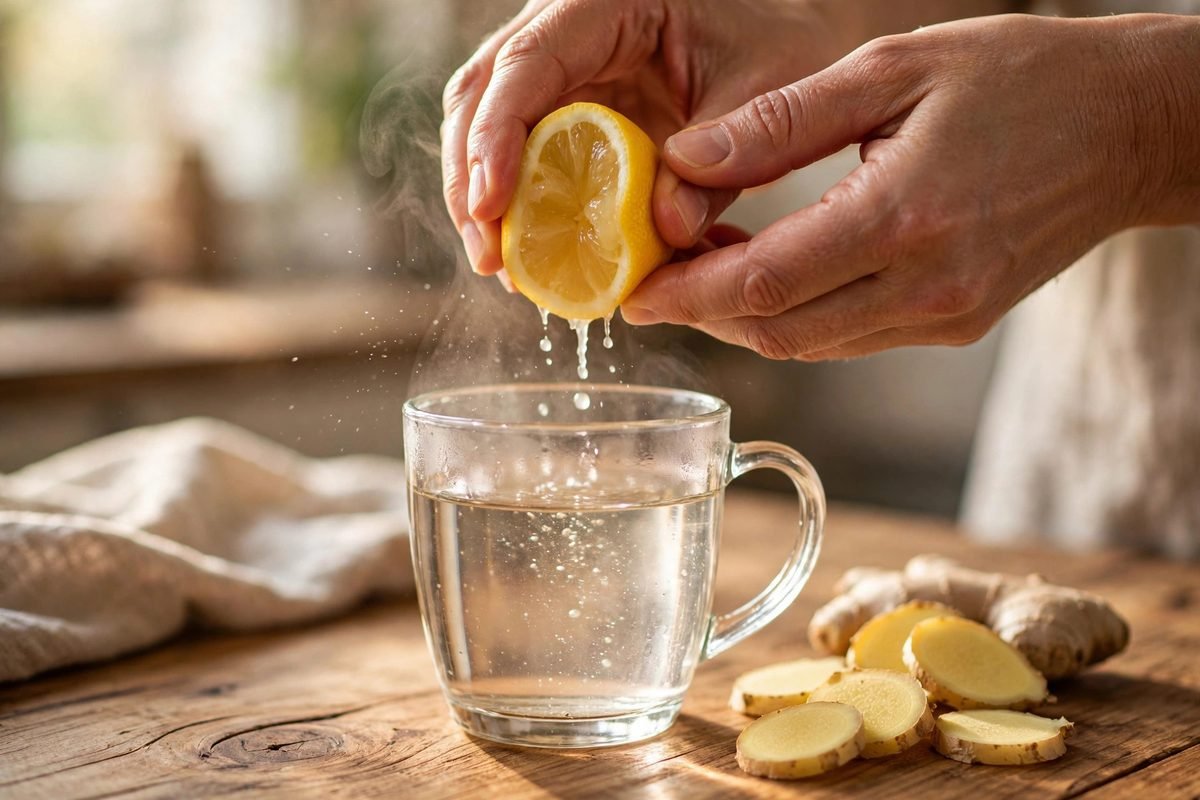
The same base, plus a thumb-sized piece of fresh ginger — sliced, grated, or simmered in the water for a few minutes. Ginger’s active compounds (gingerols and shogaols) are the traditional reason people reach for it when the stomach feels off. We covered the ginger version in full detail in our ginger lemon water benefits guide, if you want the deep dive.
Warm Lemon Water vs Ginger Lemon Water: Side by Side
| Factor | Warm Lemon Water | Ginger Lemon Water |
|---|---|---|
| Digestion | Lemon’s citric acid may gently stimulate digestive juices before a meal | Ginger traditionally helps move food along and ease post-meal heaviness — stronger digestive action |
| Nausea | Little specific benefit | Ginger is the classic nausea remedy (see our ginger for nausea guide) |
| Vitamin C | About a fifth of the daily value from one lemon, per Healthline | Same vitamin C, plus ginger’s warming compounds |
| Taste | Bright, clean, mildly tart | Warm, spicy, more robust — an acquired taste for some |
| Gentleness | Milder; the better everyday default | Stronger flavor; may feel too intense on an empty stomach for some |
| Best for | Daily hydration habit, gentle mornings | Nausea, bloating, heavy-meal recovery, cold days |
7 Key Differences to Help You Decide
1. Digestive strength
Plain lemon water is a gentle nudge: Healthline notes that citric acid may help stimulate gastric juices before meals. Ginger lemon water goes further — ginger is traditionally used to ease bloating and help the stomach empty more comfortably after heavy meals. If digestion is your main goal, the ginger version does more heavy lifting.
2. Nausea support
This one isn’t close. Ginger is one of the most widely used traditional remedies for nausea, from motion sickness to queasy mornings. Plain lemon water doesn’t offer that. On rough-stomach days, make the ginger version.
3. Warming effect
Ginger brings literal warmth — that spreading, spicy heat in the chest. On cold mornings or when you feel sluggish, ginger lemon water feels more comforting than plain lemon water, which tastes bright and cool by comparison.
4. Everyday drinkability
Here’s where plain lemon water wins: it’s mild, easy to drink daily, and hard to get wrong. Ginger’s intensity can be too much every single morning, especially on an empty stomach. Many people alternate — plain most days, ginger when they need it.
5. Sensitive stomachs
Both contain citric acid, so both can bother people prone to heartburn. But ginger adds another layer of intensity. If your stomach is delicate, start with plain warm lemon water and introduce ginger gradually — or try our gentler turmeric tea instead.
6. Teeth and enamel
Citric acid can soften tooth enamel over time, according to dental research cited by Healthline. This applies equally to both drinks. The practical fix is the same for both: drink through a straw, rinse with plain water afterward, and wait 30 minutes before brushing.
7. Prep time and cost
Plain lemon water takes about a minute and one lemon. The ginger version needs fresh ginger on hand and a few minutes of simmering or steeping. Lemons are cheap everywhere; fresh ginger costs a little more and doesn’t keep as long. On busy mornings, plain lemon water is the low-friction choice.
When to Pick Which
- Pick warm lemon water when: you want a simple daily habit, your stomach is calm, you’re hydrating before breakfast, or ginger’s taste puts you off.
- Pick ginger lemon water when: you feel nauseous or bloated, you ate too much last night, it’s cold outside, or you want a stronger digestive drink.
- Alternate when: you like both — plain on easy days, ginger on heavy days. That’s what most long-term drinkers actually do.

🍋 Two Morning Recipes, One Base
Prep time: 1–5 minutes | Total: 5 minutes | Servings: 1 mug each
Warm lemon water — ingredients
- Juice of ½ lemon
- 1 cup (250 ml) warm water (not boiling — hot water dulls the flavor)
- Optional: 1 teaspoon raw honey once the water is drinkable-warm
Ginger lemon water — ingredients
- Juice of ½ lemon
- 1 thumb-sized piece of fresh ginger, thinly sliced or grated
- 1½ cups (350 ml) water
- Optional: 1 teaspoon raw honey
Steps (ginger version)
- Simmer the ginger slices in the water for 5 minutes.
- Remove from heat and let it cool until comfortably warm.
- Stir in the lemon juice (add lemon after cooling so the vitamin C isn’t degraded by boiling water).
- Strain or leave the slices in, add honey if you like, and sip slowly.
For plain lemon water, skip the ginger and just stir the juice into warm water. For the full benefits breakdown of the ginger version, see our ginger lemon water benefits post.
A Few Gentle Cautions
Both drinks are mild, but a little care keeps them that way:
- Tooth enamel: citric acid can wear enamel over time — use a straw and rinse with plain water after.
- Heartburn: citrus can trigger reflux in some people. If either drink gives you heartburn, switch to plain warm water or a gentler option like peppermint tea.
- Ginger and medication: if you take blood thinners or blood-sugar medication, check with your doctor before making ginger a daily habit.
- Pregnancy: small amounts of ginger are commonly used, but confirm with your doctor first.
For a broader, evidence-grounded look at lemon water itself, Healthline’s benefits of lemon water guide is a solid reference.
The Bottom Line
Warm lemon water vs ginger lemon water isn’t really a rivalry — it’s a toolkit. Keep plain warm lemon water as your gentle daily default, and bring out the ginger version when your stomach needs more support: nausea, bloating, or a heavy meal to recover from. Try each for a week, notice how you feel, and let your own mornings decide.