Burdock Root Tea: The Earthy, Caffeine-Free Brew With One Real Trial Behind It
Burdock tea benefits are usually sold with big, old-fashioned promises: it “purifies the blood,” “flushes toxins,” and clears the skin from the inside out. The truth is more interesting — and more modest. Burdock root tea is an earthy, caffeine-free brew made from the root of Arctium lappa, a plant eaten as a vegetable in Japan and used as a traditional herbal remedy in Europe. It has exactly one small human trial in which the tea itself was tested — and that trial is genuinely encouraging. Everything else about it is tradition, early lab work, or honest uncertainty. This guide separates the three, so you can decide whether this root deserves a place in your cupboard.
What Is Burdock Root Tea, Exactly?
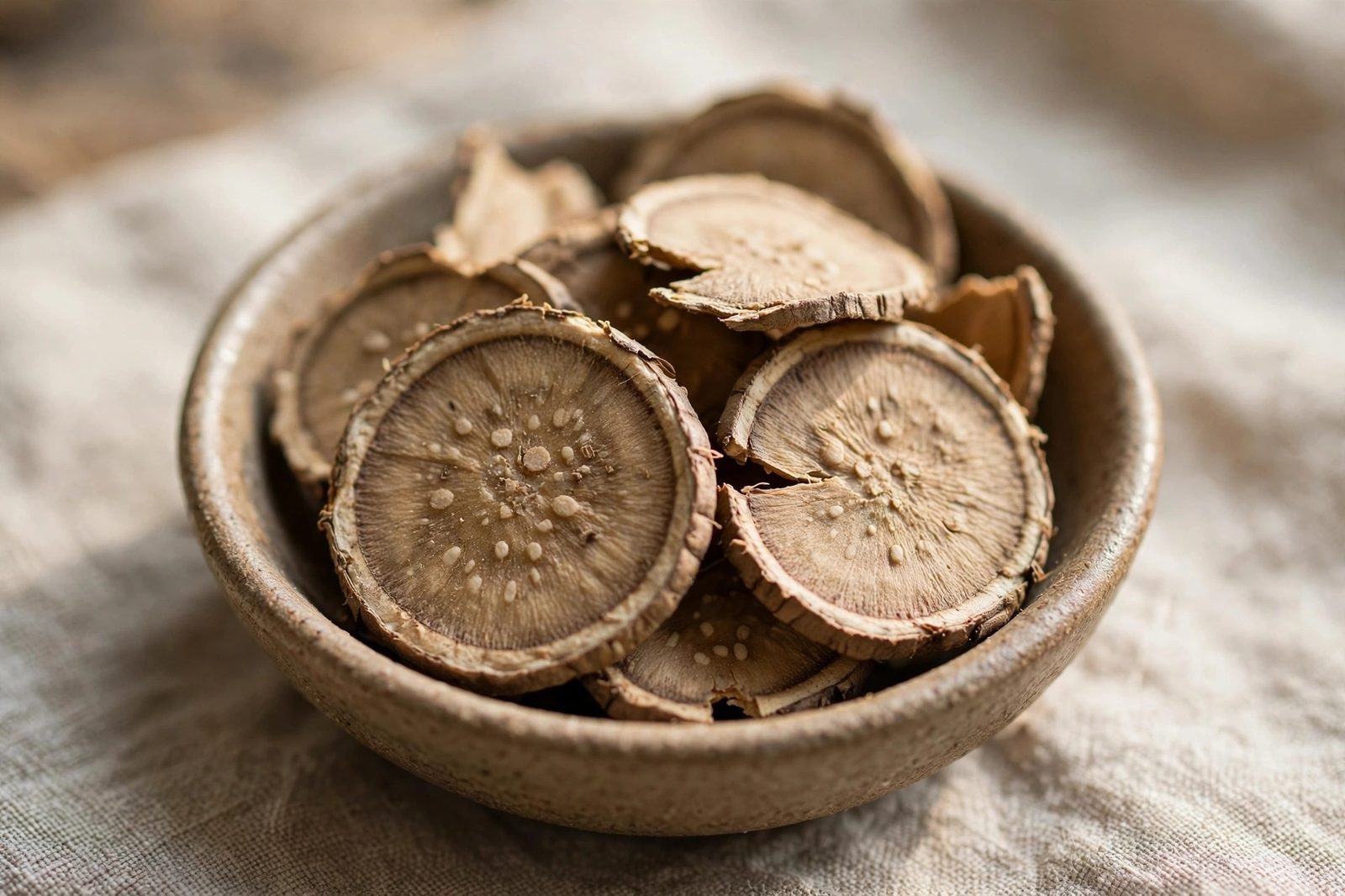
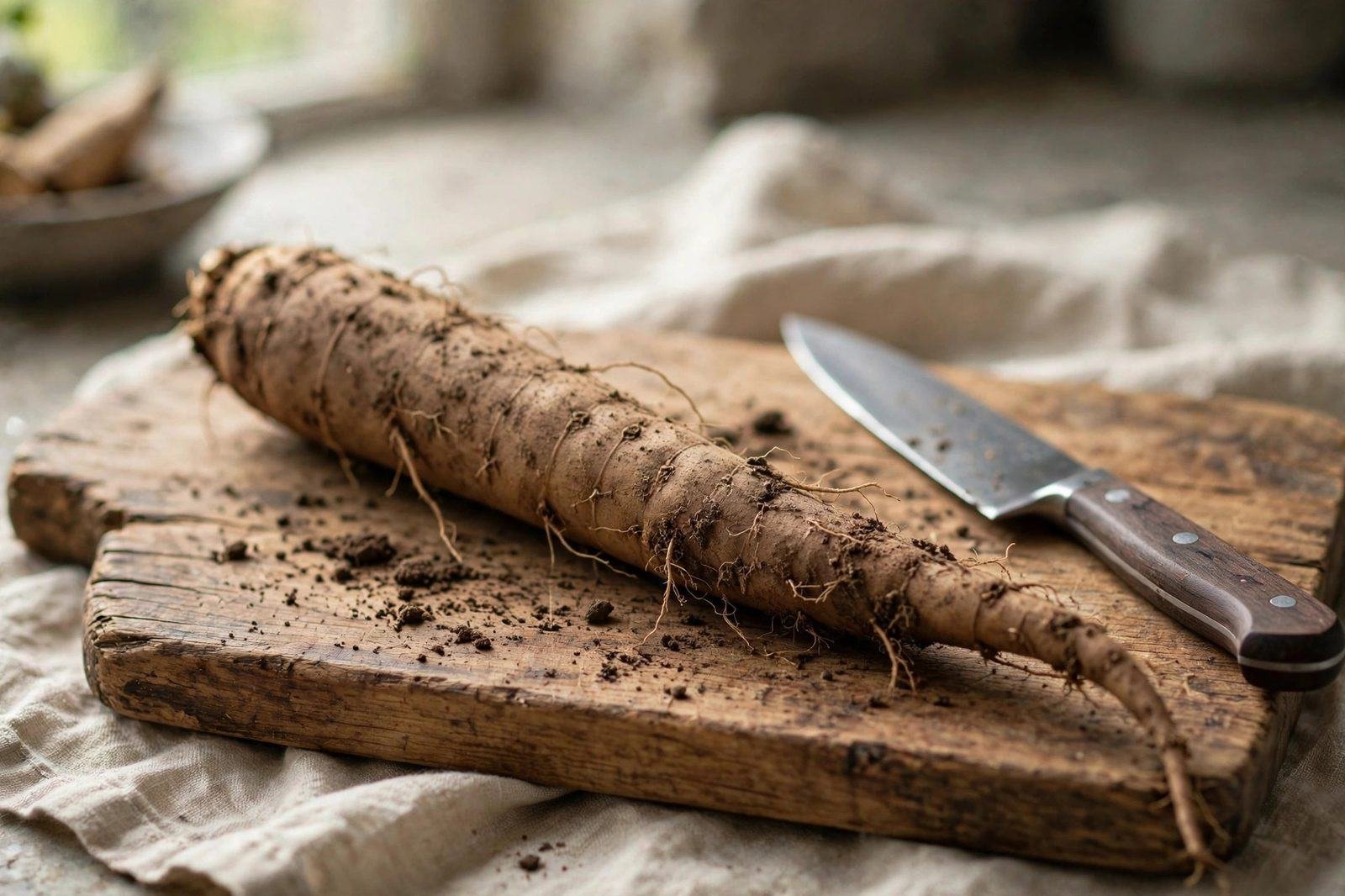
Burdock (Arctium lappa) is a biennial plant in the daisy family, recognizable by its broad leaves and hooked burrs. The tea is brewed from the dried root — not the leaf, and not the seed. That distinction matters: the root is the part eaten as the Japanese vegetable gobo, while the leaf has traditionally been used as a poultice and the fruit (seed) is a separate medicine in traditional Chinese practice. A label that only says “burdock” does not tell you which part you are getting, so check that yours says root.
The root itself is starchy and rich in inulin, a soluble fiber, along with caffeoylquinic acids such as chlorogenic acid. Two styles exist: plain dried root and roasted root. Roasting deepens the flavor toward something coffee-like and earthy, which is why roasted burdock tea (gobo cha in Japan) is the version most newcomers enjoy. Unlike dandelion tea, its bitter-root cousin, burdock tea is milder and less bitter — closer to roasted root vegetable than to medicine.
7 Possible Benefits of Burdock Root Tea
1. Lower inflammation markers — in one small trial
The strongest evidence for burdock tea comes from a single randomized trial: 36 adults aged 50–70 with knee osteoarthritis drank three cups of burdock root tea a day (2 grams of root per 150 mL cup, half an hour after meals) for 42 days, while a control group drank plain hot water. Both groups continued their usual acetaminophen and glucosamine. After six weeks, the tea group showed significantly lower levels of the inflammation markers IL-6 and hs-CRP compared with the control group (Maghsoumi-Norouzabad et al., published in the International Journal of Rheumatic Diseases). That is a real result — but it is one small, short trial, in people with arthritis, on top of pain medication. It is not proof that the tea lowers inflammation for everyone.
2. Antioxidant support — from the same trial
The same 42-day trial also measured oxidative stress: total antioxidant capacity and the enzyme superoxide dismutase rose significantly in the tea group, while malondialdehyde, a marker of oxidative damage, fell. This fits the root’s chemistry — burdock root contains phenolic compounds and flavonoids such as quercetin and luteolin, which act as antioxidants in laboratory tests. “Antioxidant” on a label is not a health outcome by itself, but here the lab chemistry and the human trial point in the same direction.
3. Traditional urinary flushing — traditional use only
European regulators recognize burdock root as a traditional herbal medicine “to increase the amount of urine to achieve flushing of the urinary tract as an adjuvant in minor urinary tract complaints” — but explicitly on the basis of long-standing use, not proven effectiveness (EMA community herbal monograph on Arctium lappa radix, EMA/HMPC/246763/2009). In plain language: generations of use, not clinical proof. Because it may increase urine flow, drink extra water with it and do not use it as a treatment for a urinary infection — that needs a doctor.
4. Appetite and digestion — a traditional bitter
The same EMA monograph lists burdock root’s traditional use for temporary loss of appetite. As a bitter, earthy root it has traditionally been taken before meals to stimulate digestion, and its inulin content gives it a prebiotic angle: inulin is a soluble fiber that gut bacteria ferment. That can mean gentler digestion for some people — and gas or bloating for others, especially in larger amounts. If you are prone to bloating, start with one weak cup rather than three strong ones. For a gentler digestive herb, peppermint tea has a longer track record for after-meal comfort.
5. Skin support — tradition, not a cure
Burdock’s oldest folk reputation is for skin: it is the “blood purifier” herb of old herbals, and the EMA monograph lists its traditional use for seborrhoeic skin conditions (oily, flaky skin). But traditional use for one skin condition is not evidence that drinking the tea clears acne, eczema, or psoriasis — those claims are unproven, and Memorial Sloan Kettering’s About Herbs database notes there is no evidence to support burdock as a treatment for eczema or psoriasis. If skin is your main reason for trying it, keep expectations low and give it weeks, not days.
6. Blood sugar — early evidence only
Small studies have found that formulations containing burdock improved post-meal blood glucose and lipid metabolism in people with diabetic kidney disease, but Memorial Sloan Kettering stresses that confirmatory studies are needed. This is the thinnest kind of evidence: small, preliminary, and not a reason to change any diabetes medication. If you take blood-sugar-lowering medicine, burdock tea’s possible glucose-lowering effect is a reason for caution, not celebration — it could push blood sugar too low in combination. Cinnamon tea has a somewhat larger (though still modest) evidence base for the same curiosity.
7. Fewer repeat diverticulitis flares — one small trial
A randomized trial reported that burdock root tea (1.5 grams, three times a day) reduced the recurrence rate of acute colonic diverticulitis by about 20% compared with a control group, according to a review of burdock’s pharmacology (PMC review of arctiin and burdock). One trial, one outcome, in people who already had the condition — promising, but nowhere near enough to recommend the tea for gut disease. Do not use it to manage diverticulitis without your doctor’s knowledge.
What Burdock Tea Does NOT Do
Most burdock marketing goes further than the evidence, so here are the claims to retire:
- It does not “purify” or “detox” your blood. “Blood purifier” is traditional language, not a measurable medical effect. Your liver and kidneys do that job, and no trial shows burdock tea improving it.
- It does not treat cancer. Burdock is an ingredient of the herbal blend Essiac, which is promoted as an alternative cancer treatment — but Memorial Sloan Kettering is clear that there is no evidence to support burdock as a cancer treatment, and lab studies on cancer cells are not human evidence.
- It does not cure diabetes. The blood-sugar findings above are small and preliminary, and MSKCC lists diabetes among the conditions burdock is not proven to treat.
- It does not melt belly fat. No human trial supports weight loss from burdock tea. Its inulin fiber may help you feel full, but that is a long way from fat loss.
How to Brew Burdock Root Tea
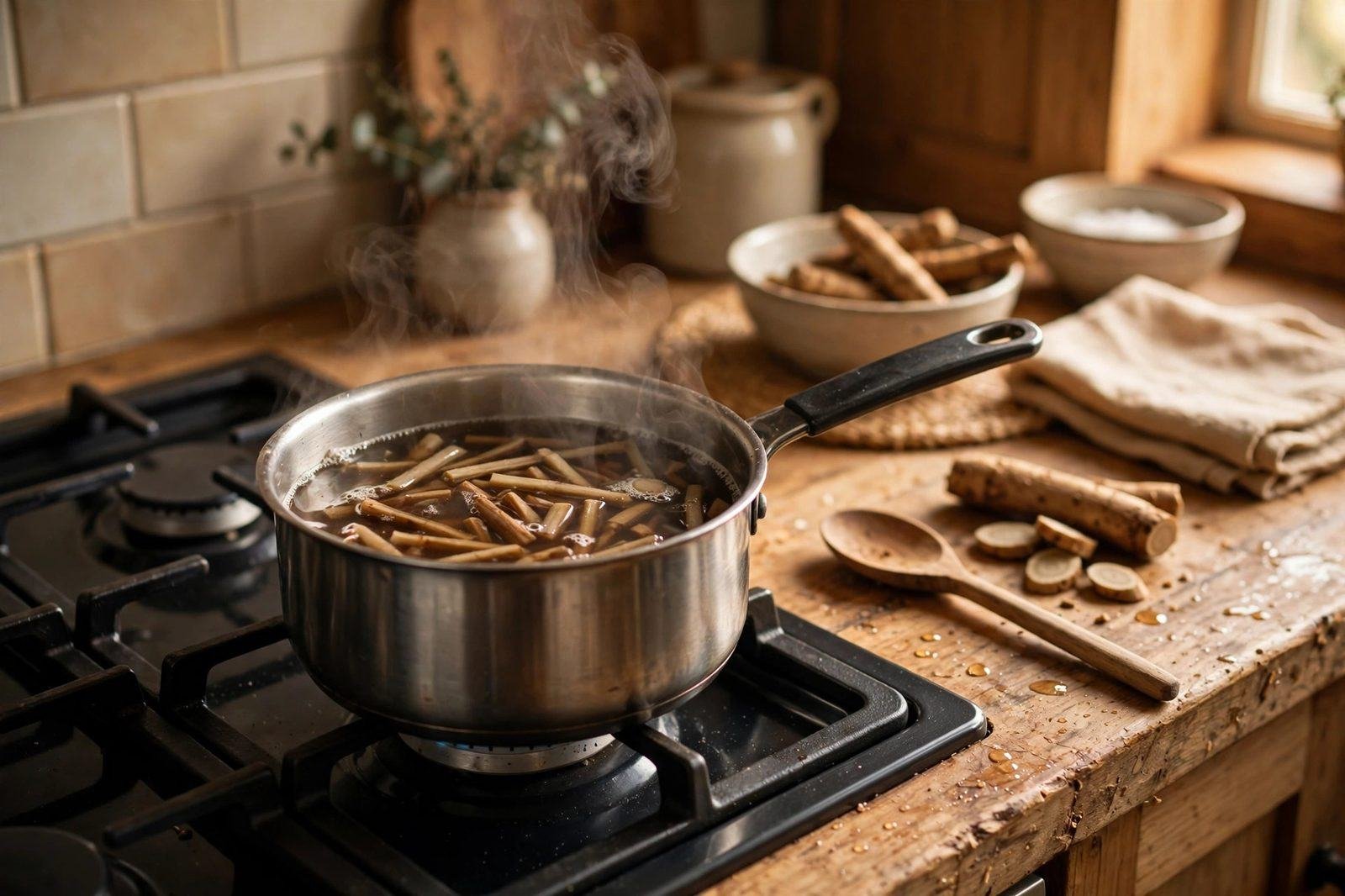
Burdock root is tough and woody, so it needs a simmer (a decoction), not a quick steep like leaf teas. The trial dose was 2 grams of dried root per small cup (150 mL), three times a day — a useful reference, though the EMA’s traditional range is 2–6 grams per infusion, up to three times daily.
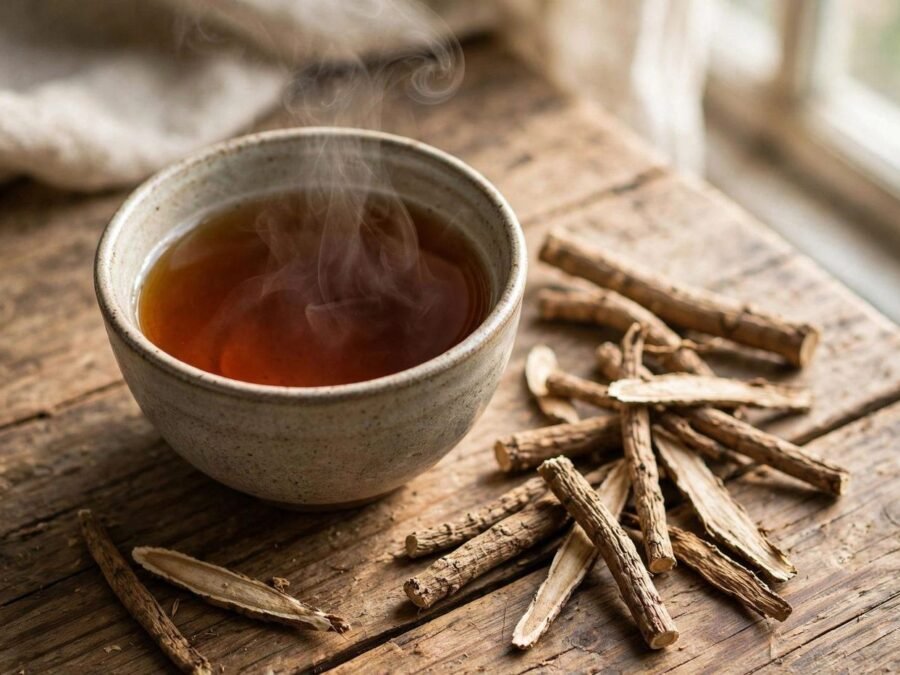
Simple method: Add 1–2 teaspoons of dried, chopped burdock root (about 2–4 grams) to a small saucepan with 1 cup of water. Bring to a gentle boil, then simmer covered for 10–15 minutes. Strain and drink warm. Roasted root gives a deeper, toastier cup; plain dried root is lighter and more vegetal. A squeeze of lemon or a teaspoon of honey softens the earthiness. If you are trying it for the first time, brew one cup and see how your stomach feels before working up to more — and as a caffeine-free brew, it suits evenings, much like chamomile tea.
Safety: Who Should Skip It or Ask First
Burdock root tea is generally considered safe in food amounts — it is, after all, a vegetable — but the concentrated tea form deserves the same fine print every herbal tea gets:
- Pregnancy: Avoid. Memorial Sloan Kettering notes burdock may stimulate the uterus and increase the risk of premature delivery. Breastfeeding data are insufficient — ask your doctor first.
- Daisy-family allergy: Do not use if you are allergic to burdock or to plants in the Asteraceae family (ragweed, daisies, chrysanthemums) — this is the EMA monograph’s stated contraindication.
- Diabetes medication: Burdock may lower blood sugar, so combined with diabetes drugs it could push levels too low. Monitor and talk to your doctor.
- Diuretics (“water pills”): Burdock may add to the diuretic effect, raising the risk of dehydration. Drink extra water and be cautious if you already take a diuretic.
- Children: The EMA monograph does not recommend burdock root products for children and adolescents under 18.
- Duration: For traditional urinary or appetite use, the EMA advises seeing a doctor if symptoms persist longer than 2 weeks (4 weeks for skin use) — the tea is not a long-term substitute for diagnosis.
- Quality matters: A burdock tea product was once found contaminated with atropine, a toxic alkaloid, because of poor quality control (reported by MSKCC). Buy from reputable brands, and never brew roots you dug up yourself unless you can identify the plant with certainty — burdock has toxic lookalikes.
As with any herb, tell your doctor about it if you take regular medication or have a chronic condition. A root tea should never replace prescribed treatment.
Frequently Asked Questions
Does burdock root tea have caffeine?
No. Like most herbal root teas, burdock tea is naturally caffeine-free, so it works as an evening drink.
Is burdock root tea the same as gobo tea?
Yes — gobo is the Japanese name for burdock root, and gobo cha is roasted burdock root tea. Same plant, same root.
Can I drink burdock tea every day?
Traditional use is up to three cups a day, and the knee-osteoarthritis trial used three cups daily for six weeks. For ongoing daily use, the EMA’s duration guidance applies: if you are drinking it for a specific symptom, see a doctor if that symptom persists beyond 2 weeks.
Does burdock tea detox the blood?
No — “blood purifier” is traditional herbal language, not a proven medical effect. There is no clinical evidence that burdock tea removes toxins from the blood.
Is burdock tea safe in pregnancy?
No — avoid it in pregnancy. Memorial Sloan Kettering notes burdock may stimulate the uterus and increase the risk of premature delivery.
Roasted or plain burdock root — which is better?
Flavor is the main difference: roasted is deeper and toastier, plain is lighter and more vegetal. Laboratory testing has found roasting can raise the tea’s phenolic content, but that is a lab finding, not a proven health advantage — choose the one you enjoy drinking.
Burdock root tea is best approached as what it is: an earthy, caffeine-free root brew with one encouraging small trial, a long traditional record, and honest limits. If that sounds like your kind of tea, brew it properly, buy it from a brand you trust, and keep the safety fine print in mind. For another gentle root tea with a different strength — soothing mucilage rather than earthy bitterness — marshmallow root tea is the quiet counterpart.
Simple Burdock Root Tea
Ingredients
Method
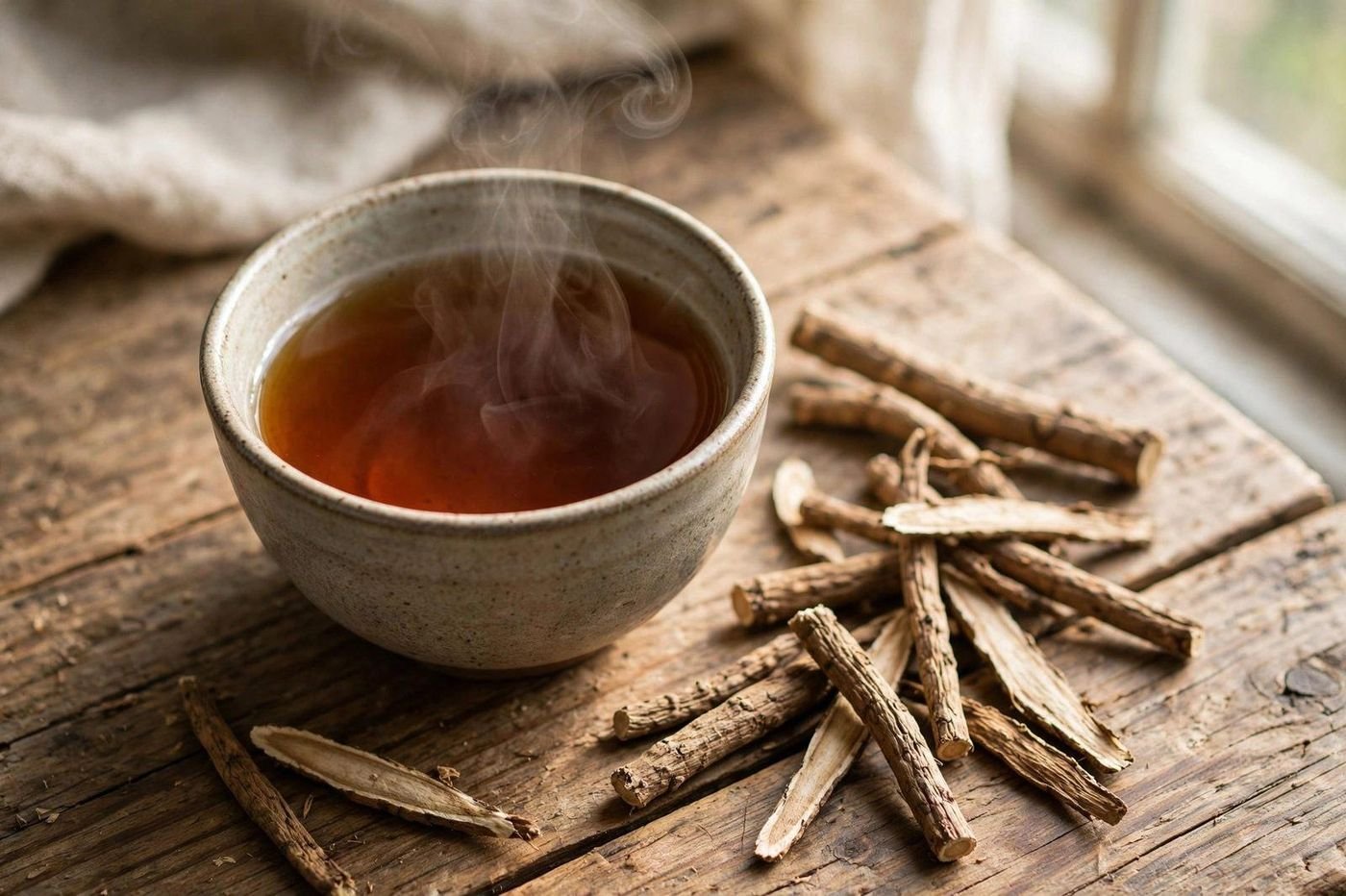
- Add the dried burdock root to a small saucepan.
- Pour in 1 cup of water.
- Bring to a gentle boil, then simmer covered for 10–15 minutes.
- Strain into a cup and serve warm, with honey or lemon if you like.