

The dandelion tea benefits you hear about are real — but most articles miss something: there isn’t one dandelion tea. There are three. The root, leaf, and flower of Taraxacum officinale each brew a different drink, with different flavors and strengths. This guide covers what each part may offer, what early research says, and who should think twice before pouring. No miracle claims — just a practical, honest cup.

One Plant, Three Teas: Root vs Leaf vs Flower
“Dandelion tea” usually means one of three different beverages: an infusion of the leaves, a roasted brew of the roots, or a mild steep of the flowers. Knowing which is which is the fastest way to get the cup you want.
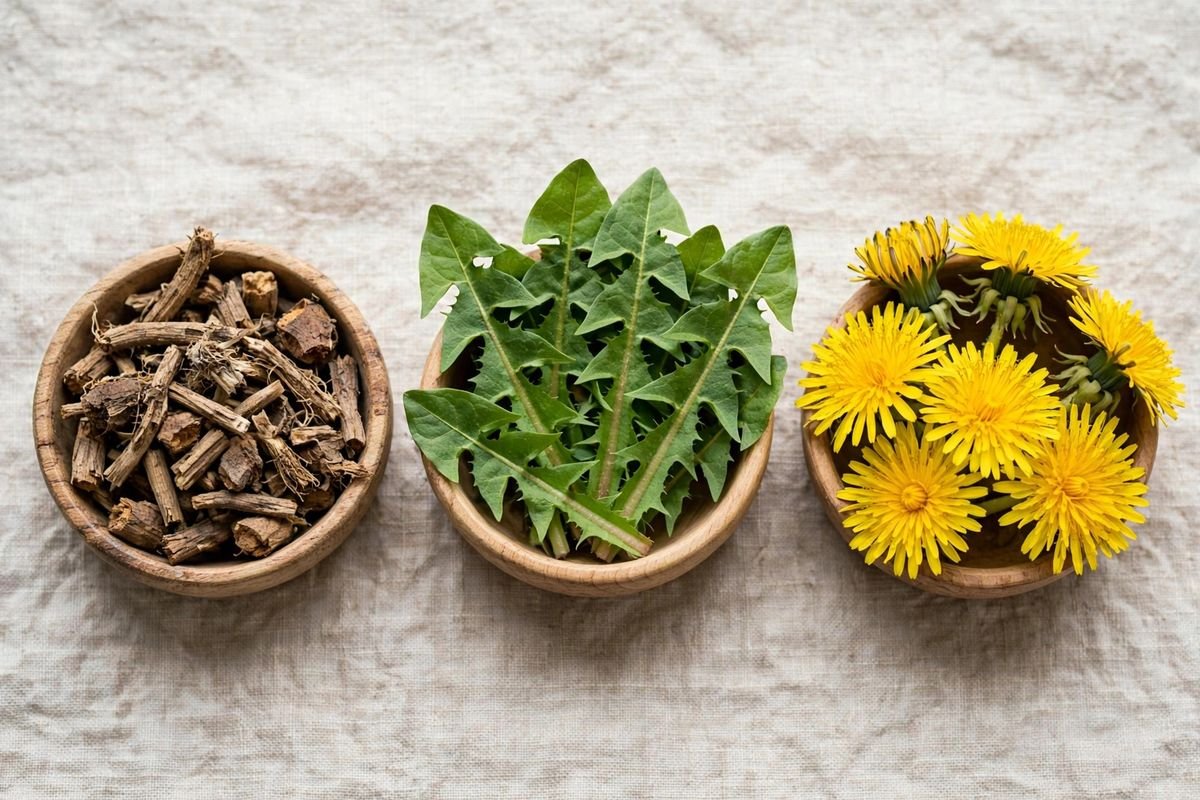
| Part used | Flavor | Best for | Brew note |
|---|---|---|---|
| Root (dandelion root tea) | Earthy, nutty; roasted = dark and coffee-like | Liver support, gut health (prebiotic inulin), caffeine-free coffee alternative | Roast then steep 10 min, or French press for body |
| Leaf | Herbal, slightly bitter (like mild greens) | Natural diuretic effect; vitamins A, C, K and potassium | Steep 5–10 min in hot (not boiling) water |
| Flower | Mild, gently sweet, floral | Antioxidants and carotenoids; the easiest-tasting cup | Steep 8–10 min; remove the green sepals first |
All three are completely caffeine-free — a friendly evening option. For another bedtime favorite, see our chamomile tea for sleep guide. And per Healthline’s dandelion overview: if you harvest your own, make sure the plants haven’t been treated with herbicides or pesticides.
9 Gentle Dandelion Tea Benefits Worth Knowing
Most evidence below comes from small studies, early lab work, or centuries of traditional use — honest researchers still call the human data limited:
1. Traditionally Used to Support the Liver
Dandelion root has long been held as a “liver tonic” in folk medicine, and preliminary studies suggest this may relate to increased bile flow. A 2017 study found dandelion polysaccharides may support healthy liver function by easing stress on the liver and aiding bile flow. Early signals, not proof — and researchers keep looking.
2. A Gentle Natural Diuretic
One study showed increased urine output after two 1-cup servings of tea made from the leaves. That makes the leaf infusion the classic choice when you’re feeling bloated — it may help the body release excess water. This is water movement, not fat loss — and it’s exactly why people on diuretic medication or lithium should check with a doctor first.
3. Digestion Support with Prebiotic Inulin Fiber
Dandelion root naturally contains inulin, a prebiotic fiber that feeds beneficial gut bacteria — part of why dandelion tea has stayed in traditional digestive routines. If gentle digestive drinks are your thing, our ajwain water for digestion guide is another easy option.
4. Antioxidants That May Ease Everyday Inflammation
Dandelion contains taraxasterol — a compound with significant antioxidant properties — plus polyphenols that neutralize free radicals. Taraxasterol may help regulate white blood cells so they don’t trigger inflammation unnecessarily. For another antioxidant-rich brew, explore tulsi tea benefits.
5. Blood Sugar Curiosity Worth Watching
Early research suggests dandelion root compounds may support how the body responds to insulin and manages glucose — an area researchers describe as still developing. It’s a curiosity, not a strategy: no solid human evidence says it lowers blood sugar, and it should never replace prescribed diabetes care. For another traditional option, see our cinnamon tea for blood sugar guide.
6. A Nutrient-Dense Sip
Dandelion leaf is the most nutritionally dense preparation: a good source of vitamins A, C, and K, plus potassium, calcium, iron, magnesium, and zinc (WebMD’s dandelion nutrition overview). Another nutrient-packed leaf to compare: moringa tea benefits.
7. Everyday Immune Support Basics
Dandelion carries real vitamin C, traditionally used for seasonal colds. No tea prevents illness — but a warm daily ritual with genuine vitamin C is a sensible winter habit.
8. May Help Your Routine Feel Lighter
Between the gentle diuretic effect and the digestive comfort of inulin, dandelion tea can make you feel less puffy on bloated days. Be skeptical of anything stronger — one Korean study was done in mice, and “may help with water retention” is the honest ceiling.
9. A Real Caffeine-Free Coffee Alternative

Here’s the surprise star: the roots of young dandelion plants, roasted dark brown and steeped, brew into a rich, slightly bitter cup that closely resembles the flavor, color, and body of black coffee — with zero caffeine, plus the prebiotic and liver-supportive compounds above. Brew it in a French press for the best result. If you’re cutting back on coffee but miss the ritual, see also our rooibos tea benefits guide.
How to Make Dandelion Tea (Leaf Infusion + Roasted Root “Coffee”)
Store-bought bags are the easy route — but here’s how to brew each style at home. Only harvest plants you’re sure are chemical-free.

Simple Leaf Tea (1 Serving)
Ingredients
- 1 cup fresh dandelion leaves (or 1–2 teaspoons dried)
- 1 cup (about 250 ml) hot water, just off the boil
- Optional: a squeeze of lemon, a teaspoon of honey
Steps
- Wash the fresh leaves thoroughly.
- Place them in a teapot or cup with an infuser.
- Pour over the hot water and steep 5–10 minutes.
- Strain, brighten with lemon if you like, and sip.
Time: 10–12 minutes | Servings: 1
Roasted Root “Coffee” (2 Servings)
Ingredients
- 2–3 tablespoons roasted dandelion root (store-bought, or home-roasted from young roots)
- 2 cups (about 500 ml) freshly boiled water
- Optional: milk or a pinch of cinnamon
Steps
- Add the roasted root to a French press or pot.
- Pour over boiling water and steep 10–15 minutes.
- Strain, press, and pour into mugs.
- Add milk or cinnamon if you like.
Time: 12–15 minutes | Servings: 2
Roasting your own roots: wash young roots very thoroughly, chop fine, and heat in the oven until dark brown (about two hours), then steep 1–2 teaspoons per cup for about 10 minutes.
Who Should Skip Dandelion Tea (or Check with a Doctor First)
Dandelion tea is generally safe for most adults — but “most” isn’t everyone. Per WebMD and Healthline, check with your doctor first if any of these apply:
- Ragweed, daisy, or marigold allergy: dandelion is in the same daisy (Asteraceae) family — if you’re allergic to those, you’ll likely react to dandelion too.
- Pregnancy or breastfeeding: the effects are inconclusive — best to choose a different tea for now.
- Diuretic or lithium medication: dandelion’s own diuretic properties may compound with them.
- Blood thinners or blood pressure medication: its potassium and fluid-balance effects may interfere.
- Certain antibiotics (like Cipro, Levaquin, Noroxin): avoid dandelion tea while taking them.
- Kidney or gallbladder conditions: consume only with your doctor’s permission.
Rare allergies are possible even without a known daisy-family sensitivity — stop and talk to a clinician if you notice itching, swelling, or stomach upset. “Natural” isn’t “unlimited”: a few cups a day is the sensible range.
Dandelion Tea FAQ
Is dandelion tea caffeine-free?
Yes — root, leaf, and flower preparations are all naturally caffeine-free, making it a good evening choice.
What’s the difference between dandelion root tea and leaf tea?
Root tea is earthy and roasted like coffee — traditionally used for liver support and gut health (prebiotic inulin). Leaf tea is herbal and slightly bitter — the classic natural diuretic and the most nutrient-dense preparation.
Does dandelion tea help with bloating?
It may help with water-retention bloating: one study showed increased urine output after two cups of leaf tea. It’s water movement, not fat loss.
Does roasted dandelion root really taste like coffee?
Remarkably close: roasted dark, it brews a rich, slightly bitter cup with the color and body of black coffee — one of the best caffeine-free coffee alternatives.
The Bottom Line
Dandelion tea benefits are gentle, early, and honest: a three-in-one herbal tea that may support the liver, digestion, hydration, and antioxidant defenses — with a roasted root brew that’s a satisfying stand-in for coffee. Brew the part that matches your goal and keep your doctor in the loop.
Try a 2-Week Dandelion Course (Why Short Courses Beat Sipping Forever)
Here’s a funny thing even the tea companies admit: the label on Traditional Medicinals’ Everyday Detox Dandelion tea literally says it’s “best if drunk daily for up to 2 weeks, followed by a break of 1 week.” That’s not marketing — it’s the traditional herbal rhythm for this plant. Herbal tradition treats dandelion as a course — typically 1 to 3 weeks, especially in spring — rather than a forever habit: long enough for the gentle diuretic and digestive effects to show up, short enough to stay in the traditional use pattern.
The window has some evidence behind it, too. In a small human study published in the Journal of Alternative and Complementary Medicine, participants reported significantly less bloating after 7 days of daily dandelion tea — right in the middle of the 2-week window. Honest expectations for a 2-week course: less bloating after meals is often the first thing people notice (usually within 3–7 days — dandelion’s bitter compounds nudge digestion along by stimulating digestive juices); you may pee a little more (the leaf’s gentle diuretic reputation is old — the French nickname “pissenlit” means “wet-the-bed” — though unlike pharmaceutical water pills, the leaf is potassium-rich, so the traditional view is that it supports fluid balance without depleting minerals); afternoons may feel steadier (no caffeine involved — replacing a sugary afternoon drink with a warm, bitter cup removes a blood-sugar roller coaster, and the ritual does as much work as the plant); and the mineral intake is a small bonus, not a multivitamin (a brewed cup extracts only a fraction of what you’d get from eating the greens). Give it the full two weeks — judging any herbal tea on day 2 is like judging exercise after one walk.
How to Run Your 2-Week Course: Timing, Buying, and Brewing
First, read the label so you know which part you’re actually drinking — most commercial “dandelion teas” mix root and leaf with extras like fennel, peppermint, or licorice root. As a rule of thumb: a root-and-leaf blend covers both bases; lean leaf if bloating is the goal; lean roasted root if you want the coffee alternative.
Timing matters more than you’d think: drink leaf tea about 30 minutes before meals for the digestive-bitter effect; have root tea in the morning as your coffee alternative; and drink your diuretic cups in the morning, not at bedtime. Two to three cups a day is the traditional course dose.
Brewing by part: dried root works best as a decoction — simmer 1–2 teaspoons (about 3–5g) in 250ml water for 10 minutes, then steep 5 more, for a stronger, darker, more coffee-like cup. Dried leaf is an infusion — pour just-boiled water over 1 teaspoon of dried leaf, cover, and steep 5–10 minutes (covering keeps the volatile compounds in). Tea bags: most commercial bags suggest 2 bags per cup, covered, steeped 10–15 minutes, squeezed before removing. Want it cold? Brew double-strength hot, then chill — the root version makes a surprisingly good iced “coffee alternative” with a splash of milk.
The honest fine print: any scale change in two weeks is almost entirely water-weight fluctuation from the mild diuretic effect — not fat loss. Sustainable weight change comes from the habit the tea replaces (like a daily soda), not the tea itself. Common side effects are mild but real: diarrhea, indigestion, or stomach upset, especially at higher intakes. And respect the label’s rhythm — 2 weeks on, 1 week off — rather than turning a course into a permanent habit.
If you enjoy dandelion’s earthy root character, burdock root tea is another earthy root brew worth trying.