
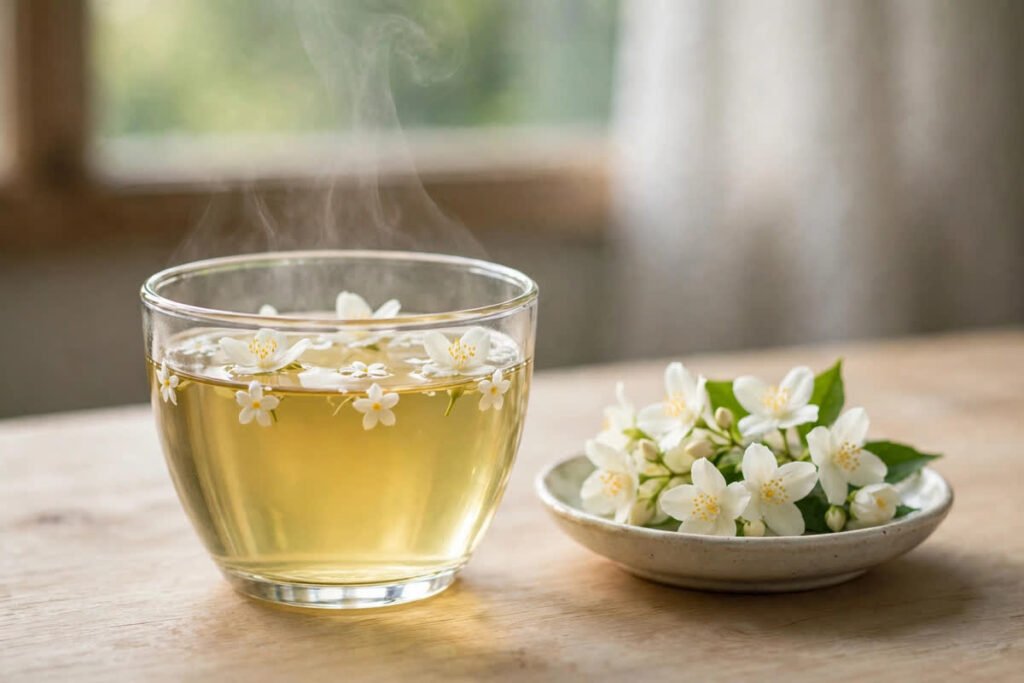
Jasmine tea benefits sound almost too good to be true: calm focus, antioxidants, better mood, gentle energy — all from a cup that smells like a summer evening. Some of that is real. Some of it is borrowed from green tea and dressed up in jasmine’s perfume. This guide separates the two.
Jasmine tea is not a tea species of its own. It is a scented tea — usually green tea leaves layered with fresh jasmine blossoms (Jasminum sambac) so the leaves absorb their fragrance. Almost no clinical trials have tested jasmine-scented tea itself. Most of the evidence belongs to its green-tea base, plus one small study on the scent itself.
Jasmine Tea at a Glance
| What is in the cup | What it may do | How solid is the evidence? |
|---|---|---|
| Catechins, especially EGCG (from the green-tea base) | Antioxidant activity; supports normal metabolism and blood-vessel function | Strong for green tea overall; thinner for jasmine tea specifically |
| L-theanine (from the green-tea base) | Calm alertness; smooths the edge of caffeine | Good, with consistent small trials |
| Caffeine, about 25–45 mg per cup | Short-term alertness and focus | Well established |
| Jasmine aroma (linalool, benzyl acetate and others) | Mild relaxation and mood effects through scent | Promising, but studies are small |
What Jasmine Tea Actually Is
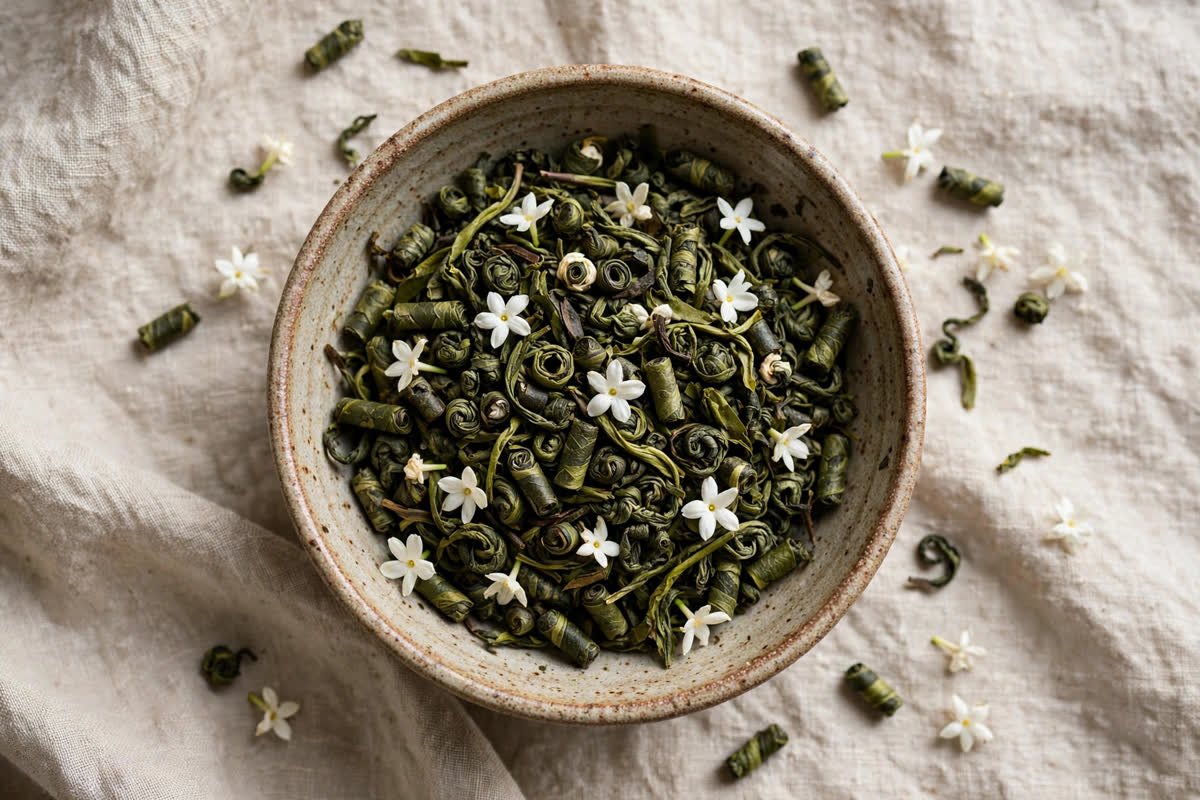
Real jasmine tea starts with a base of true tea — most often green tea, sometimes white, oolong or black tea — all from the same plant, Camellia sinensis. Fresh jasmine blossoms are layered with the leaves, sometimes several times over several nights, until the leaves carry the flowers’ scent. The blossoms are then usually removed. What you brew is scented leaf, not a cup of flowers.
That distinction decides almost everything about the cup: its caffeine, catechins and safety profile all come from the base tea. The flowers contribute aroma and a small amount of volatile compounds. A few blends do the opposite — dried jasmine blossoms steeped alone, with no tea leaf at all: a caffeine-free herbal tisane, not jasmine tea in the usual sense.
How Much Caffeine Is in Jasmine Tea?
| Jasmine tea base | Caffeine per 8 oz (240 ml) cup |
|---|---|
| Jasmine green tea (most common) | About 25–45 mg |
| Jasmine white tea | About 15–30 mg |
| Jasmine black tea | About 40–70 mg |
| Jasmine blossoms only (no tea leaf) | 0 mg — caffeine-free |
For comparison, the U.S. Food and Drug Administration (FDA) cites 400 mg of caffeine a day as an amount not generally associated with negative effects in most healthy adults, and lists green tea at about 37 mg per 12 oz serving. One or two cups of jasmine green tea sit far below that ceiling — but caffeine adds up across coffee, tea and chocolate, so count the whole day, not one cup.
7 Jasmine Tea Benefits, Honestly Weighed
1. Antioxidants from the green-tea base
The best-supported benefit in the cup belongs to green tea, not to jasmine. Green-tea catechins — especially EGCG — are among the most studied plant compounds in nutrition research, and scenting does not significantly reduce catechin content, so jasmine tea keeps most of them. The U.S. National Center for Complementary and Integrative Health (NCCIH) notes green tea’s catechins and caffeine may have a modest effect on body weight, and that green tea reduced total and LDL cholesterol to a small extent in randomised trials — while warning that most of those trials tested extracts, not brewed tea.
2. Calm focus, not a jolt
Jasmine green tea pairs a moderate dose of caffeine (about 25–45 mg) with L-theanine, an amino acid in tea leaves that promotes calm alertness. Caffeine blocks adenosine receptors and sharpens short-term focus; L-theanine smooths the jittery edge. The result is a gentler lift than coffee — roughly a third of the caffeine — which is why many people reach for jasmine tea for an afternoon cup.
3. The scent itself may calm you — this one is jasmine’s own
Here is the one benefit that belongs to jasmine rather than to green tea. In a small 2005 study, 24 healthy volunteers inhaled jasmine tea odour at the lowest concentration they could detect, for 5 minutes. Their heart rate fell significantly, the high-frequency component of heart-rate variability — a marker of parasympathetic activity — rose, and mood tests showed calm and vigorous states. The same effect came from (R)-(−)-linalool, one of jasmine’s main scent compounds. But it is small (24 people, one short session, scent only), and a follow-up found the effect depends on whether you like the smell: a strong jasmine odour raised stress markers in people who disliked it.
4. Heart and metabolic markers — association, not proof
Large reviews link regular green-tea drinking with modest improvements in LDL cholesterol and blood-pressure markers, and NCCIH notes a small LDL reduction in trials. Jasmine tea plausibly inherits much of this — but almost no trial has tested jasmine-scented tea specifically. If a headline promises jasmine tea lowers your cholesterol, the study almost certainly used green tea or green-tea extract.
5. Fresher breath and oral health support
Green-tea catechins have shown activity against the bacteria behind dental plaque and bad breath in laboratory and small human studies, and jasmine tea carries those same catechins. A cup after a meal may leave the mouth feeling fresher, and unsweetened tea adds no sugar for bacteria to feed on. This is a pleasant side benefit, not a substitute for brushing.
6. Gentle digestion and gut comfort
Jasmine tea is traditionally drunk after meals in China: a warm, light, unsweetened drink can feel soothing after eating, and green-tea polyphenols have been linked in observational work with a healthier gut-microbe balance. But no trial shows jasmine tea itself improves digestion. Treat it as a comfortable after-meal ritual, not a remedy.
7. Skin support — indirect, and the weakest claim
Polyphenols support the body’s normal defences against oxidative stress, one factor in skin ageing — so jasmine tea is sometimes sold as a skin tea. No trial has tested jasmine tea for skin, and the green-tea skin research comes mostly from extracts and creams, not brewed tea. Drink it because you enjoy it, not as skincare.
How to Brew Jasmine Tea Properly
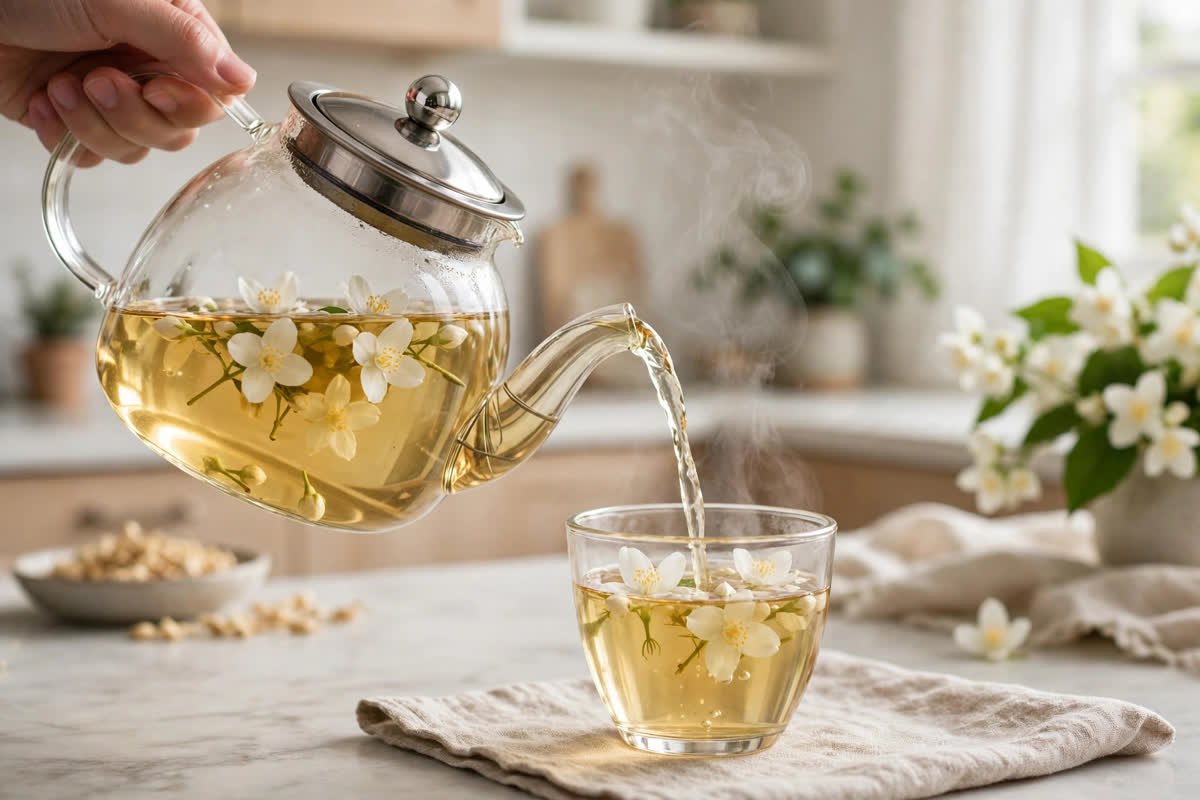
Most jasmine tea is ruined by water that is too hot or a steep that is too long. Green-tea bases turn bitter above 85°C, and the delicate scent fades. The recipe card below gives the exact method.
- Use water at about 80°C (175°F) — boil it, then let it sit for 2–3 minutes, or use a kettle with a temperature setting.
- Use 2 teaspoons (3 g) of loose leaf per 240 ml cup, and steep for 2–3 minutes — no longer.
- Re-steep the same leaves once or twice, adding 30 seconds each time; the second cup is often the most fragrant.
- Drink it plain first. If you want sweetness, add 1 teaspoon of honey after brewing, not sugar while it steeps.
- For iced jasmine tea, brew it double-strength (4 teaspoons per 240 ml), cool it, then pour over ice with a fresh jasmine blossom on top.
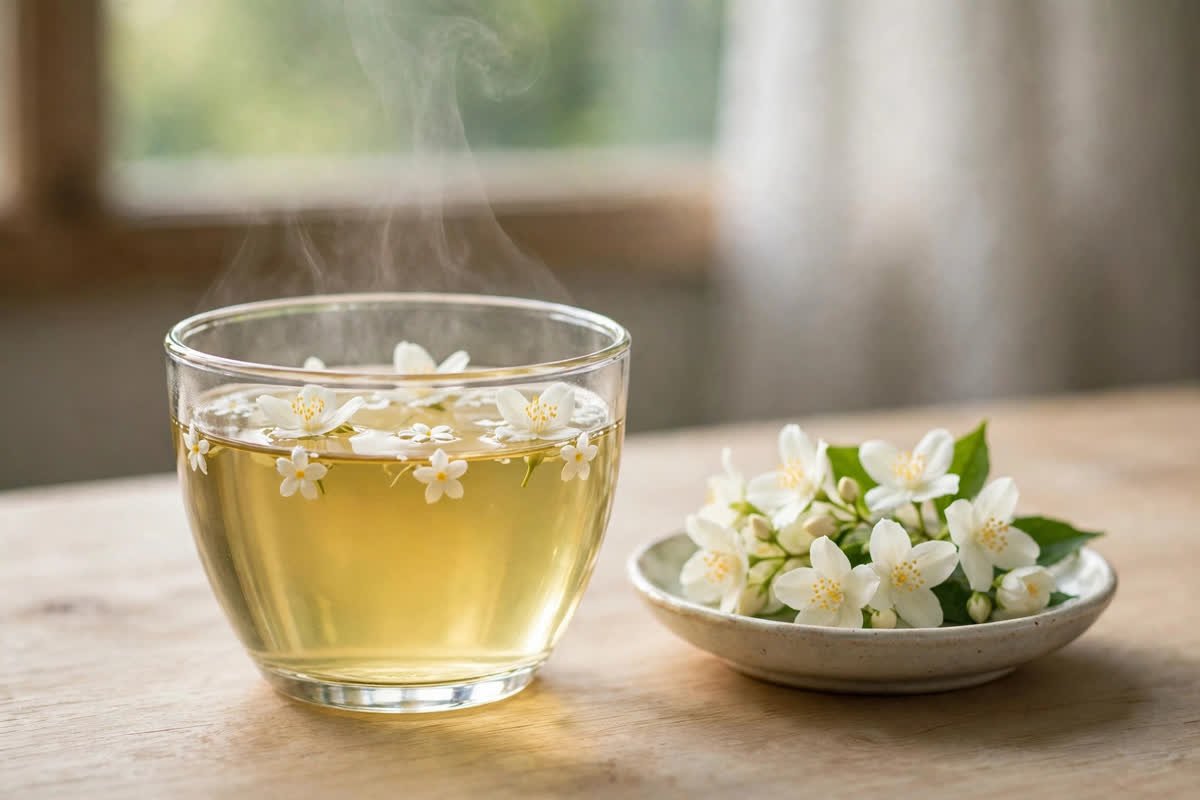
Simple Jasmine Tea
Ingredients
Method
- Heat 240 ml water to about 80°C — boil it, then let it sit for 2–3 minutes.
- Warm the cup with a splash of the hot water, then tip it out.
- Add 2 teaspoons (3 g) of jasmine green tea leaves to the cup.
- Pour in the water and steep for 2–3 minutes, then strain out the leaves.
- Stir in 1 teaspoon of honey if you like it sweet, garnish with a fresh blossom, and serve.
What Jasmine Tea Is Not
- Not a weight-loss tea. NCCIH is clear: catechins and caffeine may have a modest effect on body weight, and the effect varies with the product and the person. No tea burns fat on its own.
- Not a sleep aid. Jasmine green tea contains caffeine. A cup in the evening can delay sleep in sensitive people. The calming scent does not cancel out the caffeine.
- Not a detox. The liver and kidneys do that work; tea does not flush toxins.
- Not a cholesterol or blood-pressure treatment. The evidence is association and small average changes, mostly from extracts — not a reason to skip prescribed medicine.

Safety: Who Should Be Careful
Brewed jasmine tea is safe for most healthy adults in moderate amounts — 1–3 cups a day fits comfortably. A few groups should take care:
- Pregnancy and breastfeeding: caffeine passes to the baby, and the American College of Obstetricians and Gynecologists advises keeping caffeine moderate in pregnancy (under 200 mg a day). Two cups of jasmine green tea stay well under that, but count all caffeine sources and ask your doctor.
- Sleep, anxiety and heart rhythm: caffeine can worsen insomnia, jitteriness and palpitations in sensitive people. If that is you, use fewer leaves, steep for less time — or drink it before noon only.
- Iron absorption: tea tannins reduce absorption of iron from plant foods and supplements. If your iron runs low, drink tea between meals rather than with them.
- Reflux and empty stomachs: tannins and caffeine can trigger nausea or heartburn, especially on an empty stomach. Eat something first, and skip it if it reliably bothers you.
- Flower and pollen allergy: jasmine is a flowering plant. People with pollen allergies can rarely react to the blossoms — itchy eyes, runny nose or a rash from handling loose leaf.
- Medicines: NCCIH notes green tea at high doses can reduce blood levels of the beta-blocker nadolol and the cholesterol drug atorvastatin, and that green-tea extract can interact with raloxifene. Brewed tea in normal amounts is a much smaller exposure than extracts, but tell your doctor about any tea habit if you take heart or blood-pressure medicine.
- Green-tea extracts are not the same as brewed tea: rare liver injury has been reported with green-tea extract pills and capsules, not with brewed tea. Stick to the cup, and do not take concentrated extract supplements without medical advice.
- Children: caffeinated tea is not recommended for young children; the blossom-only tisane is the safer choice.
This article is for general information and is not medical advice. If you are pregnant, take medicine, or have a health condition, talk with your health care provider before making jasmine tea a daily habit.
Frequently Asked Questions
Does jasmine tea have caffeine?
Yes — when it is made from real tea leaves. Jasmine green tea has about 25–45 mg of caffeine per 8 oz cup, jasmine white tea about 15–30 mg, and jasmine black tea about 40–70 mg. Only a tisane of jasmine blossoms alone is caffeine-free, because the flowers themselves contain no caffeine.
Is jasmine tea good for sleep?
Not as a bedtime drink. Its scent has a mild calming effect in a small study, but jasmine green tea still contains caffeine, which can delay sleep. If you want the flavour in the evening, choose the caffeine-free blossom tisane, or drink jasmine green tea earlier in the day. For a genuinely caffeine-free evening cup, chamomile is the better choice.
Is jasmine tea safe during pregnancy?
In moderation, usually yes — but keep total caffeine moderate (under 200 mg a day, per ACOG). Two cups of jasmine green tea are roughly 50–90 mg, well under that limit. Count coffee and other teas too, and check with your doctor.
What is the difference between jasmine green tea and jasmine flower tea?
Jasmine green tea is green-tea leaves scented with jasmine blossoms — it has caffeine, catechins and L-theanine. Jasmine flower tea is dried blossoms steeped alone — caffeine-free, no catechins, gentler and purely aromatic. Most shop “jasmine tea” is the green-tea version.
How many cups of jasmine tea a day is OK?
For most healthy adults, 1–3 cups a day fits comfortably and stays far below the FDA’s 400 mg daily caffeine reference. If you are sensitive to caffeine, start with one cup, drink it before noon, and skip it on an empty stomach.
Sources
- National Center for Complementary and Integrative Health (NCCIH) — Green Tea: Usefulness and Safety (updated February 2025) — catechins, modest weight and cholesterol effects, liver-injury note for extracts, drug interactions, pregnancy caffeine advice.
- Kuroda K, Inoue N, Ito Y, et al. — Sedative effects of the jasmine tea odor and (R)-(−)-linalool, European Journal of Applied Physiology 2005;95(2–3):107–14 (PMID 15976995) — 24 healthy volunteers, 5-minute inhalation, heart rate fell, parasympathetic activity rose, calm and vigorous mood states.
- Inoue N, Kuroda K, Sugimoto A, et al. — Autonomic nervous responses according to preference for the odor of jasmine tea, Bioscience, Biotechnology, and Biochemistry 2003;67:1206–14 — the calming effect depended on liking the scent; a strong disliked odour raised stress markers.
- U.S. Food and Drug Administration — Spilling the Beans: How Much Caffeine Is Too Much? — 400 mg a day not generally associated with negative effects in most adults; green tea about 37 mg per 12 oz.
- American College of Obstetricians and Gynecologists — Moderate caffeine consumption during pregnancy, Committee Opinion No. 462 (reaffirmed 2020), cited on the NCCIH green-tea page.
Related reading on Soothe & Plate: what happens when you drink green tea every day, oolong tea benefits, chamomile tea for sleep, lavender tea benefits, and rose tea benefits.