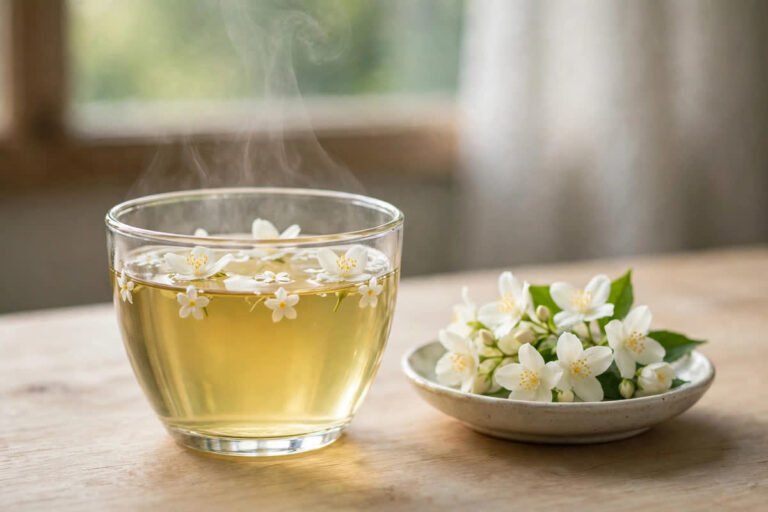

Pu-erh tea benefits sound almost too good to be true: better digestion, lower cholesterol, weight support, and calmer energy. But most of the strongest studies used concentrated extracts or animal models, not a normal cup. A cup is not a supplement or a treatment.
This article weighs each claim against what the research actually tested. Pu-erh is also genuinely different from green, black, or oolong tea: the only tea deliberately aged.
What Makes Pu-erh Different From Every Other Tea?
Pu-erh comes from the leaves of Camellia sinensis var. assamica, a broad-leaf tea plant grown in Yunnan province, China. What sets it apart is what happens after picking: pu-erh is post-fermented, and microbes keep changing the leaves over months or years.
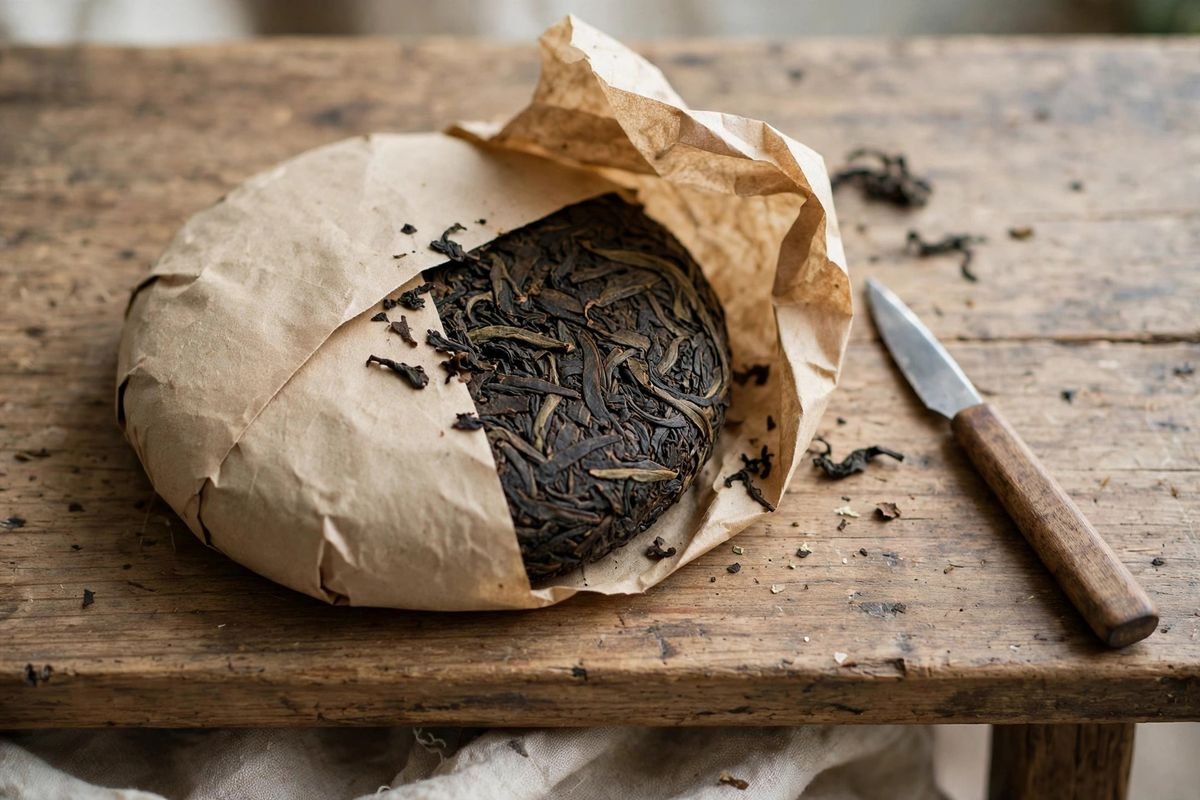
That makes pu-erh the only deliberately aged tea. Green tea is prized fresh; pu-erh is pressed into cakes, bricks, or loose leaf and left to mature. Over time its flavour softens toward smooth, earthy, and mellow.
Fermentation also changes the tea’s chemistry. During aging, microbes produce theabrownin, the brown pigment behind ripe pu-erh’s dark colour. Pu-erh drinkers usually rinse the first infusion — hot water over the leaves, a brief swirl, then discard — to wash the leaves.
Sheng vs Shou: Raw and Ripe Pu-erh at a Glance
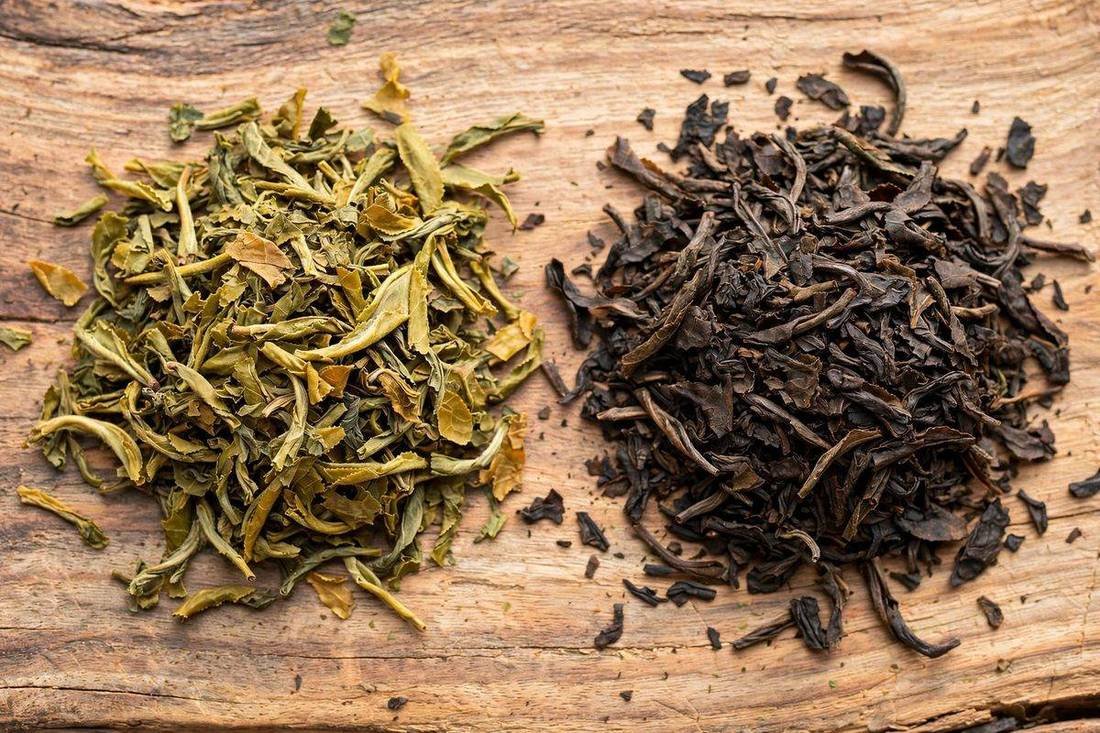
All pu-erh falls into two families: sheng (raw) and shou (ripe). Sheng is aged slowly and naturally over years. Shou goes through faster, controlled fermentation that mimics years of aging.
| Feature | Sheng (Raw) Pu-erh | Shou (Ripe) Pu-erh |
|---|---|---|
| Aging | Ages slowly and naturally over years; flavour keeps changing | Fast, controlled fermentation; ready to drink much sooner |
| Taste | Brighter, more floral or fruity when young; can be astringent | Smooth, earthy, mellow, and dark from the start |
| Colour in the cup | Golden to light amber when young; deepens with age | Deep reddish-brown to dark amber |
| Caffeine feel | Often feels brighter and more stimulating | Often feels smoother and gentler, though caffeine is still present |
| Best for | Drinkers who enjoy bright, evolving flavours and long aging | Beginners, after-meal cups, and anyone who wants a smooth dark tea |
Shou is the friendlier first buy: consistent, forgiving, and easy to enjoy. Sheng rewards patience: young sheng can taste sharp, but it can turn smooth and complex with age. Buy from a reputable seller and store it cool, dry, and away from strong smells.
7 Pu-erh Tea Benefits, Honestly Weighed
Each benefit below is weighed against the actual evidence, and every health claim links to a primary source.
1. May Support Digestion After Heavy Meals
In Yunnan, pu-erh has long been drunk after rich meals, and many drinkers still reach for it when a meal feels heavy. The traditional idea is that fermentation makes pu-erh easier on the stomach than sharper teas, and a warm cup after eating feels settling. That tradition is plausible, but human digestion trials on pu-erh are limited. The evidence rests on traditional use, not controlled trials of a brewed cup. So: comforting after a heavy meal, but not proven digestion medicine.
2. May Help Cholesterol Levels
Cholesterol is where pu-erh research looks most interesting. Huang and colleagues (2019, Nature Communications) found that theabrownin from pu-erh tea attenuated hypercholesterolemia through effects on the gut microbiota and bile acid metabolism, in mice and humans (Huang et al. 2019, PubMed). Earlier animal work points the same way. Hou and colleagues (2009, Experimental Gerontology) found pu-erh aqueous extracts lowered LDL and triglycerides and raised HDL in rats with hyperlipidemia (Hou et al. 2009, ScienceDirect). Fujita and Yamagami (2008, Phytotherapy Research) found pu-erh extract inhibited the postprandial rise in serum cholesterol in mice. Notice the pattern: extracts and animal models, plus one theabrownin study with a human component. None of this proves a daily cup will lower your cholesterol — but it makes pu-erh a reasonable drink within a heart-friendly diet, not instead of proven diet and activity changes.
3. Weight Management: A Small, Honest Signal
The best human trial is a 2016 randomised, double-blind, placebo-controlled trial by Jensen and colleagues in Clinical Interventions in Aging. Fifty-nine overweight or mildly obese adults with high cholesterol took 3 g/day of pu-erh extract for 20 weeks. The extract group lost a statistically significant amount of weight compared with placebo (P<0.05) (Jensen et al. 2016, PubMed). The honesty caveat: fat loss reached significance only within the extract group, not between the extract and placebo groups. That weakens the result — a between-group difference is the stronger test. The fair reading: a small, real signal from a concentrated extract. A brewed cup holds far less of the active compounds, so pu-erh can support a weight-friendly routine — unsweetened, instead of a sugary drink — but it is not a weight-loss treatment.
4. Gut Microbiome Support
The same 2019 Huang study links pu-erh’s theabrownin to changes in gut microbiota and bile acid metabolism (Huang et al. 2019, PubMed). The proposed mechanism: theabrownin reaches the gut, shifts gut microbes, and changes how bile acids are processed. Short-chain fatty acids (SCFAs), made by gut microbes, are also part of this picture. But the chain from a cup of tea to a healthier microbiome is not proven. The strongest evidence comes from animal work and study conditions, not from people drinking a daily brewed cup. Treat this as early, promising science rather than a proven benefit.
5. Antioxidant Support From Polyphenols
Like all true teas, pu-erh contains polyphenols, plant compounds linked to tea’s healthy reputation. Fermentation changes the mix — some compounds fall as theabrownin rises — so pu-erh’s antioxidant profile differs from green tea’s. The NCCIH green tea page gives useful general context on true teas and their antioxidants. Antioxidant content in a cup is real, but “contains antioxidants” does not mean “prevents disease.” No trial shows pu-erh’s antioxidants alone protect against any specific disease.
6. Steady Energy, Less Jitter Than Coffee
Pu-erh contains caffeine: a cup usually lands at roughly 30–70 mg — an approximate range from tea guides, depending on leaf, type, and steep time. Pu-erh generally delivers less caffeine than coffee, and many drinkers find the lift smoother, without the spike and crash of a large coffee.
| Drink (8 oz / 240 ml cup) | Caffeine, approximate |
|---|---|
| Pu-erh tea | Roughly 30–70 mg, depending on leaf, amount, and steep time |
| Green tea | Roughly 30–50 mg (approximate; varies by leaf and steep) |
| Brewed coffee | Roughly 95 mg (approximate; varies by beans and brew strength) |
The FDA gives general guidance of 400 mg of caffeine per day for healthy adults; ACOG advises a 200 mg daily limit in pregnancy. Two cups sit well within those limits for most healthy adults, but caffeine adds up across the day — coffee, other teas, and energy drinks all count. Sensitive to caffeine? Drink it earlier in the day and keep the steep short.
7. A Calm After-Meal Ritual — and Early Blood-Sugar Interest
The seventh benefit is the quietest: pu-erh makes a good ritual. A small cup after a meal, brewed slowly, is a calm pause in the day. It marks the end of a meal and replaces a sweet dessert drink with something unsweetened. Early interest in pu-erh and blood sugar rests mostly on animal and laboratory studies; human proof is limited. No blood-sugar claims can be made for a daily cup, and pu-erh is not help for diabetes. With diabetes or blood-sugar medication, talk to your doctor first, and never adjust medication because of a tea. For a gentler after-meal drink in the same spirit, try cardamom tea or fennel seeds water.
Extract vs a Cup: The Honesty Check
The strongest human trial used 3 grams of pu-erh tea extract per day for 20 weeks — a concentrated, standardised dose (Jensen et al. 2016, PubMed). The cholesterol studies used extracts or theabrownin, mostly in animals (Hou et al. 2009, ScienceDirect; Huang et al. 2019, PubMed). A brewed cup is none of those things — leaves steeped for a few minutes, with a much lower and more variable dose. Until trials test brewed pu-erh itself in people, the honest position is that pu-erh is a promising drink with early evidence, not a proven therapy.
How to Brew Pu-erh Tea
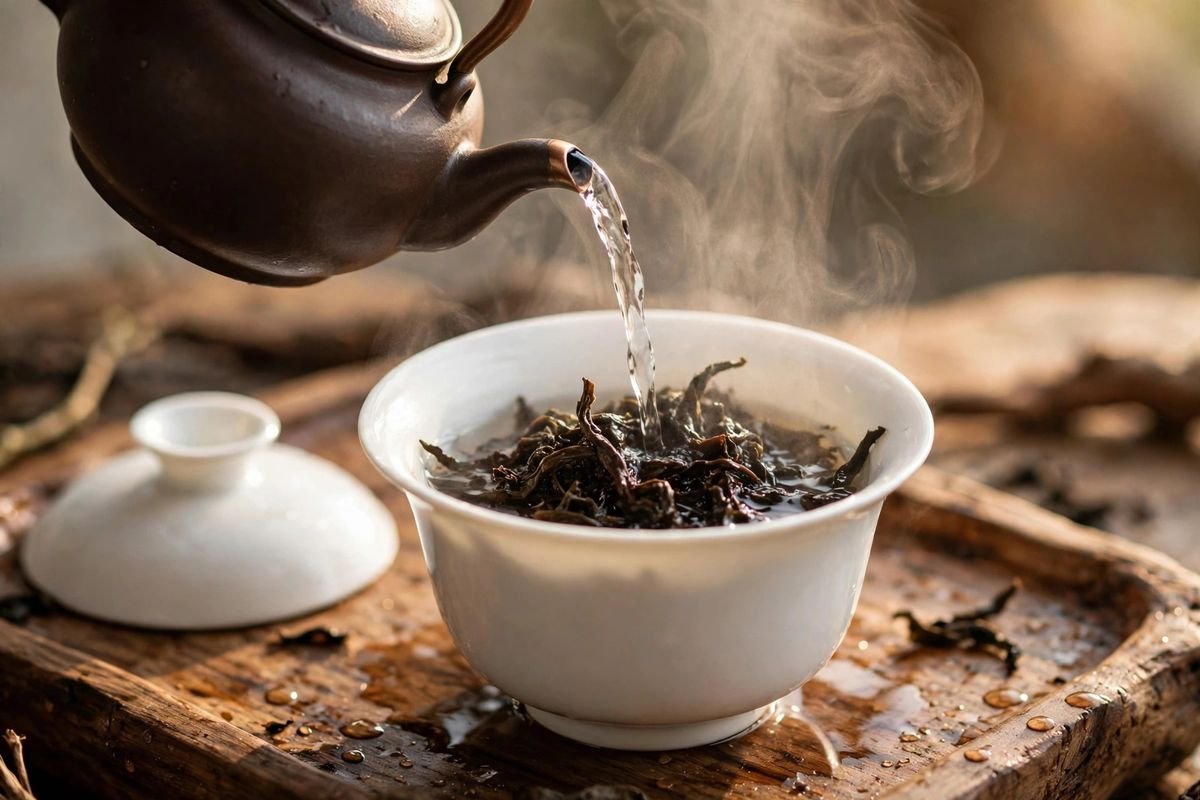
Use the quantities in the recipe below, in this order, and adjust the steep time to your taste. Remember to rinse the first infusion before the real brew.
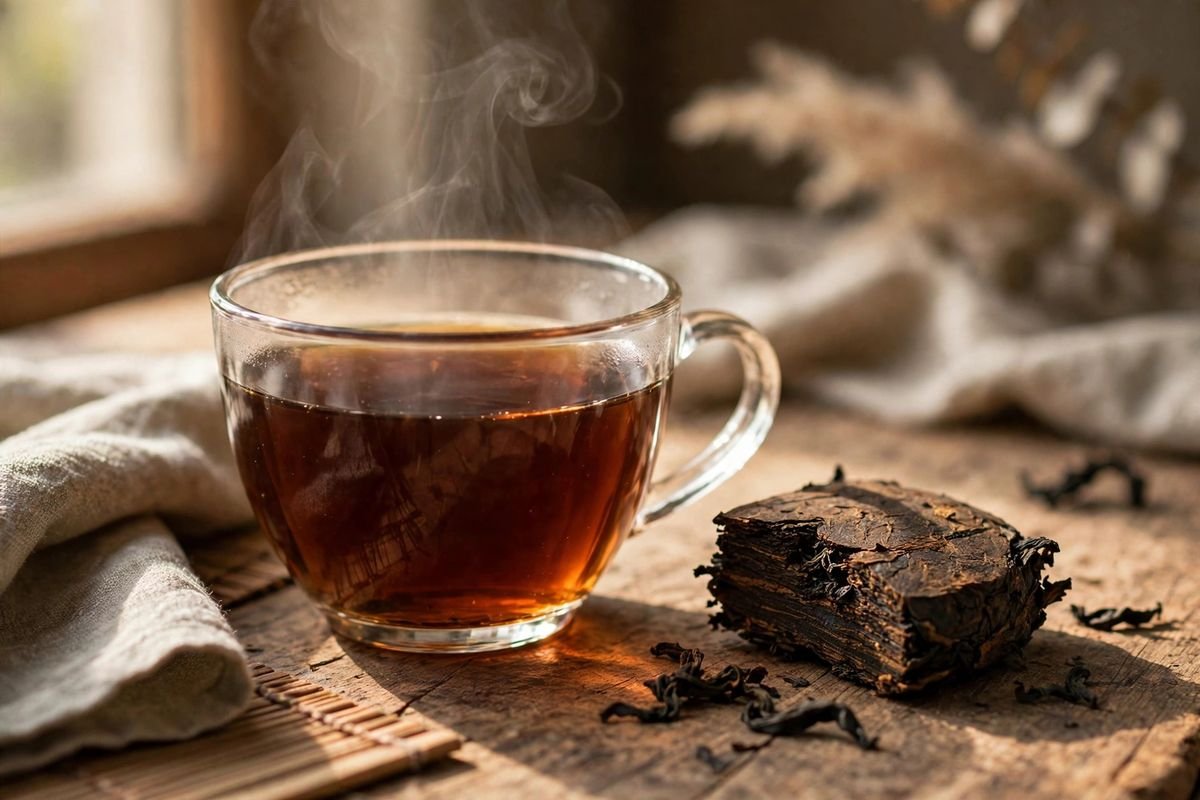
Simple Pu-erh Tea
Ingredients
Method
- Warm the pot/cup with hot water, then discard the water.
- Add the tea, pour in the rinse water, swirl for 5 seconds, then discard.
- Pour fresh just-boiled water over the leaves.
- Steep 2-3 minutes (shou) or 1-2 minutes (sheng), then strain.
- Re-steep the same leaves 2-3 more times, adding 30 seconds each round.
Start with shou and a 2–3 minute steep. Sheng drinkers often prefer a shorter 1–2 minute steep to keep the cup bright rather than bitter. The same leaves can be steeped again two or three times, adding about 30 seconds each round. Drink it unsweetened at first; add the optional honey only if you want it.
Pu-erh Tea Safety: Who Should Be Careful
Pu-erh is a traditional drink, and a moderate daily amount is fine for most healthy adults. But “traditional” is not the same as “safe for everyone.”
- Pregnancy and breastfeeding: ACOG advises keeping caffeine to 200 mg per day during pregnancy. That allows a cup or two — but count all caffeine sources and ask your doctor if unsure.
- Medications: If you take blood thinners or diabetes medication, talk to your doctor before making pu-erh a daily habit. Interactions are not proven for brewed pu-erh.
- Iron absorption: Tea tannins can reduce iron absorption when tea is drunk with food. If you have low iron, drink pu-erh between meals rather than with them.
- Kidney stones: Tea contains oxalates, so people with a history of calcium-oxalate kidney stones should be moderate and ask their doctor.
- Children: Children are more sensitive to caffeine, so pu-erh is not a suitable everyday drink for young children.
- Aged-tea storage: Buy from reputable sellers, store the tea cool and dry, and discard tea that smells musty, mouldy, or off.
You may read online that you should stop pu-erh two weeks before surgery. That is not established for pu-erh. If surgery is planned, tell your doctor about everything you take regularly, including teas. For more on daily tea habits, see drinking green tea every day for 30 days.
Frequently Asked Questions
Does pu-erh tea help weight loss?
The best human trial found that 3 grams per day of pu-erh extract for 20 weeks produced statistically significant weight loss versus placebo, but fat loss was significant only within the extract group, not between groups. That is a small, modest signal from a concentrated extract, not proof that a brewed cup causes weight loss. Pu-erh can support a weight-friendly routine when it replaces a sugary drink, but it is not a weight-loss treatment.
Sheng vs shou — which is better?
Neither is better for everyone. Shou (ripe) pu-erh is smooth, earthy, and ready to drink, so it is the friendlier choice for beginners. Sheng (raw) pu-erh is brighter and changes over years of aging, which appeals to drinkers who enjoy evolving flavours. Start with shou if you are unsure.
How much caffeine is in pu-erh tea?
Roughly 30–70 mg per cup, depending on the amount of leaf, the type of pu-erh, and the steep time. That range is approximate, drawn from tea guides rather than a clinical trial. For comparison, brewed coffee is roughly 95 mg per cup. The FDA’s general guidance is 400 mg of caffeine per day for healthy adults, and ACOG advises a 200 mg daily limit during pregnancy.
Can I drink pu-erh tea every day?
Most healthy adults can enjoy one or two cups a day. Keep the total caffeine in mind, drink it earlier in the day if you are sensitive to caffeine, and rinse the first infusion. If you are pregnant, take medication, or have a health condition, check with your doctor first.
Does pu-erh tea lower cholesterol?
Early research is promising but not proof. A 2019 Nature Communications study found theabrownin from pu-erh affected cholesterol through the gut microbiota and bile acids, and earlier animal studies with pu-erh extracts showed lower LDL and triglycerides. But these studies used extracts or animal models, not a normal brewed cup. Pu-erh can be part of a heart-friendly diet, not a replacement for proven cholesterol care.
Sources
- Jensen, G. S., et al. (2016). “Reduction of body fat and improved lipid profile associated with daily consumption of a Puer tea extract in a hyperlipidemic population.” Clinical Interventions in Aging. PMID 27069360. PubMed
- Huang, F., et al. (2019). “Theabrownin from Pu-erh Tea Attenuates Hypercholesterolemia via Modulation of Gut Microbiota and Bile Acid Metabolism.” Nature Communications. PMID 31672964. PubMed
- Hou, Y., et al. (2009). “Pu-erh tea aqueous extracts lower atherosclerotic risk factors in a rat hyperlipidemia model.” Experimental Gerontology. ScienceDirect
- Fujita, H., & Yamagami, T. (2008). “Extract of black tea (pu-erh) inhibits postprandial rise in serum cholesterol in mice.” Phytotherapy Research, 22(10):1375–1381.
- National Center for Complementary and Integrative Health (NCCIH). Green Tea. nccih.nih.gov
- U.S. Food and Drug Administration (FDA). Spilling the Beans: How Much Caffeine Is Too Much. FDA caffeine page
Medical disclaimer: This article is for general information only and is not medical advice. Talk to your doctor before changing your diet or tea habits, especially if you are pregnant, take medication, or have a health condition.