
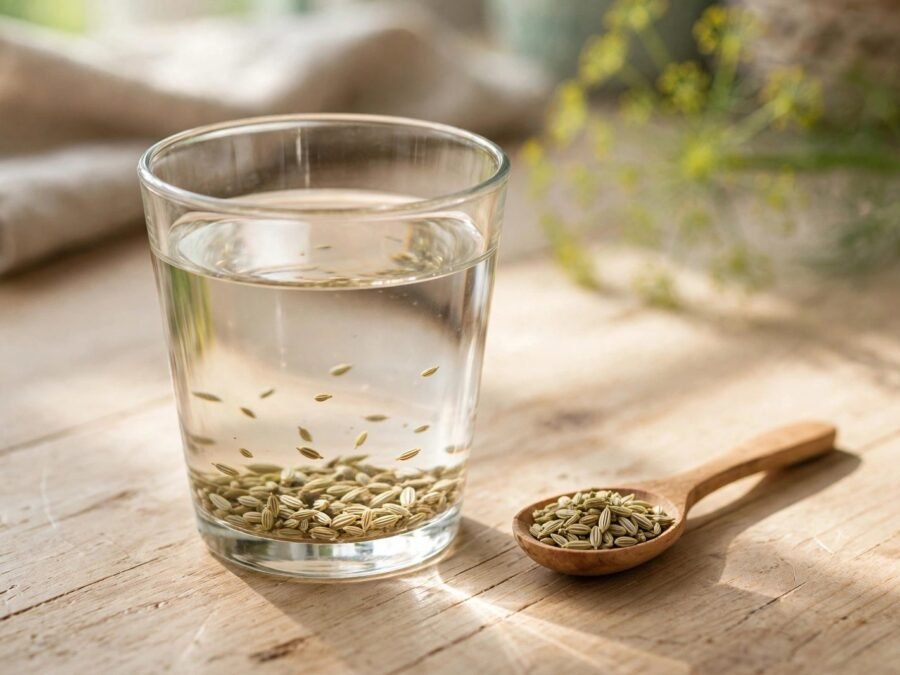
In many South Asian and Middle Eastern homes, the meal ends with a small bowl of sweet, licorice-scented fennel seeds (saunf) — chewed after meals for centuries. Soaking them in water is a gentler way to get the same soothing effect. Fennel seeds water benefits center on one thing: a calmer, less bloated stomach. Here’s how it may help, two ways to make it, and who should sip with care.
What Is Fennel Seed Water (Saunf Water)?
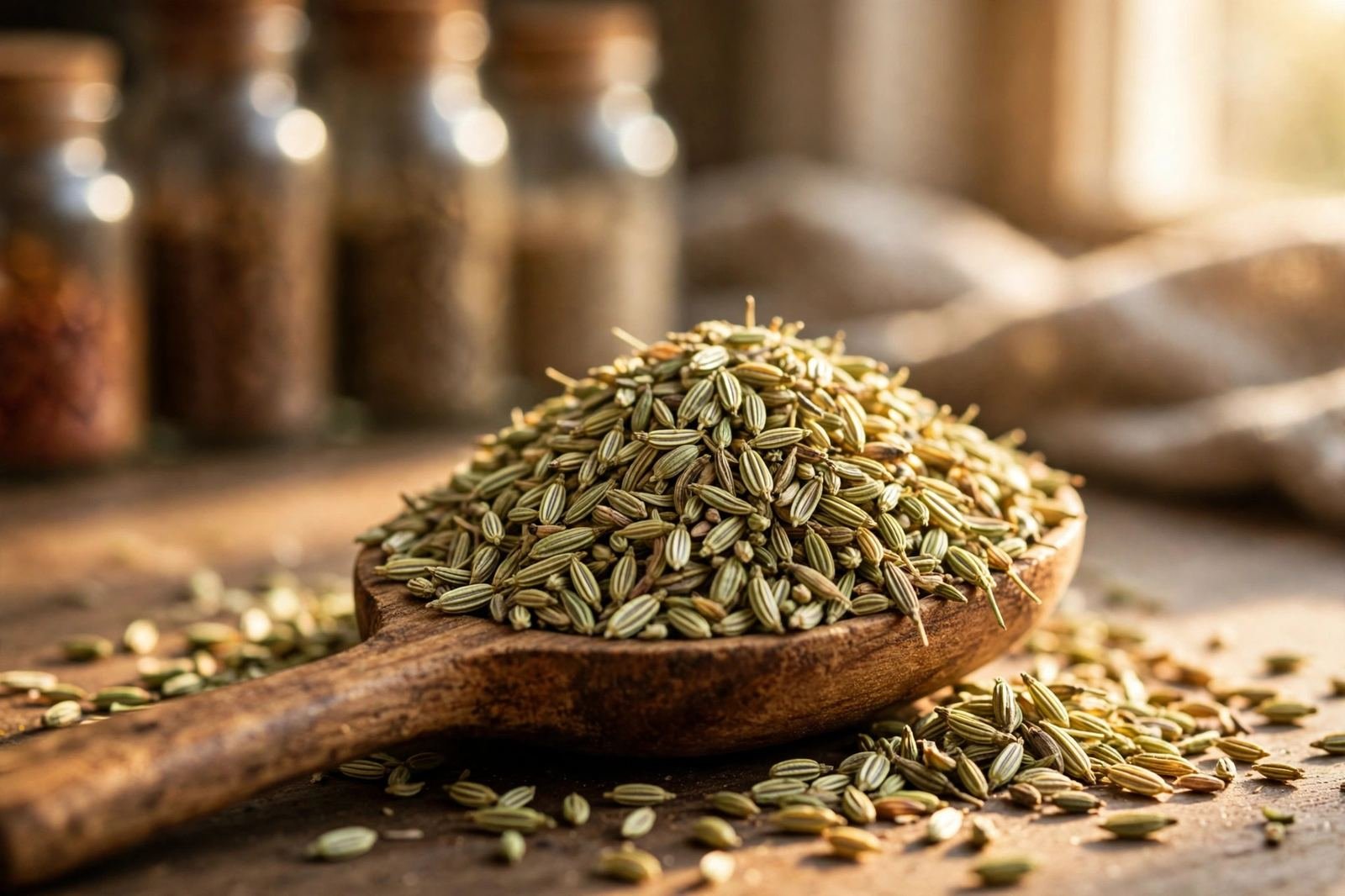
Fennel (Foeniculum vulgare) is a flowering plant in the carrot family; its dried seeds are the familiar green-brown, ridged seeds with a sweet anise flavor. Saunf water is simply these seeds soaked overnight or briefly boiled, then strained.
The flavor comes from anethole, the same aromatic compound in anise — naturally sweet and far milder than bitter brews. If you’ve tried our ajwain water for digestion guide, think of fennel water as its gentler, sweeter cousin.
What Science Says About Fennel
A 2014 review of fennel (Foeniculum vulgare) in BioMed Research International found documented traditional uses for flatulence, gastritis, stomachache, and colic, alongside experimental evidence for antispasmodic (gut-muscle-relaxing), anti-inflammatory, diuretic, and antioxidant actions. The caveat: most studies used concentrated extracts, not the soaked water — so the research supports the tradition’s plausibility, not a guaranteed effect.
Fennel Seeds Nutrition (Per Teaspoon)
You only need a teaspoon or two for a glass of fennel water, so think of it as a flavorful infusion rather than a major nutrient source. Still, fennel seeds are surprisingly concentrated for a spice. Here is what roughly 1 teaspoon (about 2 grams) of whole fennel seeds provides, based on USDA data:
| Nutrient | Per 1 tsp (~2 g) |
|---|---|
| Calories | ~7 kcal |
| Carbohydrates | ~1.1 g |
| Fiber | ~0.8 g |
| Protein | ~0.3 g |
| Fat | ~0.3 g |
| Calcium | ~25 mg |
| Iron | ~0.4 mg |
| Magnesium | ~8 mg |
| Phosphorus | ~10 mg |
| Potassium | ~36 mg |
| Zinc | ~0.08 mg |
| Manganese | ~0.14 mg |
| Vitamin C | ~0.4 mg |
| Folate | ~0.6 mcg |
11 Ways Fennel Seeds Water May Soothe Digestion & Bloating
1. May ease bloating and trapped gas
Fennel water’s signature use: as a traditional carminative, it may help the gut release trapped gas, and its anethole content is believed to relax gut smooth muscle — fitting the documented antispasmodic activity. A warm glass after a heavy meal may leave your stomach feeling flatter.
2. May calm mild indigestion after heavy meals
That slow, heavy feeling after rich food is what fennel seed water is traditionally sipped for — used for gastritis and stomachache, with a long-documented role in digestive complaints. A good follow-up to fried or festive meals.
3. A traditional after-meal digestive
Chewing a pinch of saunf after meals is one of India’s oldest digestive customs; soaking the seeds is a gentler, more hydrating version of it. For another post-meal classic, see our peppermint tea benefits guide.
4. May freshen breath naturally
Sipping or chewing fennel seeds after eating may leave your breath fresher — partly from the aromatic oils, partly from the documented antimicrobial activity. Not a replacement for brushing, but a pleasant side effect.
5. A gentle morning hydration ritual
The overnight-soaked version, drunk on an empty stomach, is a common morning habit — like fenugreek water or warm lemon water. Fennel’s mild sweetness makes this one of the easiest rituals to stick with.
6. May help with water retention
The fennel review documents diuretic activity in experiments — fennel may encourage the body to pass a little more water, which could explain why some people feel less puffy. It’s mild, not a treatment for swelling — steady hydration and less salt matter far more.
7. May soothe occasional acidity and heartburn
Fennel seed water is the go-to when spicy or fried food leaves a sour, burning sensation. Traditionally used for gastritis and stomach discomfort, its mild sweetness is easy to sip — take a small amount, since too much of any drink on a sensitive stomach can backfire.
8. Traditionally used for menstrual comfort
Fennel has a long traditional use for menstrual discomfort — the review notes emmenagogue and estrogenic activity, and some small studies suggest it may ease period pain. A traditional option, not a replacement for medical care when cramps are severe.
9. Contains natural antioxidants
Fennel seeds are a documented source of flavonoids, phenolic compounds, and volatile oils with antioxidant activity. If bloat is your main target, also see our ginger tea for bloating guide.
10. May support healthy weight management
There is no solid evidence that fennel water burns fat, so treat bold weight-loss claims with skepticism. That said, a small 2017 pilot study linked drinking fennel tea before a meal with reduced appetite, and as a near-zero-calorie swap for sugary drinks it can be a sensible part of a weight-conscious routine. It may also ease the bloating that makes your waistline feel larger than it is.
11. A natural source of potassium that may support healthy blood pressure
A teaspoon of fennel seeds provides roughly 36 mg of potassium plus about 8 mg of magnesium — a modest contribution toward your daily target from something you’d drink anyway. Getting enough potassium is associated with healthy blood pressure as part of a balanced diet, but fennel water is a complement to, not a treatment for, blood pressure concerns. If you take blood pressure medication or follow a potassium-restricted diet, check with your doctor first.

How to Make Fennel Seeds Water (Two Simple Methods)
The overnight soak is milder and sweeter; the quick boil is stronger and warmer — better after heavy meals.
Method 1: Overnight-soaked fennel water (mildest)
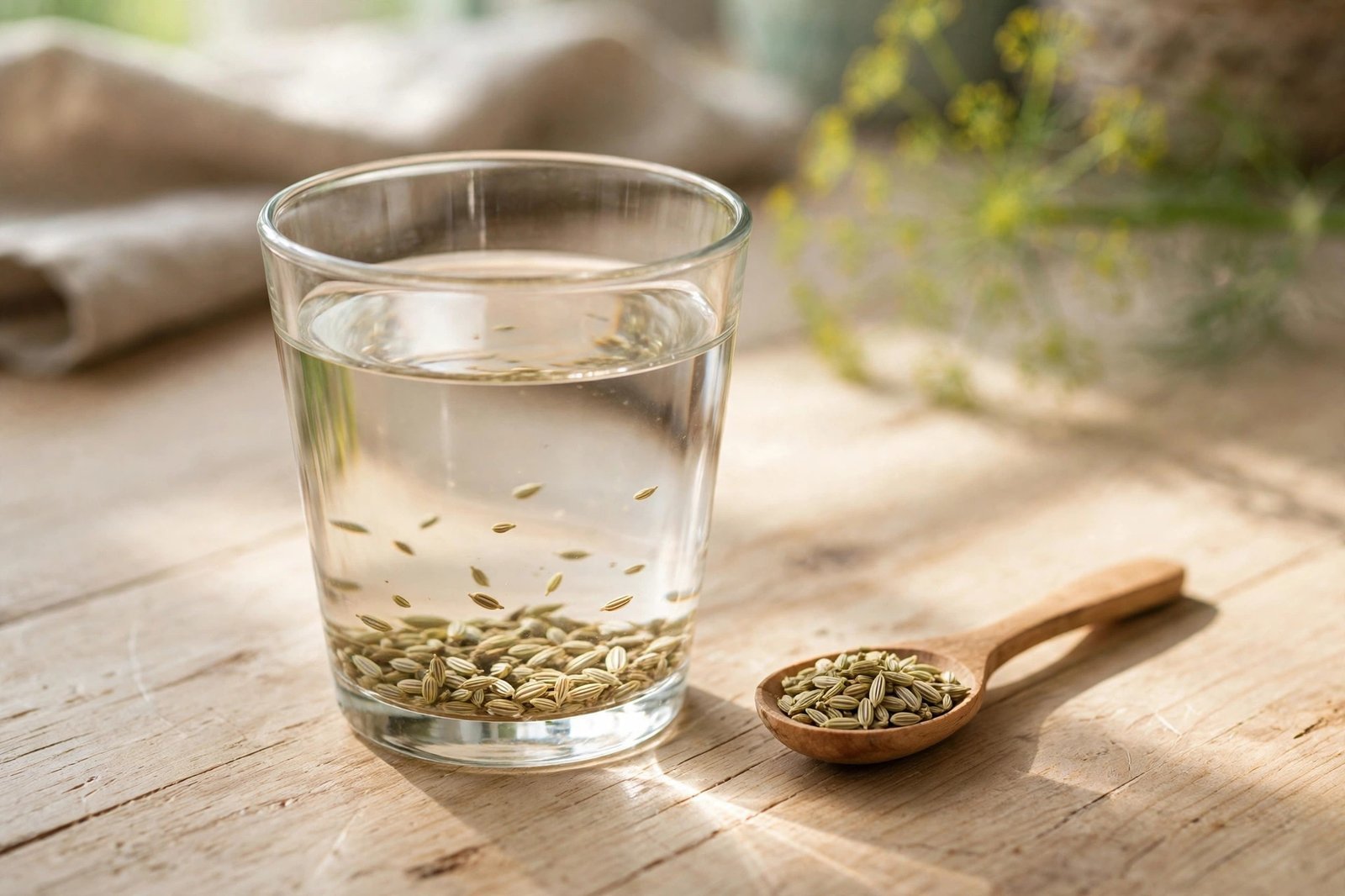
- Add 1–2 teaspoons of fennel seeds to 1 cup (250 ml) of room-temperature water.
- Cover and leave overnight (about 8 hours).
- In the morning, strain and drink the pale golden water on an empty stomach.
Method 2: Quick-boiled fennel tea (stronger, warm)
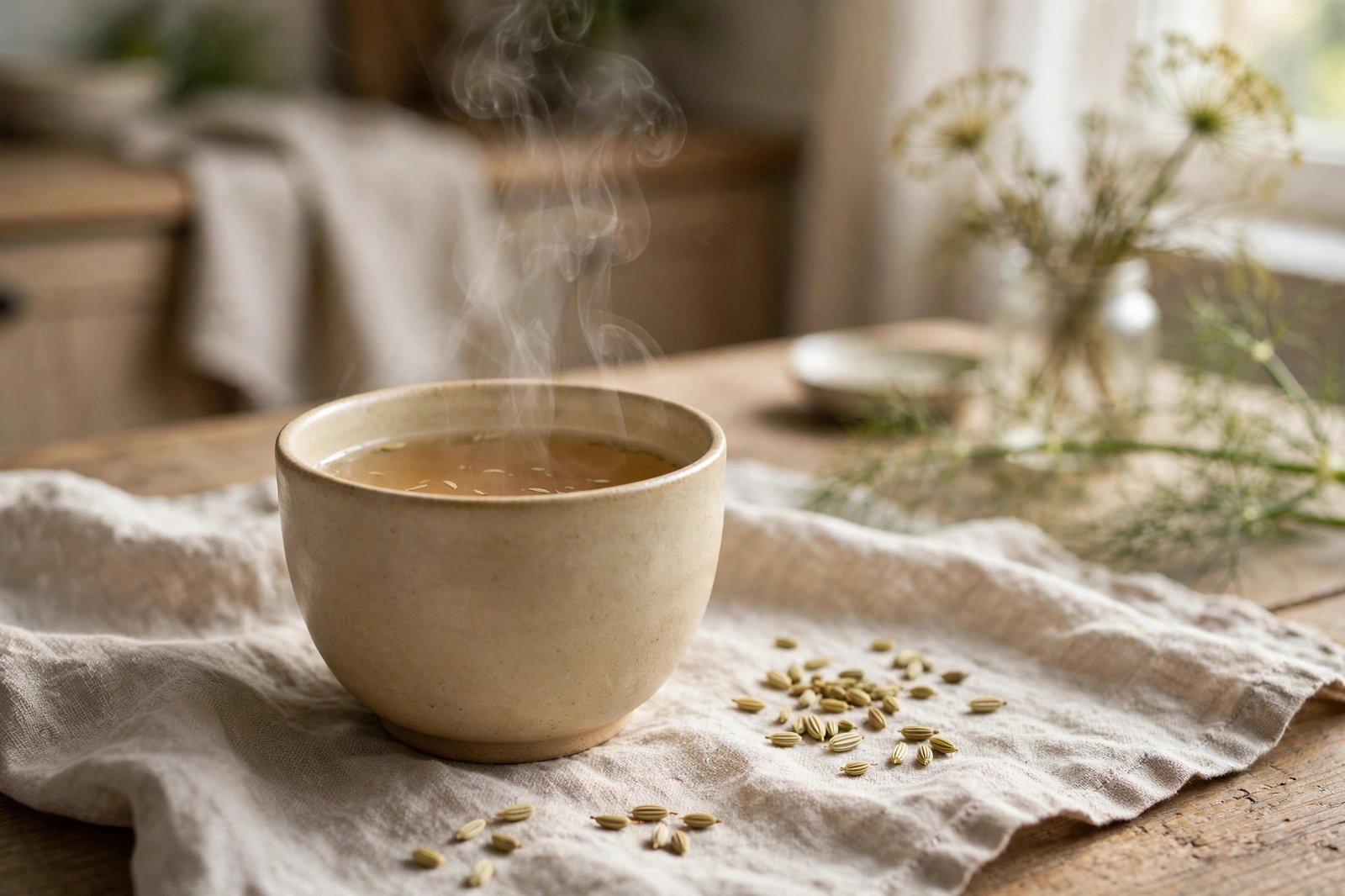
- Add 1 teaspoon of fennel seeds to 2 cups (500 ml) of water; bring to a boil, then simmer 5–7 minutes until light golden.
- Strain, cool until comfortably warm, and sip slowly after meals.
Fennel Seeds Water (Saunf Water)
Ingredients
Method
- Add 1–2 teaspoons of fennel seeds to 1 cup of water, cover, and leave overnight (about 8 hours).
- In the morning, strain and drink on an empty stomach.
- For the quick version: boil 1 teaspoon of seeds in 2 cups of water, simmer 5–7 minutes, strain, and sip warm.
Notes
When to Drink Fennel Seeds Water
- After a heavy meal — the classic time, to ease fullness and gas.
- First thing in the morning — on an empty stomach, especially the overnight-soaked version.
- When you feel bloated or gassy — as an occasional rescue drink; sip it warm and slowly.
- After spicy or fried food — its mild sweetness feels gentler.
One to two glasses a day is the usual amount. It’s mild, but still a concentrated herbal infusion — not an all-day water bottle.
Who Should Be Careful
Fennel seed water is a traditional home drink, not a medicine, and a few people should check with a doctor first:
- Pregnant and nursing women — fennel has documented estrogenic and emmenagogue (uterine-stimulating) activity, so avoid regular medicinal-strength use, including daily fennel water, during pregnancy unless your doctor approves. Nursing mothers should check with a healthcare provider too.
- People with carrot-family allergies — fennel is in the same family as celery, carrot, and parsley; if those trigger reactions, fennel may too.
- Anyone on regular medication — fennel may affect how the liver processes certain drugs (including some antibiotics and blood thinners), so talk to your doctor or pharmacist before drinking it daily.
- Children — keep servings small and ask a pediatrician first; concentrated herbal drinks and small children don’t mix casually.
- People with diabetes or on blood-sugar medication — fennel may mildly affect blood sugar, so monitor your levels and talk to your doctor before drinking it regularly.
- People with hormone-sensitive conditions — because of fennel’s estrogen-like activity, talk to your doctor first if you have endometriosis or an estrogen-receptor-positive cancer.
- People with kidney disease or on a potassium-restricted diet — fennel adds potassium, so check with your doctor before making it a daily habit.
- Anyone scheduled for surgery — fennel may slow blood clotting, so stop drinking fennel water in advance and ask your surgeon when to pause it.
If bloating or indigestion is frequent or worsening, see a doctor rather than relying on any home drink — they support a healthy gut, not replace diagnosis.
Fennel Seeds Water FAQs
Is fennel seeds water the same as fennel tea?
Essentially, yes — “saunf water” usually means the overnight-soaked version; “fennel tea” means the boiled version.
Can I drink fennel water every day?
Traditionally, yes — one to two glasses daily. If you’re pregnant, nursing, on medication, or have a carrot-family allergy, check with a doctor first.
Should I strain the seeds or eat them?
Either works. Straining gives a smooth drink; chewing the softened seeds adds fiber. Just avoid large amounts of unstrained seeds — they’re fibrous and can feel heavy.
Does fennel water help with weight loss?
No solid evidence of that. It may ease bloating, which can feel like a slimmer waistline — but that’s water and gas, not fat. Habits and movement are what move the scale.
What’s the difference between fennel water and ajwain water?
Both are traditional digestive seed drinks: fennel water is sweet, mild, and cooling; ajwain water is bitter, pungent, and warming. Fennel suits sensitive stomachs; ajwain suits heavy indigestion. Our ajwain water guide covers the stronger option.
Does fennel seeds water affect blood sugar?
Thin evidence — a few animal studies suggest fennel may mildly lower blood sugar, but there is no good human evidence. It is not a diabetes treatment. If you take blood-sugar medication, check with your doctor and monitor your levels.
The Bottom Line
Fennel seeds water benefits come down to this: a sweet, gentle, traditional digestive drink that may ease bloating, gas, and post-meal heaviness, with experimental research supporting its antispasmodic and antioxidant reputation — though most studies used concentrated extracts. Try the overnight soak for mornings or the quick boil after heavy meals, keep it to a glass or two a day, and check with your doctor if you’re pregnant, on medication, or have a carrot-family allergy. For more gut-friendly brews, explore our ginger tea for bloating and peppermint tea guides.
1 Comment