
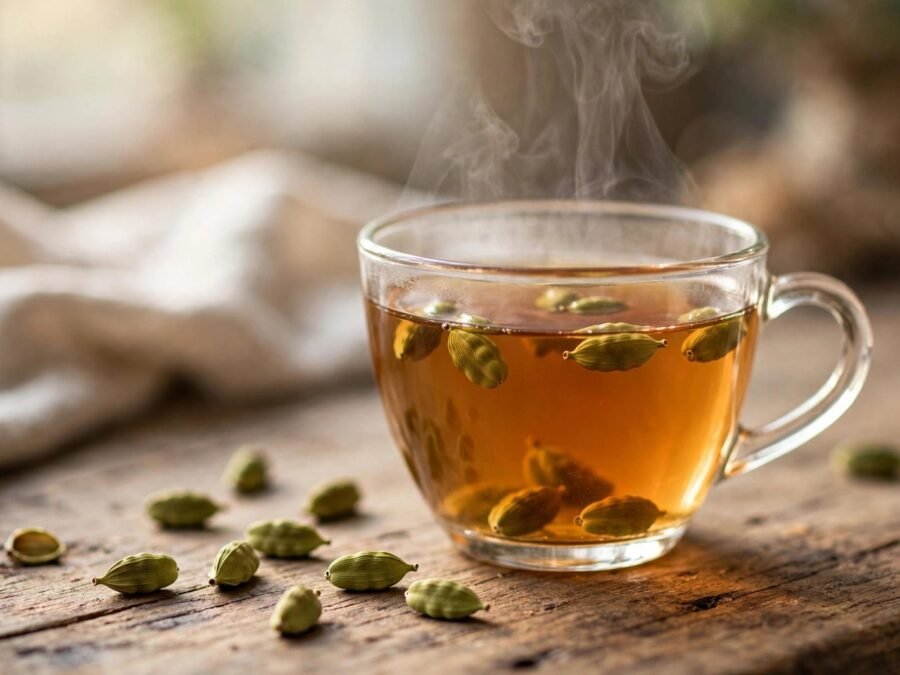
In South Asian and Middle Eastern kitchens, cardamom is the queen of spices — the fragrant green pod that perfumes chai, biryani, and desserts. Steeped on its own, it makes a warm, minty-sweet, naturally caffeine-free brew with thousands of years of traditional use behind it.
Cardamom tea benefits are often described in glowing terms, so here is the honest picture: a handful of small human trials plus animal and lab research suggest cardamom may support healthy blood pressure, digestion, oral health, and metabolic health — mostly at doses higher than a single cup of tea delivers. Below you will find 10 gentle, evidence-informed reasons to brew it, what is actually in the spice, who should be careful, and a simple 10-minute recipe with a cozy milk-tea variation.
What Is Cardamom?
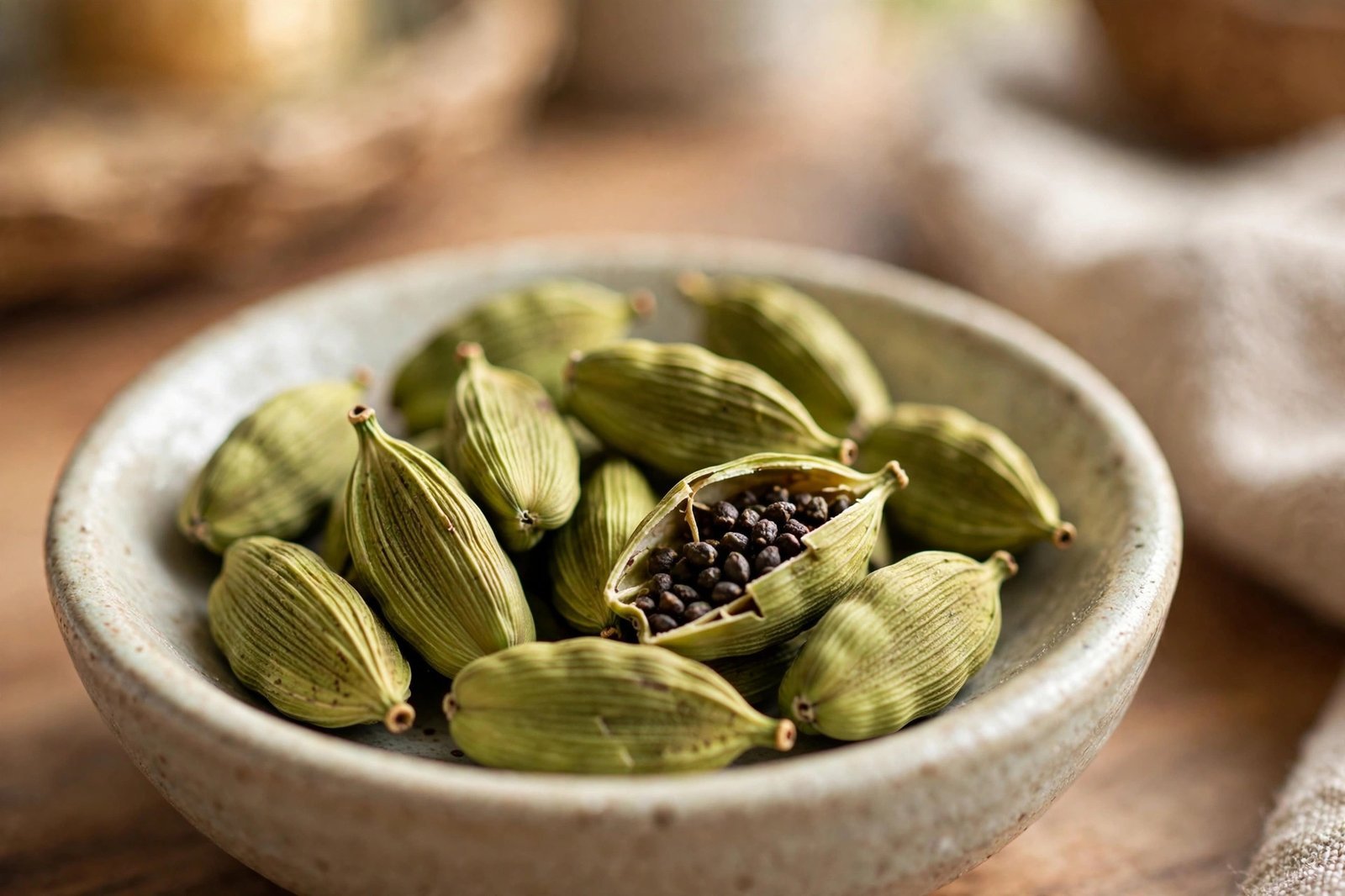
Cardamom (Elettaria cardamomum) is a spice made from the seed pods of a plant in the ginger family, native to southern India. The small green pods hold dark, intensely aromatic seeds — that’s where the flavor lives: warm, slightly sweet, a little like mint and citrus combined.
Two main types exist: green cardamom (delicate, fragrant — the one for tea) and black cardamom (Amomum subulatum; larger, smokier, for savory cooking — skip it here). Buy whole green pods and crush them just before steeping; pre-ground cardamom loses its aroma fast. Store pods in an airtight jar away from light and they will stay fragrant for months. If mornings feel heavy, our turmeric tea recipe is another warming option.
Cardamom Nutrition: What’s in a Teaspoon?
According to the USDA FoodData Central, ground cardamom (per 100 g) contains roughly 311 calories, 11 g of protein, 28 g of fiber, and notable amounts of iron, magnesium, potassium, calcium, and vitamin C. A teaspoon (about 2 g) — roughly what flavors a strong cup — carries only around 6 calories and a fraction of those nutrients, so think of cardamom tea as a fragrant, nearly calorie-free infusion rather than a nutrient source. The real interest lies in its aromatic compounds, such as 1,8-cineole and alpha-terpineol, which researchers are studying for their antioxidant activity.
What Science Says About Cardamom
Here is what researchers have actually published — with links to the original studies so you can check the details yourself:
- Blood pressure: 20 adults with newly diagnosed stage 1 hypertension took 3 g of cardamom powder daily for 12 weeks; blood pressure fell significantly and total antioxidant status rose 90% (Verma et al., 2009).
- Blood sugar: results are mixed — a 2014 trial linked a cardamom-containing spice mix to better glycemic markers in type 2 diabetes patients (Azimi et al., 2014), but a larger 2016 trial of 204 patients found cardamom alone did not improve blood sugar control (Azimi et al., 2016).
- Metabolic and liver health: two randomized trials in adults with non-alcoholic fatty liver disease found green cardamom improved glucose indices, lipid profiles, and inflammatory markers (Daneshi-Maskooni et al., 2018; 2019).
- Digestion and oral health: cardamom fruit extract protected rat stomachs against ulcers (Jamal et al., 2006), and green cardamom essential oil showed antimicrobial activity in lab testing (Abdullah et al., 2017).
The honest caveats: most trials were small and used about 3 g of cardamom powder a day — far more than the 4–5 pods in a cup of tea. Cardamom tea is the gentlest way to enjoy the spice, not a therapy. A 2020 review of cardamom’s traditional uses and phytochemistry (Ashokkumar et al.) is a good deeper read.
10 Gentle Reasons to Brew Cardamom Tea
1. May support healthy blood pressure
This is cardamom’s best-studied human benefit: in the 12-week trial above, 3 g of cardamom powder a day significantly lowered systolic and diastolic pressure in adults with stage 1 hypertension (Verma et al., 2009), possibly via a mild diuretic effect plus antioxidants. A cup of tea delivers far less than 3 g of powder — treat it as a tasty addition to a heart-healthy routine, never a replacement for medication.
2. Rich in protective antioxidants
In that same trial, participants’ total antioxidant status rose 90% over three months. Cardamom seeds contain cineole, alpha-terpineol, and other phenolic compounds that help neutralize everyday free radicals (Ashokkumar et al., 2020). Like our clove tea, which shares cardamom’s warm eugenol note, it’s an easy way to add these plant compounds to your day.
3. Traditionally used to settle digestion
Cardamom has been a digestive remedy for thousands of years — taken for bloating, gas, and nausea. Modern animal research found cardamom fruit extract protected rat stomachs against ulcers (Jamal et al., 2006). The evidence in humans is still thin, but as a traditional after-meal drink it has an excellent track record of simply feeling good on the stomach. For a stronger digestive brew, see our fennel seeds water guide.
4. Traditionally used as a natural breath freshener
Chewing a cardamom pod after meals is an age-old practice across South Asia and the Middle East — and lab research gives it some backing: green cardamom essential oil showed antimicrobial activity in laboratory testing (Abdullah et al., 2017). A cup of unsweetened cardamom tea after dinner gives a milder version of the same benefit. (It won’t replace brushing.)
5. May support easier breathing in cold season
Cardamom contains 1,8-cineole (eucalyptol) — the aromatic compound behind eucalyptus’s clearing scent — and the spice has long been added to cold-season remedies in traditional practice (Ashokkumar et al., 2020). Human evidence for breathing benefits is thin, so treat this as traditional comfort rather than treatment: a steaming cup in cold season is the cozy way to enjoy that aromatic benefit.
6. Blood sugar: the evidence is mixed — be cautious
Here’s the honest part: a 2014 trial linked a cardamom-containing spice mix to better glycemic markers in type 2 diabetes patients, but a larger 2016 trial of 204 patients found cardamom (unlike cinnamon) did not improve blood sugar control over eight weeks (Azimi et al., 2014; 2016). Don’t count on cardamom tea to move the needle — and check with your doctor, since anything that may nudge blood sugar can interact with medication. Our cinnamon tea guide covers the spice with stronger human evidence here.
7. May modestly support metabolic health
Two randomized trials in adults with non-alcoholic fatty liver disease found green cardamom improved glucose indices, lipid profiles, and inflammatory markers (Daneshi-Maskooni et al., 2018; 2019). Those used supplement-level doses, not tea. The realistic takeaway: cardamom tea is a flavorful, nearly calorie-free drink that can replace sugary beverages — and that swap is where any weight benefit most likely comes from.
8. A naturally calming evening ritual
Cardamom’s aroma is doing quiet work: the warm, sweet scent is traditionally considered calming, and the simple act of brewing — crushing pods, steeping, sipping slowly — builds a pause into a busy day. Like tulsi tea, it’s completely caffeine-free, so it works as a bedtime wind-down drink too.
9. Pairs beautifully with other wellness teas
Cardamom rarely brews alone in traditional recipes — it’s the spice that makes other teas better. Add two crushed pods to chamomile tea for a fragrant bedtime blend, or to ginger tea when your stomach feels unsettled.
10. May support liver health — early research
This one is new and preliminary: in the fatty-liver trials above, green cardamom was linked to better liver-related markers, including lower inflammation and higher levels of sirtuin-1, a protein involved in metabolic health (Daneshi-Maskooni et al., 2018; 2019). Small trials, concentrated doses — intriguing rather than proven, and another reason researchers keep studying this spice.

How to Make Cardamom Tea (Simple Recipe)
It takes about 10 minutes, and the whole kitchen will smell wonderful.

Simple Cardamom Tea Recipe
Prep time: 2 minutes | Steep time: 5–7 minutes | Total: ~10 minutes | Servings: 1 cup
Ingredients
- 4–5 whole green cardamom pods
- 1 cup (250 ml) water
- Optional: 1 teaspoon raw honey (stir in once drinkable-warm, not boiling)
- Optional: a thin slice of fresh ginger or a squeeze of lemon
Steps
- Lightly crush the cardamom pods with the flat side of a knife — just enough to crack them open and expose the seeds.
- Bring the water to a boil, add the crushed pods, then lower the heat and simmer gently for 3–4 minutes.
- Take off the heat, cover, and steep 5 minutes more — covering traps the aromatic oils.
- Strain into a cup, add honey or lemon if you like, and sip slowly.
Stronger version: simmer the pods a full 5 minutes for a deeper brew. Milk version: replace half the water with milk and add a pinch of cinnamon for a quick elaichi chai.
When Is the Best Time to Drink Cardamom Tea?
There’s no single medicinal “best time” — match the cup to the moment:
- After meals: the traditional digestive moment — a warm cup settles the stomach.
- Mid-afternoon: a caffeine-free lift when you’d otherwise reach for a second coffee.
- Evening: the gentle aroma and zero caffeine make it a natural wind-down drink.
Avoid drinking it scalding hot, and if you’re sensitive to spices, skip it on a completely empty stomach.
Cardamom Tea vs Cardamom Supplements
A cup of cardamom tea uses 4–5 pods — a culinary amount consumed safely for centuries. Supplements and essential oils are different: concentrated doses haven’t been thoroughly studied, and Healthline notes they may not suit children or pregnant/breastfeeding women. Tea from the spice jar is the gentle, traditional route.
Cardamom Tea Safety and Side Effects
At culinary amounts — a cup or two of tea a day — cardamom is well tolerated. In the 12-week blood pressure trial, participants taking 3 g of cardamom powder daily reported no side effects (Verma et al., 2009). Still, a few groups should be thoughtful:
- Pregnant or breastfeeding: culinary amounts in food and tea are traditionally considered fine, but concentrated cardamom supplements lack safety data — check with your doctor. The NCCIH advises consulting your health care provider about complementary approaches if you’re pregnant or nursing.
- On blood pressure or diabetes medication: cardamom may nudge both downward; talk to your doctor before making it a daily habit. Mention it too if you take blood thinners — the small blood-pressure trial also measured changes in fibrinolysis, the body’s clot-breakdown process.
- Gallstones: cardamom stimulates digestive secretions, so large amounts may be uncomfortable — stick to a cup or two.
- Allergies: rare, but cardamom is related to ginger — if ginger bothers you, start with a weak brew.
“Natural” doesn’t automatically mean risk-free: MedlinePlus notes that herbal products can interact with prescription medicines and advises telling your health care provider about any herbal products you use.
FAQs
How many cardamom pods per cup of tea?
Four to five lightly crushed green pods per cup (250 ml) gives a fragrant, balanced brew. More than that can taste medicinal — cardamom is potent.
Can I drink cardamom tea every day?
Yes — one to two cups daily is a traditional, culinary-level amount. If you take medication for blood pressure or blood sugar, mention the habit to your doctor.
Does cardamom tea have caffeine?
No. It’s made from a spice, not the tea plant (Camellia sinensis), so it’s naturally caffeine-free.
Green vs black cardamom for tea — which is better?
Green cardamom. Black cardamom is smoky and camphor-like — great in savory dishes, but it overwhelms a delicate tea.
Can I reuse the pods?
You can get a weaker second steep from the same pods, but the best aroma is always in the first brew. Compost the spent pods afterward.
When is the best time to drink cardamom tea?
After meals for digestion, or in the evening as a caffeine-free wind-down. There’s no medicinal “best time” — brew it when you’ll enjoy it most.
Is cardamom tea good for women?
There’s no evidence of harm from normal culinary amounts, and women have brewed cardamom tea for centuries. If you’re pregnant or breastfeeding, stick to food-level amounts and check with your doctor about concentrated supplements.
How much cardamom tea can I drink per day?
One to two cups daily is the traditional culinary amount. Human trials used about 3 g of cardamom powder a day — a supplement-level dose — and stronger daily doses haven’t been well studied. More isn’t better.
Cardamom tea won’t perform miracles — but as a fragrant, caffeine-free daily brew with centuries of traditional use and promising early research behind it, it earns its place in the rotation. Brew it plain, or let it lift your chamomile or ginger tea. For the deeper evidence picture, the Healthline review of cardamom studies is a solid, honest read — animal and test-tube caveats included.
Sources
- Verma SK et al. Blood pressure lowering, fibrinolysis enhancing and antioxidant activities of cardamom. Indian J Biochem Biophys. 2009.
- Azimi P et al. Effects of cinnamon, cardamom, saffron, and ginger consumption on markers of glycemic control, lipid profile, oxidative stress, and inflammation in type 2 diabetes patients. Rev Diabet Stud. 2014.
- Azimi P et al. Effect of cinnamon, cardamom, saffron and ginger consumption on blood pressure and a marker of endothelial function in patients with type 2 diabetes mellitus. Blood Press. 2016.
- Daneshi-Maskooni M et al. Green cardamom supplementation improves serum irisin, glucose indices, and lipid profiles in overweight or obese NAFLD patients. BMC Complement Altern Med. 2019.
- Daneshi-Maskooni M et al. Green cardamom increases Sirtuin-1 and reduces inflammation in overweight or obese patients with NAFLD. Nutr Metab. 2018.
- Jamal A et al. Gastroprotective effect of cardamom, Elettaria cardamomum Maton. fruits in rats. J Ethnopharmacol. 2006.
- Abdullah et al. Evaluating the antimicrobial potential of green cardamom essential oil. J Food Sci Technol. 2017.
- Ashokkumar K et al. Botany, traditional uses, phytochemistry and biological activities of cardamom. J Ethnopharmacol. 2020. (Review)
- National Center for Complementary and Integrative Health — Ayurvedic Medicine: In Depth.
- MedlinePlus — Herbal Medicine.
- USDA FoodData Central.