

In Indian homes, tulsi grows in a pot near the door — watered every morning, offered in prayers, plucked for tea when the day feels heavy. That same leaf makes a warm, clove-scented brew Ayurveda calls the “queen of herbs.” Tulsi tea benefits are often talked about in glowing terms, but the real story is gentler and more practical: a caffeine-free evening tea that may help you unwind and settle your stomach. Here’s what it may — and may not — do, plus a simple recipe to brew it right.
What Is Tulsi (Holy Basil)?
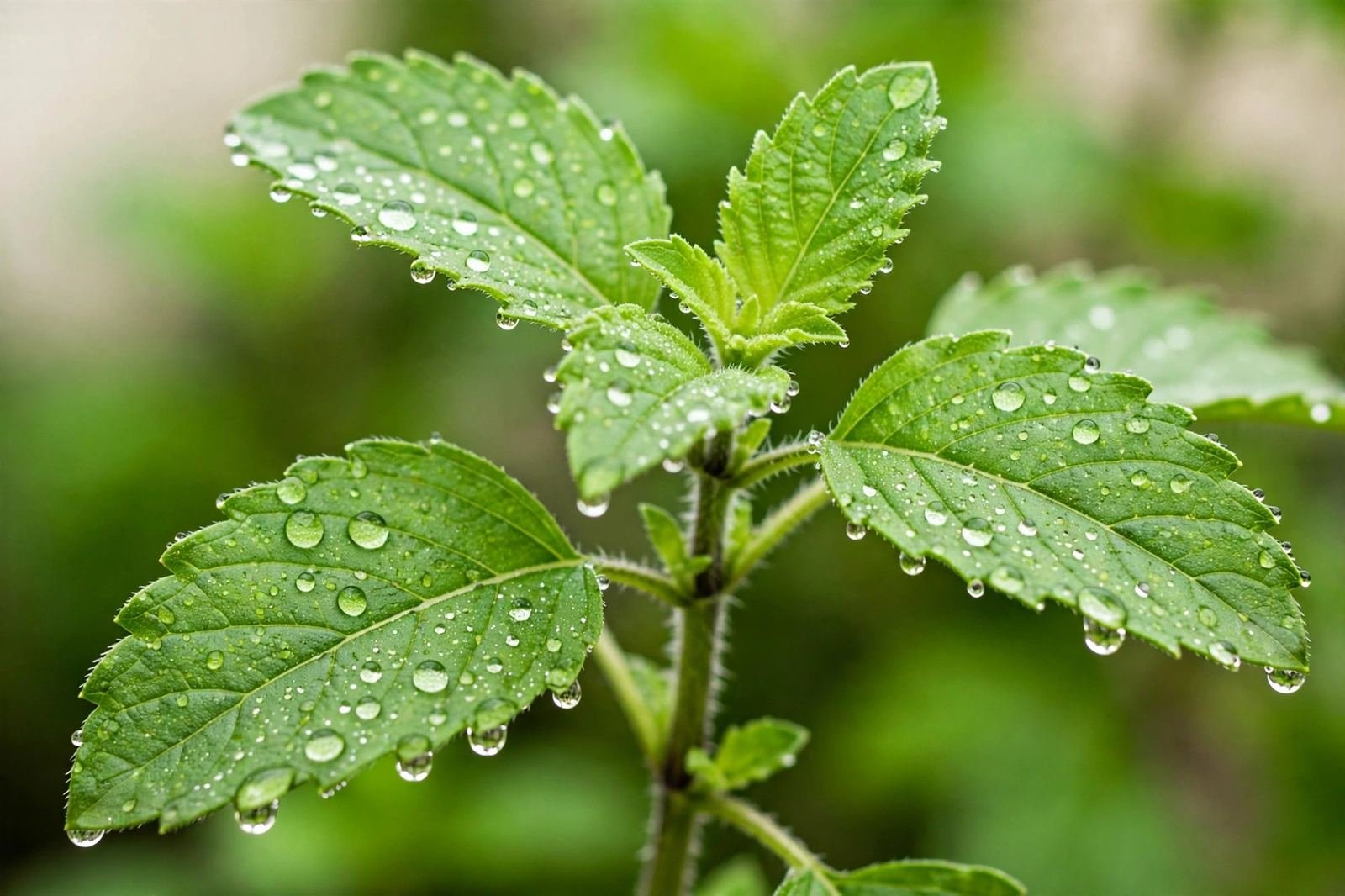
Tulsi (Ocimum tenuiflorum, also known by the older name Ocimum sanctum) is a fragrant shrub in the mint and basil family. It’s not the sweet basil on pizza — its leaves are smaller, the scent is spicier and more clove-like, and in Ayurveda it holds a place of honor as “The Incomparable One.”
Three varieties exist — Rama (milder), Krishna (stronger, purple-tinged), and Vana (wild) — and any brews a good tea. Dried tulsi leaf from a health store works just as well as fresh.
What Science Says About Tulsi
A 2014 review in the Journal of Ayurveda and Integrative Medicine surveyed hundreds of lab, animal, and some human studies and found a consistent pattern: tulsi appears to act as an adaptogen — helping the body stay balanced under stress — with evidence for antioxidant, antimicrobial, and blood-sugar-normalizing effects. Most of this work is still early-stage, though, so think of the findings as promising rather than proven. Here’s what a daily cup may offer.
9 Gentle Reasons to Brew Tulsi Tea
1. May help the body handle everyday stress
This is tulsi’s headline claim. In Ayurveda it’s classed as an adaptogen, and the review found studies reporting calming effects — including lower cortisol and less anxiety in some trials. It won’t erase a stressful day, but as a daily habit it may take the edge off.
2. May support calmer evenings and restful sleep
Naturally caffeine-free, tulsi won’t keep you up — the calming effects noted in the research make it a natural bedtime brew. For more sleep-friendly options, see our chamomile tea for sleep guide.
3. Traditionally used to settle digestion
Tulsi is traditionally taken for indigestion and gas, and its antispasmodic action — relaxing gut muscles — has been noted in pharmacological studies, which fits the folk use for a bloated stomach after a heavy meal. Our peppermint tea benefits guide covers another classic option.
4. Rich in antioxidant compounds
Tulsi leaves contain natural antioxidants including eugenol (also found in cloves) and rosmarinic acid, which help neutralize everyday free radicals. Krishna tulsi, the darker variety, is especially rich in these compounds. A daily cup adds them to your diet — though it’s no substitute for vegetables.
5. Traditionally used for respiratory comfort in cold season
Tulsi is a go-to traditional herb for coughs, congestion, and seasonal colds — the review lists respiratory uses among its most documented applications. A hot cup with a little honey is the classic winter comfort drink in many Indian households.
6. May support immune function
The review reports immunomodulatory activity in experimental studies — tulsi may help the immune system respond in a more balanced way. Whether a cup of tea delivers a meaningful effect is unproven — treat it as a gentle bonus, not a reason to skip medical care.
7. A naturally caffeine-free evening alternative
One of tulsi tea’s most practical advantages needs no research: it contains no caffeine at all, since it’s made from a basil-family leaf, not the tea plant. If you’re cutting back on afternoon caffeine but miss the ceremony of a hot drink, tulsi tea fills that gap.
8. Traditionally used as a mouth freshener
Chewing a couple of fresh tulsi leaves after meals is a traditional practice for fresher breath — the review notes tulsi’s antimicrobial activity and its historical use as a mouthwash. It won’t replace brushing, but it’s a pleasant side effect of an after-dinner cup.
9. A warming daily ritual
Brewing tulsi tea is slow by design: boil the water, steep for several minutes, sip slowly. That built-in pause is a genuine stress-relief tool. For another warming ritual, try our turmeric tea recipe or clove tea, which shares tulsi’s cozy eugenol warmth.
How to Make Tulsi Tea (Simple Recipe)
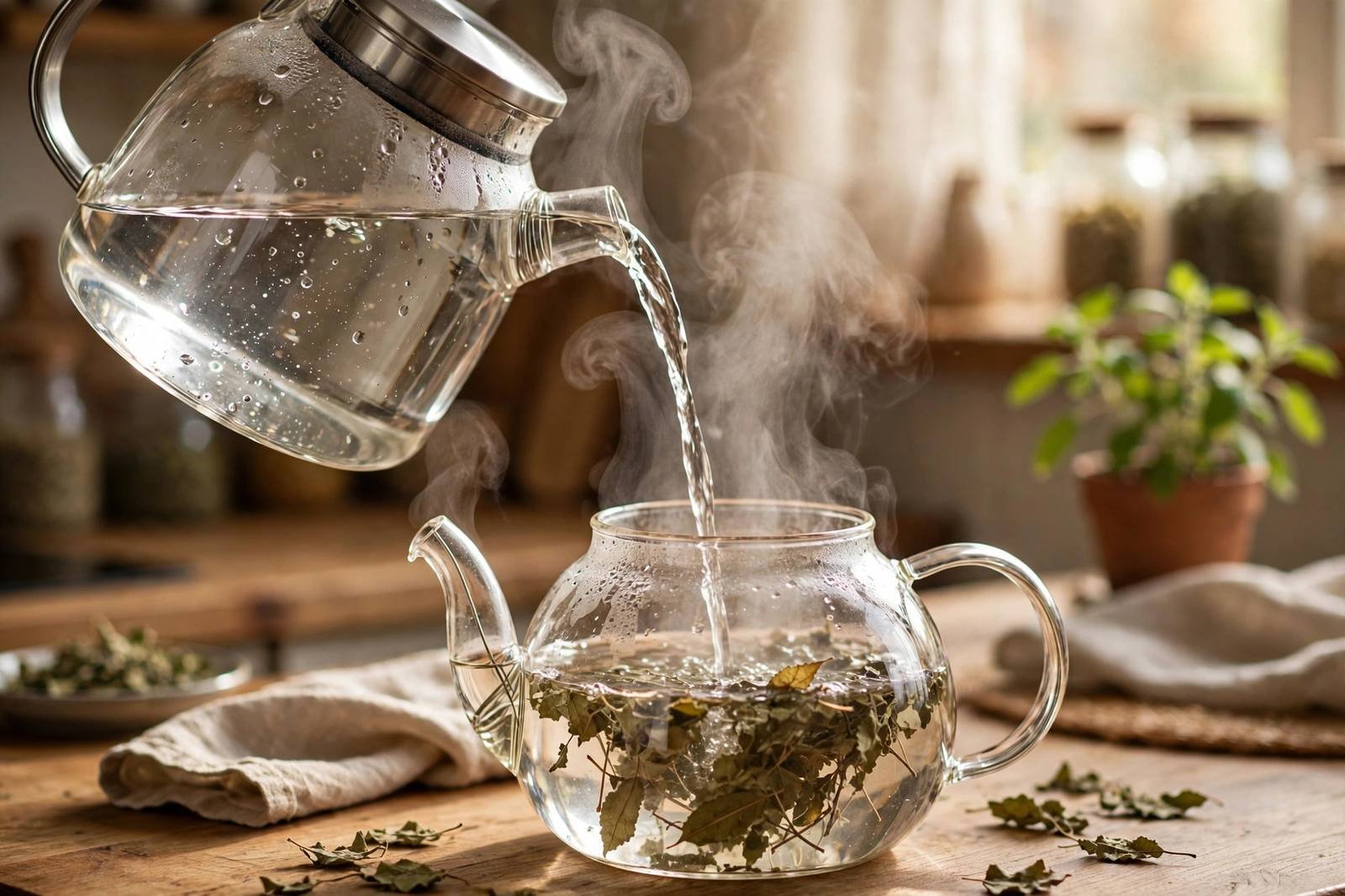
It takes about 10 minutes from start to finish.
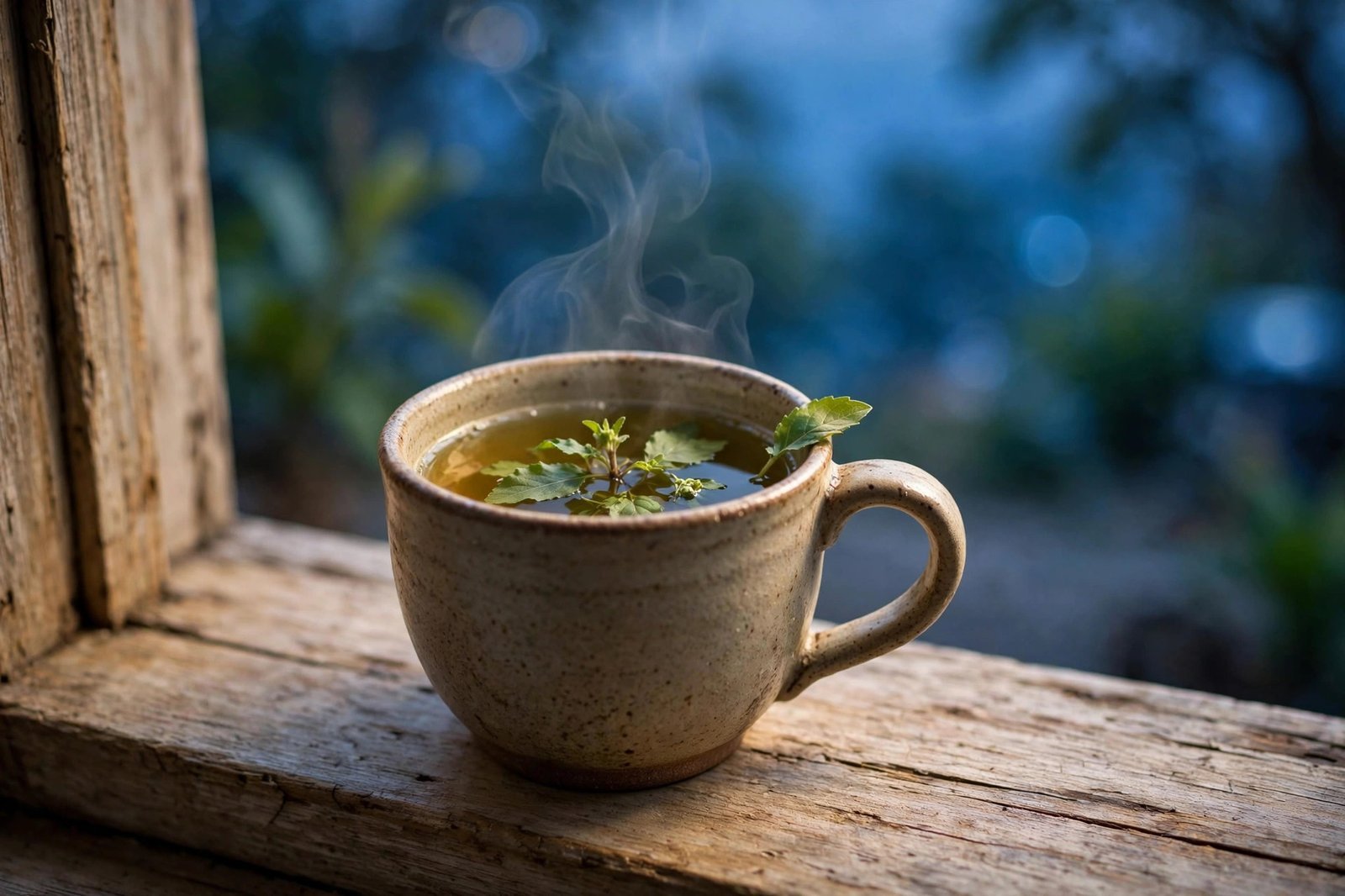
🍵 Simple Tulsi Tea Recipe
Prep time: 2 minutes | Steep time: 5–7 minutes | Total: ~10 minutes | Servings: 1 cup
Ingredients
- 1 teaspoon dried tulsi leaves (or a small handful of fresh leaves, lightly crushed)
- 1 cup (250 ml) water, just off the boil
- Optional: 1 teaspoon raw honey (stir in once drinkable-warm, not boiling)
- Optional: a thin slice of lemon or a small piece of fresh ginger
Steps
- Bring the water to a boil, then take it off the heat for 30 seconds.
- Add the tulsi leaves to a cup or teapot and pour the hot water over them.
- Cover and steep for 5–7 minutes — covering keeps the aromatic oils in the tea instead of the steam.
- Strain the leaves, add honey or lemon if you like, and sip slowly.
Tip: for a milder cup, steep 3 minutes instead of 5–7, or blend half tulsi with half chamomile — like our chamomile tea guide.
When and How Much to Drink
- Evening (1–2 hours before bed) — the most popular time, for winding down without caffeine.
- After meals — a warm cup may help a full stomach feel more settled.
- During cold season — as a comforting hot drink when your throat feels scratchy.
One to two cups a day is the usual amount in traditional use. There’s no evidence that more is better — treat two cups as a comfortable ceiling.
Who Should Sip With Care
Tulsi tea is a traditional home drink, not a medicine, and a few people should check with a doctor first:
- Pregnant or breastfeeding women — there’s limited safety data for regular, concentrated use, so get medical advice before making it a daily habit.
- People on blood thinners or blood-sugar medication — experimental studies suggest tulsi may affect clotting and blood sugar, so check with your doctor about interactions.
- Anyone with an upcoming surgery — stop herbal teas like tulsi a week or two beforehand unless your surgeon says otherwise.
- Children — keep servings small and mild; their bodies are more sensitive to herbal compounds.
If stress, anxiety, or a health symptom is persistent or getting worse, see a healthcare professional rather than relying on any herbal tea. Tulsi tea is a gentle daily support, not a treatment.
Tulsi Tea FAQs
Does tulsi tea have caffeine?
No. Tulsi is a basil-family leaf, not the tea plant (Camellia sinensis), so pure tulsi tea is naturally caffeine-free and fine for evenings.
Can I drink tulsi tea every day?
Traditionally, yes — one to two cups daily is the common pattern. If you’re pregnant, on medication, or unwell, check with a doctor first.
What does tulsi tea taste like?
Warm, peppery, and slightly sweet, with a clove-like note from natural eugenol. A little honey and lemon smooths it out. For a soothing brew, see our ginger for nausea guide.
Is holy basil the same as regular basil?
No. Kitchen basil is Ocimum basilicum; holy basil (tulsi) is Ocimum tenuiflorum — a different species with a spicier scent and different traditional uses.
Should I use fresh or dried tulsi leaves?
Both work. Fresh leaves give a brighter, more aromatic tea; dried leaves are more consistent. If you grow a plant, pinch the flowering tips off for the most flavorful leaves.
The Bottom Line
Tulsi tea benefits come down to this: a warm, caffeine-free, clove-scented brew treasured in Ayurveda for centuries, described by reviews as a plausible adaptogen with antioxidant and calming properties — though most evidence is still early-stage. Brew it in the evening, keep it to a cup or two a day, and check with your doctor if you’re pregnant, on medication, or managing a condition. For more calming brews, explore our peppermint tea and turmeric tea guides.
4 Comments