

That unmistakable lavender scent isn’t just for sachets — brewed as tea, those purple buds deliver a pale, fragrant cup people have sipped for centuries to wind down. The real lavender tea benefits are modest but meaningful: small human studies on the tea itself suggest it may ease stress and low mood, while wider research on lavender’s aroma points to calm, comfort, and better rest. Here’s what the evidence supports — and where it runs out.
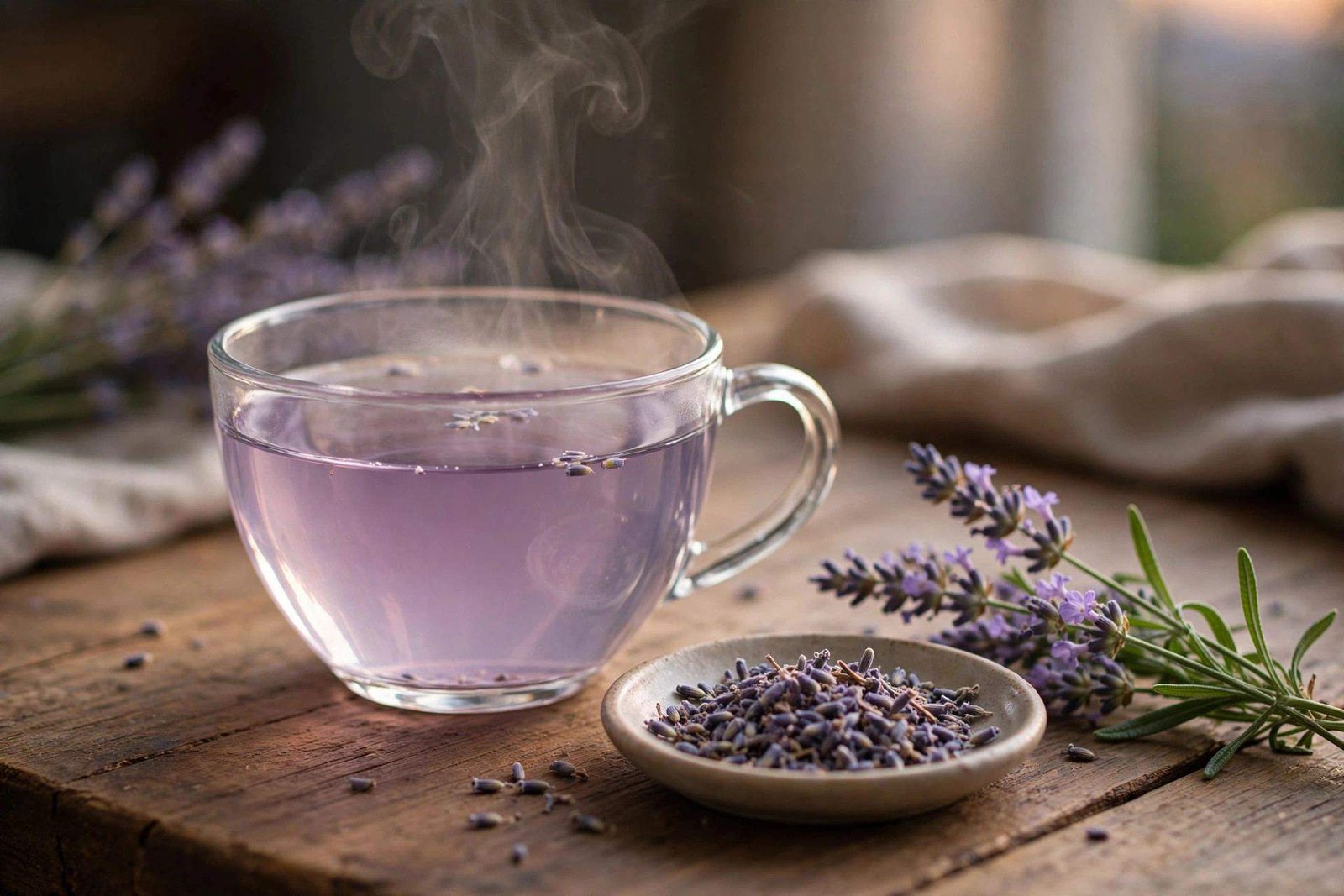
What Is Lavender Tea, and What Does It Taste Like?
Lavender tea is brewed from the dried purple buds of Lavandula angustifolia — English or “true” lavender. Its signature scent comes from linalool and linalyl acetate, the compounds behind lavender’s famous calming aroma (NCCIH’s lavender overview).
One rule: use culinary-grade lavender. Ornamental lavender may carry pesticides or taste harsh — only food-grade buds belong in your cup.

Brewed correctly, it’s pale lilac to light gold, floral, lightly sweet, deeply aromatic. Brewed carelessly — too many buds, too long a steep — it turns bitter and soapy. Honest framing: most lavender studies tested extracts or oil, not brewed tea, and the tea studies are small — so every benefit below is a “may.”
1. May Help Calm Everyday Stress
Lavender’s best-supported tea benefit: a 2020 study in 60 older adults found two cups of lavender tea twice daily for two weeks produced significantly larger anxiety drops than a placebo, and a 2024 trial in 60 adults found 2 g steeped 10–15 minutes twice daily for 14 days reduced anxiety, depression, and anger scores. Small studies — but actual tea studies, which are rare. For another well-studied calming brew, see lemon balm tea benefits.
2. May Lift a Low Mood
The 2020 trial also measured depression scores dropping, and a 2015 study in 80 new mothers found one cup daily for two weeks — sipped slowly while appreciating the aroma — eased fatigue and low mood versus no tea. Honest caveat: by week four the groups looked similar, suggesting a gentle early lift, not transformation. Serious note: persistent low mood is a health matter — please talk to a healthcare professional if you’re struggling.
3. May Support More Restful Nights
Honesty matters most here: there are no specific studies on lavender tea and sleep quality (Healthline). Adjacent evidence is promising — a 2025 study found lavender oil aromatherapy improved sleep in 100 chemotherapy patients, and a 2015 study in 158 new mothers found bedtime lavender fragrance improved sleep over 8 weeks. A warm pre-bed cup combines that aroma with a wind-down ritual — plausibly, not provably, helpful. If sleep is the mission, chamomile tea for sleep has the deeper tradition; passionflower tea is the stronger sedative candidate.
4. May Ease Tension Headaches
Lavender’s traditional résumé includes headache relief: tension headaches are worsened by stress and tight muscles, and lavender’s whole profile is anti-tension. This rests on traditional use plus the stress evidence above, not a dedicated trial — a comforting ritual, not a treatment.
5. May Soothe Digestion
Like many mint-family herbs, lavender is mildly antispasmodic — it may ease bloating, gas, and mild nausea after meals. A gentle option: for stronger stomach-settling, our peppermint tea benefits guide covers the bolder mint.
6. May Bring Comfort During Menstrual Cramps
A 2021 review found lavender oil aromatherapy — especially with abdominal massage — helped menstrual cramping. No studies exist on drinking the tea for cramps, so this is an extrapolation: a warm, fragrant cup may take the edge off. Keep a hot water bottle handy.
7. Antioxidant Support for Skin and Cells
Lavender has antioxidant and antimicrobial compounds — but the skin findings (2025, topical oil) and antimicrobial results (2025, test-tube) didn’t test tea. The brew gives you the plant’s polyphenols diluted: a reasonable wellness contribution, not a skin treatment. For deeper traditional skin associations, tulsi tea is worth a look.
8. Aromatherapy in a Cup
Don’t underestimate the scent: appreciating the aroma was part of the tea-study protocols. A warm, fragrant cup held for five slow breaths is a mindfulness practice wearing a beverage costume.
9. A Naturally Caffeine-Free Evening Ritual
Pure lavender tea has zero caffeine — a genuinely bedtime-safe cup. Swapping a late-night caffeinated drink for a small pot is one of the simplest sleep-hygiene upgrades, and the fragrance makes the habit stick.
How to Make Lavender Tea (Hot + Iced)
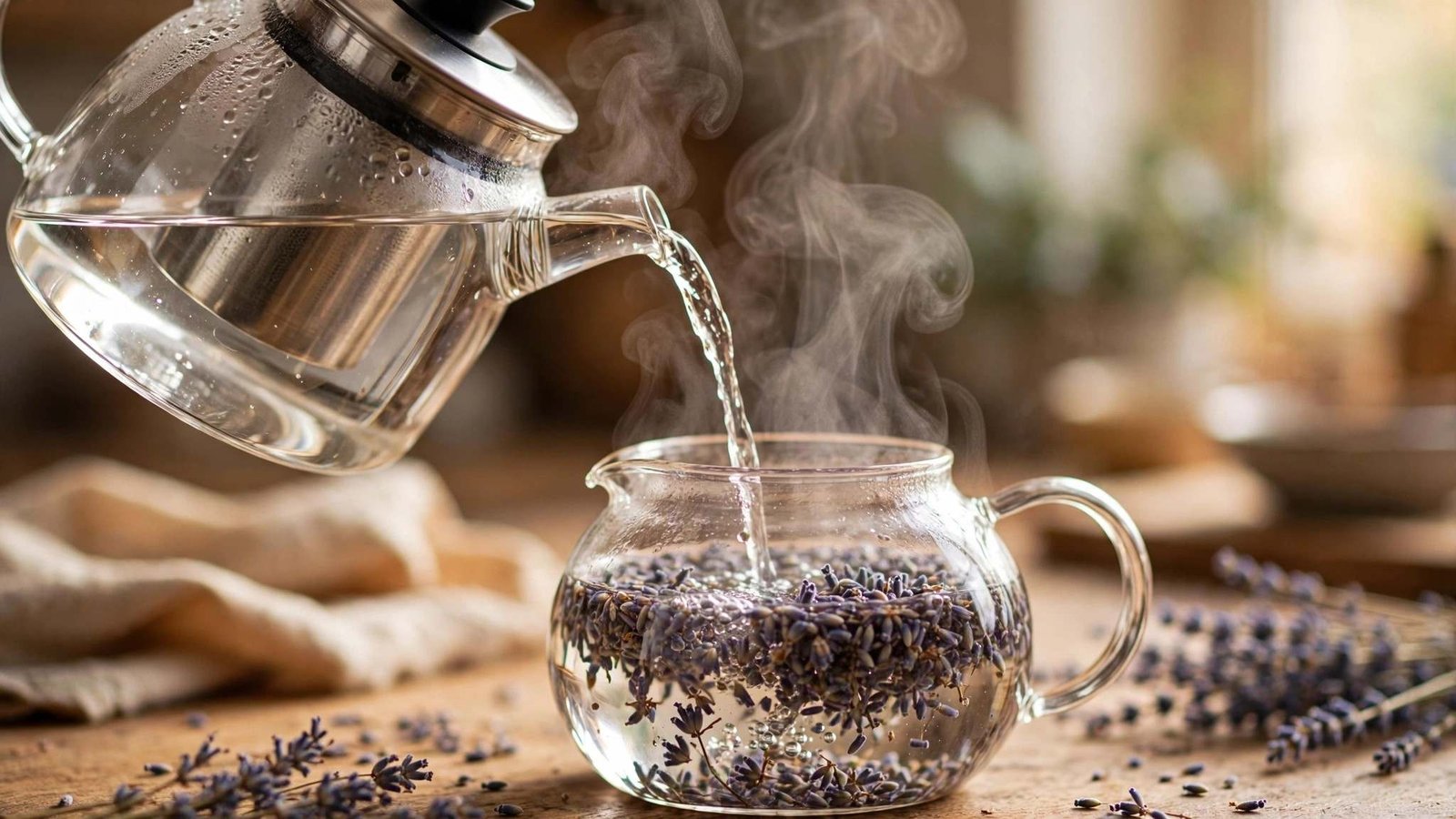
The golden rule: less is more. Too many buds or too long a steep is exactly how lavender tea earns its “soapy” reputation.
Hot Lavender Tea (makes 2 cups)
- 1 teaspoon dried culinary lavender buds (no more — seriously)
- 2 cups (500 ml) water
- Optional: 1 teaspoon honey and a thin slice of lemon
- Boil the water, then rest it a minute so it’s just off the boil.
- Add the buds to a teapot or infuser and pour the hot water over.
- Cover and steep 5–7 minutes (taste at 5 — longer risks bitterness).
- Strain thoroughly (stray buds cause bitterness), add honey or lemon, and sip slowly — pausing to enjoy the aroma.
Iced Lavender Lemon Tea (makes about 1 quart)
- 2 teaspoons dried culinary lavender buds
- 2 cups (500 ml) hot water + 2 cups cold water or ice
- 1–2 teaspoons honey + juice of half a lemon
- Steep the buds in the hot water for 7 minutes, then strain well.
- Stir in honey while warm, add lemon juice, and pour over ice.

Lavender Tea vs. Chamomile Tea: Which Calming Cup?
The two most famous “calm down” teas: chamomile tastes apple-sweet and owns the bedtime tradition (chamomile tea for sleep); lavender is more intensely floral with stronger stress-and-mood tea research. Choose lavender to unwind a wired mind; chamomile to fall asleep — or blend half-and-half with honey.
Safety: Who Should Check With a Doctor First
Lavender tea in normal amounts is generally considered safe — with a few specific cautions:
- Pregnant or breastfeeding: safety is unknown — check with your doctor rather than assuming.
- Sedative medications: lavender may interact with sedatives (theoretical but NCCIH-flagged) — don’t stack strong tea with sleep or anti-anxiety meds without guidance.
- Upcoming surgery: tell your surgeon about regular lavender use — they may ask you to stop beforehand.
- Any daily medication or condition: both Healthline and NCCIH advise checking with a healthcare professional first.
- Side effects: some report nausea, headache, burping, or diarrhea. One 2012 case report linked the tea to a rapid heartbeat — extremely rare, but stop and call your doctor if you feel palpitations.
- Never ingest essential oil as “tea”: lavender oil is not a beverage. Only dried buds, brewed and strained, belong in your cup.
Stick to 1–3 lightly brewed cups a day from culinary-grade buds, and you’re squarely in the traditional zone.
Lavender Tea FAQs
Does lavender tea have caffeine?
No — pure lavender bud tea is naturally 100% caffeine-free.
Is it okay to drink lavender tea every day?
For most healthy adults, 1–3 lightly brewed cups a day is generally fine. On daily medication? Check with your doctor.
Why does my lavender tea taste bitter or soapy?
Usually too many buds, too long a steep, or non-culinary lavender. Use ½–1 tsp per cup, steep 5–7 min, strain well.
Can I use lavender essential oil instead of buds?
No — essential oil is highly concentrated and not safe to drink in water. Brew only dried culinary buds.
Is lavender tea safe during pregnancy?
Unknown — there isn’t enough evidence either way, so check with your doctor and err on skipping it.
Can kids drink lavender tea?
Little research exists for children. A very weak, small cup is traditional in some families, but check with your pediatrician first.
Does lavender tea lower blood pressure?
Limited tea research; some aromatherapy studies suggest the scent may ease high blood pressure. Don’t use it as a BP treatment.
The Bottom Line
Lavender tea isn’t a cure for stress or sleeplessness — but it’s one of the few herbal teas with small human tea studies behind its calming reputation. Brew it lightly, sip slowly, respect the cautions.
1 Comment