
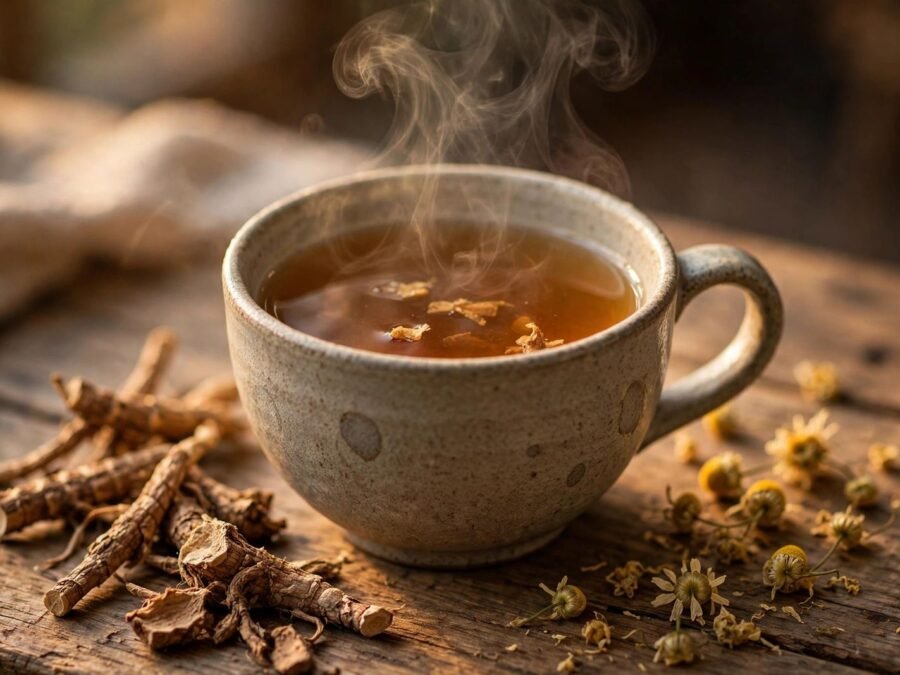
If your brain refuses to switch off at midnight, valerian root tea benefits are worth knowing about before you reach for another restless scroll through your phone. This earthy, old-world bedtime brew has been sipped for centuries by people chasing the same thing you are: a calmer slide into sleep. But does the science back up the tradition? Here is the honest answer — seven gentle reasons to try it, a simple recipe, and the safety notes most cheerful blog posts skip.
What Is Valerian Root Tea?
Valerian root tea is made from the dried roots and rhizomes (underground stems) of Valeriana officinalis, a flowering plant native to Europe and Asia. According to the National Center for Complementary and Integrative Health (NCCIH), valerian has been used medicinally since the days of ancient Greece and Rome, historically for insomnia, restlessness, and stomach cramps.
The tea itself is an acquired taste — most drinkers describe it as woody and earthy, stronger the longer it steeps. That is why it is so often blended with chamomile, lemon balm, lavender, or a spoonful of honey. It usually comes as loose dried root or in tea bags, and it is naturally caffeine-free.
7 Valerian Root Tea Benefits Worth Knowing
1. A centuries-old bedtime tradition for restless minds
Long before sleep apps existed, herbalists reached for valerian root in the evening. Its signature compounds — valerenic acid and isovaleric acid — are thought to interact with GABA, a neurotransmitter involved in calming the nervous system. That traditional reputation is exactly why valerian tea became a bedtime staple across Europe.
2. May help you unwind — with an honest evidence caveat
Here is where honesty matters: the NCCIH states that evidence on whether valerian helps sleep problems is inconsistent, and there is not enough evidence to say it works for any specific condition. In fact, the American Academy of Sleep Medicine’s 2017 guidelines recommended against valerian for chronic insomnia in adults. So think of this tea as a gentle wind-down ritual rather than a proven sleep treatment — and see a doctor if insomnia persists.

3. A caffeine-free evening ritual that signals “day over”
Sometimes the benefit is behavioral, not chemical. Brewing a warm cup an hour before bed — same time, same cozy spot — trains your brain to associate the ritual with winding down. Sleep researchers call this stimulus control, and it works even when the herb itself is doing only part of the job.
4. Traditionally used for nervous tension and restlessness
Beyond sleep, valerian’s folk history includes calming everyday nervousness, tension headaches, and that jittery feeling on overstimulated days. Modern evidence here is thin, but the traditional use is well documented — which is why valerian often appears in “calm” tea blends rather than solo.
5. Early research hints at menopause-related sleep support
The NCCIH notes three small studies suggesting valerian might help with menopause symptoms, including the sleep disruptions that so often come with them — though it stresses there is not enough evidence to know for certain. If night sweats keep waking you, this is a gentle, low-cost experiment to discuss with your doctor.
6. Blends beautifully with proven bedtime herbs
Valerian rarely travels alone. It pairs well with chamomile tea for sleep, lemon balm tea, and passionflower tea — all of which have their own calming traditions. A blend also solves valerian’s biggest complaint: its musky, earthy flavor all by itself.
7. Simple, affordable, and non-habit-forming as a nightly cup
A bag of valerian root tea costs less than a single fancy coffee, takes ten minutes to brew, and — unlike some sleep aids — a simple nightly cup of tea carries no dependency concerns. Just keep expectations realistic (see the safety section below) and enjoy the ritual.

How to Make Valerian Root Tea (That Actually Tastes Good)
Simple Valerian Root Bedtime Tea
Prep: 2 min | Steep: 10–15 min | Servings: 1 cup | Best enjoyed: 30–60 minutes before bed
Ingredients:
- 1 teaspoon dried valerian root (or 1 valerian tea bag)
- 1 cup freshly boiled water
- 1 teaspoon dried chamomile or lemon balm (optional, for flavor)
- 1 teaspoon honey and a squeeze of lemon (optional)
Steps:
- Place the valerian root (and chamomile or lemon balm, if using) in a cup or teapot.
- Pour over freshly boiled water and cover — covering keeps the aromatic compounds in the cup, not in the air.
- Steep 10–15 minutes. Longer means stronger — and earthier.
- Strain, then stir in honey and lemon to taste. Sip slowly in dim light.
Tip: If the flavor still challenges you, try a 50/50 blend with lavender tea — floral covers earthy surprisingly well.

Valerian Root Tea vs. Chamomile Tea: Which Bedtime Brew?
Both are caffeine-free evening classics, but they play different roles. Chamomile is the gentle all-rounder — mild apple-like flavor, long folk history for relaxation, and the better-tasting solo cup. Valerian is the stronger-smelling specialist with a deeper traditional reputation specifically for restless, can’t-switch-off nights — but weaker scientific backing than its fame suggests. Many people simply blend the two and get the best of both. If you are choosing one to start with, chamomile is the easier daily habit; valerian is the one to try when chamomile alone is not cutting it.
Safety First: Who Should Skip It or Ask a Doctor
Valerian root tea is a real herbal product, not candy — treat it with respect:
- Short-term use looks safe for most adults (NCCIH cites 300–600 mg daily for up to 6 weeks in studies), but long-term safety is unknown. Take occasional breaks rather than drinking it nightly for months.
- Never mix with alcohol, sleep aids, or sedative medications — valerian may amplify their drowsiness.
- Possible side effects include headache, stomach upset, mental dullness, vivid dreams, and morning grogginess. Stop if you feel off.
- Rare liver injury has been reported with valerian, mostly combined with other herbs. Skip it if you have liver disease.
- Pregnancy, breastfeeding, and children: safety is unknown — check with your doctor first.
- Surgery: tell your surgeon; many advise stopping herbal sedatives beforehand.
- Don’t drive after a strong cup until you know how it affects you.
For the full safety picture, see the NCCIH’s valerian usefulness and safety page and Medical News Today’s valerian tea overview.
FAQs About Valerian Root Tea
How long before bed should I drink valerian root tea?
About 30–60 minutes before bed gives the ritual time to work and the warmth time to relax you.
Can I drink valerian root tea every night?
Short-term nightly use appears safe for most adults, but long-term safety is unknown — cycle it (a few weeks on, a week off) and talk to your doctor about extended use.
Why does valerian root tea smell so strong?
Its volatile oils (including isovaleric acid) smell musky and earthy — some say like old socks. Blending with chamomile, lemon, or honey tames it considerably.
Does valerian root tea actually work for insomnia?
The honest answer: evidence is inconsistent, and sleep-medicine guidelines don’t recommend it for chronic insomnia. It may help as part of a calming bedtime routine, but persistent insomnia deserves a doctor’s visit.
Can I mix valerian root with other herbs?
Yes — chamomile, lemon balm, passionflower, and lavender are classic partners. Avoid combining it with alcohol or sedative medications.
Curious about more bedtime brews? Explore our ashwagandha tea guide and skullcap tea guide — and if stress (not just sleeplessness) is the issue, lavender tea might be your cup.