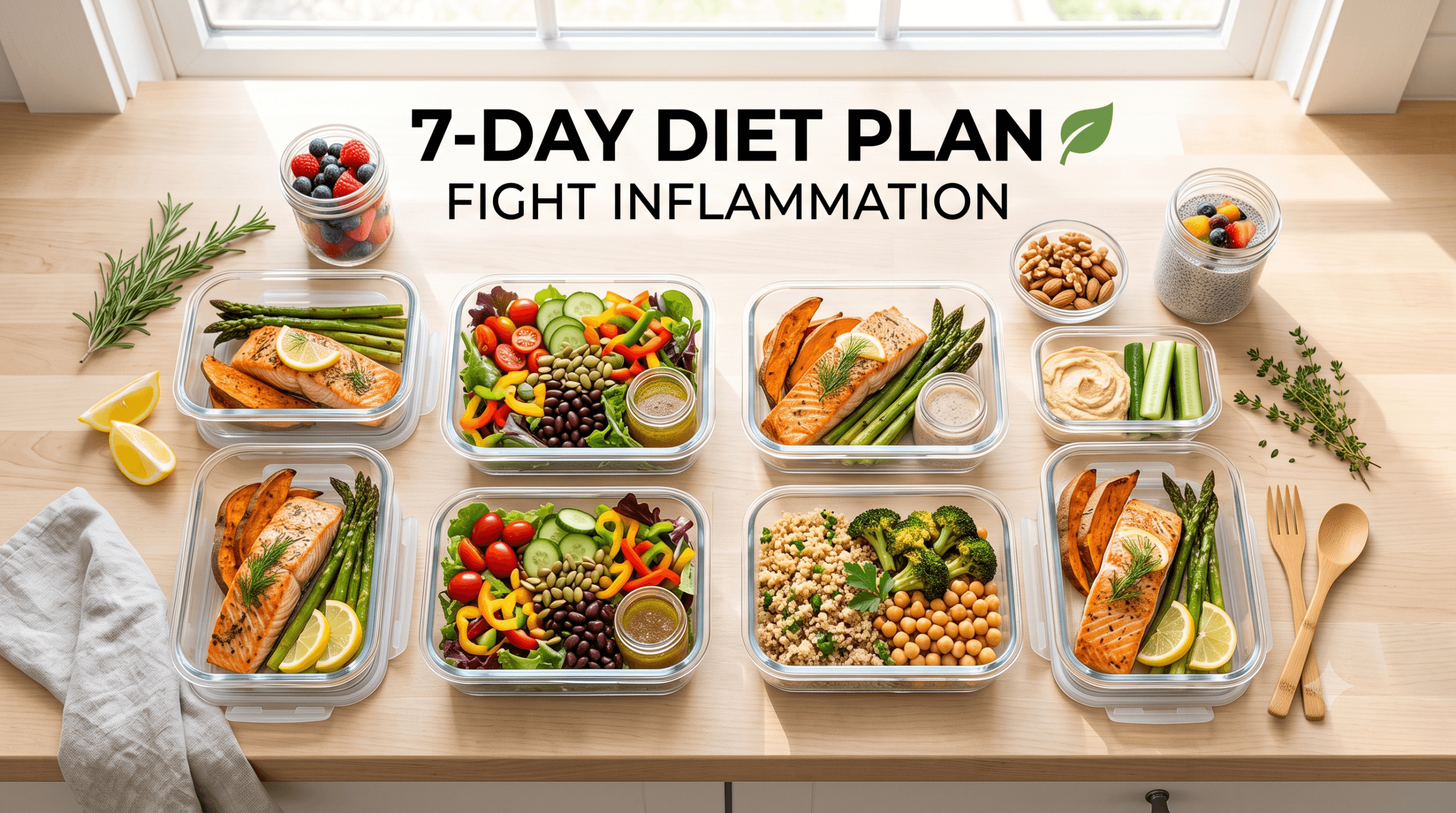
Are you tired of waking up with stiff joints, feeling bloated, or dealing with constant fatigue? The solution might be simpler than you think. Transitioning to a healthier lifestyle can seem overwhelming, but a structured 7-day anti-inflammatory diet plan is the perfect way to reset your body, calm your immune system, and start feeling better fast.
Why You Need a 7-Day Anti-Inflammatory Diet Plan
Chronic inflammation is the root cause of many everyday health issues, including arthritis, digestive problems, and stubborn weight gain. By following a dedicated 7-day anti-inflammatory diet plan, you give your digestive system a much-needed break from processed foods and flood your body with healing nutrients.
This short-term plan is designed to help beginners ease into a long-term healthy eating habit without feeling deprived or hungry.
What to Eat and What to Avoid
Before we get into the daily meals, here are the basic ground rules for your week of healing:
- Foods to Enjoy: Fresh vegetables, fruits (especially berries), fatty fish like salmon, extra virgin olive oil, nuts, seeds, and powerful spices like turmeric and ginger.
- Foods to Avoid: Processed meats, refined sugars, white bread, fried foods, and excessive dairy.
How to Prep for the Week
Preparation is the secret to success. Take an hour on Sunday to wash and chop your vegetables, cook a batch of quinoa, and portion out your nuts and seeds. Having healthy ingredients ready will prevent you from reaching for processed snacks when hunger strikes.
Your Simple 7-Day Meal Plan
Let’s dive into the delicious, healing meals you will be enjoying this week!
Day 1: Starting Fresh
- Breakfast: A warm bowl of oatmeal topped with fresh blueberries and a sprinkle of chia seeds.
- Lunch: Mixed green salad with grilled chicken, sliced avocado, and a simple olive oil dressing.
- Dinner: Baked salmon with roasted sweet potatoes and steamed broccoli.
Day 2: Plant-Powered Energy
- Breakfast: Try our 5-Minute Anti-Inflammatory Berry Chia Pudding.
- Lunch: Hearty lentil soup with a side of fresh spinach salad.
- Dinner: Stir-fried tofu or chicken with mixed vegetables (bell peppers, zucchini, carrots) in a ginger-turmeric sauce.
Day 3: Mid-Week Boost
- Breakfast: A green smoothie made with spinach, pineapple, fresh ginger, and almond milk.
- Lunch: Leftover lentil soup or a quick quinoa salad with cherry tomatoes and cucumber.
- Dinner: Grilled mackerel or trout with a side of cooked quinoa and roasted asparagus.
Day 4: Keep the Momentum
- Breakfast: Scrambled eggs cooked in olive oil with handfuls of spinach and diced tomatoes.
- Lunch: Tuna salad (mixed with mashed avocado instead of mayo) served on whole-grain crackers.
- Dinner: Chicken breast baked with lemon and rosemary, served with a side of sautéed kale.
Day 5: Flavorful Healing
- Breakfast: Plain Greek yogurt topped with walnuts, almonds, and a light drizzle of raw honey.
- Lunch: A large salad packed with chickpeas, cucumbers, red onions, and a lemon-tahini dressing.
- Dinner: Zucchini noodles tossed with homemade tomato sauce and lean ground turkey.
Day 6: Weekend Reset
- Breakfast: Avocado toast on whole-wheat sourdough bread, sprinkled with hemp seeds.
- Lunch: A hearty black bean and corn salad with a zesty lime vinaigrette.
- Dinner: Shrimp stir-fry with broccoli, snap peas, and minced garlic.
Day 7: The Final Stretch
- Breakfast: Oatmeal with sliced almonds and fresh strawberries.
- Lunch: A salad inspired by our [Top 10 Anti-Inflammatory Foods for Joint Pain]—spinach, walnuts, salmon chunks, and a light vinaigrette. (Note: Yahan apne pichle article ka link lagayen)
- Dinner: Roasted vegetable medley (carrots, bell peppers, red onions) with baked chicken thighs.
Conclusion: Keep the Healing Going
Completing this 7-day anti-inflammatory diet plan is a massive step toward better health, less joint pain, and a happier gut. Remember, consistency is key. Your body wants to heal, and providing it with the right fuel is the best way to support it.
For more evidence-based information on fighting inflammation through diet, check out these helpful guidelines from Harvard Medical School.