
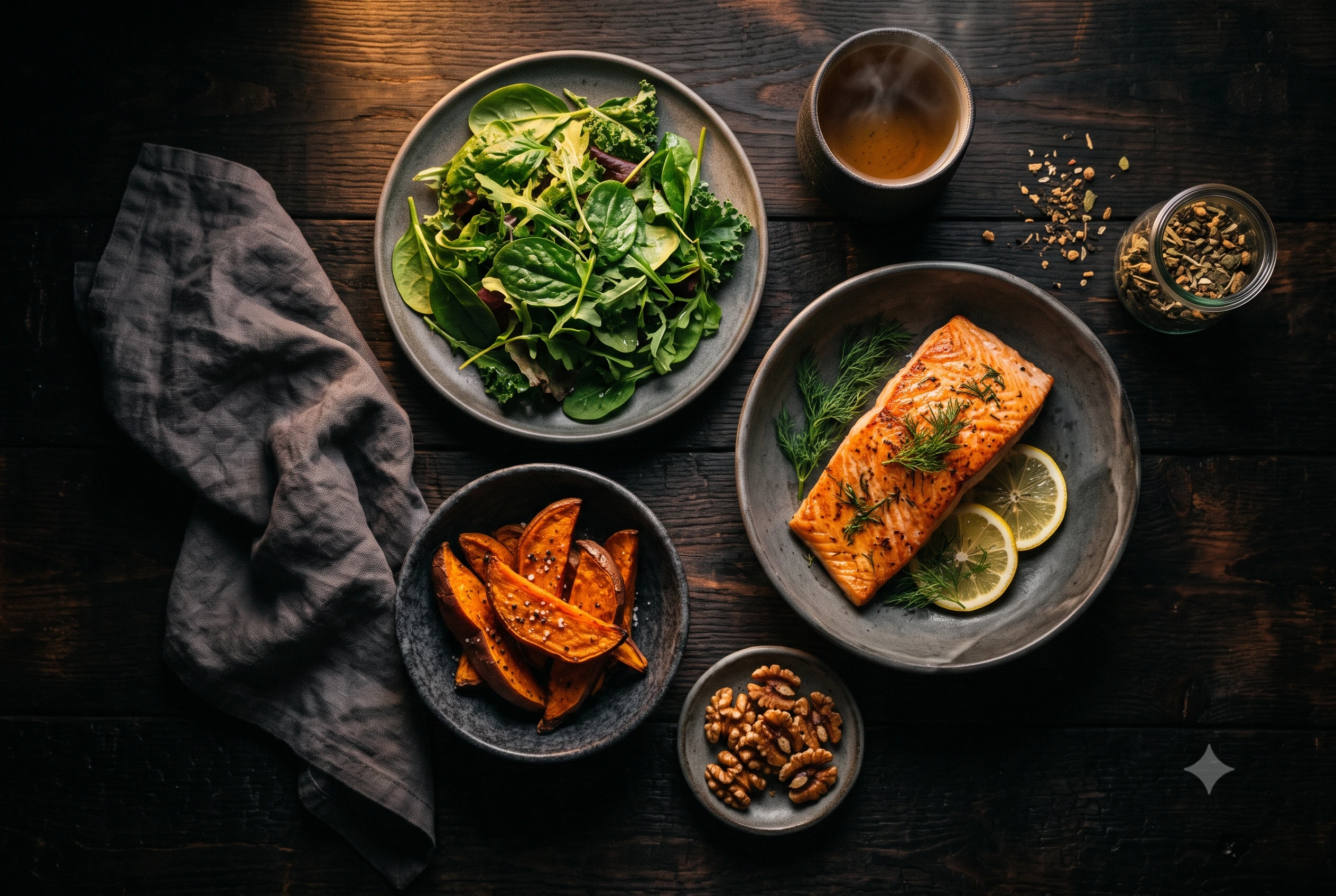
It’s 3 PM, and you’re already exhausted.
Somehow you’re wired but tired, craving sugar, and carrying belly weight that wasn’t there a year ago.
This isn’t a willpower problem. It’s often a cortisol problem, and it’s more common than most women realize.
The right cortisol diet food list can help calm your stress response, balance your hormones, and finally stop that stubborn midsection bloat.
This guide gives you exactly what to buy, what to avoid, and a simple 7-day plan to put it all into action.

What Does High Cortisol Actually Do to Your Body?
Cortisol is your body’s main stress hormone. In small doses, it’s helpful.
But when stress becomes constant, cortisol stays elevated far longer than it should.
That’s when things start to go sideways:
- Belly fat storage increases, especially around the midsection
- Blood sugar becomes unstable, leading to energy crashes and sugar cravings
- Sleep quality drops, which raises cortisol again the next day
- Digestion slows, contributing to bloating and discomfort
These are some of the most common high cortisol symptoms in women, and they tend to feed into each other in a frustrating loop.
According to WebMD, cortisol is a hormone your adrenal glands release in response to stress, and it plays a direct role in where and how much fat your body stores.
Stress raises cortisol, cortisol disrupts sleep, poor sleep raises cortisol further the next day, and the cycle keeps repeating until something interrupts it.
Diet happens to be one of the most powerful, accessible ways to break that cycle. Unlike sleep or stress levels, which can feel harder to control day to day, what’s on your plate is something you can change starting with your very next meal.
The good news: the right cortisol diet food list can start interrupting that cycle within days, not months.
The Ultimate Cortisol Diet Food List (What to Buy)
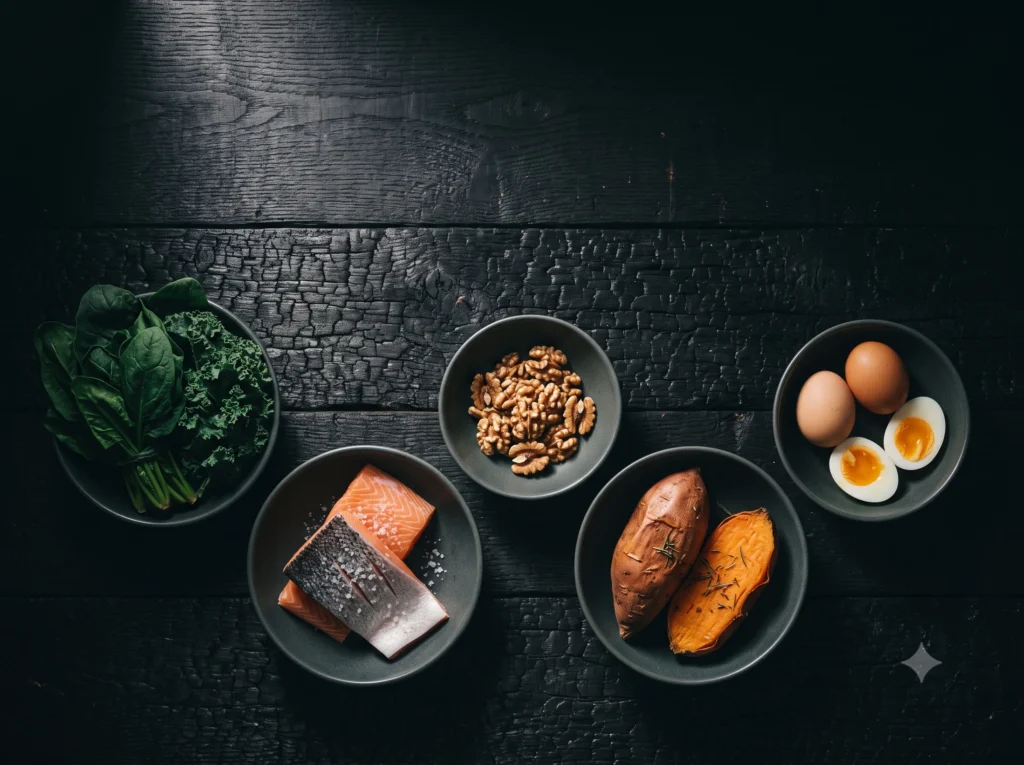
Here are the 5 essential categories to stock your kitchen with. Think of this as your core cortisol diet food list to build every meal around.
1. Magnesium-Rich Greens
Spinach, kale, and Swiss chard help regulate cortisol production directly.
Magnesium is one of the most well-studied hormone balancing foods, and most women are quietly low in it, often without realizing their fatigue or irritability is connected to this one nutrient gap.
Aim to include a handful of leafy greens at least once a day, whether blended into a smoothie or added to a salad.
2. Omega-3 Rich Foods
Wild-caught salmon, walnuts, and flaxseed help lower inflammation linked to chronically high cortisol.
These are essential foods that lower cortisol over time, especially with regular intake, since omega-3s directly support the same pathways cortisol tends to disrupt.
Two to three servings a week is a reasonable, sustainable target for most women.
3. Adaptogenic Herbs
Ashwagandha, holy basil, and reishi mushroom are known for helping the body adapt to stress more efficiently.
Many women add these into tea or smoothies as part of a broader stress relief diet, often noticing a calmer, steadier mood within a couple of weeks.
These herbs won’t replace addressing the root cause of your stress, but they can meaningfully take the edge off while you work on the bigger picture.
4. Complex Carbohydrates
Sweet potatoes, quinoa, and oats support stable blood sugar and steady serotonin production.
This helps prevent the energy crashes that often trigger stress eating, especially in the late afternoon when cortisol naturally starts to dip.
Pairing these carbs with protein and healthy fat keeps blood sugar even steadier throughout the day.
5. High-Quality Proteins
Pasture-raised eggs, grass-fed beef, and organic poultry help stabilize blood sugar across the day.
Protein at every meal is one of the simplest ways to keep cortisol from spiking between meals, since it slows digestion and keeps you fuller for longer.
For dinner ideas that already use many of these ingredients, check out our 5 Easy Weight Loss Dinner Recipes to Lower Cortisol.
3 “Stress-Spiking” Foods to Remove from Your Pantry Today
Just as important as what you add is what you remove.
1. Refined Sugar Sugar spikes blood sugar rapidly, followed by a crash that triggers another cortisol surge.
2. Excessive Caffeine on an Empty Stomach Caffeine before eating can spike cortisol directly, especially first thing in the morning.
3. Ultra-Processed Snacks Chips, packaged pastries, and fast food are often loaded with inflammatory oils and refined carbs that quietly keep cortisol elevated.
These foods are easy to reach for during a stressful moment, which is exactly what makes them worth removing from easy access in your pantry.
Removing just these three categories is often enough to notice a difference within the first week of following your cortisol diet food list.
If you want a deeper foundation before diving in, our Ultimate Anti Inflammatory Diet Plan for Beginners pairs perfectly with this approach.
A Simple 7-Day Cortisol Balancing Meal Plan
Here’s a realistic overview to help you put your new cortisol diet food list into practice.
- Day 1: Greek yogurt with berries, salmon salad, herb-roasted chicken with sweet potato
- Day 2: Veggie omelet, turmeric lentil soup, garlic shrimp with quinoa
- Day 3: Overnight oats with walnuts, leafy green salad with chicken, baked cod with vegetables
- Day 4: Smoothie with spinach and flaxseed, quinoa bowl with chickpeas, turkey and vegetable stir-fry
- Day 5: Eggs with avocado, salmon and greens, slow-roasted chicken with root vegetables
- Day 6: Chia pudding, grilled chicken wrap, vegetable curry with brown rice
- Day 7: Berry smoothie, mixed salad with salmon, light vegetable soup
Rotate in adaptogenic tea in the evenings, and drink plenty of water throughout each day to support the process.
Frequently Asked Questions
How quickly can diet actually lower cortisol? Many women notice less bloating and steadier energy within the first one to two weeks. More noticeable changes in belly fat tend to build over several weeks of consistency, especially once sleep and stress levels start improving alongside your diet.
Do I need to cut out coffee completely? Not necessarily. Having it after breakfast rather than on an empty stomach can meaningfully reduce its impact on cortisol, and switching to one cup instead of three is often enough to notice a difference.
Can stress alone cause belly fat, even with a healthy diet? Yes. Chronically high cortisol encourages fat storage around the midsection specifically, which is why cortisol belly fat can appear even in women who eat relatively well. Addressing stress and diet together tends to work best.
Is this cortisol diet food list safe to follow long-term? Yes. Unlike restrictive diets built around cutting calories, this approach is built around adding nourishing, whole foods back into your routine, which makes it sustainable well beyond the first 7 days.
Conclusion
You don’t need an extreme diet to feel like yourself again.
This cortisol diet food list gives you a clear, realistic starting point to calm your stress response and support your hormones naturally.
Start with just a few swaps this week, and let your body do the rest. Small, consistent changes tend to outlast any extreme overhaul, especially when it comes to something as sensitive as your stress hormones.