
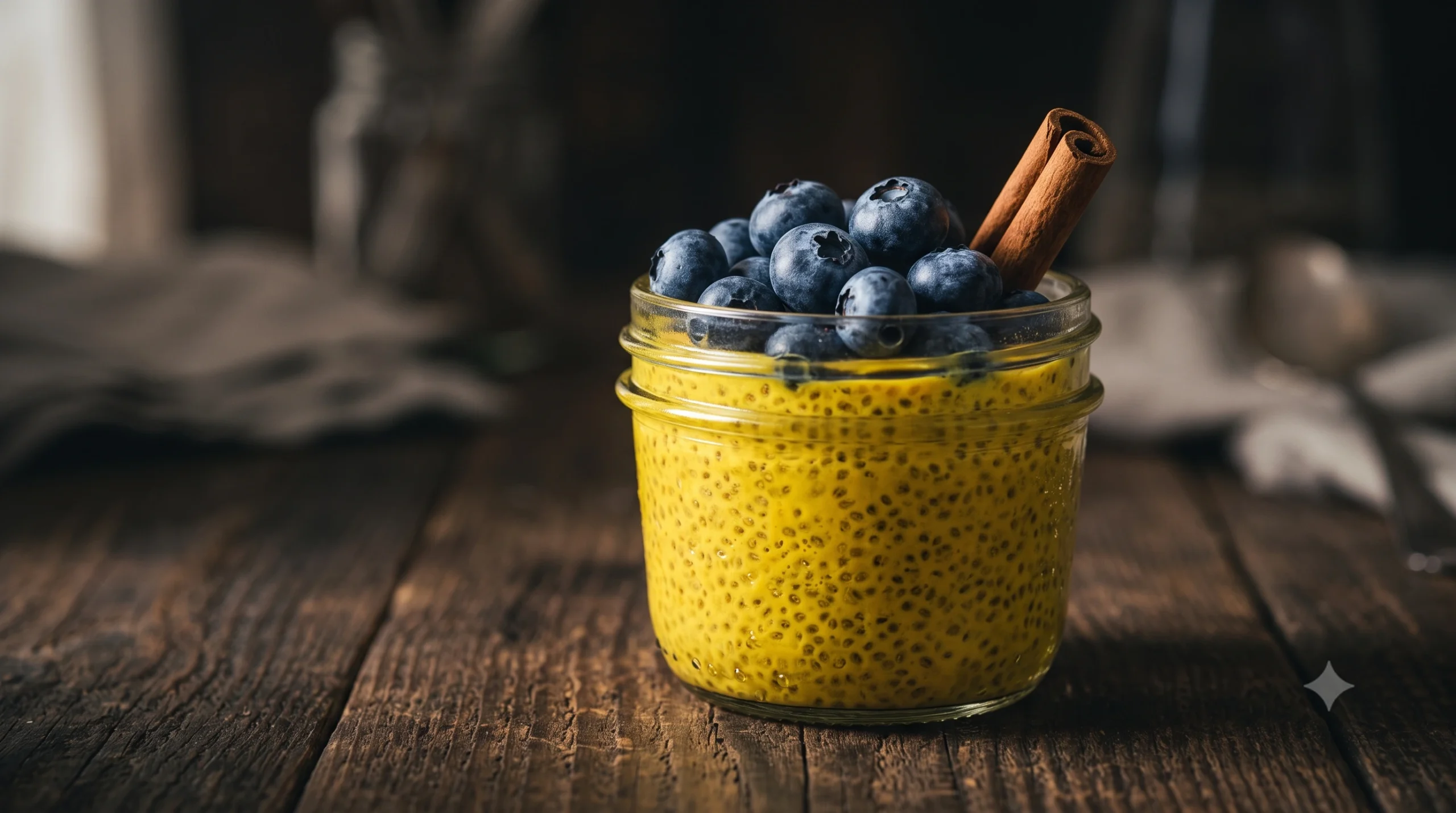
Waking up with stiff, achy joints is a rough way to start the day — especially when breakfast usually makes it worse, not better.
This anti inflammatory chia pudding recipe flips that script.
It tastes like dessert, takes five minutes of hands-on work, and is built around two of the most well-studied anti-inflammatory ingredients available: turmeric and chia seeds.
If mornings already feel rushed, this is one less decision to make — prep it the night before, and it’s ready when you wake up. For more ideas like this one, check out our full list of 10 Easy Anti-Inflammatory Breakfast Ideas for Joint Pain.
🔑 TL;DR — Quick Answer
To make this anti inflammatory chia pudding recipe, whisk 1/4 cup chia seeds, 1 cup almond milk, 2 tbsp maple syrup, 1/2 tsp turmeric, 1/4 tsp cinnamon, and a pinch of black pepper. Chill overnight until it thickens into a creamy, golden pudding.
Why This Anti Inflammatory Chia Pudding Recipe Works
This anti inflammatory chia pudding recipe works because it combines two of the most researched anti-inflammatory compounds into one simple bowl. Chia seeds bring plant-based omega-3s, while turmeric brings curcumin — and together, they do more than either one alone.
Here’s the science behind each ingredient.
- Curcumin, the active compound in turmeric, has been studied by the NIH for its role in reducing inflammatory markers in the body.
- Curcumin on its own is poorly absorbed — which is why black pepper is not optional in this recipe.
- Piperine, the compound in black pepper, has been shown to significantly increase curcumin absorption when eaten together.
- Omega-3 fatty acids in chia seeds are linked by the Mayo Clinic to a reduction in inflammatory processes throughout the body.
Skip the black pepper, and you’re mostly wasting the turmeric — that one small ingredient is what makes this golden milk chia pudding actually effective, not just trendy.
The Core Ingredients You Need
This recipe uses six simple ingredients, each chosen for a specific anti-inflammatory or functional role. Nothing here is hard to find — most are already in your pantry.
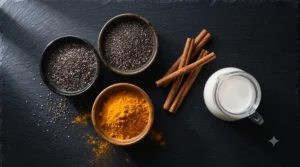
- Chia seeds — the base of the pudding, rich in fiber and omega-3 fatty acids.
- Almond milk — a lower-inflammatory dairy alternative; swap for oat or coconut milk if you prefer.
- Turmeric — the source of curcumin, the primary anti-inflammatory compound in this recipe.
- Black pepper — a small but essential addition that activates curcumin absorption via piperine.
- Cinnamon — adds warmth and has been studied for supporting healthy blood sugar levels.
- Maple syrup — a natural sweetener that keeps this recipe free of refined sugar.
Each ingredient earns its place — this isn’t a random pantry mashup, it’s a deliberately built chia pudding for joint pain.
At a glance, here’s what a single serving contributes toward an anti-inflammatory eating pattern:
- Roughly 5 grams of omega-3 fatty acids from the chia seeds alone.
- A meaningful dose of curcumin, boosted for absorption thanks to the black pepper.
- 11 grams of fiber per serving, which supports the gut-inflammation connection noted by the NIH.
- Zero refined sugar, unlike most store-bought pudding or overnight oat cups.
That combination is hard to find in a five-minute breakfast — most convenience foods trade one of these benefits for shelf stability or flavor.
Step-by-Step Anti Inflammatory Chia Pudding Recipe
This anti inflammatory chia pudding recipe comes together in under five minutes of active prep, with the rest of the work happening in your fridge overnight. Follow these four simple steps.
- Combine the chia seeds, almond milk, turmeric, cinnamon, maple syrup, and a pinch of black pepper in a jar or bowl.
- Whisk thoroughly for about 30 seconds to prevent the chia seeds from clumping together.
- Rest the mixture for 30 minutes, then stir again — this second stir is what prevents the seeds from settling unevenly.
- Chill in the refrigerator for at least 4 hours, though overnight gives the best creamy texture.
By morning, you’ll have a thick, spoonable overnight chia seed pudding with a golden hue and a subtly spiced flavor.
- Store in an airtight container for up to 4 days.
- If the pudding seems too thick after chilling, stir in a splash of almond milk to loosen it.
- Top with fresh berries, sliced banana, or a drizzle of extra maple syrup before serving.
Two Delicious Variations (Chocolate & Mango)
Both of these variations keep the same anti-inflammatory base while changing the flavor profile entirely. They’re built from the same core recipe, so prep time stays just as fast.
Think of the base recipe as a template rather than a fixed formula — once you’ve made it once, these swaps take almost no extra effort.
Anti-Inflammatory Turmeric Chocolate Chia Pudding
Adding cacao powder turns this into a chocolate dessert without losing any of the anti-inflammatory benefits. Cacao itself contains antioxidants that complement the turmeric and chia base.
- Add 1 tablespoon of unsweetened cacao powder to the base recipe.
- Increase maple syrup slightly to balance the bitterness of the cacao.
- Top with a few dark chocolate shavings for a dessert-like finish.
Tropical Mango Turmeric Chia Pudding
Swapping almond milk for coconut milk and topping with mango creates a brighter, tropical version of this recipe. The natural sweetness of mango also means you can reduce the maple syrup.
- Use full-fat coconut milk in place of almond milk for a richer texture.
- Top with fresh diced mango and a sprinkle of shredded coconut.
- A squeeze of lime juice brightens the flavor and adds a dose of vitamin C.
Frequently Asked Questions
Is chia seed pudding good for inflammation?
Yes — chia seeds are one of the richest plant-based sources of omega-3 fatty acids, which research has linked to reduced inflammatory markers. Combined with turmeric’s curcumin, this pudding delivers two anti-inflammatory compounds in a single serving.
Can I eat this on an anti-inflammatory diet?
This recipe fits naturally into most anti-inflammatory diets, since it’s free of refined sugar, processed ingredients, and inflammatory seed oils. It’s also naturally gluten-free and easy to make dairy-free with almond or coconut milk.
How long does this chia pudding last in the fridge?
This pudding stays fresh in an airtight container in the refrigerator for up to 4 days. The texture may thicken slightly over time, so stir in a splash of milk before serving if needed.
Can I make this recipe vegan?
Yes, this recipe is already vegan as written, as long as you use maple syrup rather than honey. Every ingredient — chia seeds, almond milk, turmeric, cinnamon, and maple syrup — is plant-based.
Why does this recipe need black pepper?
Black pepper isn’t optional in this recipe — it’s what makes the turmeric actually work. Curcumin, the anti-inflammatory compound in turmeric, is poorly absorbed on its own, and piperine in black pepper has been shown to significantly improve that absorption when the two are eaten together.
Final Thoughts
Mornings don’t have to start with stiffness, and breakfast doesn’t have to work against your joints.
This anti inflammatory chia pudding recipe proves that something this simple — five minutes of prep and a night in the fridge — can genuinely support how your body feels by the time you wake up.
Make a batch this weekend, and let your future self wake up to something already waiting for them.