
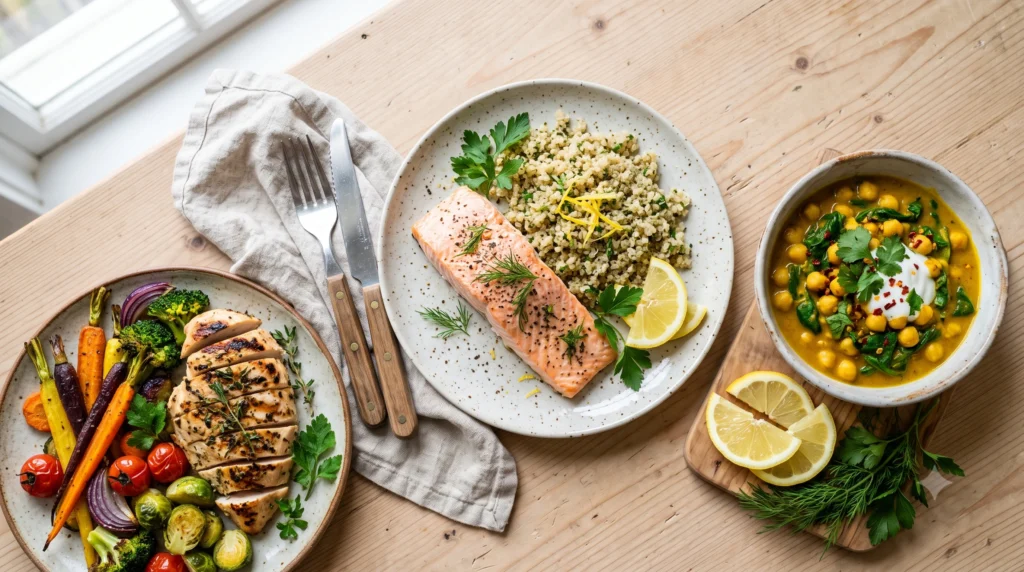
If you’re dealing with joint pain, you’ve probably heard that protein is important — but not all protein sources are created equal. Some can quietly fuel inflammation, while others actively help calm it. These high protein anti inflammatory meals are built specifically to give your body the fuel it needs without triggering more stiffness or discomfort — and every one of them starts with our anti-inflammatory grocery list.
Whether you’re managing arthritis, general joint pain, or just want to eat in a way that supports your body long-term, this list gives you 7 real, satisfying options.
Why Protein Matters for Joint Pain
Protein plays a key role in repairing tissue, including the connective tissue around your joints. But the source of that protein matters. Processed meats and fried proteins tend to increase inflammation, while fatty fish, legumes, and lean poultry support your body’s natural anti-inflammatory processes.
Do High Protein Anti Inflammatory Meals Really Help Joint Pain?
Yes — when the protein sources are chosen intentionally. High protein anti inflammatory meals combine two things your joints need at once: enough protein to support tissue repair, and ingredients that actively calm inflammation rather than add to it. This combination is especially helpful for people who feel both achy and fatigued, since low energy is often tied to inadequate protein intake.
High-Protein Anti-Inflammatory Foods to Build Meals Around
The best high-protein anti-inflammatory meals start with the right ingredients. Stock your kitchen with fatty fish like salmon, tuna, and mackerel (rich in omega-3s), lean poultry such as chicken and turkey, eggs, and Greek yogurt. Plant-based standouts include lentils, chickpeas — try our 20-minute anti-inflammatory chickpea salad — black beans, tofu, nuts, and seeds. For a full shopping guide, see our anti-inflammatory grocery list for beginners.
7 High-Protein Anti-Inflammatory Meals to Try
1. Grilled Chicken with Roasted Vegetables
Lean protein paired with antioxidant-rich vegetables like bell peppers and zucchini.
2. Baked Salmon with Quinoa
Omega-3s from salmon plus complete protein from quinoa make this anti-inflammatory salmon recipe a joint-pain powerhouse.
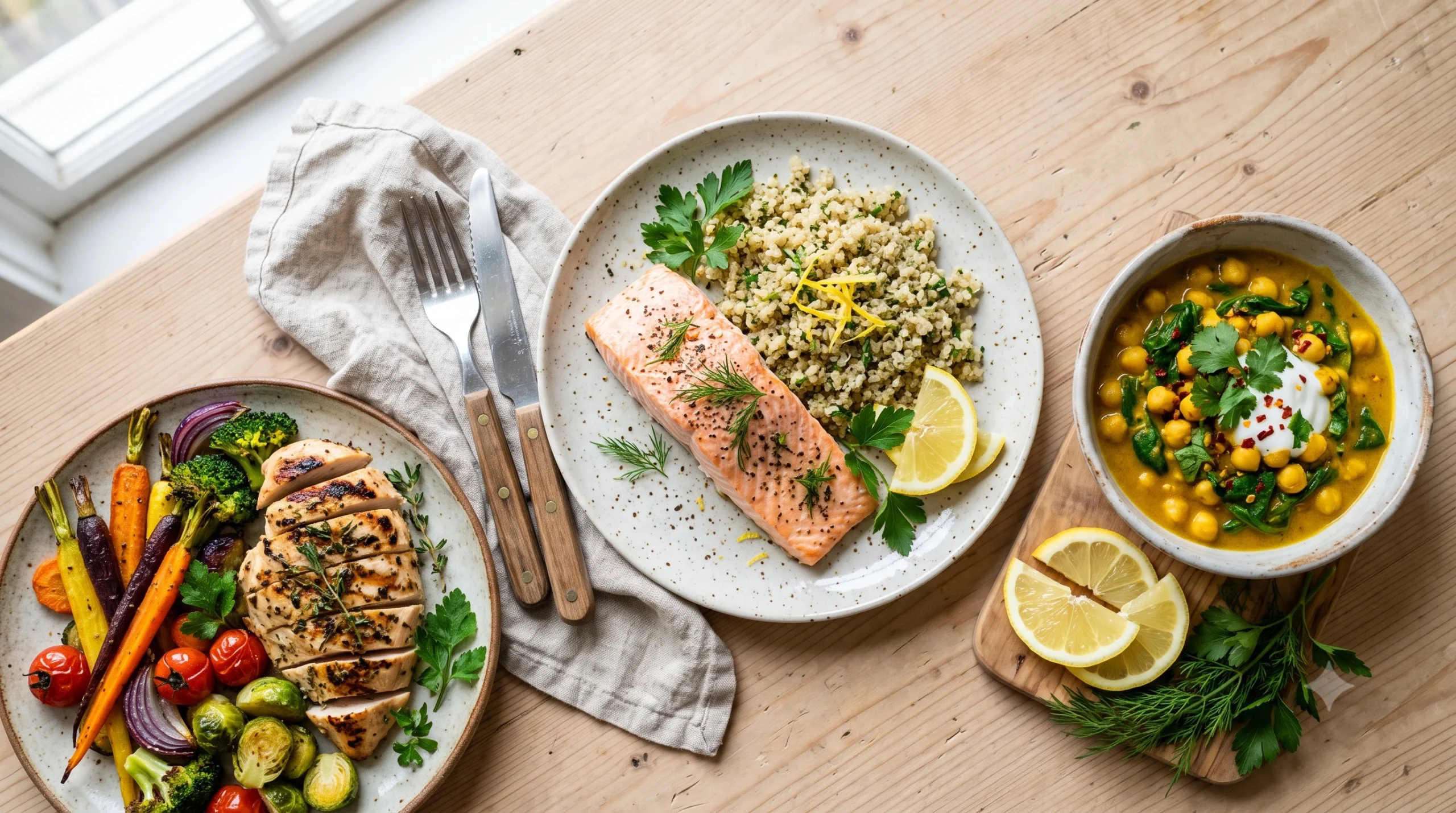
Baked Salmon with Quinoa
Ingredients
Method
- Preheat oven to 400°F and line a baking sheet with parchment paper.
- Cook quinoa in water or broth according to package instructions, about 15 minutes.
- Place salmon fillets on the baking sheet, drizzle with olive oil and garlic, season with salt and pepper.
- Top salmon with lemon slices and bake for 12-15 minutes until it flakes easily.
- Fluff cooked quinoa with a fork, plate alongside salmon, and garnish with fresh parsley.
3. Lentil and Turmeric Stew
Plant-based protein combined with anti-inflammatory turmeric for a warming, filling meal.
4. Turkey and Sweet Potato Skillet
Lean turkey protein paired with fiber-rich, antioxidant-loaded sweet potatoes.
5. Chickpea and Spinach Curry
A plant-based protein option rich in iron and inflammation-fighting compounds.
6. Grilled Shrimp with Avocado Salad
Light, fast-cooking protein paired with healthy fats from avocado.
7. Egg and Vegetable Frittata
A versatile, protein-packed option loaded with colorful vegetables, perfect for any meal of the day.
How to Build a High-Protein Anti-Inflammatory Week
You don’t need to eat all 7 in one week — start by rotating in two or three of these high protein anti inflammatory meals to replace your usual go-to dinners. If mornings are also difficult for you, pairing these meals with our 10-Minute Morning Routine for Joint Stiffness. Stocking your kitchen first makes it easier — start with our anti-inflammatory grocery list for beginners, then follow a 7-day diet plan for the week.
According to the Cleveland Clinic, combining adequate protein intake with anti-inflammatory foods can play a meaningful role in managing joint-related discomfort.
Frequently Asked Questions
What protein can I eat on an anti-inflammatory diet?
Research suggests that lean and plant-based proteins may fit well into an anti-inflammatory eating pattern — think fatty fish like salmon and tuna, poultry, eggs, legumes such as lentils and chickpeas, Greek yogurt, nuts, and seeds. It may help to limit processed meats and heavily fried proteins, which have been linked to higher inflammation markers in some studies.
Does high protein reduce inflammation?
Protein itself isn’t a direct treatment for inflammation, but getting enough may help maintain muscle mass and support recovery, which matters when joint pain limits activity. Some studies associate balanced diets that combine adequate protein with anti-inflammatory foods — like leafy greens, berries, and omega-3-rich fish — with lower inflammation markers. If you have a condition like arthritis, talk to your doctor or a registered dietitian about your protein needs.
Final Thoughts
Eating enough protein doesn’t have to work against your joint health — with the right choices, it can actively support it. These seven meals prove that you can fuel your body and calm inflammation at the same time, without complicated meal prep or expensive ingredients. For an easy evening wind-down, try our 5-minute golden milk recipe.

3 Comments