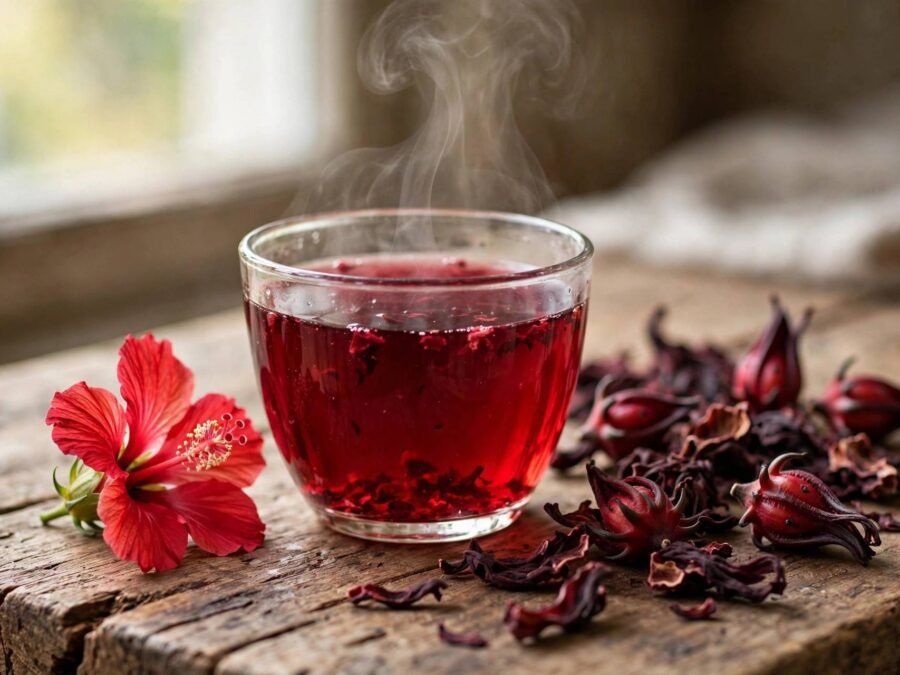
That deep ruby-red cup that stains everything it touches? Hibiscus tea benefits are some of the best-studied in the herbal tea world — particularly for blood pressure, where pooled clinical trials show drops big enough to matter. But the internet also credits it with melting belly fat and “flushing toxins,” so let’s separate what the research actually supports from the hype, and cover how to brew it properly (hot or iced).
What Hibiscus Tea Actually Is
Despite the name, hibiscus tea isn’t made from the showy petals. It’s brewed from the calyces — the fleshy red sepals that protect the flower bud of Hibiscus sabdariffa, a plant also called roselle. Around the world it goes by other names: sorrel in the Caribbean, agua de jamaica in Mexico, karkadeh in Egypt and Sudan.
The flavor is tart and cranberry-like, the color is dramatic, and it’s naturally caffeine-free — which already makes it a solid evening option if you’re cutting back on caffeinated drinks (we mapped out a whole caffeine-free swap ladder here).
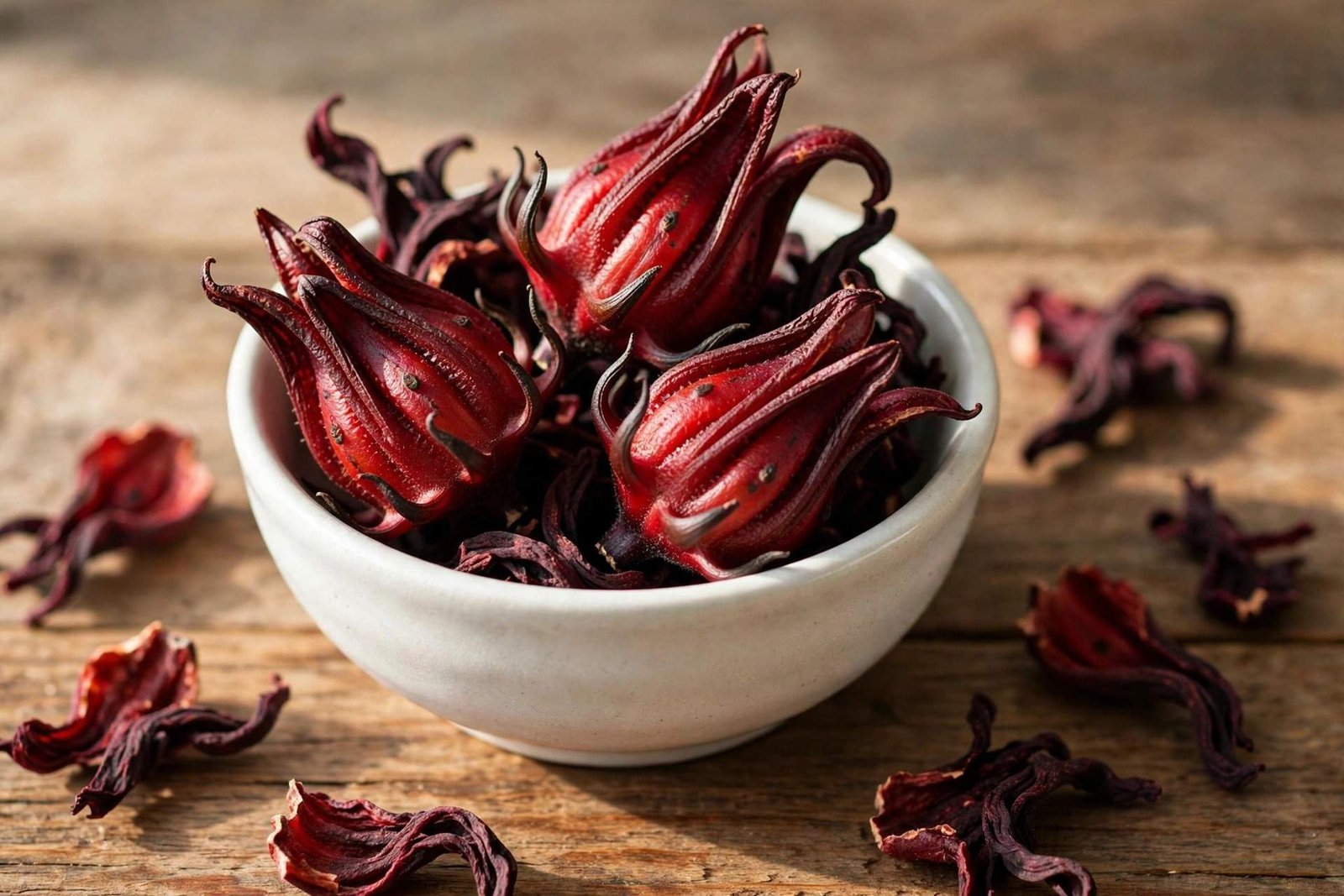
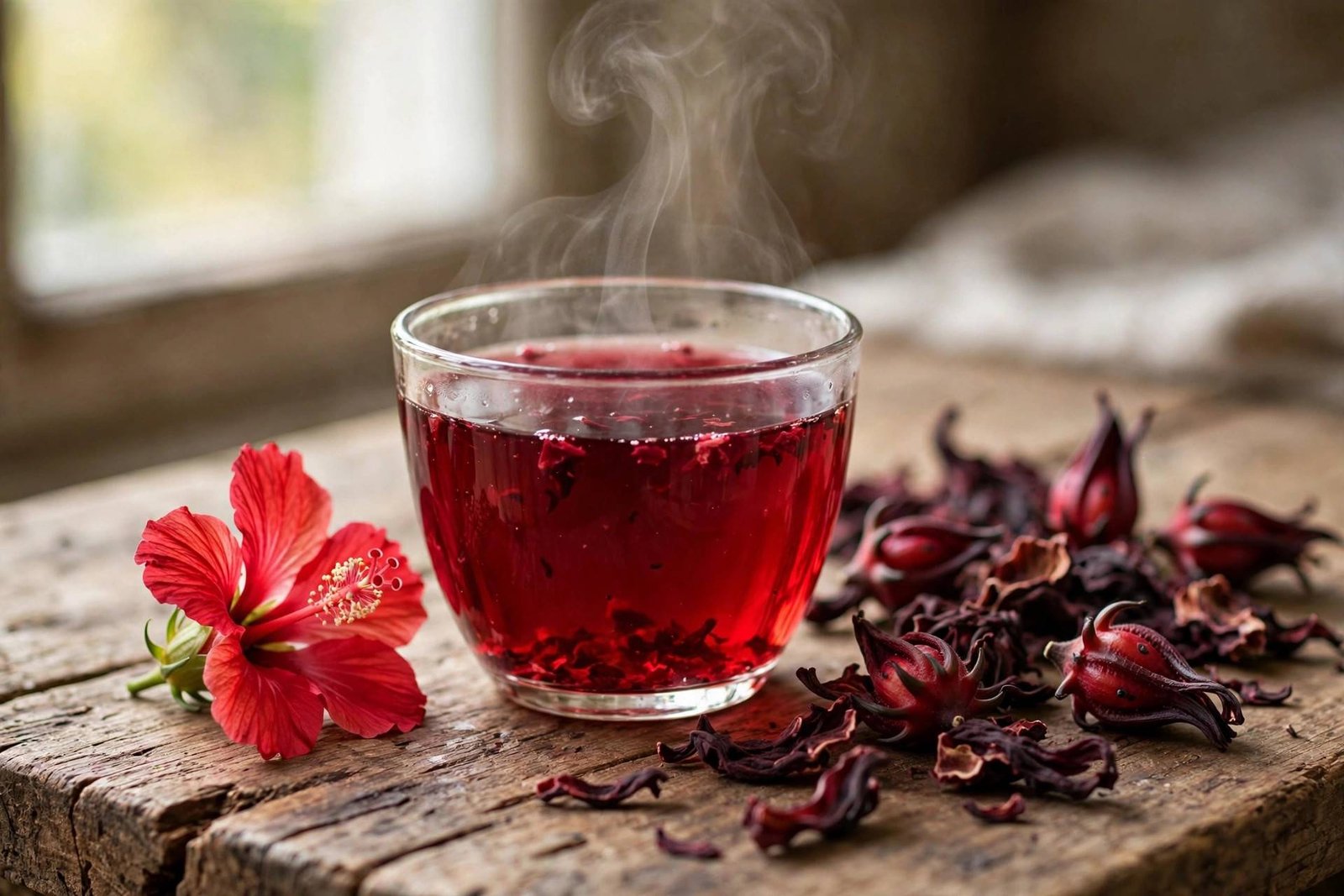
Dried hibiscus calyces — the deep-red sepals that give the tea its color and tart flavor.
8 Hibiscus Tea Benefits the Research Actually Supports
1. May help lower blood pressure — the best-studied benefit
This is hibiscus’s headline act, and the evidence is unusually solid for an herbal tea. A 2025 umbrella review pooling 26 randomized controlled trials (1,797 participants) found that hibiscus dose-dependently reduced both systolic and diastolic blood pressure compared with placebo and other teas — with moderate credibility for drops over 10 mmHg, especially in people over 50 and in trials lasting more than four weeks.
Earlier meta-analyses landed in the same zone: a 2015 meta-analysis found average drops of 7.58 mmHg systolic and 3.53 mmHg diastolic, and a 13-trial analysis found −6.67/−4.35 mmHg versus placebo. Intriguingly, the umbrella review found no significant difference between hibiscus and antihypertensive drugs — which is not the same as saying tea replaces medication (it doesn’t), but it signals a real effect, not wishful thinking. If you’d like the day-by-day experience angle, our 30-day hibiscus tea honest review walks through what a month of daily cups may feel like.
2. May support healthier cholesterol balance
The same 2025 umbrella review found hibiscus reduced total cholesterol and LDL cholesterol while increasing HDL (“good”) cholesterol. The lipid results were less dramatic than the blood pressure findings, but they point in a heart-friendly direction — one reason hibiscus often appears in heart-health tea roundups alongside green tea.
3. May modestly lower fasting blood sugar
A meta-analysis of 7 randomized trials (362 participants) found sour tea consumption reduced fasting plasma glucose by about 3.67 mg/dL, and the 2025 umbrella review confirmed a glucose-lowering signal. That’s modest — this is not a diabetes treatment, and anyone on glucose-lowering medication should read the safety section below. For a deeper dive on the blood-sugar tea angle, see our cinnamon tea for blood sugar guide.
4. Rich in anthocyanin antioxidants
That ruby color comes from anthocyanins, the same antioxidant family behind blueberries’ reputation. A comprehensive review of animal and human studies details hibiscus’s polyphenol and anthocyanin content, and the 2025 umbrella review found improvements in oxidative-stress markers across trials. Translation: it’s a genuinely antioxidant-rich cup — just don’t let anyone tell you antioxidants alone “detox” you (more on that below).
5. Early signals for liver health — but mostly animal studies so far
Animal research suggests hibiscus extracts may support healthy liver enzyme levels, and human trials are only beginning to explore this. Honest caveat from the umbrella review: researchers actually observed a minor, clinically insignificant rise in AST (a liver enzyme) — not a danger signal, but a reminder that “natural” doesn’t mean “no monitoring,” especially at therapeutic doses.
6. A genuinely caffeine-free ritual
No caffeine, no jitters, no 3 a.m. staring at the ceiling. If your goal is an evening wind-down drink, hibiscus does the job that decaf wishes it could — with actual flavor. It also makes a smart swap for sugary sodas and juices: tart, refreshing, and endlessly customizable (see the iced version below).
7. Traditionally used as a gentle diuretic and digestive aid
Across North Africa, the Middle East, and Latin America, hibiscus tea has a long folk history as a mild diuretic and after-meal digestive. Modern trials focus on blood pressure rather than digestion, so consider this traditional-use territory rather than proven — but the diuretic effect is one plausible mechanism behind the blood pressure benefit.
8. The honest extract-vs-tea caveat
Here’s what most hibiscus articles won’t tell you: many trials used concentrated extracts or strong multi-cup daily brews, not one casual teabag. A single weak cup is unlikely to reproduce trial results. If you’re drinking it for the blood-pressure benefit, the studied pattern is typically 2–3 strong cups daily for several weeks — and that’s a conversation to have with your doctor, not a DIY prescription.
How to Brew Hibiscus Tea (Hot)
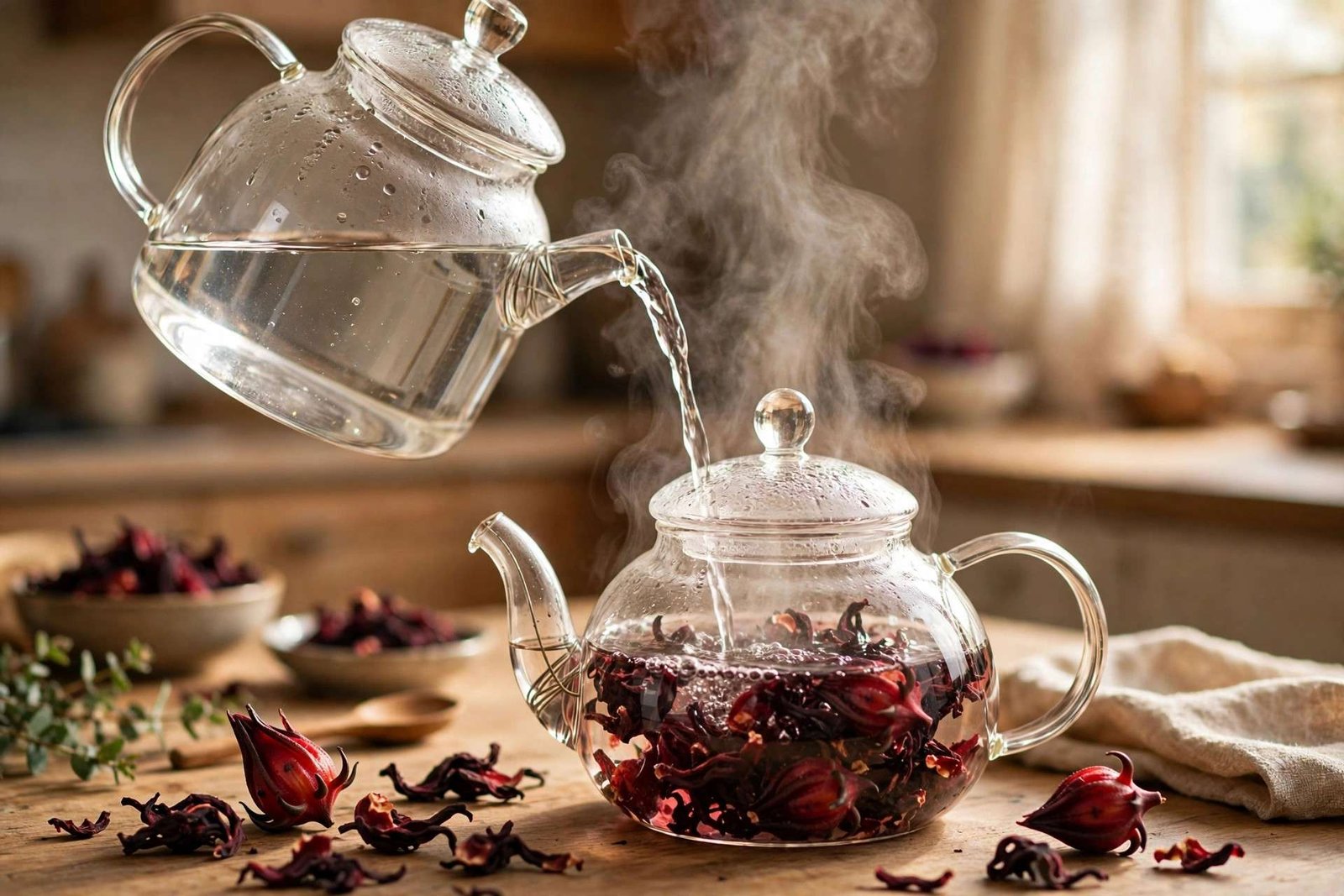
Pour just-boiled water over the dried calyces and steep 5–10 minutes for full color and flavor.
Stronger is better here, since the studied benefits come from robust brews:
- Measure: 1–2 tablespoons of dried hibiscus calyces per 2 cups (500 ml) of water. Tea bags work too — use 2 per mug for a strong cup.
- Heat: Bring water to a full boil, then pour over the hibiscus.
- Steep: 5–10 minutes, covered. Longer = tarter and deeper red.
- Strain and sweeten lightly: A teaspoon of honey softens the tartness without burying it. A cinnamon stick or a few slices of fresh ginger during steeping add warmth.
Iced Hibiscus (Agua de Jamaica Style)
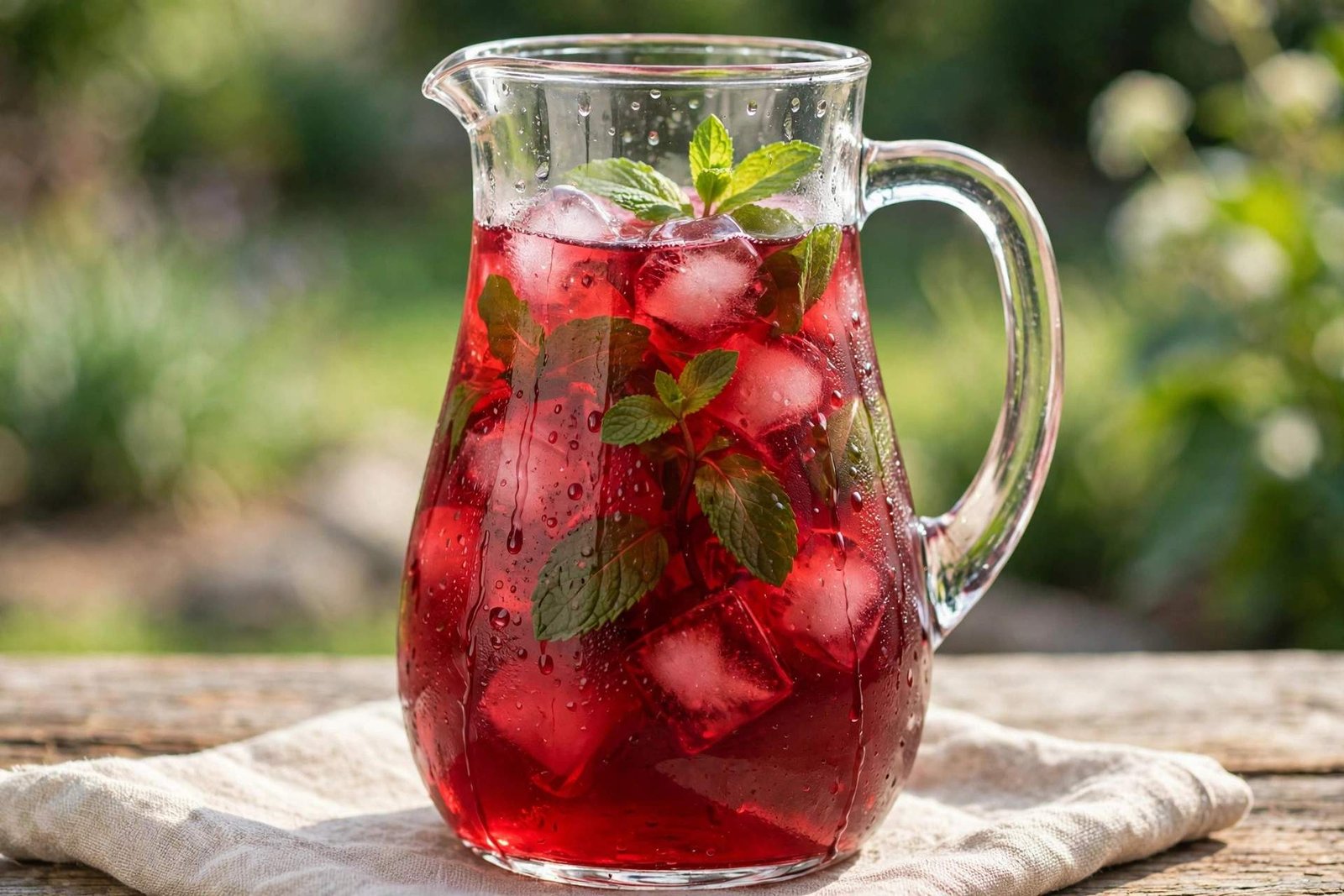
Cold-brewed or chilled hibiscus over ice — tart, refreshing, and endlessly customizable.
Brew double-strength hot (2 tablespoons per 2 cups), steep 10 minutes, strain, then chill. Serve over ice with mint and a squeeze of lime. For cold brew: combine calyces and cold water in a jar (same ratio), refrigerate 8–12 hours, strain. It’s smoother and less tart than the hot method — a genuinely good sugary-drink replacement.
What Hibiscus Tea Won’t Do (Myth Debunks)
- Melt belly fat. Some extract studies show modest weight signals; no trial shows tea melting fat. Anyone promising this is selling something.
- “Flush toxins” / detox you. Your liver and kidneys handle detoxification. Antioxidant-rich ≠ detoxifying.
- Replace blood pressure medication. The “comparable to drugs” finding is about effect size in trials — not a license to drop prescriptions. Ever.
- Cure diabetes or high cholesterol. Modest supportive signals, not treatments.
Safety: Who Should Be Careful
- Pregnant or breastfeeding? Human data are limited, and hibiscus has a folk history of being avoided in pregnancy in some cultures. Check with your doctor first — don’t guess.
- On blood pressure medication (including diuretics, ACE inhibitors)? Hibiscus lowers blood pressure in trials, so combining it with BP drugs could push it too low. Talk to your clinician about timing and monitoring.
- On diabetes medication? The modest glucose-lowering effect could stack with your meds.
- Already-low blood pressure? You probably don’t need something that nudges it lower.
- Surgery coming up? As with many herbal products, many clinicians advise pausing 1–2 weeks before surgery.
- Long-term high doses: The umbrella review calls hibiscus generally safe but notes therapeutic/long-term dosing needs careful monitoring.
- Stomach sensitivity: Very strong brews on an empty stomach can cause mild nausea in some people — start with one cup and dilute if needed.
Frequently Asked Questions
How much hibiscus tea should I drink per day?
Trials showing blood-pressure benefits typically used 2–3 strong cups daily for 4+ weeks. For casual enjoyment, 1–2 cups is plenty. More isn’t automatically better — especially if you take BP medication.
Does hibiscus tea have caffeine?
No — it’s naturally caffeine-free, making it suitable for evenings.
Can hibiscus tea replace my blood pressure pills?
No. Trials show effect sizes comparable to some drugs, but that’s not the same as a prescription replacement. Any change to medication needs your doctor.
Is hibiscus tea safe in pregnancy?
Human data are limited. Because of its folk history and blood-pressure effects, most cautious guidance says to check with your doctor first.
What’s the difference between hibiscus tea and sorrel or jamaica?
Same plant, different names: sorrel (Caribbean), agua de jamaica (Mexico), karkadeh (Egypt/Sudan) are all Hibiscus sabdariffa calyx brews.
Why is my hibiscus tea so sour?
The tartness comes from natural organic acids (including hibiscus acid and citric acid). Shorter steeps, a little honey, or the cold-brew method all soften it.
The Bottom Line
Hibiscus tea earns its reputation where it counts: blood pressure has the strongest trial backing of any herbal-tea claim on this site, with cholesterol and blood-sugar signals behind it. Brew it strong, enjoy it hot or iced, keep the health claims honest — and if you’re managing blood pressure or taking medication, bring your doctor into the loop before making it a daily ritual.
Classic Hibiscus Tea (Hot & Iced)
Ingredients
Method
- Measure 2 tbsp dried hibiscus calyces per 4 cups water (2 tea bags per mug if using bags).
- Bring water to a full boil and pour over the hibiscus.
- Steep covered 5–10 minutes — longer means tarter and deeper red.
- Strain; stir in honey while warm if using, plus cinnamon or ginger during the steep if you like.
- For iced: brew double-strength, chill, serve over ice with mint and lime — or cold-brew 8–12 hours in the fridge.