
Nutrition advice today is exhausting.
One expert says cut carbs. Another says avoid dairy. Someone else insists you need a $200 supplement stack just to feel normal again.
If you’re here because your joints ache in the morning, your stomach feels puffy by evening, and you’re simply tired of guessing what to eat — take a breath. You’re in the right place, and this doesn’t have to be complicated.
This anti inflammatory diet plan for beginners is the only “start here” guide you need.
No extreme rules. No complicated science. Just a simple, supportive path to calming inflammation, easing joint pain, and finally feeling like yourself again — starting with your very next meal.

What Actually Causes Inflammation? (Explained Simply)
Inflammation isn’t inherently bad. It’s actually your body’s built-in defense system.
Acute inflammation is short-term. Think of a swollen ankle after a fall, or a sore throat when you’re fighting a cold. It shows up, does its job, and fades.
Chronic inflammation is different. It lingers quietly in the background, day after day, often triggered by diet, stress, and poor sleep.
This is usually what’s behind waking up stiff, feeling puffy for no clear reason, or dealing with nagging joint pain relief never quite seems to fix.
According to Johns Hopkins Medicine, ongoing joint inflammation can affect how joints look and function over time, contributing to pain, swelling, and reduced mobility.
The goal of this anti inflammatory diet plan for beginners isn’t to eliminate inflammation completely. It’s to stop feeding the chronic, low-grade kind that wears your body down.
Common Signs of Chronic Inflammation
You don’t need a lab test to suspect chronic inflammation is at play. A few everyday signs are often enough:
- Waking up stiff, especially in your hands, knees, or lower back
- Feeling bloated most evenings, even after a “normal” meal
- Low, steady fatigue that doesn’t improve with sleep
- Skin that feels puffy or irritated more often than not
If a few of these sound familiar, you’re not imagining it, and you’re not alone. This is exactly the pattern an anti inflammatory diet plan for beginners is designed to interrupt.
The Core Rule: Foods to Eat vs. Inflammatory Foods to Avoid
Once you understand this one rule, everything else becomes simple.
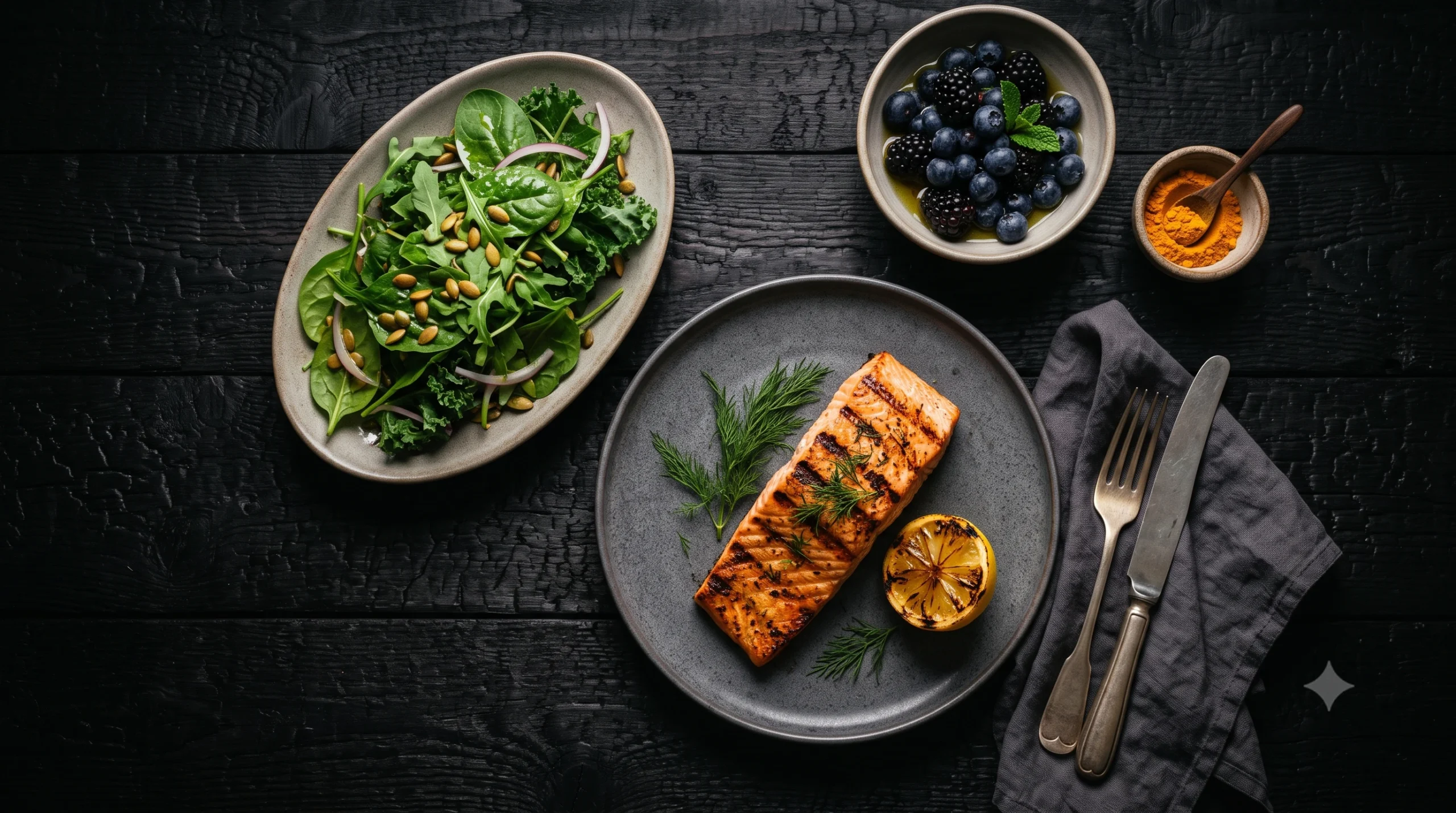
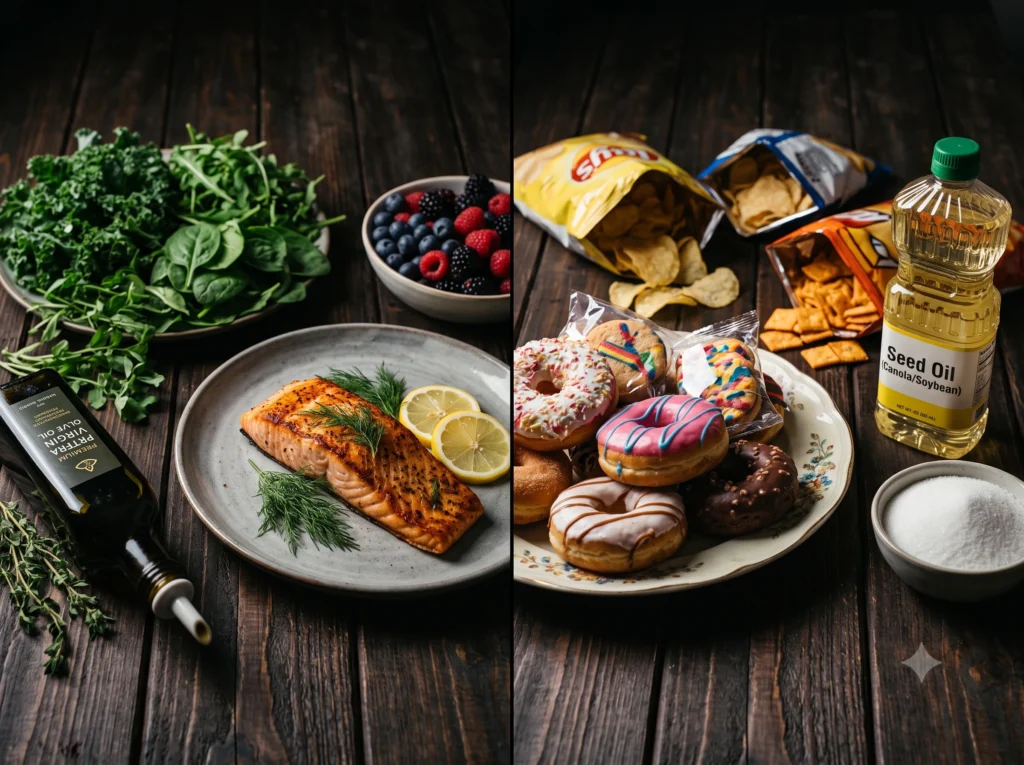
5 Foods That Help Reduce Inflammation:
- Wild-caught salmon — rich in omega-3s that calm inflammatory pathways
- Berries — packed with antioxidants that protect your cells
- Leafy greens — support gut health and reduce oxidative stress
- Healthy fats (olive oil, avocado) — help regulate inflammatory response
- Turmeric and ginger — natural compounds shown to ease swelling and pain
3 Major Inflammatory Foods to Avoid:
- Refined sugar — spikes blood sugar and drives chronic inflammation
- Seed oils — heavily processed oils linked to inflammatory markers
- Highly processed carbs — white bread, chips, and packaged snacks that offer little nutrition
This is the entire foundation of the anti inflammatory diet plan for beginners you’re about to follow. Everything else is just putting these two lists into practice.
Your Simple Anti Inflammatory Diet Plan for Beginners
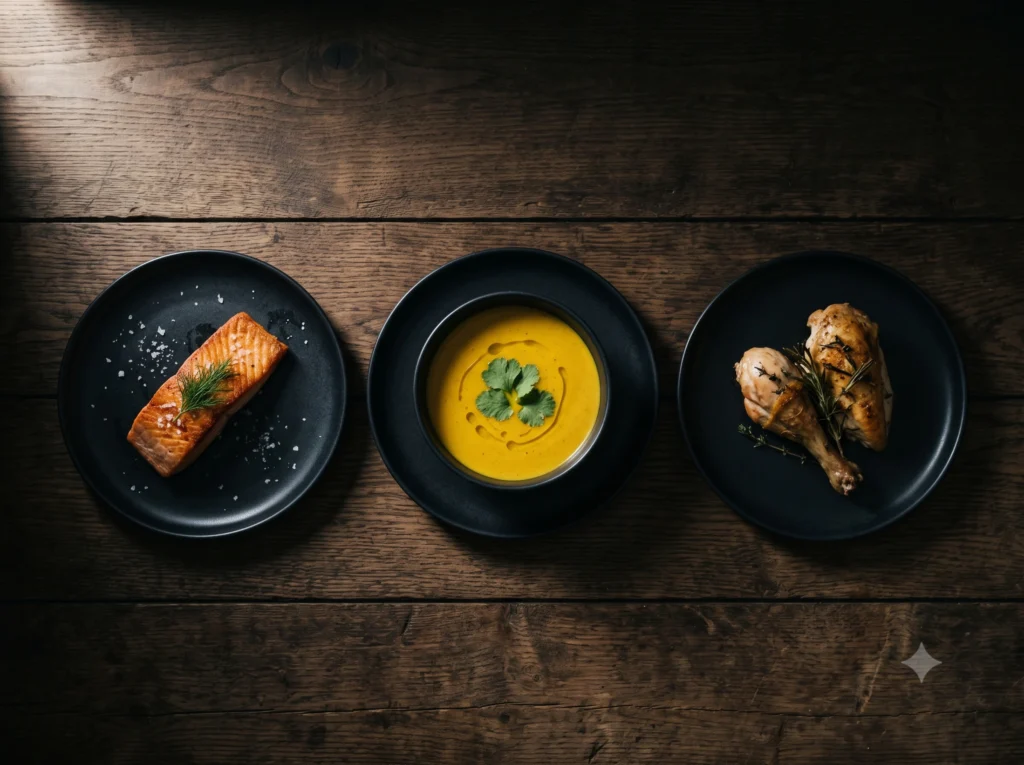
Here’s a realistic, beginner-friendly 3-day sample to get you started. Nothing fancy, nothing complicated.
Day 1
- Breakfast: Greek yogurt with berries and a drizzle of honey
- Lunch: Leafy green salad with grilled chicken, olive oil, and lemon
- Dinner: Baked salmon with roasted vegetables
Day 2
- Breakfast: Veggie omelet with spinach and tomato
- Lunch: Turmeric ginger soup with shredded chicken
- Dinner: Garlic shrimp with zucchini noodles
Day 3
- Breakfast: Overnight oats with chia seeds and berries
- Lunch: Quinoa bowl with roasted sweet potato and kale
- Dinner: Herb-roasted chicken with root vegetables
For more gut-friendly, cortisol-calming dinner ideas beyond these three days, our 5 Easy Weight Loss Dinner Recipes to Lower Cortisol is a natural next step.
And once you’re ready to make these meals feel as beautiful as they are healing, The Ultimate Healthy Diet Aesthetic guide will show you how to style your plate the Soothe & Plate way.
3 Beginner Mistakes to Avoid on Day 1
Starting an anti inflammatory diet plan for beginners goes much smoother if you sidestep these three common mistakes.
Mistake 1: Trying to change everything at once. Swapping every meal, snack, and drink overnight is a fast track to burnout. Start with dinner, then build from there once it feels natural.
Mistake 2: Forgetting hydration. Water plays a direct role in flushing inflammatory byproducts and reducing bloat. Aim for consistent sips throughout the day, not just one big glass at dinner. Herbal teas count too, and can offer their own gentle anti-inflammatory benefits.
Mistake 3: Stressing over perfection. Chasing a “perfect” diet raises cortisol, which itself fuels inflammation. Progress, not perfection, is what actually calms your body down. One inflammatory meal doesn’t undo your progress; it’s the overall pattern that matters most.
Frequently Asked Questions
How long does it take for an anti-inflammatory diet to work? Many people notice less bloating and more steady energy within the first one to two weeks. Deeper changes, like reduced joint discomfort, often build gradually over four to six weeks of consistency, so patience really does pay off here.
Can I still drink coffee? Yes, in moderation. Black coffee or coffee with a splash of milk is generally fine — the bigger concern is the added sugar and flavored syrups that often come with it, which can quietly undo a lot of your progress.
Will this help with my gut health? Yes. Reducing inflammatory foods and adding fiber-rich, whole-food options supports a healthier gut microbiome, which is closely tied to lower inflammation throughout the body. A calmer gut often means less bloating, more steady energy, and even better mood regulation over time.
Why a Beginner Approach Actually Works Best
It might feel like you need something more intense to see real results, but the opposite is usually true.
Sustainable change comes from small, repeatable habits, not short bursts of extreme discipline that fizzle out by week two.
An anti inflammatory diet plan for beginners works precisely because it’s realistic. You’re far more likely to still be following it in three months if it never felt like punishment in the first place.
Think of this less like a diet and more like a gentle recalibration, one that your joints, your gut, and your energy levels will all thank you for.
Conclusion
You don’t need to overhaul your entire life by tomorrow morning.
This anti inflammatory diet plan for beginners is designed to meet you exactly where you are, one simple meal at a time.
Start with breakfast tomorrow. Add in the swaps that feel manageable. Your body is more resilient than you think, and it’s already ready to start healing the moment you give it the right support.
You don’t have to get it perfect. You just have to start, and let consistency do the rest, one small choice at a time.
2 Comments