
If bloating, sluggish digestion, or low-grade inflammation feel like a daily struggle, what you drink can make a real difference alongside what you eat. These anti-inflammatory juicing recipes for gut health combine fresh produce known to calm digestion and reduce inflammation — no complicated ingredients, just simple combinations you can make in minutes.
Unlike store-bought juices loaded with added sugar, each recipe below leans on whole, gut-friendly ingredients that work with your body instead of against it.
Quick Answer: Anti-Inflammatory Juicing Recipes for Gut Health
Anti-inflammatory juicing recipes for gut health typically combine ginger, turmeric, leafy greens, and low-sugar fruits like green apple or cucumber to calm digestive inflammation and support gut healing. These combinations avoid the high sugar content of typical juice bar drinks while still delivering a refreshing, nutrient-dense boost.
Why Juicing Can Support Gut Health
Certain fresh ingredients — like ginger, turmeric, and leafy greens — contain compounds that help calm digestive inflammation and support a healthy gut lining. Juicing makes it easy to consume a concentrated amount of these ingredients quickly, without needing to eat large volumes of raw vegetables in one sitting.
This is exactly why building a rotation of go-to anti-inflammatory juicing recipes for gut health can make a real difference over time.
| Typical Juice Bar Drink | Anti-Inflammatory Swap |
|---|---|
| Sugary fruit punch juice | Green apple, cucumber, ginger juice |
| Store-bought orange juice | Turmeric carrot ginger juice |
| Bottled “detox” juice (high sugar) | Leafy greens and celery juice |
| Fruit smoothie with added sugar | Beet, lemon, and ginger juice |
The 7 Juicing Recipes
1. Green Apple, Cucumber, and Ginger Juice
A refreshing, low-sugar blend that supports digestion and hydration.
2. Turmeric Carrot Ginger Juice
Combines anti-inflammatory turmeric with naturally sweet carrots.
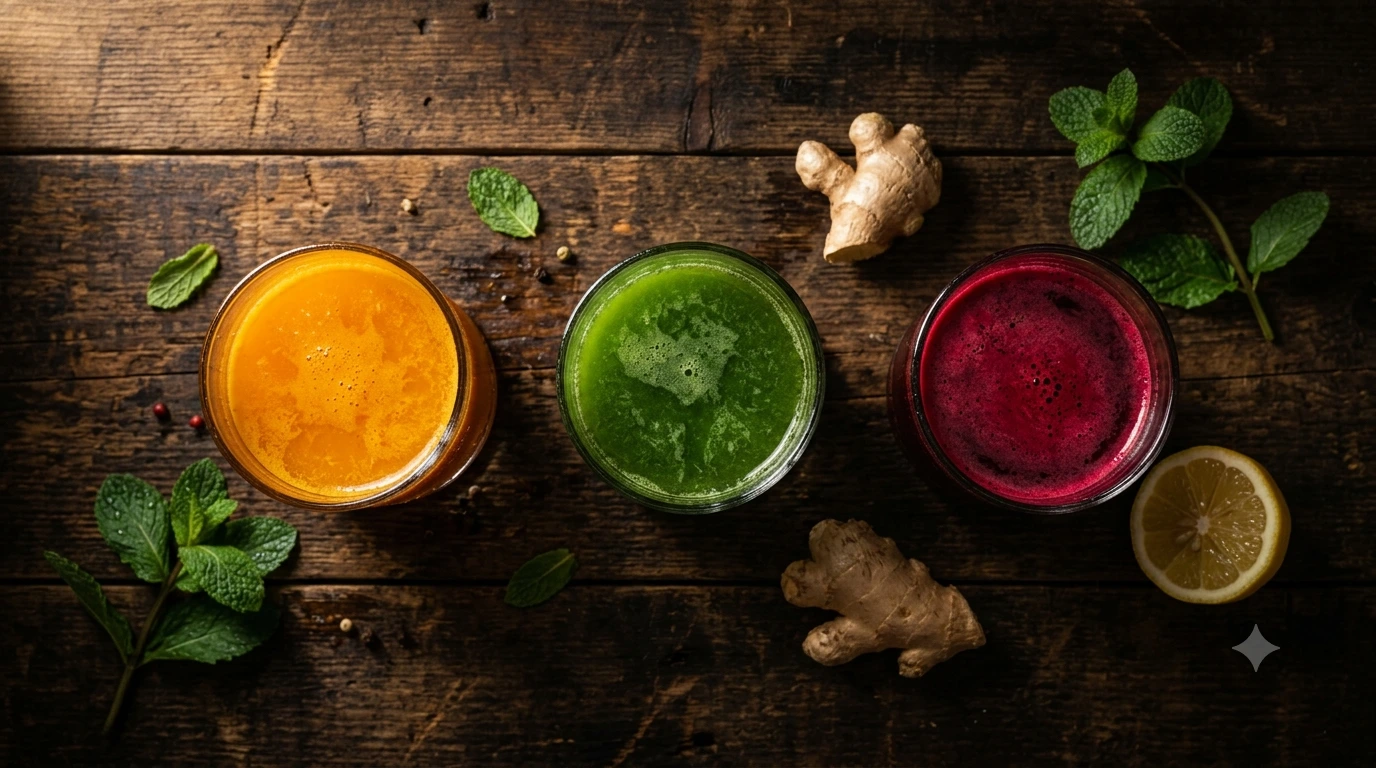
Turmeric Carrot Ginger Juice
Ingredients
Method
- Step 1: Wash and prep all produce, peeling the carrots, turmeric, ginger, and lemon.Step 2: Run the carrots, turmeric, ginger, apple, and lemon through a juicer.Step 3: If using a blender, blend all ingredients with 1/2 cup water, then strain through a nut milk bag or fine mesh strainer.Step 4: Stir well and pour into a glass over ice if desired.Step 5: Drink fresh within 24 hours for best results.
3. Celery and Leafy Greens Juice
A hydrating, mineral-rich option known for its calming effect on digestion.
4. Beet, Lemon, and Ginger Juice
Rich in antioxidants, with a bright, tangy flavor from fresh lemon.
5. Pineapple and Turmeric Juice
Pineapple contains bromelain, an enzyme that may help support digestion.
6. Spinach, Pear, and Ginger Juice
A mild, naturally sweet green juice that’s easy to introduce if you’re new to juicing.
7. Carrot, Orange, and Turmeric Juice
A vitamin C-rich combination with a warm, slightly spiced flavor from turmeric.
Juicing Tips & Storage
- Drink fresh juice within 24 hours for the most nutrients, since juicing removes the fiber that normally slows nutrient breakdown.
- Store in an airtight glass container in the refrigerator to help preserve freshness.
- Add lemon juice to green juices to help slow oxidation and preserve color.
- Use a high-quality juicer or blender with a nut milk bag if you don’t own a dedicated juicer.
- Rotate recipes throughout the week to avoid palate fatigue and get a wider range of nutrients.
Building These Into Your Routine
You don’t need to juice every single day to notice a difference — start with two or three days a week and build from there. If you’re also focused on joint health, pair these juices with our 7 High Protein Anti Inflammatory Meals That Actually Fight Joint Pain.
According to Harvard Health, certain fruits and vegetables have measurable anti-inflammatory effects when consumed consistently as part of a balanced diet.
Frequently Asked Questions
Is juicing good for gut health?
Fresh juices made from anti-inflammatory ingredients like ginger, turmeric, and leafy greens can support digestion, though juicing removes fiber, so it works best alongside whole foods rather than as a replacement for them.
How often should I drink anti-inflammatory juice?
Many people start with 2-3 times per week and adjust based on how their body responds, rather than juicing daily right away.
Does turmeric juice really help inflammation?
Turmeric contains curcumin, a compound often associated with anti-inflammatory effects, though it’s absorbed better when paired with black pepper or a source of fat.
Final Thoughts
Supporting your gut doesn’t require an expensive juice cleanse or complicated ingredients. These anti-inflammatory juicing recipes for gut health are simple enough to fit into a busy week while still giving your digestion the support it needs.