Those pretty pink-purple blossoms dotting summer meadows are more than a lucky-charm hunt — red clover tea benefits have made this humble flower a women’s-wellness staple for generations. Brewed from the dried blossoms of Trifolium pratense, red clover tea is caffeine-free, gently sweet, and rich in plant compounds called isoflavones. Here are seven gentle reasons women have brewed it for centuries — with the evidence kept honest, a simple recipe, and the safety notes that matter most.
What Is Red Clover Tea?
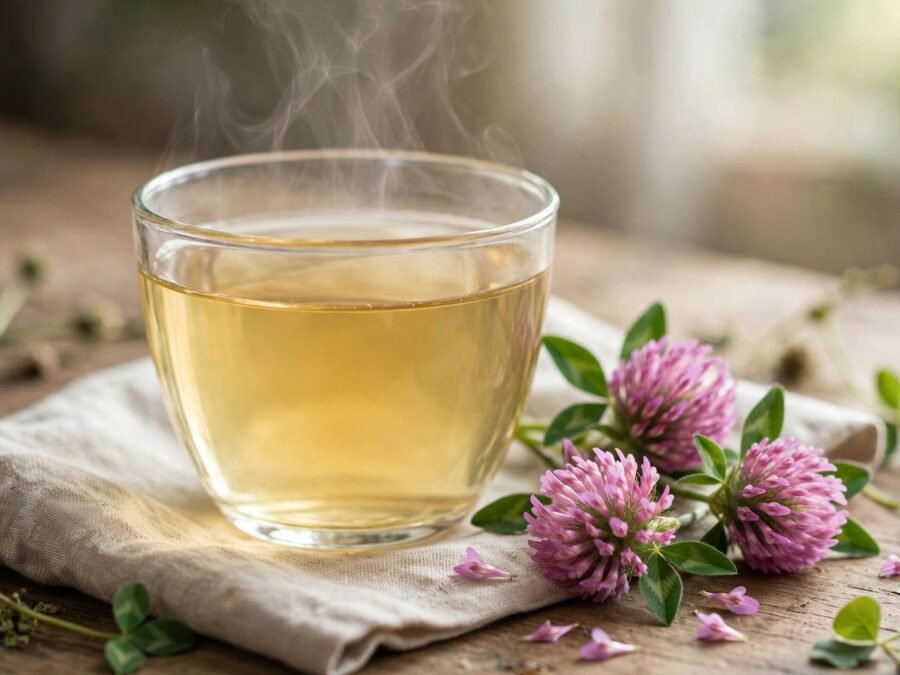
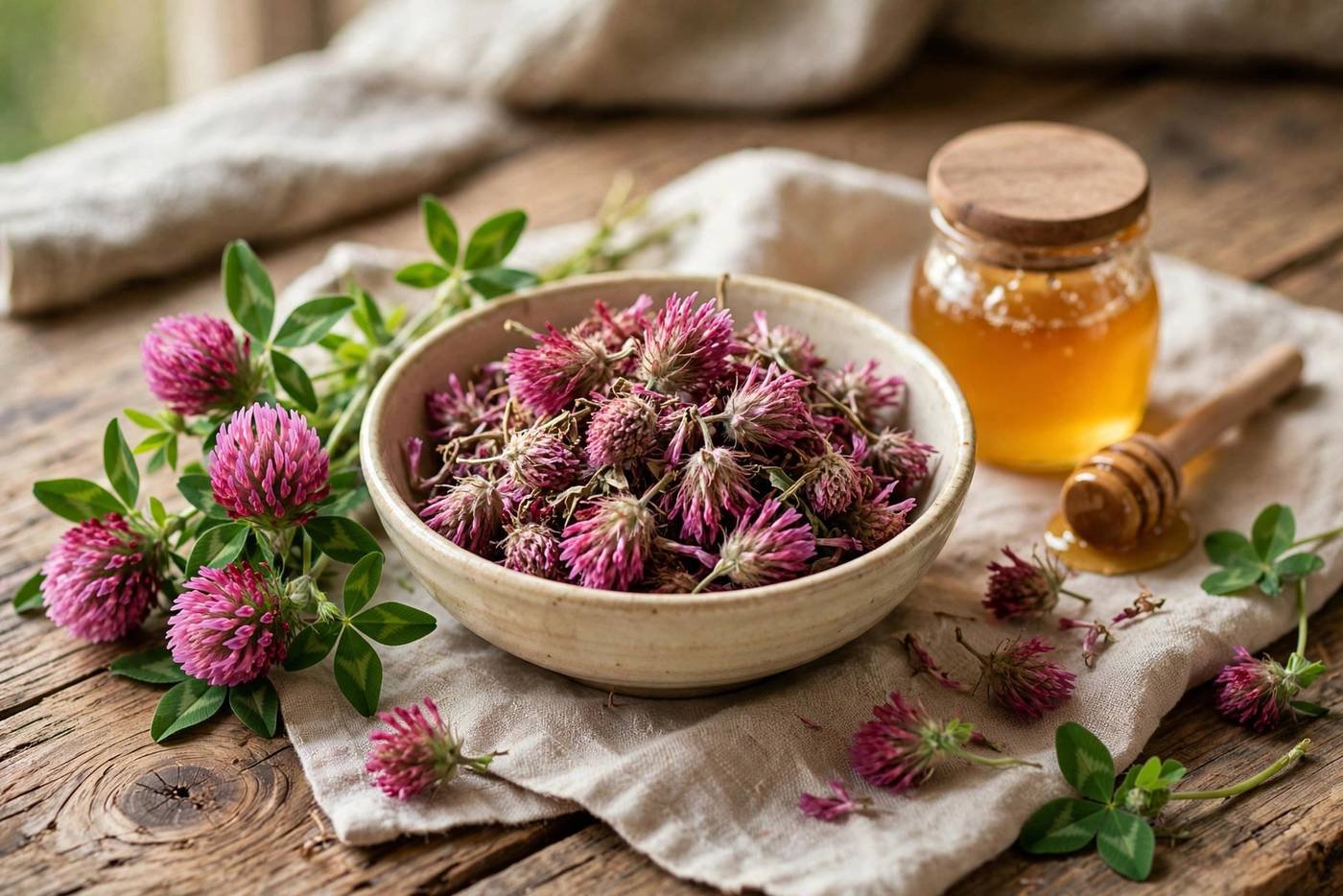
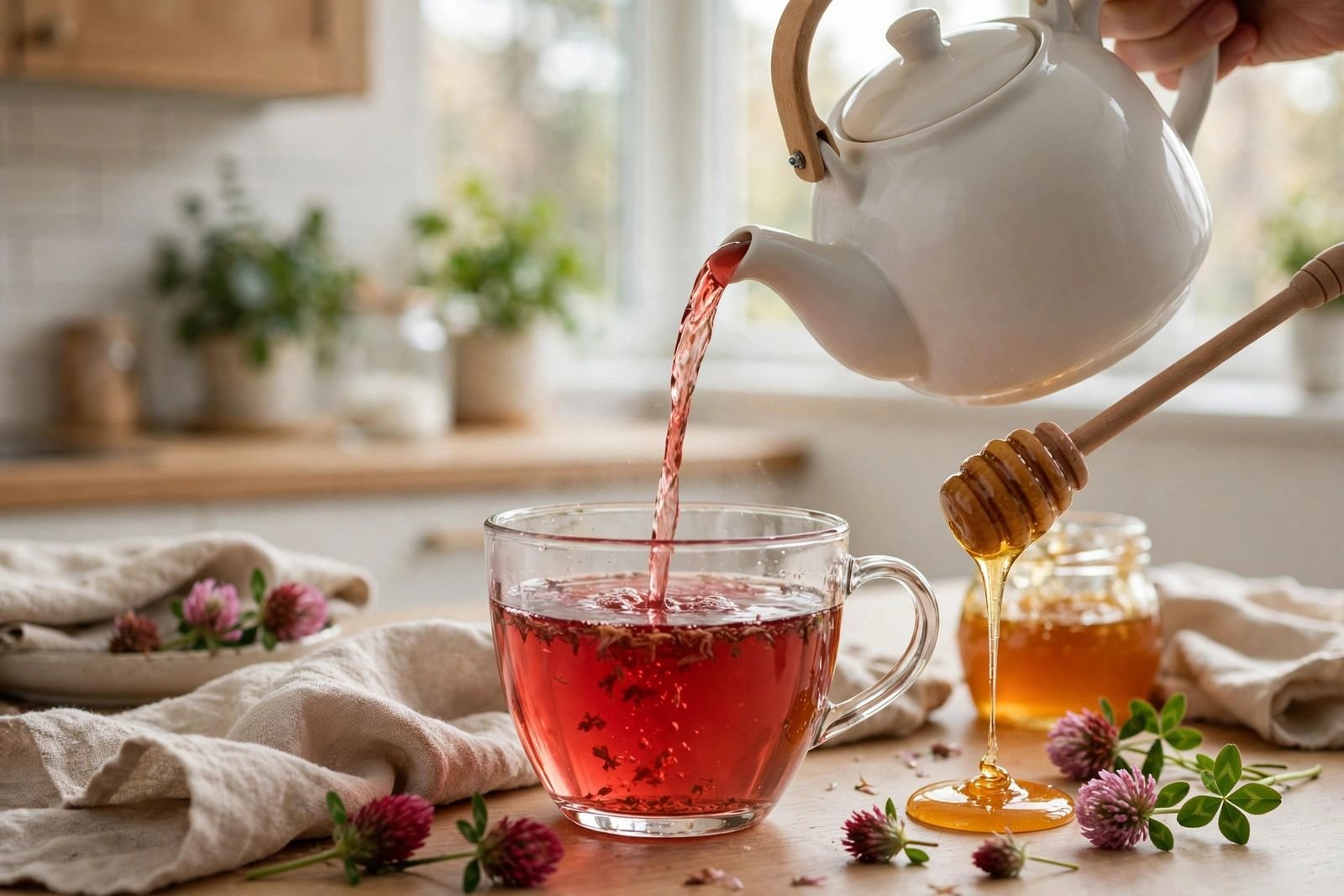
Red clover (Trifolium pratense) is a perennial herb in the pea and bean family, native to Europe and Asia and now widespread in North America. The tea is made by steeping its dried pinkish-purple flower heads — it brews into a pale golden cup with a delicate, lightly sweet, hay-and-honey flavor.
What sets it apart: red clover is naturally rich in isoflavones, plant compounds that act as phytoestrogens (they can weakly mimic estrogen in the body). That single fact explains both its traditional popularity for women’s health and its most important safety cautions. Memorial Sloan Kettering Cancer Center notes it has been traditionally used for skin conditions, whooping cough, and menopausal symptoms alike.
7 Red Clover Tea Benefits Worth Knowing
1. Traditionally brewed for menopause comfort
This is red clover’s headline act. Its isoflavones are the reason generations of women sipped it through hot flashes and night sweats. The honest science: Memorial Sloan Kettering reports that clinical data show red clover isoflavone supplements improve menopausal symptoms compared with placebo — but systematic reviews are mixed. A brewed cup is far milder than a concentrated supplement, so think “gentle traditional support,” not treatment.
2. May help maintain bone mineral density
When estrogen dips after menopause, bones can thin. MSK notes a trial in which a red clover extract rich in isoflavones attenuated bone mineral density loss in osteopenic postmenopausal women and improved bone turnover markers. Again, that was an extract — tea is gentler — but it is a genuinely interesting thread of research, not folklore.
3. Plant compounds linked to heart-friendly effects
A meta-analysis of a standardized red clover extract suggested potential reductions in total cholesterol in peri- and postmenopausal women — though the studies were heterogeneous, per MSK. Red clover also contains beta-sitosterol, a plant sterol associated with modest cholesterol support. Soft, early, and worth knowing — not a reason to skip prescribed cholesterol care.
4. Rich in antioxidant isoflavones
Beyond their estrogen-like activity, red clover’s isoflavones (including formononetin and biochanin A) act as antioxidants. Lab research has even explored neuroprotective and skin-collagen effects of isoflavone-enriched extracts. For a simple flower tea, that is an impressive phytochemical resume — even if most dramatic findings come from extracts, not cups.
5. A traditional skin soother, inside and out
Folk herbalism used red clover for psoriasis, eczema, and irritated skin — traditionally both as tea and as creams or ointments. Modern evidence for the tea specifically is thin, but its anti-inflammatory plant compounds make the tradition plausible. If breakouts or stressed skin are your concern, it is a gentle addition to a skin-friendly routine, not a cure.
6. A naturally sweet, caffeine-free daily ritual
Unlike many medicinal-tasting herbs, red clover tea is genuinely pleasant — lightly sweet with honeyed notes, needing little or no sweetener. As a caffeine-free infusion it fits anywhere in the day, and simply replacing a sugary afternoon drink with it is a small win on its own.
7. A mineral-containing herbal infusion
Red clover blossoms contain small amounts of calcium, magnesium, potassium, phosphorus, and vitamin C. A cup of tea won’t replace a balanced diet, but as part of a nutrient-rich routine — alongside mineral-rich foods — every little bit counts.
How to Make Red Clover Tea
Simple Red Clover Blossom Tea
Prep: 2 min | Steep: 10–15 min | Servings: 1 cup (up to 1–3 cups daily)
Ingredients:
- 1–2 teaspoons dried red clover blossoms (or 1 tea bag)
- 8 oz hot — not boiling — water
- 1 teaspoon raw honey or a slice of lemon (optional)
Steps:
- Place the blossoms in a cup or teapot.
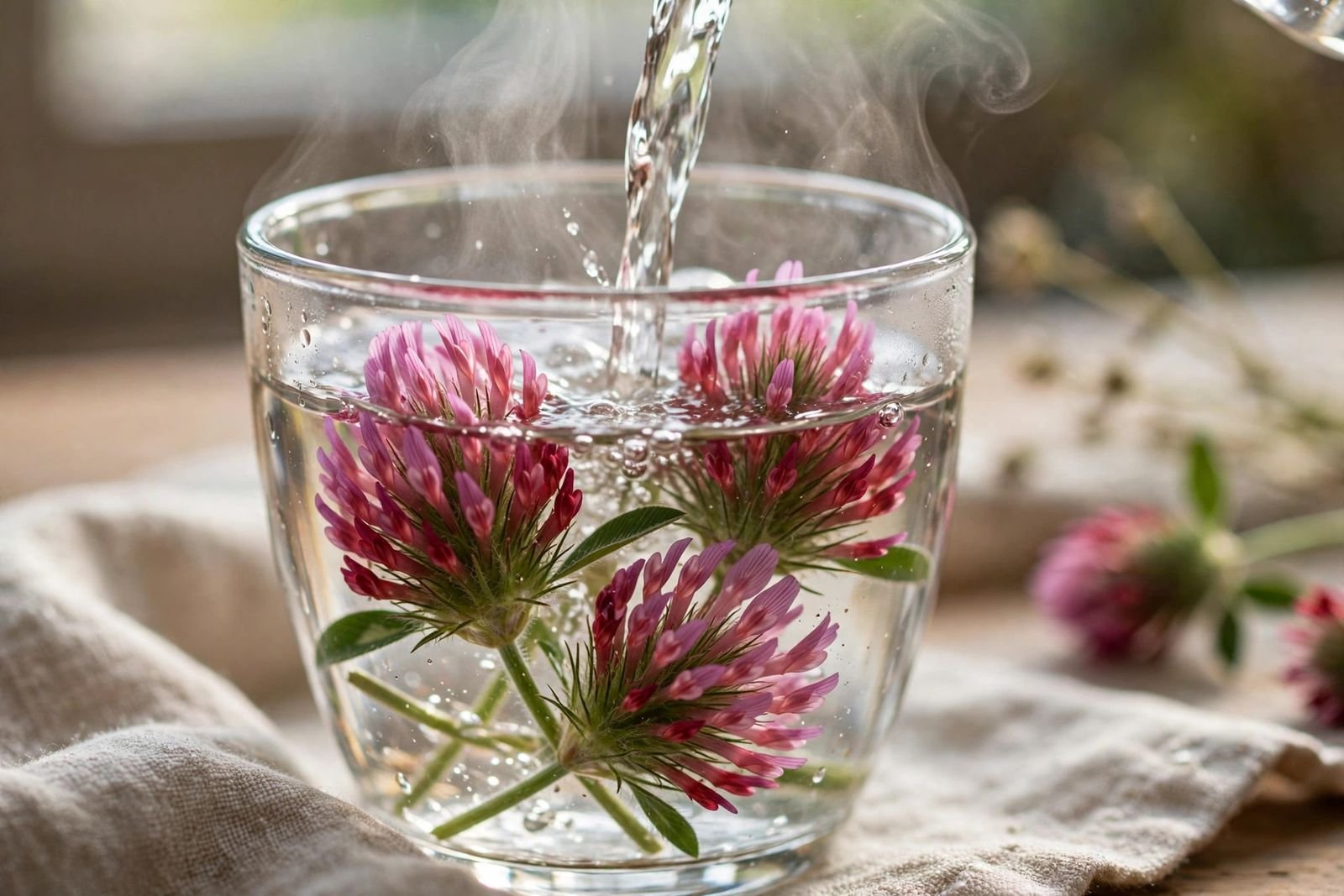
- Pour hot water over them and cover to trap the delicate volatile oils.
- Steep 10–15 minutes, then strain.
- Sweeten lightly if you like — the blossoms are already gently sweet.
Variation: For a “women’s wellness” evening blend, mix red clover half-and-half with raspberry leaf tea — another traditional women’s herb with a complementary flavor.
Red Clover Tea vs. Raspberry Leaf Tea: What’s the Difference?
Both are traditional women’s herbs, but they are not interchangeable. Raspberry leaf tea is the classic pregnancy and uterine-toning herb (traditionally used in later pregnancy), with a bolder, more tannic black-tea-like flavor. Red clover is the menopause-era herb — milder, sweeter, and centered on isoflavones rather than uterine toning. Many women drink raspberry leaf in their younger years and graduate to red clover later; some blend the two. If pregnancy is on your mind, read our raspberry leaf guide instead — red clover is not the pregnancy herb (see safety below).
Safety First: Who Should Skip It or Ask a Doctor
Because red clover’s isoflavones act like weak estrogen, this section matters more than usual:
- Avoid if pregnant or breastfeeding — Memorial Sloan Kettering advises it may not be safe.
- Hormone-sensitive conditions: if you have or had an estrogen-sensitive cancer (like some breast cancers), avoid red clover — it may worsen the condition. Talk to your oncologist.
- Blood thinners: red clover may increase bleeding risk with warfarin and similar drugs. Tell your doctor.
- Surgery: stop at least 2 weeks beforehand because of bleeding risk.
- Hormone medications and birth control: check with your doctor or pharmacist about interactions.
- Long-term safety is unknown — use it as a seasonal or cycled habit, not a permanent one, unless your clinician advises otherwise.
- Men: traditional guidance often suggests men go easy on phytoestrogen-rich herbs; a casual cup is fine, daily heavy use deserves a doctor’s input.
Read Memorial Sloan Kettering’s full red clover herb monograph before making it a habit — it is one of the most careful summaries available.
FAQs About Red Clover Tea
What does red clover tea taste like?
Delicately sweet with hay-and-honey notes — one of the most pleasant-tasting medicinal herbs, needing little sweetener.
How much red clover tea can I drink daily?
Traditional use is 1–3 cups daily. Because long-term safety data are limited, many herbalists suggest cycling (a few weeks on, a break) rather than year-round daily use.
Can red clover tea help hot flashes?
Supplement trials show improvement over placebo, but reviews are mixed — and tea is milder than supplements. It may gently support comfort as part of a broader menopause plan; talk to your doctor about persistent symptoms.
Is red clover tea safe during pregnancy?
No — avoid it while pregnant or breastfeeding, and skip it if you have a hormone-sensitive condition, unless your doctor specifically approves.
Can men drink red clover tea?
An occasional cup is fine, but its phytoestrogen content means men should avoid heavy daily use without medical guidance.
Building a women’s-wellness tea shelf? Pair this with our lemon balm tea guide for calm, chamomile for sleep, and elderberry tea for the immune season.