Echinacea Tea Benefits: 7 Honest Facts Before You Brew Your First Cup
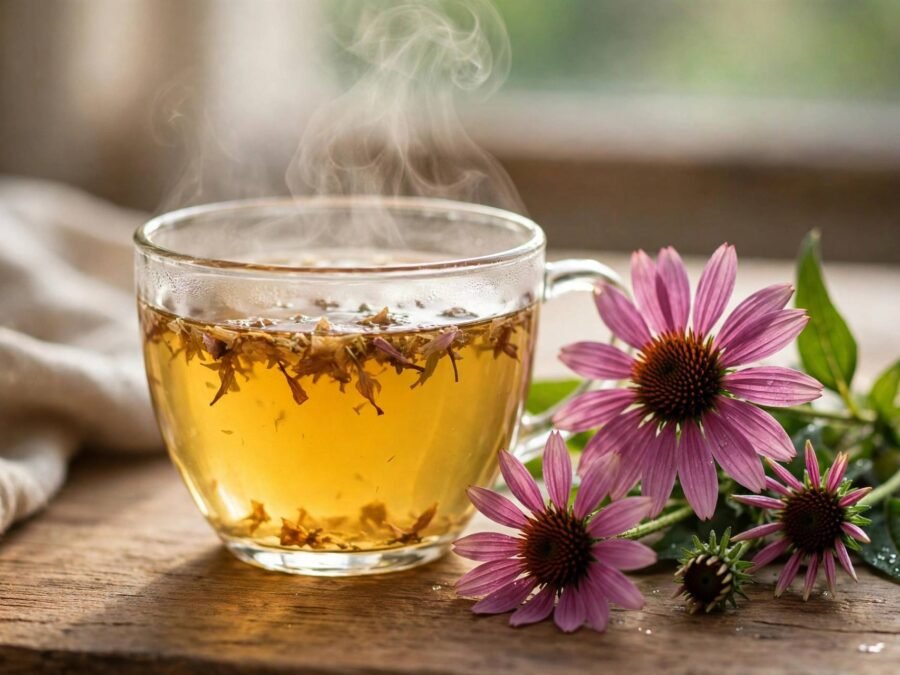
When cold season arrives, echinacea tea is one of the first cups people reach for. It is caffeine-free, floral, and has a long history as a cold-season herb — but the science behind it is far more mixed than most tea blogs admit. Echinacea tea benefits are real in one narrow sense and unproven in several others, and knowing the difference is what makes this brew worth drinking.
This guide sticks to what the strongest reviews actually found: a possible small effect on catching colds, weak evidence for treating a cold once it starts, and a safety list that matters more than any benefit claim. No miracle cures, no “immune-boosting” promises — just the honest picture, plus how to brew a good cup.
What Is Echinacea Tea?
Echinacea, also called purple coneflower, is a perennial plant native to areas east of the Rocky Mountains in the United States, and closely related to sunflowers, daisies, and ragweed. Its common names include purple coneflower, coneflower, and American coneflower, and the three Latin names you will see on labels are Echinacea purpurea, Echinacea angustifolia, and Echinacea pallida. (NCCIH)
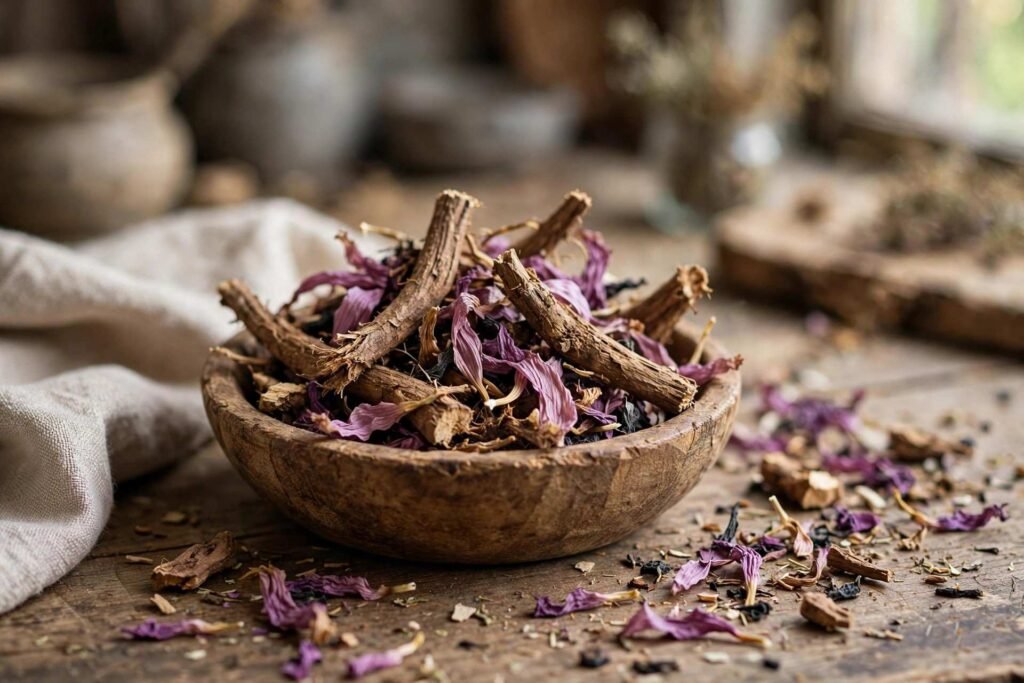
Echinacea tea is usually made from the dried root, leaves, flowers, or a blend of them, either as loose tea or in a tea bag. That detail matters more than most drinkers realise: echinacea products vary widely in species, plant part, and preparation, and trials have varied just as widely — which is a large part of why the evidence looks so mixed. (NCCIH)
Traditionally, E. purpurea was used by Native Americans in North America for respiratory tract infections, tooth pain, and snakebite. Today echinacea products are mainly promoted for the common cold and other respiratory infections, on the idea that certain species may stimulate the immune system. (NCCIH) Tradition is not proof, but it explains why this plant, and not dozens of others, became the cold-season default.
7 Honest Facts About Echinacea Tea
1. It May Slightly Lower Your Chance of Catching a Cold — But Only Slightly
This is the strongest claim echinacea can honestly make, and it is still a modest one. The National Center for Complementary and Integrative Health (NCCIH) states that taking echinacea may slightly reduce your chances of catching a cold, while noting that more research is needed to confirm the finding. (NCCIH)
The picture behind that sentence is worth knowing. A 2014 Cochrane review of 24 double-blind randomised controlled trials involving 4,631 participants concluded that echinacea products have not been shown to provide benefits for treating colds, and that results of individual prevention trials consistently showed positive but not significant trends, of questionable clinical relevance. (NCCIH) In plain terms: the trend points in a helpful direction, but no single prevention trial on its own proved it.
A 2016 systematic review and meta-analysis found that echinacea might have a preventative effect on upper respiratory tract infections, but it was unclear whether the effect was clinically meaningful, and there was no evidence that it changed how long infections lasted. (NCCIH) So if you drink echinacea tea hoping never to catch a cold, you will be disappointed. If you drink it as a small, plausible nudge during cold season, that matches the evidence.
2. It Has Not Been Proven to Shorten a Cold Once You Have One
This is where most blogs overpromise — and where honesty is the point. NCCIH states plainly that it is still unclear whether echinacea can shorten the length of a cold. (NCCIH) The Cochrane review reached the same conclusion for treatment: although some preparations might be more effective than placebo, the overall evidence for clinically relevant treatment effects is weak. (NCCIH)
Some trials of alcoholic extracts or pressed juice from E. purpurea aerial parts, started early, reported symptom benefits — but not all showed even a trend. That inconsistency is why no honest guide can promise a cold ends sooner. At best, echinacea tea is a comfort drink with a possible small effect, not a treatment.
3. The Species and the Part of the Plant Matter — a Lot
Not all echinacea tea is the same tea. E. purpurea is the most studied species, and its root, leaves, and flowers can all end up in the cup — sometimes alone, sometimes blended, sometimes with other herbs such as lemongrass or mint. Because trials tested chemically different preparations, results cannot simply be pooled into one clean verdict, and most products on the shelf have never been tested in a clinical trial at all.
Practical takeaway: read the label. A tea naming Echinacea purpurea root or aerial parts is closer to what was studied than a blend hiding echinacea among a dozen herbs. If a brand claims a specific result, ask which preparation and trial — the honest answer is usually “none in particular.”
4. It Is a Naturally Caffeine-Free Evening Cup
Unlike true teas from the Camellia sinensis plant, echinacea tea contains no caffeine. That makes it a practical evening choice when you want something warm without risking your sleep — the same reason it pairs well with chamomile tea for sleep and lemon balm tea in a cold-season night routine. This is a fact about the drink itself, not a health claim, and it is one of the most reliable reasons to keep a box in the cupboard.
5. A Warm Cup Can Soothe a Sore Throat — as Comfort, Not Cure
Warm fluids, honey, and rest are the unglamorous backbone of cold care, and echinacea tea fits that role well. A hot, mildly floral cup with honey and lemon can feel soothing on a scratchy throat and makes drinking fluids more pleasant when you least feel like it. That comfort is real, even though it is not evidence that echinacea itself fights the virus.
Soothing a symptom is not treating its cause: a severe sore throat, high fever, or trouble breathing is a doctor visit, not a tea decision.
6. It Belongs in Short Courses, Not as a Daily Forever Habit
Echinacea is traditionally used for short periods — at the start of cold season, or for a week or two when colds are going around — rather than as an endless daily supplement. NCCIH notes that it is likely safe for most adults to consume E. purpurea extracts, and some mixtures of E. purpurea and E. angustifolia, for short periods of time. (NCCIH) There is no good evidence that drinking it every single day for months works better, and long, uninterrupted use is simply unstudied for tea.
A sensible rhythm is a box or two while colds circulate, then a break — the same short-course logic as elderberry tea in cold season.
7. What It Does Not Do Matters as Much as What It Might
NCCIH is explicit that it is unclear whether echinacea is helpful for other health conditions, including eczema, and that much less research has been done on echinacea for purposes other than colds and respiratory infections. (NCCIH) Claims you will meet online — that echinacea tea melts belly fat, detoxes the body, cures the flu, or replaces medicine — have no such backing and should be treated as marketing, not evidence.
The same applies to anxiety, skin, and urinary claims on smaller blogs: they rest on lab or animal work, traditional use, or single small studies — not human tea trials that would justify a benefit claim.
How to Brew Echinacea Tea
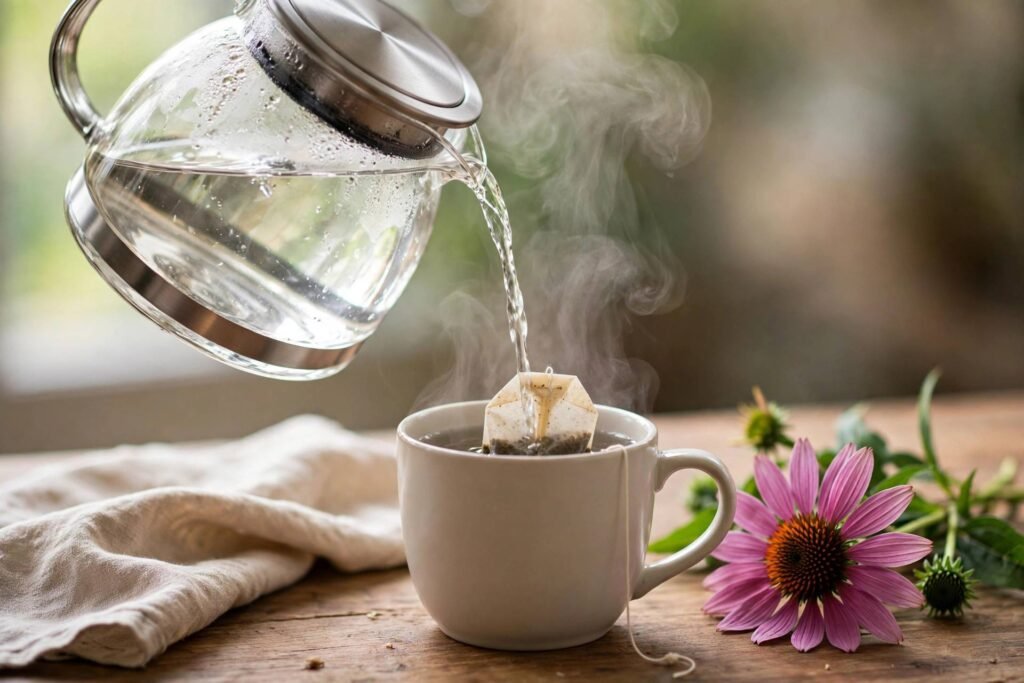
For a tea bag, pour freshly boiled water over the bag, cover, and steep for 10–15 minutes, then squeeze the bag gently before removing it — a longer steep than many herbal teas, because echinacea root in particular needs time to release flavour. For loose dried root, use about 1 teaspoon per cup, simmer gently for 10–15 minutes rather than just steeping, then strain. Leaf-and-flower blends need only a 10-minute covered steep.
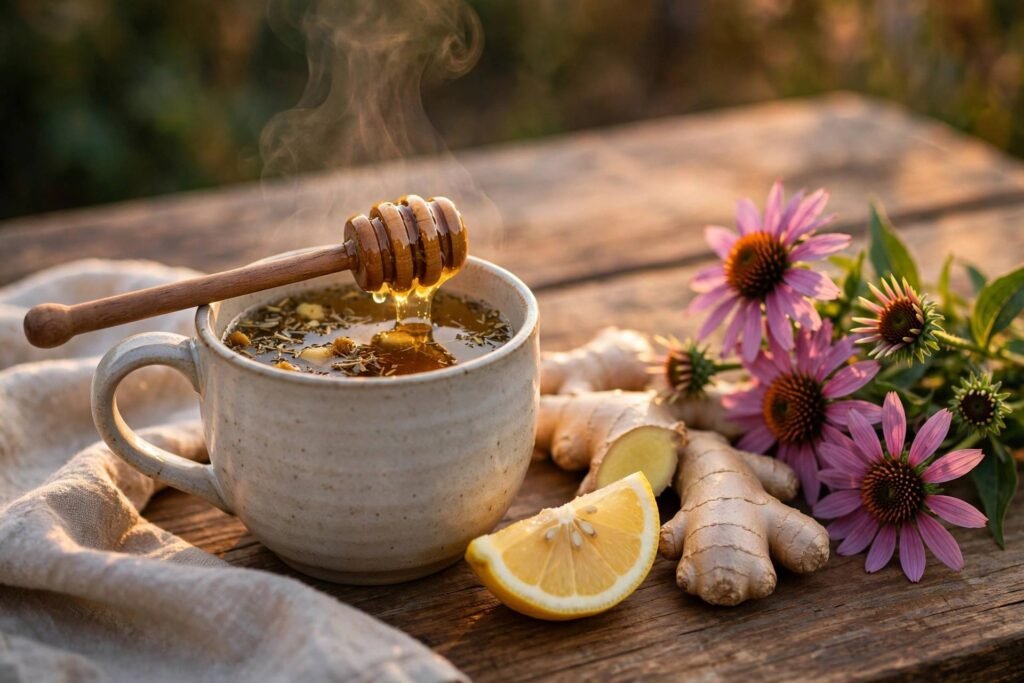
Taste-wise, echinacea tea is earthy and mildly floral, with a faint tingling sensation on the tongue that many drinkers notice — that tingle comes from the plant’s alkylamides and is normal, not a sign that something is wrong. Honey and lemon soften the earthiness; ginger adds warmth and pairs it with another cold-season staple, as in our drinking ginger tea every day guide. Drink 1–2 cups a day during a short course, and stop if you notice a rash, stomach upset, or any allergic symptom.
Safety: Who Should Skip Echinacea Tea or Ask First
Echinacea tea is likely safe for most adults for short periods, but the exceptions matter. Some people have allergic reactions to echinacea, which may be severe, and the most common side effects are digestive symptoms such as abdominal pain, nausea, or stomach pain. (NCCIH) Because echinacea is related to daisies and ragweed, anyone with an allergy to plants in the daisy (Asteraceae) family should be especially cautious. (NCCIH)
- Daisy-family allergy: if ragweed, daisies, marigolds, or chrysanthemums trigger you, try a tiny first cup and stop at any itching, swelling, or rash — or skip it entirely.
- Autoimmune conditions and immunosuppressants: there are theoretical reasons to suspect echinacea might interact with immunosuppressants, and conflicting evidence about liver-metabolised drugs. If you take any regular medicine, talk to your clinician first. (NCCIH)
- Pregnancy: some studies suggest solid or liquid extracts of E. purpurea and E. angustifolia are possibly safe for up to 7 days during the first trimester, but if you are pregnant, consult your health care provider before using it. (NCCIH)
- Breastfeeding: little is known about safety while breastfeeding — ask your clinician rather than assuming. (NCCIH)
- Children: it is possibly safe for children to consume E. purpurea extract for short periods, but some children in a clinical trial developed rashes that may have been allergic reactions, and reactions could be severe in some children. Talk to the child’s health care provider first. (NCCIH)
- Caffeine medicines: there are theoretical reasons to suspect echinacea might interact with caffeine — another reason to mention it to your clinician if you take caffeine-containing medicines. (NCCIH)
Also remember the regulatory reality: herbal products sold as dietary supplements are not approved by the U.S. Food and Drug Administration before sale, and manufacturers are responsible for their own safety and labelling. (NCCIH) Buy from brands that name the species and plant part, and avoid any product that promises to prevent or cure disease.
Echinacea Tea vs. Elderberry Tea: Which Cold-Season Cup?
Both are cold-season staples, but they are not interchangeable. Elderberry tea is built around the berry’s traditional use for flu-like symptoms and is usually simmered, while echinacea tea is built around the coneflower’s possible small preventive effect and is usually steeped or gently simmered from root and flower. Neither has been proven to cure a cold, and neither replaces rest, fluids, or medical care when symptoms are serious.
If you like a fruity, tart cup, elderberry suits you better; if you prefer an earthy, floral, caffeine-free evening cup, echinacea is the easier nightly habit. For a gentler evening rotation, peppermint tea and tulsi tea round out the same shelf.
Frequently Asked Questions
Does echinacea tea really work for colds?
Possibly, a little, for prevention — and not proven for treatment. NCCIH says it may slightly reduce your chance of catching a cold, but it is unclear whether it shortens a cold once you have one. (NCCIH) Treat it as a plausible comfort drink, not a proven cure.
How long should I drink echinacea tea?
Short courses are the traditional and best-studied pattern — a week or two when colds are circulating, not months on end. NCCIH describes short-term use as likely safe for most adults; long daily use of tea is unstudied. (NCCIH)
Can I drink echinacea tea every day?
For a short cold-season stretch, 1–2 cups a day is the common pattern. There is no evidence that daily use for months works better, so take breaks between courses and stop if you notice side effects.
Is echinacea tea safe in pregnancy?
Possibly safe for up to 7 days in the first trimester in studies of solid or liquid extracts, but the evidence is limited — consult your health care provider before using it while pregnant or breastfeeding. (NCCIH)
What does echinacea tea taste like?
Earthy and mildly floral, with a faint tingling on the tongue. Honey and lemon soften it; ginger adds warmth. Root-forward blends taste earthier than leaf-and-flower blends.
Is echinacea tea better than echinacea capsules?
Neither form has been proven better for colds, because trials tested many different preparations and most products were never tested at all. Tea has the advantage of warmth, fluids, and ritual; capsules have the advantage of a measured dose. Choose the form you will use consistently — and read the label either way.
The Bottom Line
Echinacea tea earns its place in the cupboard honestly: it may slightly lower your chance of catching a cold, it is caffeine-free and soothing, and it is likely safe for most adults in short courses. It does not cure colds, melt fat, detox anything, or replace medicine — and any blog that says otherwise is selling, not informing. Brew it when colds are going around, enjoy it for what it is, and keep your doctor, not your teapot, in charge of anything serious.
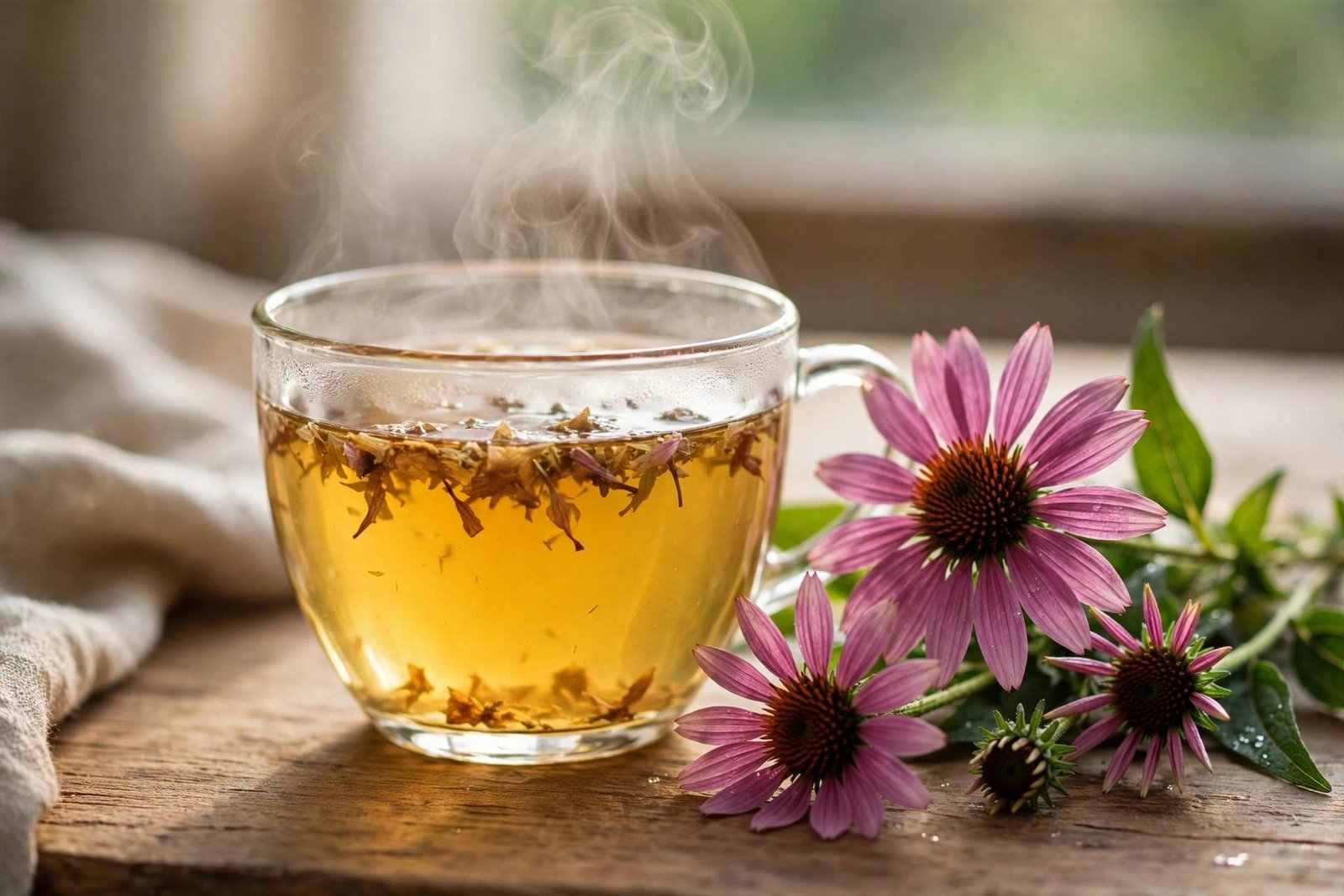
Simple Echinacea Tea
Ingredients
Method
- Place the dried echinacea root or tea bag in a cup.
- Pour over 1 cup of freshly boiled water, cover, and steep for 10–15 minutes (simmer loose root gently for 10–15 minutes instead of just steeping).
- Strain, or remove and gently squeeze the tea bag.
- Stir in honey and lemon to taste and serve hot.