
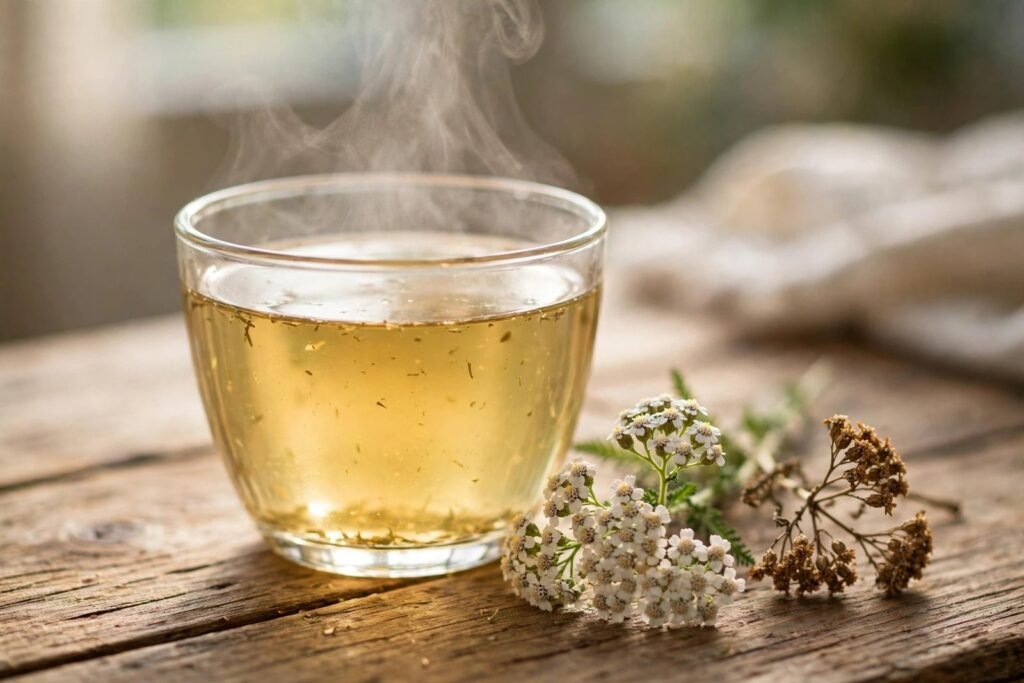
Yarrow Tea Benefits: The Ancient Wound Herb With One Real Trial — and a Pregnancy Warning
Yarrow tea benefits are easy to oversell and easy to dismiss, and most blogs do one or the other. Yarrow (Achillea millefolium) is a bitter, feathery herb with a long history — as a wound herb, a digestive bitter, and a menstrual herb — but its modern evidence is thin, and one traditional use is exactly why some people must not drink it at all.
What Is Yarrow Tea?
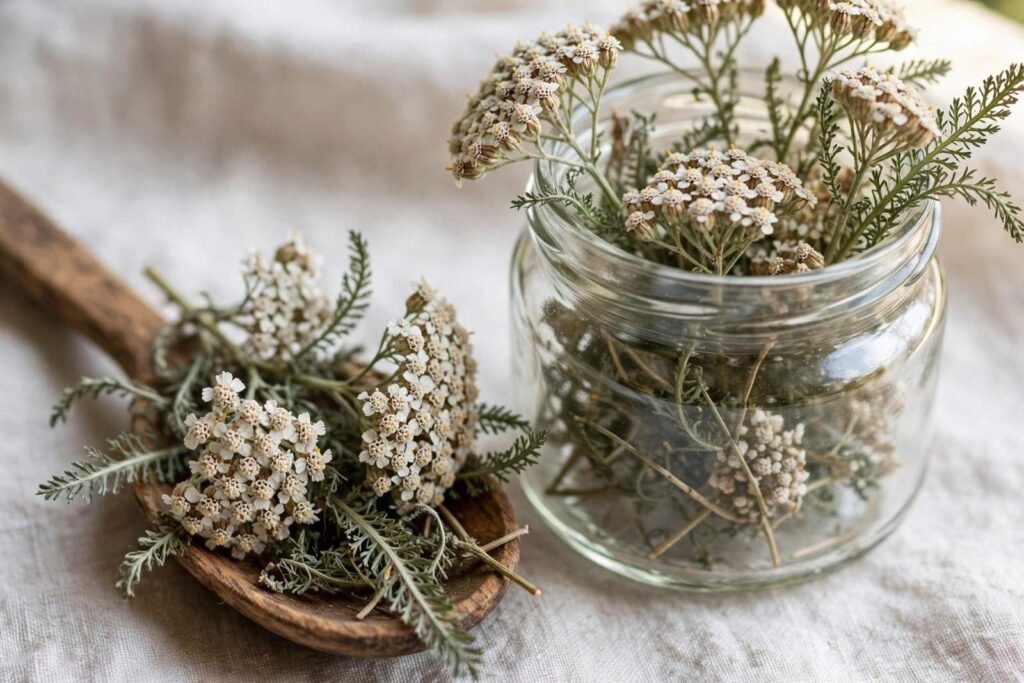
Yarrow is a hardy perennial in the daisy family (Asteraceae), with finely divided, fern-like leaves and flat-topped clusters of small white or pink flowers. Its Latin name nods to the legend that Achilles used it on his soldiers’ wounds — a story, not a study — hence the nicknames woundwort, milfoil, and staunchweed. Tea is made from the dried flowering herb: leaves, flowers, and stems, steeped in hot water.
That plant-part detail matters: yarrow products vary — herb, flower-only, extract, capsule — and trials tested different preparations. A result for an extract capsule is not automatically a result for your cup of tea.
The Honest Evidence Picture First
Here is the sentence that frames everything below. Europe’s herbal medicines committee (HMPC) lists four traditional indications for yarrow herb — temporary loss of appetite, mild spasmodic gut complaints including bloating and flatulence, minor menstrual spasm, and small superficial wounds — but explicitly on long-standing use, not clinical trials: it states there is insufficient evidence from clinical trials and no clinical studies with yarrow flower medicines available. (EMA) A standard drug reference is blunter: research reveals no clinical data regarding the use of yarrow to treat any medical condition. (Drugs.com)
That does not make yarrow tea useless — it makes it a traditional herb, not a proven treatment. The small trials that do exist are worth knowing precisely because they are small, and because one of them actually used tea bags.
7 Possible Benefits — Sorted by How Strong the Evidence Is
1. May ease menstrual cramp pain — the one trial that used tea
This is yarrow’s strongest, still modest, claim. In a double-blind randomised trial, female students with primary dysmenorrhea were given either placebo or A. millefolium in teabag form for 3 days across 2 menstrual cycles, and the pain-score improvement was significantly greater in the yarrow group at both 1 month (P = .001) and 2 months (P < .0001). (PubMed)
Keep it in proportion: it was one small, single-site trial in students, and a 2024 systematic review of yarrow for dysmenorrhea and menstrual bleeding found the included studies small with weak methods, so no definitive conclusion can be drawn. (Journal of Midwifery and Reproductive Health) Yarrow tea may help mild period cramps for some people; it is not a replacement for pain relief, and severe, new, or unusually heavy period pain needs a clinician, not a teapot.
2. May settle mild digestive grumbles — a traditional use, not a proven cure
Yarrow’s oldest internal use is as a bitter digestive tonic. The EMA lists mild, spasmodic gut complaints including bloating and flatulence among its traditional indications, based on long-standing use rather than trials. (EMA) The traditional explanation — bitter compounds stimulating bile flow — is plausible but not demonstrated for yarrow tea in a clinical trial.
Practically, this is the use most drinkers actually notice: a small bitter cup before or after a heavy meal, in the same family as dandelion tea, another bitter brew. If bloating is severe, persistent, or comes with vomiting, fever, black stools, or weight loss, that is not a tea situation — see a clinician.
3. May support appetite when it has temporarily gone missing
The EMA’s first traditional indication is temporary loss of appetite, again on long-standing use: yarrow’s bitterness is traditionally thought to wake up appetite before meals. (EMA) This is a narrow claim — a short-term nudge when appetite is briefly low — not a treatment for ongoing appetite or weight loss, which needs medical attention.
4. Wound care — but only on the skin, never by drinking the tea
This is the distinction most blogs blur, so be exact. The EMA’s wound indication is for a yarrow infusion applied to the skin for small superficial wounds — a traditional external use, not a claim that drinking tea heals wounds from inside. (EMA) The Achilles legend is about leaves pressed onto soldiers, not cups drunk afterwards. Do not drink yarrow tea to treat a wound, and do not put tea on a deep, infected, or slow-healing wound.
5. May comfort a cold or fever — as a hot, sweating-promoting drink, not a cure
Traditionally, yarrow tea drunk hot, while keeping warm, was used to promote sweating and ease the discomfort of a cold or fever — the classic diaphoretic use, often blended with peppermint and elderflower. (Healthline) No clinical trial shows yarrow tea shortens a cold or breaks a fever; the honest version of this benefit is comfort: a hot, bitter, aromatic cup, rest, and fluids. For that same cold-season shelf, elderberry tea is the fruitier companion brew — also unproven as a cure, also comforting.
6. Anti-inflammatory and antioxidant compounds — lab evidence only
Yarrow is rich in flavonoids such as apigenin and luteolin, and laboratory studies show anti-inflammatory and antioxidant activity for its extracts. The EMA assessment notes the same laboratory findings while stressing that no clinical studies with yarrow flower medicines are available. (EMA) Lab activity is a reason to keep studying a plant, not a reason to promise that a cup lowers inflammation in your body.
7. A genuinely caffeine-free evening cup
One claim needs no trial at all: yarrow is not Camellia sinensis, so yarrow tea contains no caffeine. That makes it a practical evening option when you want something warm without risking sleep — in the same caffeine-free corner as chamomile tea for sleep and lemon balm tea, though yarrow is far more bitter than either.
What Yarrow Tea Is Not
Four myths deserve a short, firm answer. Yarrow tea does not reliably stop heavy menstrual bleeding — the review evidence is small and weak, and heavy bleeding needs diagnosis, not a home brew. It does not detox or flush toxins; that language is marketing, not physiology. It does not replace painkillers, blood-pressure, or diabetes medicine; Drugs.com notes no clinical data for treating any condition. (Drugs.com) And it is not safe in pregnancy just because it is natural — pregnancy is the clearest reason not to drink it.
How to Brew Yarrow Tea
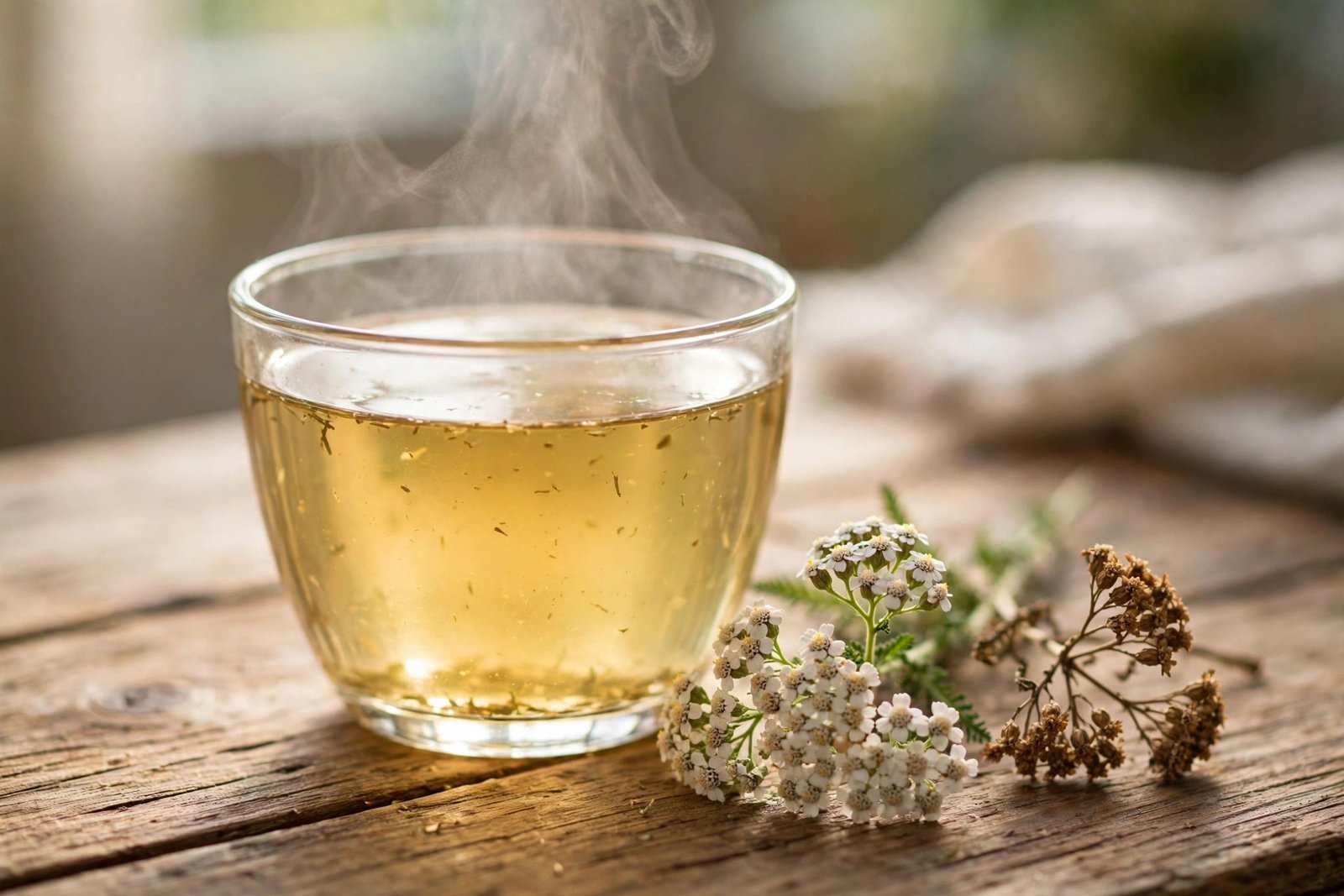
Use 1 teaspoon of dried yarrow herb per cup (roughly the lower end of the EMA’s traditional range of 2–4 g in 250 ml). Pour over freshly boiled water, cover the cup — covering keeps the volatile oils in — and steep for 10–15 minutes, then strain. Drink 1–2 cups a day for a short course, not as an endless daily supplement: the EMA advises seeking medical advice if gut or appetite complaints continue beyond 2 weeks, or menstrual spasm or wounds beyond 1 week. (EMA) For taste, blend with chamomile or peppermint, or add honey and lemon; peppermint tea is the traditional partner that suits the same digestive purpose.

Buy dried yarrow from a labelled source; do not harvest wild plants unless you can identify them with certainty. Try a half-strength first cup, and stop if you notice a rash, stomach upset, or any allergic symptom.
Simple Yarrow Tea
Ingredients
Method
- Add the dried yarrow herb to a cup or teapot.
- Pour over freshly boiled water and cover.
- Steep for 10–15 minutes.
- Strain and add honey or lemon if desired.
Safety: Who Should Skip Yarrow Tea or Ask First
Read this section before the first cup.
- Pregnancy — do not drink it. Yarrow is documented as an emmenagogue (stimulating menstrual flow) and abortive, and its volatile oil should be avoided during pregnancy. (Drugs.com) This is the single most important safety fact about yarrow, and any guide that lists menstrual benefits without it is incomplete.
- Breastfeeding: safety has not been established — ask your clinician rather than assuming a traditional herb is safe while nursing.
- Children under 12: the EMA does not recommend yarrow herb medicines for children under 12. (EMA)
- Daisy-family allergy: do not take yarrow if you are hypersensitive to yarrow or other Asteraceae (Compositae) plants such as daisies, ragweed, or chrysanthemums. (EMA) Contact dermatitis is the most commonly reported side effect. (Drugs.com) Prolonged use may also increase the skin’s sensitivity to sunlight, so note any new sun sensitivity and stop if it appears.
- Medicines: Drugs.com reports no interactions well documented, but that is absence of study, not proof of safety. (Drugs.com) Because yarrow traditionally affects menstrual flow and fluid balance, tell your clinician if you take blood thinners, blood-pressure or diabetes medicines, diuretics, or lithium, and mention it before any surgery.
- Epilepsy and liver or kidney disease: information on use in epilepsy is lacking, and safety in severe liver or kidney disease has not been established — ask first.
As with all herbal products, supplements are not approved before sale in the same way medicines are, so buy from brands that name the species (Achillea millefolium) and plant part, and avoid any product promising to prevent or cure disease.

Frequently Asked Questions
Does yarrow tea really help period pain?
Possibly, a little: one small teabag trial found significantly greater pain improvement than placebo over two cycles, but a 2024 review calls the overall evidence small and weak. (PubMed) Treat it as a traditional option for mild cramps, not a proven treatment.
Is yarrow tea safe in pregnancy?
No — avoid it. Yarrow is documented as an emmenagogue and abortive, and its volatile oil should be avoided during pregnancy. (Drugs.com)
Can I drink yarrow tea every day?
Short courses are the traditional pattern — a cup or two a day for days to a couple of weeks, not months on end. If gut or appetite complaints last beyond 2 weeks, or menstrual spasm beyond 1 week, seek medical advice. (EMA)
Does drinking yarrow tea heal wounds?
No. The traditional wound use is an infusion applied to the skin for small superficial wounds, not tea drunk for wound healing, and even that rests on long-standing use rather than clinical trials. (EMA)
Why does yarrow tea taste so bitter?
Its bitter sesquiterpene lactones are part of the plant’s traditional digestive action. Cover while steeping, then soften with honey, lemon, or a chamomile or peppermint blend — but expect bitterness to remain.
Yarrow tea earns its place on the shelf honestly: a bitter traditional herb with one small tea trial behind it, a genuine digestive and menstrual history, and a pregnancy warning that must travel with every recommendation. Brew it knowing exactly what it is — and what it is not.
For the other half of the classic ‘influenza tea’ blend, try elderflower tea alongside yarrow.


