
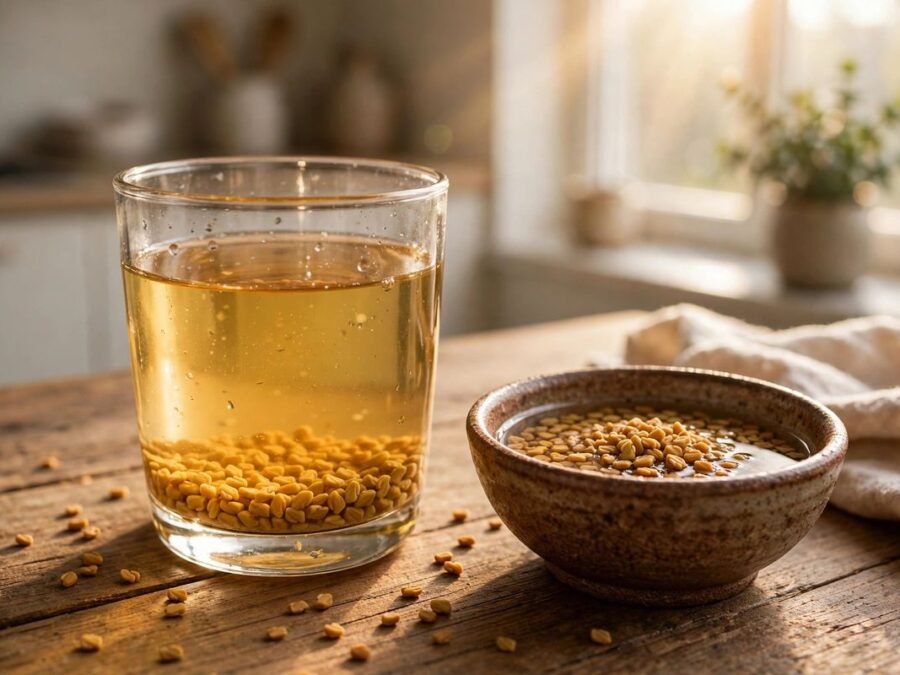
Fenugreek water benefits start with something wonderfully simple: a spoonful of tiny golden seeds soaked overnight. Known as methi water in South Asia, this humble morning drink has been a kitchen remedy for generations. If you’re curious whether methi water benefits like smoother digestion, steadier appetite, or shinier hair are real, this practical guide covers what it is, how to make fenugreek water two easy ways, nine possible benefits, and the safety notes that matter.
What Is Fenugreek Water (Methi Water)?
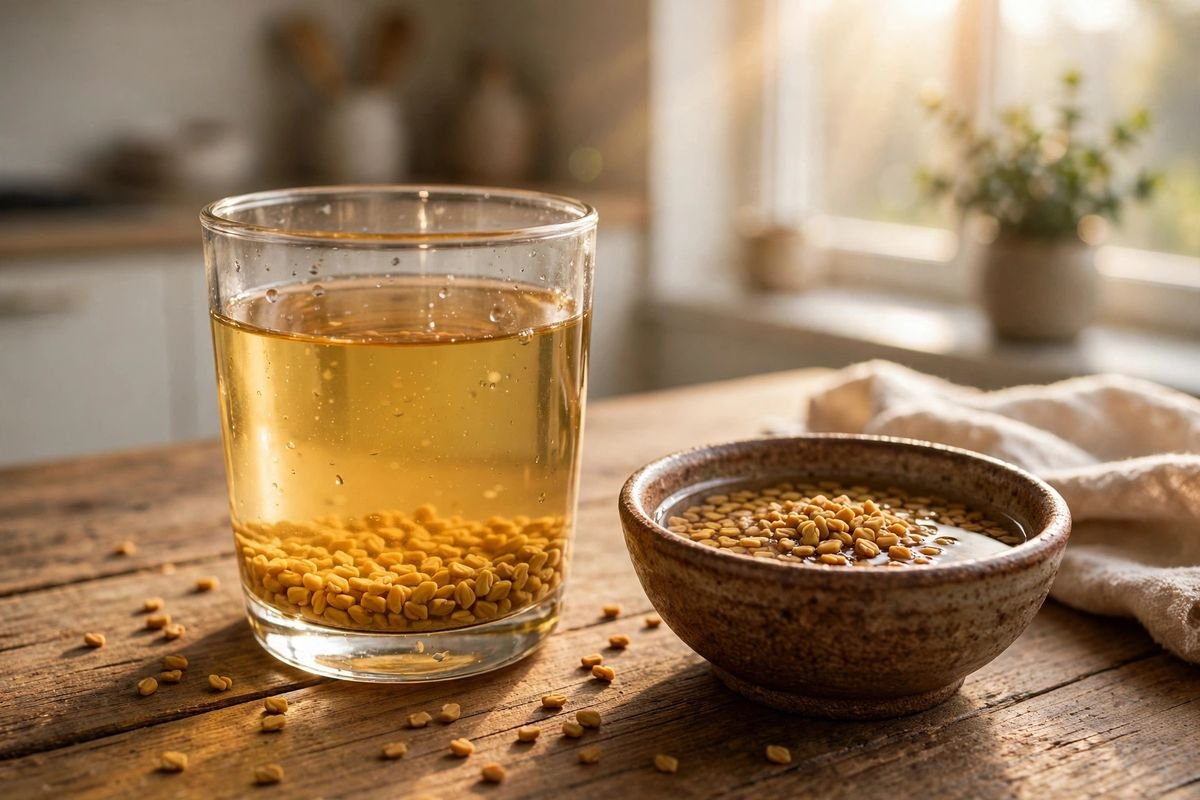
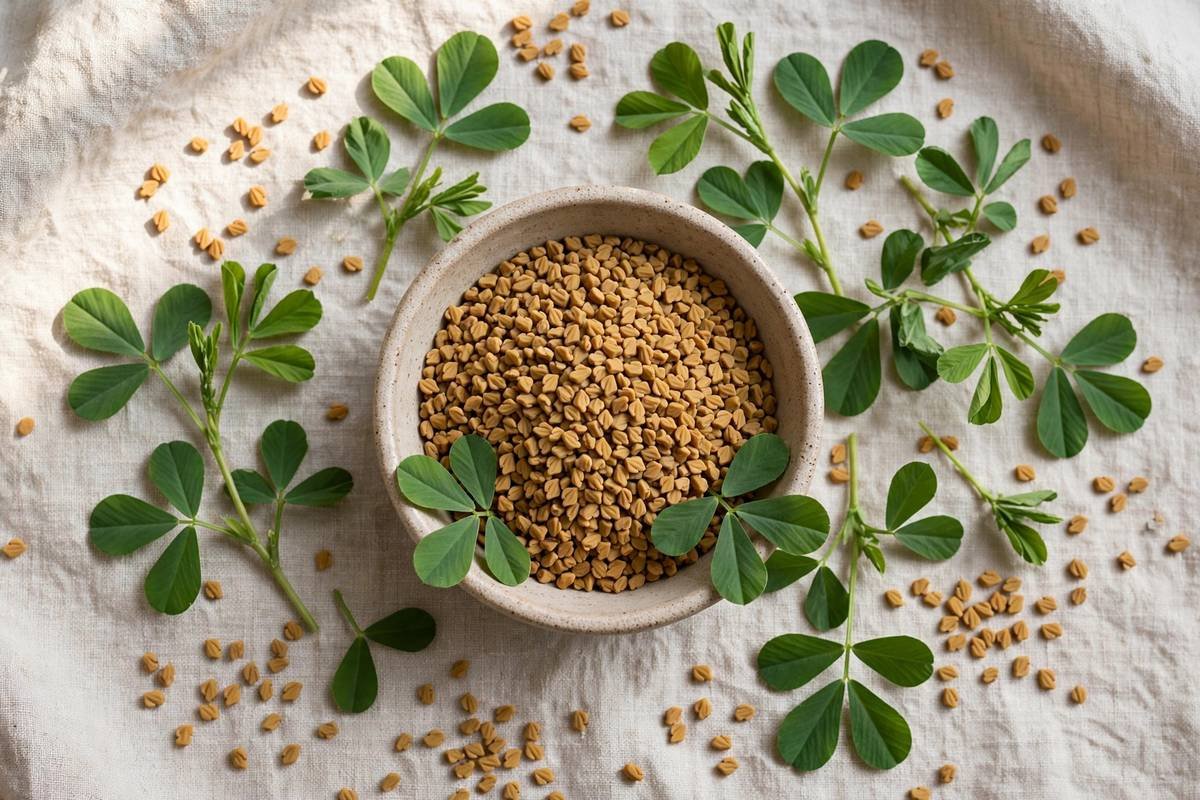
Fenugreek water is water in which fenugreek seeds (Trigonella foenum-graecum, called methi dana in Hindi and Urdu) have been soaked, usually overnight. The seeds — already a staple spice in South Asian and Middle Eastern cooking — release soluble fiber and plant compounds that turn the water pale gold and give it a slightly bitter, maple-like taste.
How to Make Fenugreek Water: 2 Easy Methods
Method 1: The Overnight Soak (traditional)
Overnight Methi Water
Prep time: 2 minutes | Soak time: 8–10 hours (overnight) | Servings: 1 glass per day
Ingredients
- 1 teaspoon whole fenugreek seeds (methi dana)
- 1 glass (about 250 ml) filtered water
- Optional: a squeeze of lemon or ½ teaspoon honey, added just before drinking
Steps
- Rinse the seeds quickly under running water.
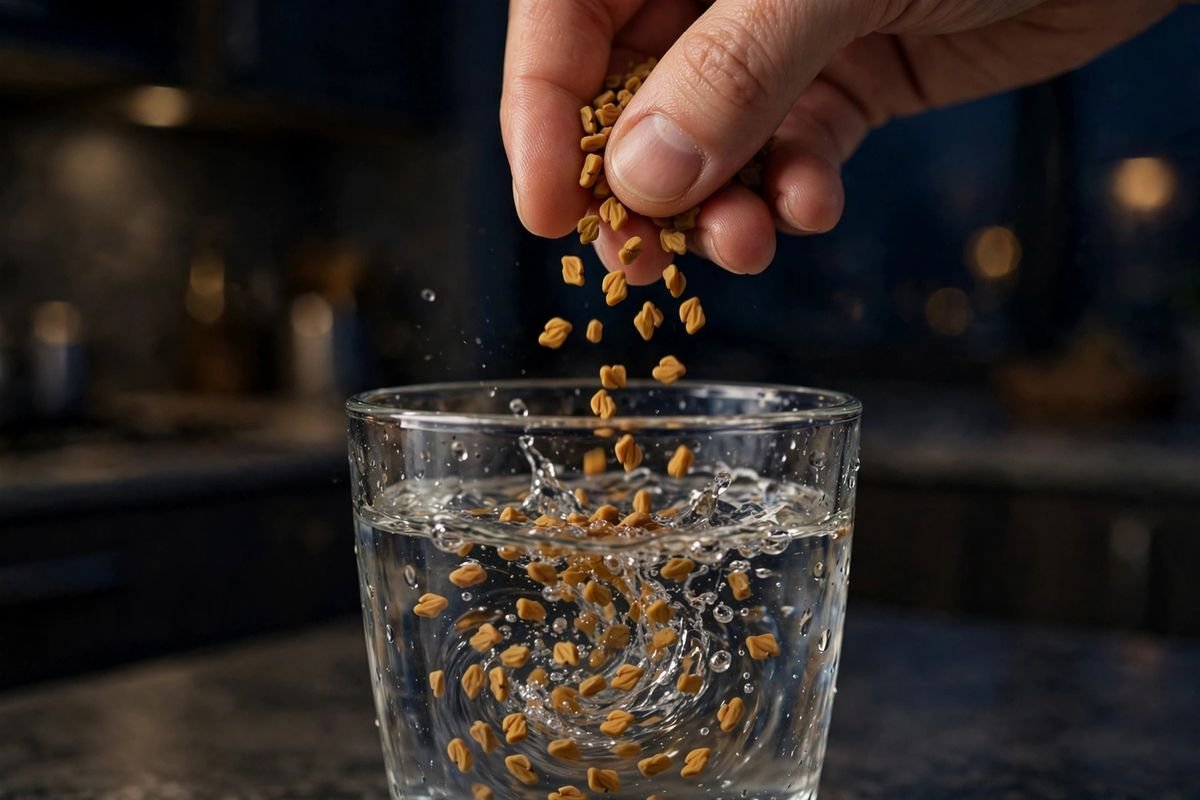
- Drop them into the glass of water and cover lightly.
- Leave on the counter (or in the fridge in hot weather) for 8–10 hours overnight.
- In the morning, strain the seeds out and drink the golden water on an empty stomach. The softened seeds are edible too — chew them, or blend a spoonful with yogurt for a scalp mask.
Method 2: The Quick Warm Method
In a rush? Add 1 teaspoon of seeds to a glass of warm (not boiling) water, cover, and let it sit 30–60 minutes. Strain and sip — milder than the overnight version, but a fine everyday fallback.
9 Fenugreek Water Benefits Worth Knowing
Most of what we know about fenugreek comes from studies on the seeds themselves rather than the water specifically — so think of the water as a gentle, low-dose way to get the seeds’ goodness. Here’s what traditional use and early research point to.
1. May support smoother digestion
Fenugreek seeds are rich in soluble fiber and mucilage, which form a soothing gel in the gut. This is why methi water benefits for digestion are the most talked-about of all: the fiber may help keep things moving and the mucilage is traditionally used to calm occasional acidity and heaviness. If bloating is your main complaint, try our ginger tea for bloating as an after-dinner companion.
2. May help with blood sugar balance
Fenugreek’s soluble fiber appears to slow how quickly carbohydrates are digested and absorbed, and the seeds contain a unique amino acid (4-hydroxyisoleucine) that researchers are studying for its effect on insulin sensitivity. Healthline’s overview of fenugreek summarizes the nutrition and blood-sugar research. Important: if you take diabetes medication, fenugreek can lower blood sugar further — talk to your doctor first.
3. May help curb appetite and support weight goals
The same soluble fiber that slows digestion also promotes fullness, which may naturally reduce snacking between meals. Think of methi water as a sensible add-on — not a magic fix — for mindful weight management alongside balanced meals and movement.
4. Traditionally used for healthier hair
In many South Asian households, soaked methi is a classic hair remedy: the softened seeds are ground into a paste and massaged into the scalp, traditionally believed to strengthen roots and add shine. Drinking methi water gives you the seeds’ nutrients from within, while the paste is the direct-use tradition.
5. May support clearer-looking skin
Fenugreek seeds contain flavonoid antioxidants and other plant compounds studied for their anti-inflammatory activity. Traditionally, fenugreek is used both internally and as a skin-soothing paste for minor irritation — and as part of a hydration-and-whole-foods routine, a daily glass is a reasonable supporting habit.
6. Traditionally used for women’s wellness
Fenugreek has a long history of use around menstrual comfort, and it is one of the most widely used traditional foods believed to support breast-milk production among nursing mothers. If you’re pregnant, nursing, or dealing with hormonal concerns, check with your healthcare provider before making it a daily habit.
7. May support heart-friendly habits
The soluble fiber in fenugreek may help bind cholesterol in the digestive tract, which is one reason researchers have looked at fenugreek for cholesterol support. Combined with its blood-sugar effects, methi water fits naturally into a heart-conscious morning routine.
8. Fits an anti-inflammatory lifestyle
Chronic, low-grade inflammation is linked to many modern health complaints, and fenugreek’s flavonoid antioxidants are being studied for inflammation-calming potential in lab and animal research. Human evidence is still early, but methi water sits comfortably alongside other gentle anti-inflammatory foods — and our turmeric tea recipe is another warming option in the same spirit.
9. A gentle, hydrating morning ritual
Sometimes the simplest benefit is the habit itself. A warm, purposeful glass of water before coffee encourages hydration and a few mindful minutes to start the day. If you enjoy comparing morning tonics, see how methi water stacks up against ginger lemon water.

How and When to Drink It
- Timing: First thing in the morning, on an empty stomach, about 20–30 minutes before breakfast.
- Amount: Start with ½–1 teaspoon of seeds per glass. Most traditional routines use about 1 teaspoon daily.
- Duration: Many people drink it daily for a few weeks, then take a short break. Consistency matters more than quantity.
Side Effects and Who Should Be Careful
Fenugreek water in small, food-level amounts is generally well tolerated, but skip the daily habit or get medical advice if any of these apply:
- Pregnancy: WebMD cautions that pregnant women should avoid fenugreek in amounts larger than those used in food, since it may stimulate uterine contractions. If you’re pregnant or trying to conceive, skip the daily drink or get medical clearance first. (See WebMD’s fenugreek safety page for details.)
- Blood-sugar and blood-thinning medications: Because fenugreek may lower blood sugar and slow blood clotting, it can interact with diabetes drugs and anticoagulants. Talk to your doctor if you take these.
- Allergies: People allergic to peanuts, chickpeas, or other legumes may react to fenugreek, which is in the same plant family.
- Digestion: Large amounts can cause gas or loose stools — another reason to start with a small dose.
The bottom line: this is a kitchen remedy, not a treatment. If you’re pregnant, nursing, managing a condition, or taking medication, check with your doctor before drinking methi water daily.
FAQs About Fenugreek Water
Can I drink methi water every day?
Most traditional routines use it daily — 1 teaspoon of seeds soaked overnight, strained and drunk each morning. Start small, watch how your body responds, and take a short break after a few weeks.
What is the best time to drink fenugreek water?
First thing in the morning on an empty stomach, about 20–30 minutes before breakfast.
Can I reuse the soaked seeds?
Once more for a weaker second glass — or chew them, or grind them into a hair paste. Nothing goes to waste.
Does fenugreek water really help with weight loss?
It may help you feel fuller and snack less thanks to its soluble fiber — but no drink melts fat on its own. Think of it as one supportive piece of a balanced eating and activity routine.
Is fenugreek water safe during pregnancy?
Best avoided as a daily concentrated drink — fenugreek in larger-than-food amounts may stimulate uterine contractions. Small culinary amounts in food are a different story. When in doubt, ask your doctor.
Related Morning Rituals You’ll Like
- Ginger Lemon Water Benefits — another zesty morning tonic
- Turmeric Tea Recipe — a soothing 10-minute golden brew
- Ginger Tea for Bloating — when digestion needs extra help
- Anti-Inflammatory Foods List — build your whole plate around calm
2 Comments