
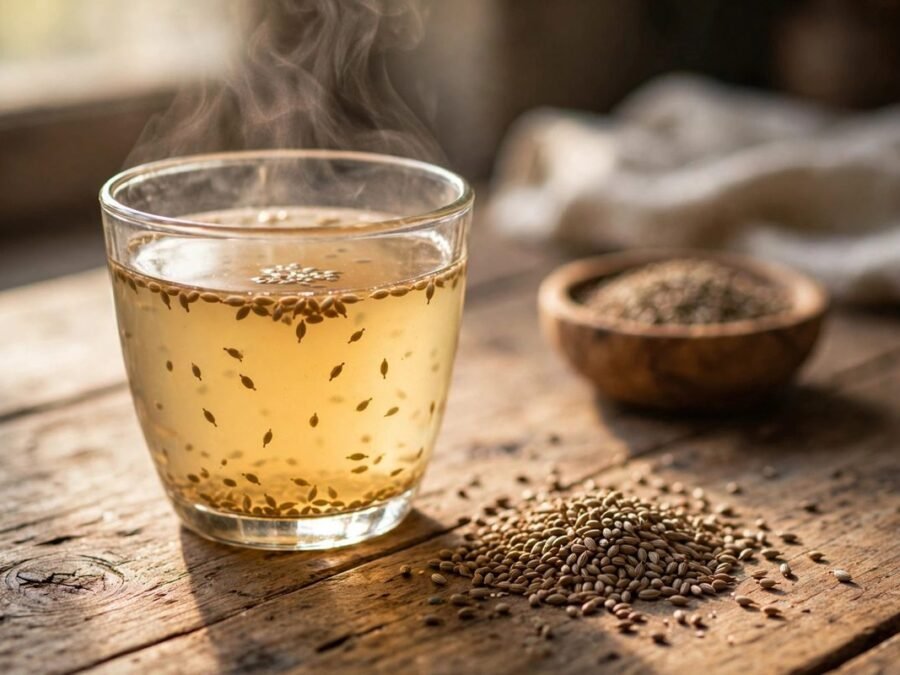
After a heavy meal, when your stomach feels tight and gassy, many South Asian kitchens reach for a small glass of something bitter and warming: ajwain water for digestion. Carom seeds — tiny, ridged, with a sharp thyme-like bite — have been brewed into a simple drink for generations, and this humble glass may be one of the easiest home remedies to add to your routine. Here’s how it may help, how to make it in five minutes, and who should sip with care.
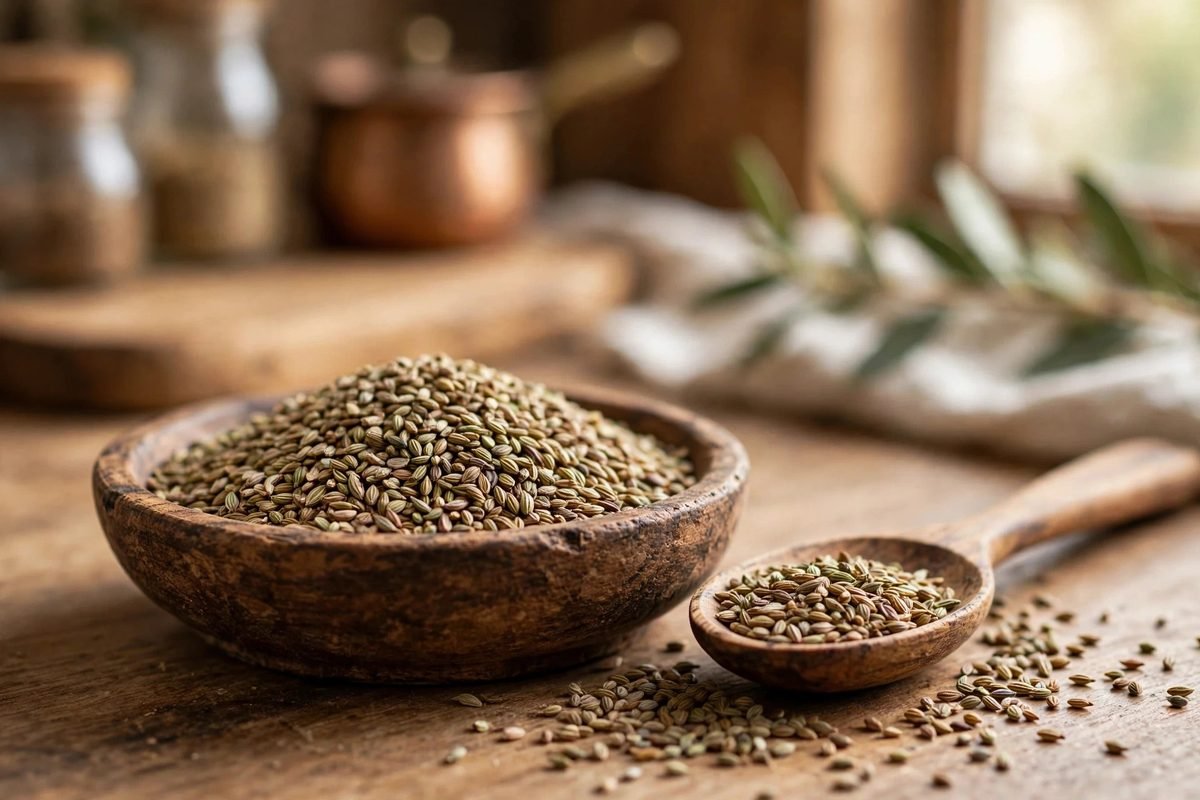
What Is Ajwain Water?
Ajwain (Trachyspermum ammi), also called carom seeds, is a spice from the same plant family as cumin and fennel. Ajwain water is simply these seeds steeped or boiled in water, then strained. It tastes warm, slightly bitter, and pungent — an acquired taste, but most people get used to it after a few sips.
Its character comes from thymol, the same aromatic compound found in thyme oil, which gives ajwain its sharp smell and much of its traditional reputation as a digestive aid.
How Ajwain Water May Support Digestion
Traditional use aside, there’s a plausible reason this remedy persists. A lab study on isolated intestinal tissue found that thymol-rich ajwain essence relaxed gut muscle contractions — a spasmolytic effect, which fits with the folk use for cramping and bloating. That said, this was tissue-level research, not a human trial on the drink itself, so think of the evidence as interesting rather than conclusive.
7 Ways Ajwain Water May Help Your Digestion
1. May ease bloating and trapped gas
Ajwain is traditionally classed as a carminative — a substance that helps the gut release trapped gas. A warm glass after a heavy meal may help you feel less puffed up.
2. May calm mild indigestion
That heavy, slow feeling after eating is what most people mean by indigestion. Ajwain water is traditionally sipped to nudge sluggish digestion along; if you relate, our peppermint tea benefits guide covers another classic after-meal option.
3. May soothe occasional stomach cramps
The muscle-relaxing action seen in lab research lines up with the traditional use of ajwain for mild abdominal cramping. Sip it warm and slowly — gulping rarely helps anything.
4. May help with acidity after rich meals
In many households, ajwain water is the go-to when fried or spicy food leaves a sour, burning sensation. Drink a small amount rather than a full tall glass — too much of a strong-tasting drink can itself feel heavy.
5. A gentle start for the morning gut
Drinking the overnight-soaked version on an empty stomach is a common morning habit, similar to other warm morning drinks like fenugreek water. It may help your digestive system wake up before breakfast.
6. May support more regular bowel movements
Warm water in the morning generally helps get things moving, and ajwain’s gentle stimulating quality is traditionally valued for sluggish digestion. If regularity is your main goal, fiber-rich foods matter more — see our anti-inflammatory breakfast ideas for practical options.
7. A warm, low-effort comfort ritual
Sometimes the ritual is the remedy: a warm drink, a pause, and a moment of calm can make a queasy stomach feel better on their own. Ajwain water costs almost nothing and takes minutes to prepare.
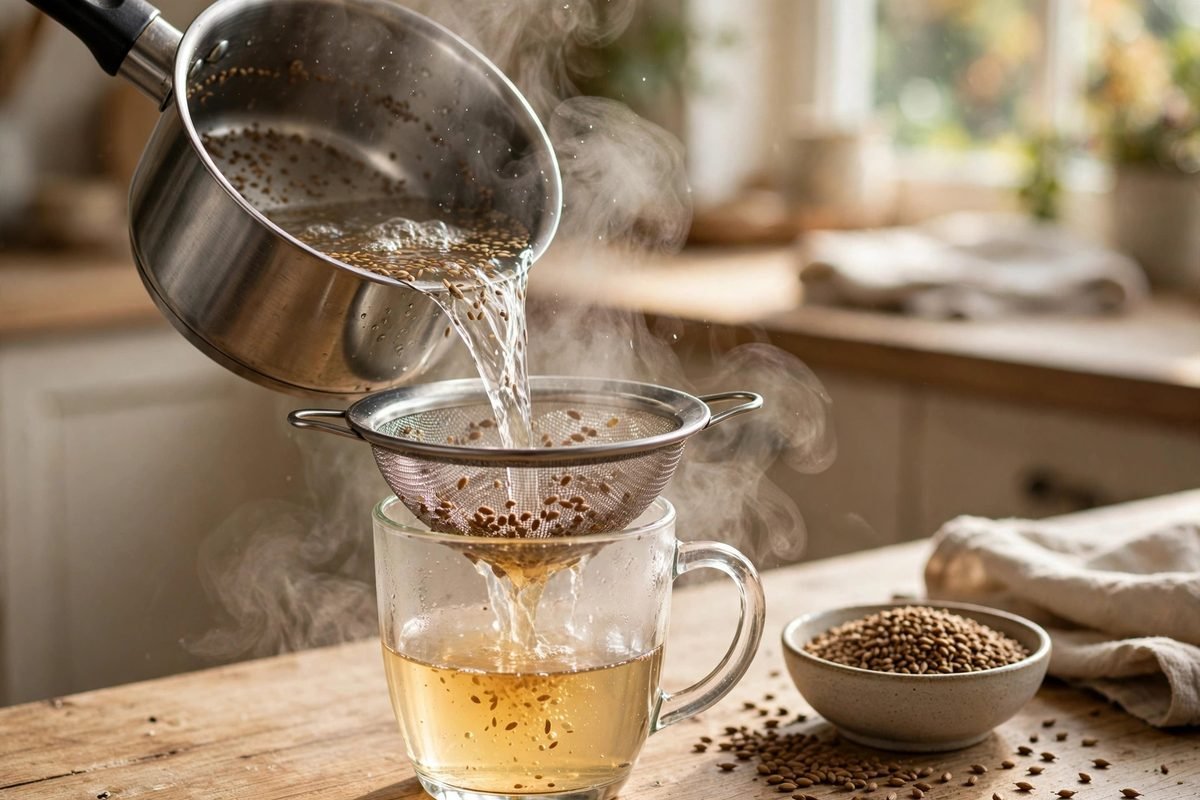
How to Make Ajwain Water (Two Simple Methods)
Both methods work; pick whichever fits your morning.
Method 1: Quick boiled ajwain water (5 minutes)
- Add 1 teaspoon of ajwain seeds to 1 cup (about 250 ml) of water.
- Bring to a gentle boil and simmer for 5 minutes.
- Take off the heat, strain through a fine sieve, and let it cool until comfortably warm.
- Sip slowly. Add a squeeze of lemon if the taste is too strong — but skip sweeteners if you’re drinking it for digestion.
Method 2: Overnight-soaked ajwain water (milder taste)
- Soak 1 teaspoon of ajwain seeds in a glass of room-temperature water overnight.
- In the morning, strain and drink on an empty stomach.
- This version is gentler in flavor and easier on sensitive stomachs.
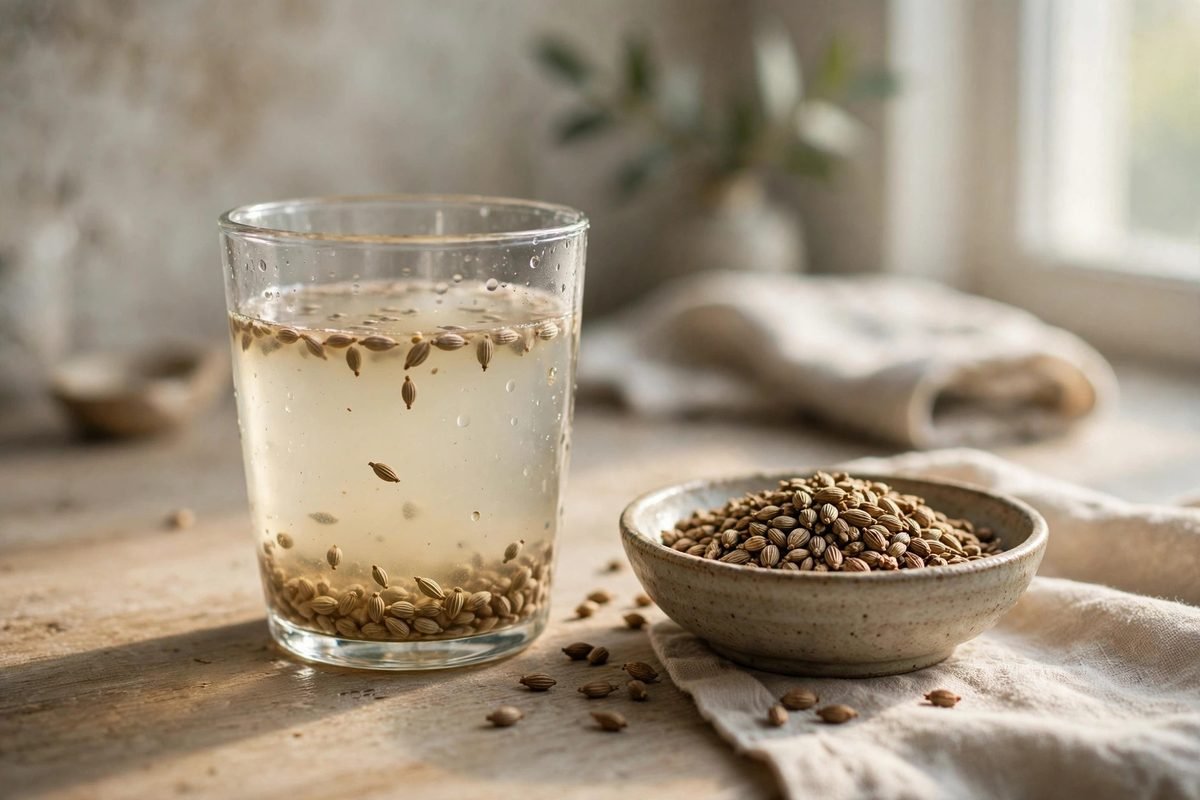
🍵 Simple Ajwain Water Recipe
Prep time: 2 minutes | Brew time: 5 minutes | Total: 7 minutes | Servings: 1 glass
Ingredients
- 1 teaspoon ajwain (carom) seeds
- 1 cup (250 ml) water
- Optional: a small squeeze of lemon
Steps
- Add the ajwain seeds to the water in a small pan.
- Bring to a gentle boil and simmer for 5 minutes.
- Remove from heat and strain through a fine sieve.
- Cool until warm (not hot) and sip slowly after a meal or in the morning.
Tip: lightly roast the seeds in a dry pan for 30 seconds first for a deeper, nuttier flavor — a trick borrowed from many turmeric tea and spice-drink recipes.
When to Drink Ajwain Water
- After a heavy meal — the most common time, to ease fullness and gas.
- First thing in the morning — on an empty stomach, especially the overnight-soak version.
- When you feel bloated or gassy — as an occasional rescue drink rather than an all-day beverage.
One small glass (about a cup) once or twice a day is the usual amount. This isn’t a drink to chug by the liter — ajwain is potent, and more isn’t better.
Who Should Be Careful
Ajwain water is a traditional home remedy, not a medicine, and a few people should check with a doctor first or skip it:
- Pregnant or breastfeeding women — ajwain is traditionally considered stimulating in larger amounts, so get medical advice before using it regularly.
- People with acid reflux or stomach ulcers — its warming, pungent nature may aggravate sensitive stomachs; start with a very small amount or skip it.
- Anyone on regular medication — especially for blood thinning or blood sugar, talk to your doctor, since concentrated herbs can interact with drugs.
- Children — stick to tiny amounts or skip; their stomachs are more sensitive.
And the usual honest note: if bloating, pain, or indigestion is frequent or getting worse, see a doctor rather than relying on any home drink. Home remedies support a healthy gut; they don’t replace diagnosis.
The Bottom Line
Ajwain water for digestion is one of those remedies that earns its place by being simple, cheap, and genuinely plausible: a warm, thymol-rich drink traditionally used to settle gas, bloating, and post-meal heaviness, with early lab research pointing to a muscle-relaxing action in the gut. Try the boiled or overnight method, sip it after heavy meals or first thing in the morning, and keep your expectations gentle. For more morning rituals, explore our guides to ginger for nausea and turmeric tea.