
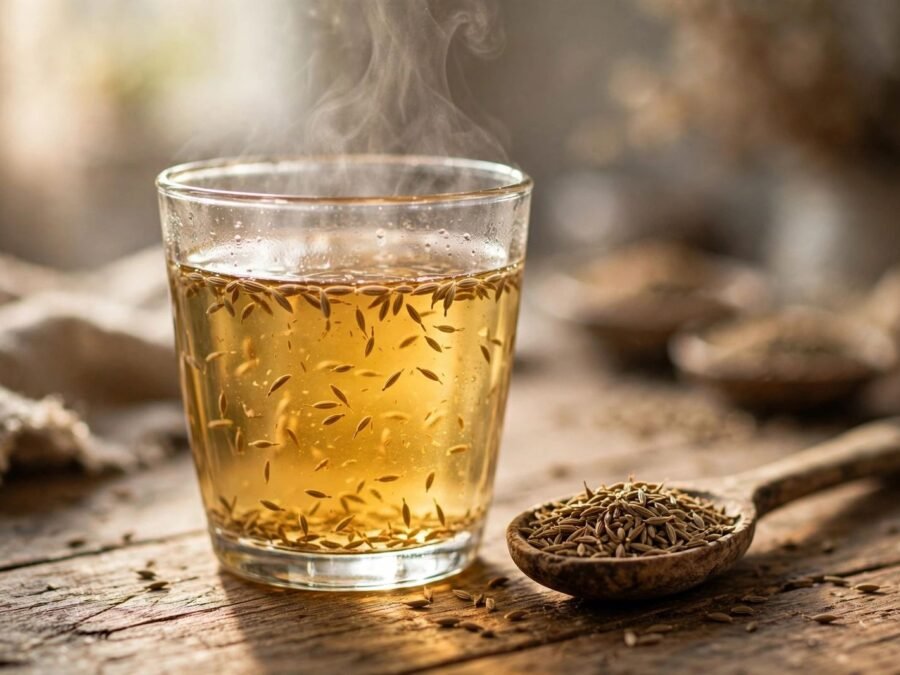
Ask an Indian grandmother about bloating and she’ll likely point you to the spice box: jeera. Soak a teaspoon of these earthy brown seeds overnight, strain, and sip in the morning — that’s cumin water, also called jeera water or jeera pani. It’s one of Ayurveda’s simplest digestive tonics, and modern research backs some of the tradition. Here are eight gentle ways jeera water may help, two easy methods, and the honest limits of what a glass of seed-infused water can do.
What Is Jeera Water?
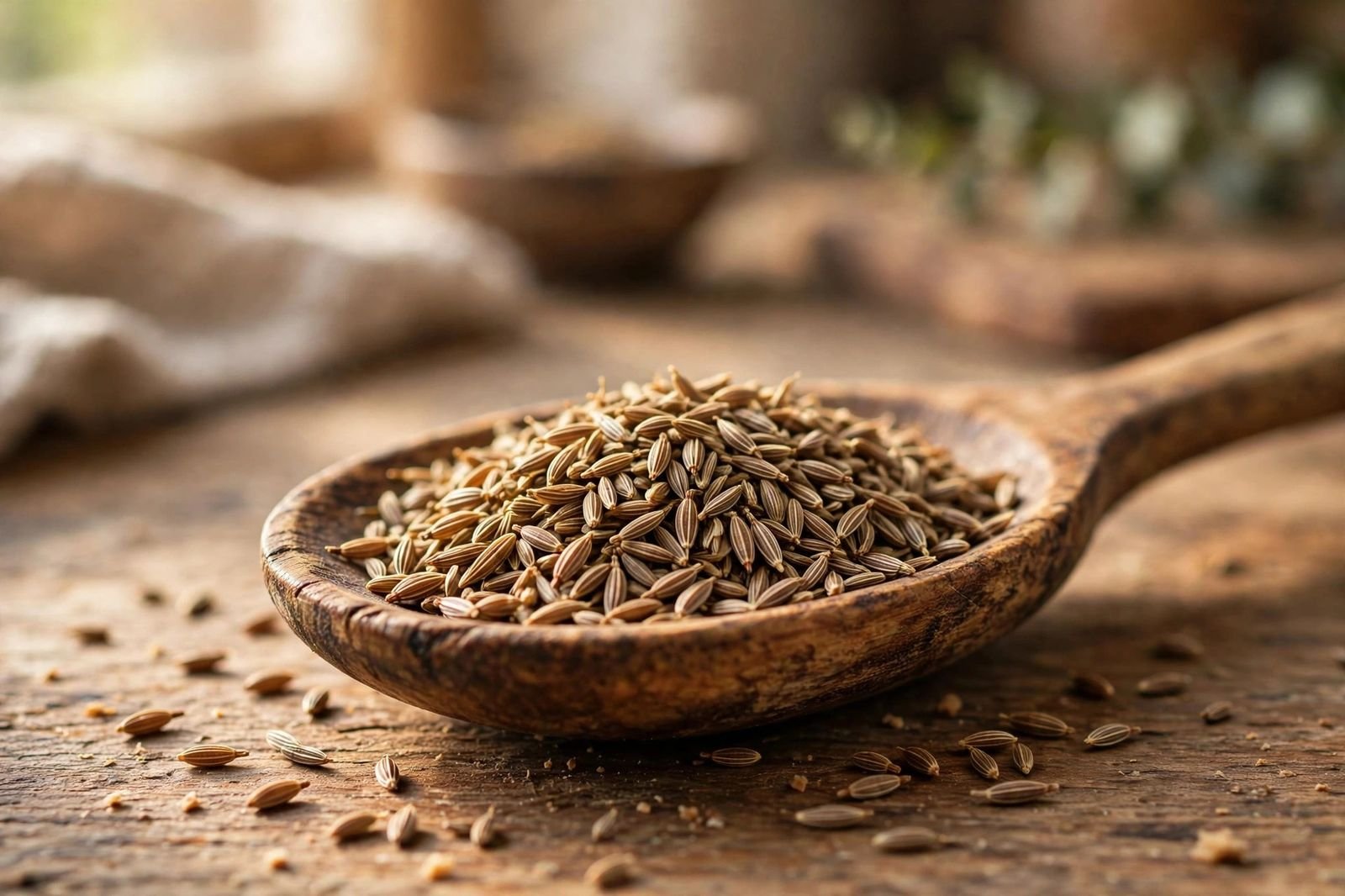
Jeera water is simply water infused with cumin seeds (Cuminum cyminum), the same spice that flavors curries, chili, and Mexican dishes. In Ayurveda, jeera is considered warming and kindling for agni — the digestive fire — and jeera pani is traditionally sipped to ease gas, bloating, and sluggish digestion.
There are two classic ways to make it. The overnight soak is milder: seeds rest in room-temperature water for 8 hours. The quick boil is stronger: seeds simmered 5–10 minutes give a warm, golden, more pungent brew. Pick the flavor you prefer. If you enjoy seed-based morning drinks, our fennel seeds water guide covers a sweeter, milder cousin.
What Science Says About Cumin
A Healthline review of cumin research gives the balanced picture. The well-supported findings: cumin may rev up digestion by increasing digestive enzyme activity and bile release, and the seeds are remarkably iron-dense — one teaspoon carries about 1.4 mg of iron, roughly 17.5% of an adult’s daily needs. The flashier claims (weight loss, blood sugar, cholesterol) come from studies using concentrated cumin supplements, not a glass of jeera water — and not all studies agree.
8 Gentle Ways Jeera Water May Help
1. May ease digestion and bloating
Cumin’s most traditional use — and the one with the best evidence. Research suggests it increases digestive enzyme activity and boosts bile release, helping food move along. In one study, 57 IBS patients reported improved symptoms after two weeks of concentrated cumin. A glass of jeera water is a far smaller dose, but as a daily habit it has centuries of satisfied users behind it. For a stronger digestive brew, see our ajwain water guide.
2. Traditionally used for gas and acidity
Jeera is carminative in traditional medicine — it helps the gut release trapped gas rather than letting it build up. Warm jeera water after a heavy or bean-rich meal is the classic application. If acidity is your main complaint, our warm lemon water vs ginger lemon water comparison can help you pick.
3. Adds iron to your day
Cumin seeds are one of the most iron-dense seasonings around — about 1.4 mg per teaspoon. Some of that iron infuses into the water; eating the softened soaked seeds (they’re perfectly edible) delivers more. For anyone watching iron intake — growing kids, menstruating women — jeera water is a small, tasty contributor, not a treatment for anemia. Persistent fatigue deserves a blood test, not just a spice.
4. Supplies antioxidant plant compounds
Cumin contains terpenes, phenols, flavonoids, and alkaloids — plant compounds that act as antioxidants against everyday oxidative stress. A morning glass adds these alongside your vegetables; a complement, never a substitute.
5. May modestly support metabolism — with honest limits
Small clinical studies found concentrated cumin supplements helped overweight participants lose a little more weight — but “concentrated supplements” is doing heavy lifting there. One trial used 3 grams of cumin in yogurt daily; another used 75 mg capsules. A teaspoon of seeds in water is gentler still. Drink jeera water because it’s a flavorful, near-zero-calorie morning drink — any metabolic nudge is a bonus. Our fenugreek water guide is candid about the same dose distinction.
6. Blood sugar: early evidence only
One clinical study found concentrated cumin supplements improved early markers of blood-sugar trouble in overweight adults, and test-tube work shows cumin compounds countering some diabetes-related damage. But researchers still don’t know which compounds are responsible or what dose matters — and it was supplements, not jeera water. If you have diabetes or take blood-sugar medication, treat jeera water as a pleasant drink and talk to your doctor before expecting anything more.
7. Traditionally used for clearer-looking skin
Ayurvedic tradition links jeera water to clearer skin — the logic being that better digestion and antioxidant intake show up on the face. Direct evidence is thin, so treat this as folk wisdom. What is certain: starting the day with a glass of water beats starting it dehydrated.
8. A grounding morning ritual
Don’t underestimate the ritual itself. Soaking the seeds the night before, straining and sipping something warm and earthy first thing — it’s a slower, more intentional start than scrolling with coffee. Pair it with five unhurried minutes and it becomes a genuine wellness habit, whatever the seeds are doing biochemically. For queasy mornings specifically, our ginger for nausea guide is the stronger pick.
Simple Cumin Water Recipe (Two Methods)
Both methods use the same ratio — pick the flavor you prefer.
Simple Cumin Water (Jeera Pani) Recipe
Prep time: 2 minutes | Soak/boil time: 5–7 minutes simmer, or 8 hours overnight | Total: 7 minutes – 8 hours | Servings: 1 glass
Ingredients
- 1 teaspoon cumin (jeera) seeds
- 1 glass (250 ml) water
- Optional: a squeeze of lemon or a pinch of black salt (for the boiled version)
Method A — Overnight soak (milder)
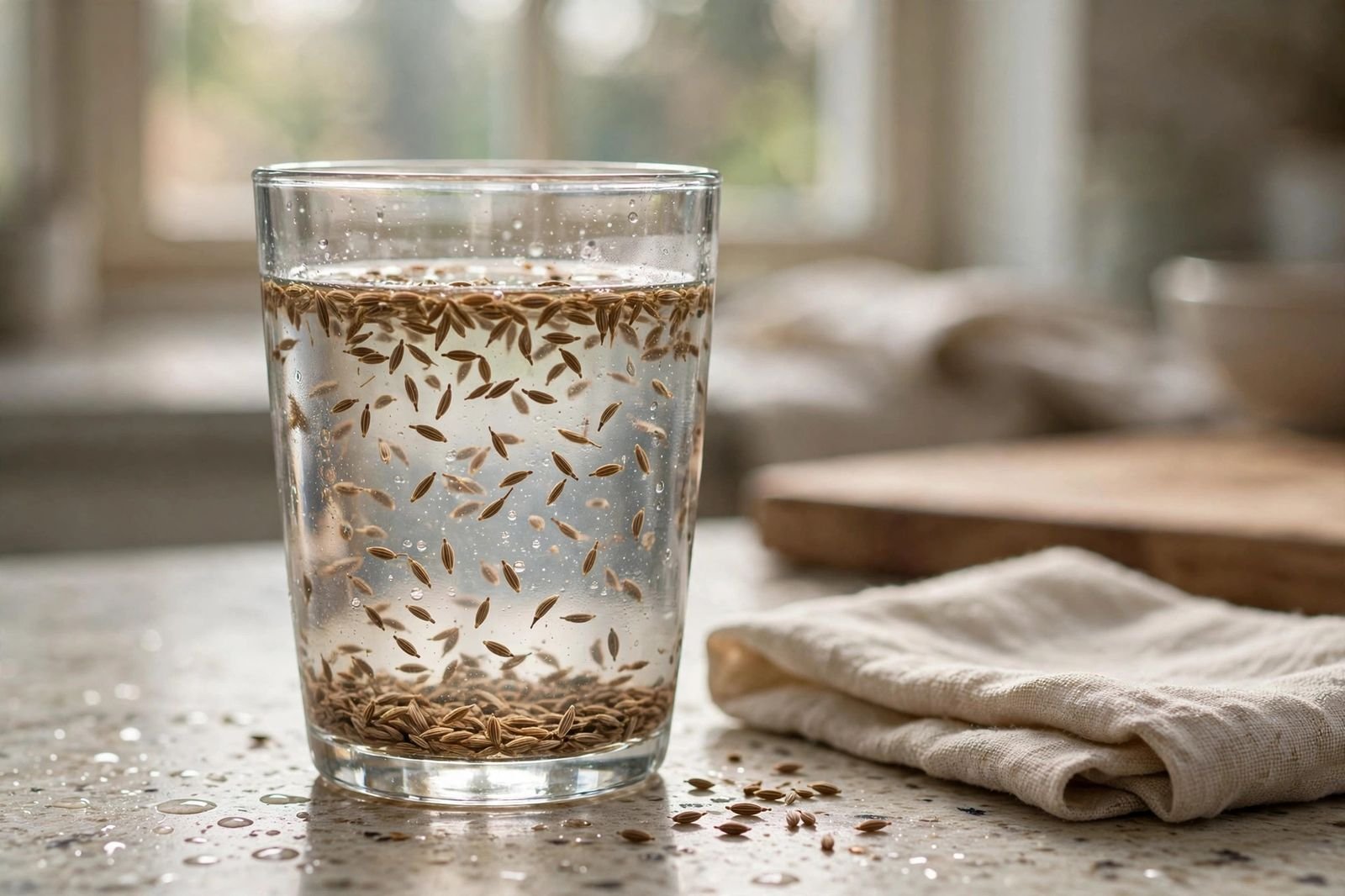
- Add the cumin seeds to a glass of room-temperature water before bed.
- Cover and leave 8 hours overnight.
- Strain in the morning and sip on an empty stomach. The softened seeds are edible — chew a few for extra fiber.
Method B — Quick boil (stronger, warm)
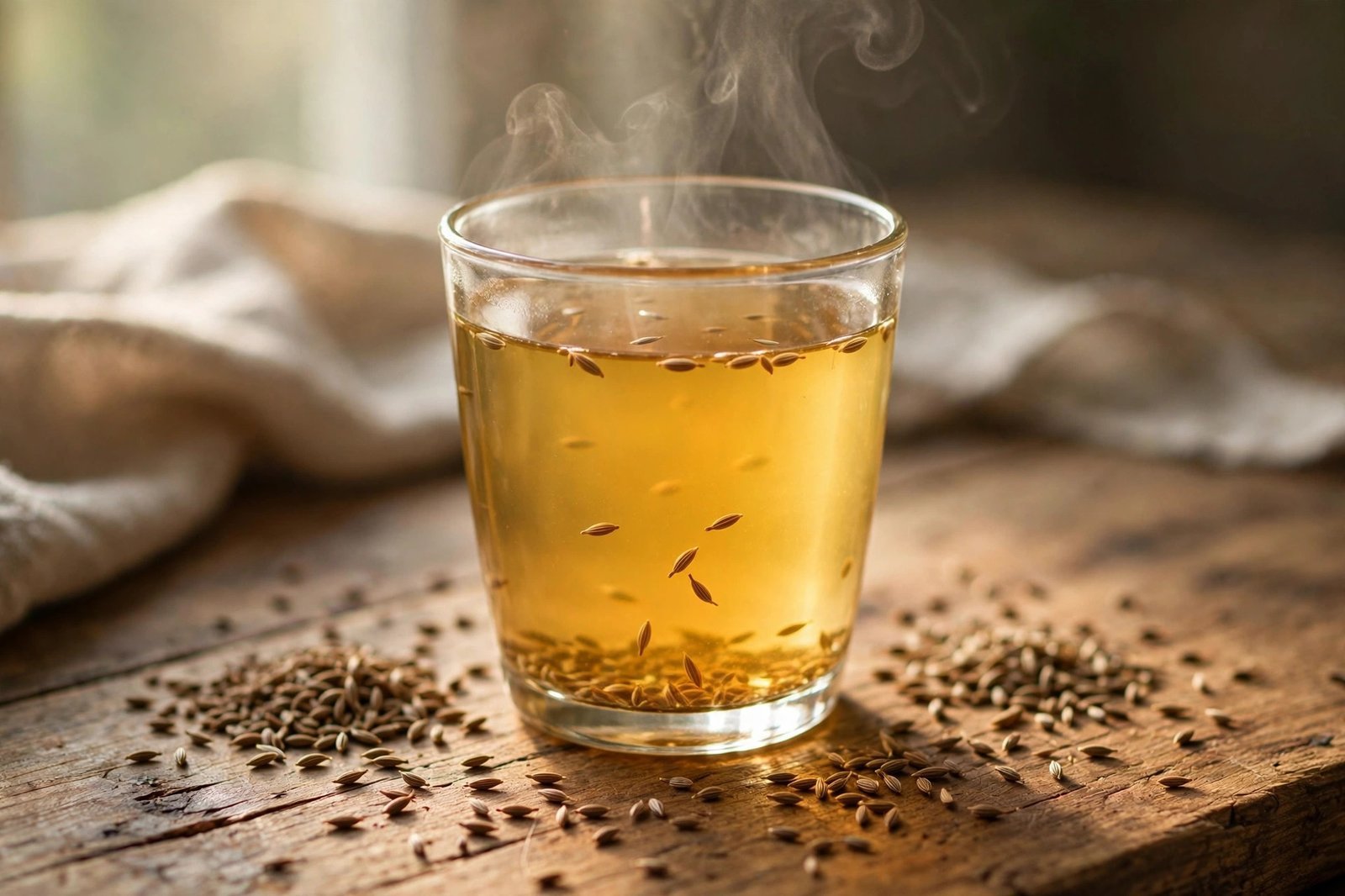
- Add the seeds to a small pan with the water and bring to a boil.
- Lower the heat and simmer 5–7 minutes until golden and fragrant.
- Strain, let it cool to drinkable warmth, add lemon if you like, and sip.
Tip: lightly dry-roast the seeds in a pan for 30 seconds before soaking or boiling — it deepens the nutty flavor noticeably.
Best Time to Drink & How Much
Tradition says one glass first thing in the morning on an empty stomach. A second small glass after dinner works too if evenings bring bloating. One to two glasses a day is the traditional range.
Who Should Be Careful
- Pregnant: culinary amounts are fine, but large or concentrated amounts of cumin have traditionally been discouraged in pregnancy — keep it to a normal glass and mention it to your doctor.
- Gallstones or bile-duct issues: cumin stimulates bile release; check with your doctor first.
- Diabetes medication: cumin may nudge blood sugar downward — watch for interactions.
- Upcoming surgery: cumin may slow blood clotting in large amounts; stop concentrated use a couple of weeks before, as with most medicinal spices.
- Allergies: rare but reported — if you react to related spices, start with a few sips.
FAQs
Is jeera water the same as cumin water?
Yes — jeera is the Hindi word for cumin seeds, so “jeera water,” “cumin water,” and “jeera pani” all mean the same drink.
Should I drink jeera water hot or cold?
Both work. The overnight soak is drunk at room temperature; the boiled version is sipped warm. Warm is traditionally preferred for digestion.
Can I drink jeera water every day?
Yes — one glass daily is the traditional routine. If you’re pregnant, on medication, or managing gallstones, check with your doctor first.
Do I need to eat the seeds too?
Not necessary, but the softened soaked seeds are edible and add fiber and a little more iron.
How long before I notice anything?
Digestive comfort is the first thing people report, often within days. If bloating persists for weeks, see a doctor rather than adding more spices.
Cumin water is no miracle tonic — but it’s a sensible one: cheap, safe in normal amounts, pleasant, and backed by real (if modest) digestive research. Make it the overnight way for a gentle morning glass, or boil it quick and warm when dinner sits heavy. For the fuller evidence picture — dose caveats included — the Healthline review of cumin studies is worth the read.
If this overnight-soak ritual works for you, you might also enjoy a 30-day fenugreek water morning ritual — details in our fenugreek water benefits guide.
Prefer a sweeter seed-water ritual for bloating? Our fennel seeds water guide is another gentle traditional option worth trying.