
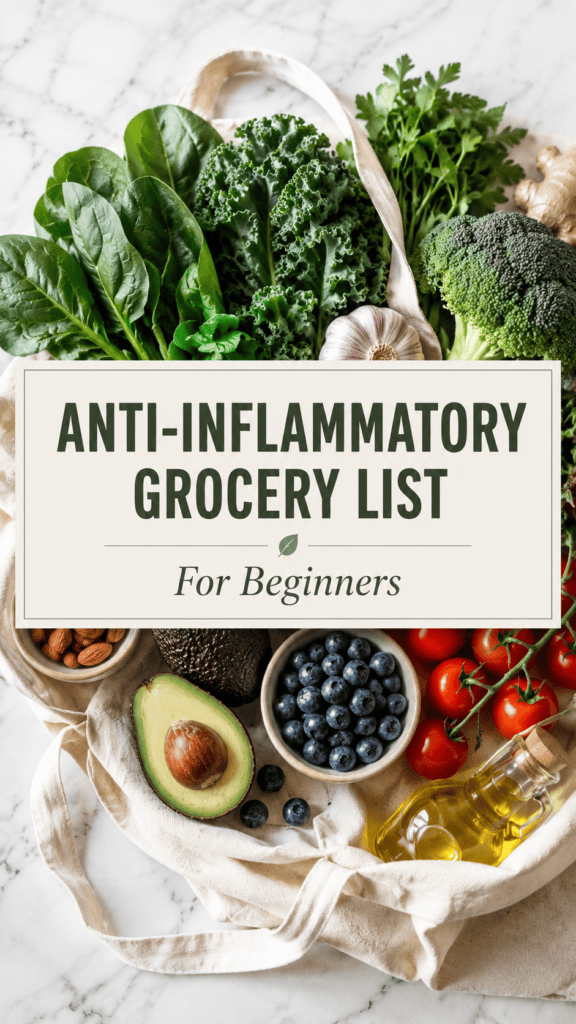
If you are confused about what to eat for joint pain, you need a solid plan. This ultimate anti-inflammatory grocery list for beginners will help you stock your kitchen with healing foods and stop inflammation at the source.
The secret to success is keeping it simple. You do not need expensive supplements or complicated superfoods. You just need to focus on whole, nutrient-dense ingredients. Here is your ultimate beginner-friendly grocery list to fight inflammation.
1. Colorful Fruits & Vegetables (The Foundation)
Vegetables and fruits should make up the bulk of your grocery cart. They are packed with antioxidants and vitamins that neutralise inflammation-causing free radicals.
- Dark leafy greens (Spinach, kale, Swiss chard)
- Cruciferous vegetables (Broccoli, cauliflower, Brussels sprouts)
- Allium vegetables (Garlic, onions, leeks)
- Berries (Blueberries, strawberries, raspberries)
- Tomatoes (fresh or canned, no added sugar)
- Citrus fruits (Oranges, lemons, grapefruits)
- Sweet potatoes and yams
- Carrots and beets
- Bell peppers
- Cherries (tart or sweet)
2. Healthy Fats & Oils (The Joint Lubricators)
Fats are not the enemy! In fact, healthy fats are essential for absorbing vitamins and reducing joint stiffness.
- Extra virgin olive oil (Use this for dressings, not high-heat frying)
- Avocados and avocado oil
- Raw nuts (Walnuts, almonds, pecans)
- Seeds (Chia seeds, flaxseeds, pumpkin seeds)
- Natural nut butters (no added sugar)
- Olives (green or Kalamata)
3. High-Quality Proteins (The Rebuilders)
Protein is crucial for repairing tissues, but processed meats (like hot dogs and deli meats) are highly inflammatory. Stick to these clean sources:
- Fatty fish (Salmon, mackerel, sardines – aim for wild-caught if possible)
- Organic chicken or turkey breast
- Plain Greek yogurt (unsweetened)
- Free-range eggs
- Wild shrimp or mussels
4. Whole Grains & Legumes (Steady Energy)
Whole grains and legumes are rich in fiber, which may help support gut health and keep your energy steady through the day. Add oats, quinoa, or brown rice to your cart, and keep lentils, chickpeas, and beans on hand — they are affordable staples that bulk up any anti-inflammatory meal. For the bigger picture, see our beginner anti inflammatory meal plan guide.
- Oats (rolled or steel-cut)
- Quinoa
- Brown rice
- Lentils (red, green, or brown)
- Chickpeas
- Black beans and kidney beans
5. Anti-Inflammatory Spices (Flavor Powerhouses)
Your spice cabinet is your secret weapon. Spices contain concentrated amounts of active healing compounds.
- Turmeric (Always pair with a pinch of black pepper)
- Ginger (Fresh or ground)
- Cinnamon (Great for blood sugar regulation)
- Garlic powder and rosemary
- Black pepper (boosts turmeric absorption)
- Cayenne pepper
- Oregano (fresh or dried)
What Makes These Foods Anti-Inflammatory
You don’t need to memorize the science to shop well, but it helps to know why these staples made the list. Berries owe their deep color to anthocyanins, antioxidants studied for their inflammation-fighting properties. Extra virgin olive oil contains oleocanthal, a compound researchers have compared to ibuprofen for how it affects inflammation.
Cruciferous vegetables like broccoli provide sulforaphane, while garlic and onions supply diallyl disulfide — both associated with a healthier inflammatory balance. Walnuts are a notable plant source of ALA, a plant-based omega-3. And green tea, rich in the antioxidant EGCG studied for joint and cartilage support, makes another smart addition to your routine (enjoy it earlier in the day, since it contains caffeine).
How to Use This Anti-Inflammatory Grocery List
To get the best results, make sure these items stay out of your grocery cart:
- Refined carbohydrates (White bread, pastries, standard pasta)
- Added sugars (Soda, candy, sweetened yogurts)
- Trans fats (Margarine, shortening, many packaged baked goods)
- Processed meats (Bacon, sausage, deli meats)
Take a screenshot of this list the next time you head to the store. Stick to the perimeter of the supermarket where the fresh food lives, and your body will thank you!
After your shopping, make sure to try our 5-Minute Golden Milk Recipe before bed. Read more about healing foods on Harvard Health.
Ready to cook? Start your day with these anti-inflammatory breakfast ideas, build satisfying plates from our high-protein anti-inflammatory meals, or try the 20-minute anti-inflammatory roasted chickpea salad for a quick lunch.
Frequently Asked Questions
What foods are on an anti-inflammatory grocery list?
Focus on colorful produce (leafy greens, berries, cruciferous vegetables), healthy fats (olive oil, avocados, nuts, seeds), clean proteins (fatty fish, legumes, eggs), and spices like turmeric and ginger. The list above covers 30+ beginner-friendly options across these groups.
What foods should I avoid for inflammation?
Limit refined carbohydrates, added sugars, trans fats, and processed meats — these are linked to higher inflammatory markers. Swapping them for whole foods from the list above is one of the simplest ways to calm inflammation through diet.
What are 10 foods that fight inflammation?
Some of the most commonly recommended anti-inflammatory foods include fatty fish like salmon, leafy greens, berries, extra virgin olive oil, nuts, tomatoes, cruciferous vegetables, avocados, green tea, and turmeric. Research suggests these foods may help support a healthy inflammatory response when eaten as part of a balanced diet.
Which is the strongest anti-inflammatory food?
There is no single strongest food — variety matters most. That said, omega-3-rich fish like salmon and sardines, along with deeply colored berries, are among the most studied options for supporting a healthy inflammatory response. Rather than chasing one superfood, aim to fill your cart with several items from this list each week, and enjoy turmeric as a warm cup of Turmeric Ginger and Lemon Tea.
New Additions: Fermented Foods + Extra Grocery Staples
The biggest missing category on this list was fermented foods — add these to your cart: plain yogurt with live cultures, kefir, kimchi, unpasteurized sauerkraut, and miso. Fermented foods support a healthy gut microbiome, which plays a huge role in regulating inflammation — and the whole grains and fiber already on this list feed those good bacteria.
More staples worth adding to your list: blackberries, tart cherries and tart cherry juice, pineapple (it contains bromelain), apples, red and purple grapes, hemp seeds, anchovies, fresh garlic, green tea, chamomile tea, and dark chocolate (70%+ cacao). On the tea front: green tea brings the antioxidant EGCG, chamomile tea is a gentle caffeine-free option, and both join turmeric and ginger as the highest-impact-per-teaspoon additions in your kitchen.
Put the List to Work: The 3-Swap Method (Plus Honest Answers)
A long list only helps if it changes what lands in your cart. This week, pick three swaps: Breakfast — add berries to whatever you already eat (oatmeal, yogurt, or a smoothie). Cooking fat — switch to extra virgin olive oil for dressings and low-heat cooking. One drink — replace one daily soda or sugary coffee with green tea or ginger tea. Next week, add three more: spice everything (turmeric in rice, cinnamon in oatmeal, ginger in stir-fries); fish twice — even canned sardines or salmon count, they’re cheap and excellent; snack smart — walnuts, almonds, or dark chocolate instead of chips. Small, boring, consistent changes: six months of “pretty good” beats two weeks of perfect.
Also worth crowding out of the cart: ultra-processed snacks (chips, candy, packaged pastries), sugary drinks (soda, sweetened juices, energy drinks), deep-fried foods (french fries, fried chicken), excess alcohol (a glass of wine is different from a habit), and artificial trans fats (mostly phased out, but check labels on cheap baked goods). You don’t need to be perfect — an 80/20 approach beats a strict diet you abandon in two weeks.
Are eggs inflammatory? For most people, no. Eggs are nutrient-dense and fine in moderation as part of a balanced diet — the “eggs cause inflammation” claim is largely overblown. What about nightshades (tomatoes, peppers, potatoes)? Nightshades contain solanine, which some people with arthritis say bothers them — but for most people they’re nutritious. If you suspect a sensitivity, try eliminating them for 2–3 weeks and see how you feel; a personal experiment beats internet dogma. Can diet replace arthritis medication? No — and please don’t stop prescribed medication because of a blog post. Diet is a powerful complement to medical treatment, not a replacement. Always work with your doctor.
A 7-Day Anti-Inflammatory Meal Plan From This List
A list only helps if it turns into meals. The plan below is built entirely from the foods above — one day at a time. For the full beginner version, see our anti-inflammatory diet plan for beginners. The original guide estimated each day at around $8–$12; your cost will vary with where you shop.
Swap This for That
Before the plan, four quick swaps that make the biggest difference at the checkout:
| Category | Ditch This | Buy This Instead |
|---|---|---|
| Proteins | Frozen fried chicken strips | Fresh salmon or lentils |
| Oils & Fats | Margarine | Extra virgin olive oil |
| Carbs & Grains | White rice and pasta | Quinoa or brown rice |
| Snacks & Sweets | Soda and chips | Green tea and nuts |
Day 1
Breakfast: Steel-cut oats with berries and walnuts. Lunch: Green smoothie with spinach, banana, and ginger. Dinner: Baked salmon with turmeric and roasted vegetables.
Day 2
Breakfast: Smoothie bowl with banana, berries, and chia seeds. Lunch: Quinoa salad with chickpeas, cucumber, and olive oil. Dinner: Lentil soup with turmeric and ginger.
Day 3
Breakfast: Green tea and a smoothie with spinach and pineapple. Lunch: Grilled chicken and a colorful salad. Dinner: Roasted vegetables and quinoa.
Day 4
Breakfast: Chia pudding with berries and a drizzle of honey. Lunch: Leftover lentil soup or a veggie stir-fry. Dinner: Baked salmon and sweet potato fries.
Day 5
Breakfast: Oatmeal with apple and cinnamon. Lunch: Tomato soup with basil and a side of whole-grain toast. Dinner: Turmeric chicken stir-fry with brown rice.
Day 6
Breakfast: Smoothie bowl with mango, banana, and flaxseed. Lunch: Chickpea and spinach salad. Dinner: Grilled salmon and steamed broccoli.
Day 7
Breakfast: Berry parfait with Greek yogurt. Lunch: Quinoa with roasted vegetables and feta. Dinner: Lentil stew with garlic and ginger.
Meal Prep Tips That Make the Week Easy
- Batch-cook grains and proteins. Cook a pot of quinoa, lentils, and chicken on Sunday — mix and match all week.
- Freeze chopped herbs. Freeze chopped herbs in olive oil in an ice cube tray — they keep for months.
- Keep dressing and juice ingredients ready. Keep dressing and juice ingredients ready so a quick salad or drink is always an option.
- The Ultimate Anti Inflammatory Diet Plan for Beginners
- 7 High-Protein Anti-Inflammatory Meals for Less Joint Pain
November 2026 Update: A Printable Checklist and Budget Buys
Updated November 10, 2026. The highest-ranking grocery lists for this query now promise two things this page did not make clear: a free printable checklist and exactly what to buy. This update adds both — a short, print-friendly checklist below (screenshot it or print this page before you shop) and a budget section, so the list works at a real store, not just on screen.
Your Printable Checklist: Exactly What to Buy
For one week for one or two people, start with this — quantities are a guide, not a prescription:
- Produce: 1 bag baby spinach, 1 head broccoli, 1 bag frozen mixed berries, 2–3 sweet potatoes, 1 bag carrots, 1 punnet blueberries, 3 lemons, 1 bunch fresh ginger.
- Protein: 2 cans sardines or 2 salmon fillets, 1 dozen eggs, 1 tub plain Greek yogurt, 1 can chickpeas, 1 bag lentils.
- Pantry: 1 bag rolled oats, 1 bag quinoa, 1 bottle extra virgin olive oil, 1 jar turmeric, 1 jar cinnamon, 1 bag walnuts, 1 bag chia seeds, 1 bag ground flaxseed.
- Drinks: green tea and, for a caffeine-free evening option, the ingredients for turmeric ginger lemon honey tea.
Use it with the recipes on this site: 10 high-fiber anti-inflammatory breakfast ideas are built from the same staples, so one shop covers the week.
Anti-Inflammatory Shopping on a Budget
Healthy eating does not have to mean expensive superfoods, and this list was never meant to require supplements. The cheapest anti-inflammatory staples are usually the plainest ones:
- Frozen beats fresh for berries and greens: frozen blueberries and spinach are picked ripe, keep for weeks, and cost far less out of season.
- Canned fish and beans count: sardines, canned salmon in water, and canned chickpeas or black beans (rinsed, no added sugar) are budget protein.
- Buy the big bag: oats, lentils, brown rice and quinoa are cheapest in bulk and keep for months.
- Store-brand staples are fine: store-brand olive oil, plain yogurt, nuts and spices are the same foods — check the label for added sugar, not the brand.
- Seasonal produce first: sweet potatoes, carrots, cabbage and citrus are usually the cheapest vegetables in season.
Can an anti-inflammatory grocery list reduce pain or boost energy?
Honestly: it can help, but it is not a cure. Diets rich in vegetables, fruit, whole grains, fish and olive oil are associated in research with lower markers of inflammation, and many people report steadier energy when sugary drinks and ultra-processed snacks are replaced — but no single food or week of shopping treats joint pain or guarantees more energy. Think of this list as a practical, sustainable pattern, and talk to your provider if pain is worsening or limiting daily life.
4 Comments