

There’s a quiet little ritual trending in wellness corners: soak a spoonful of fenugreek seeds overnight, strain, and drink the golden water first thing in the morning. Do it for 30 days, fans say, and expect steadier blood sugar, calmer digestion, and even a little weight loss. But fenugreek water for 30 days — does the science back any of it, or is this another overhyped morning drink? Here’s the honest, evidence-checked answer.
What Exactly Is Fenugreek Water?
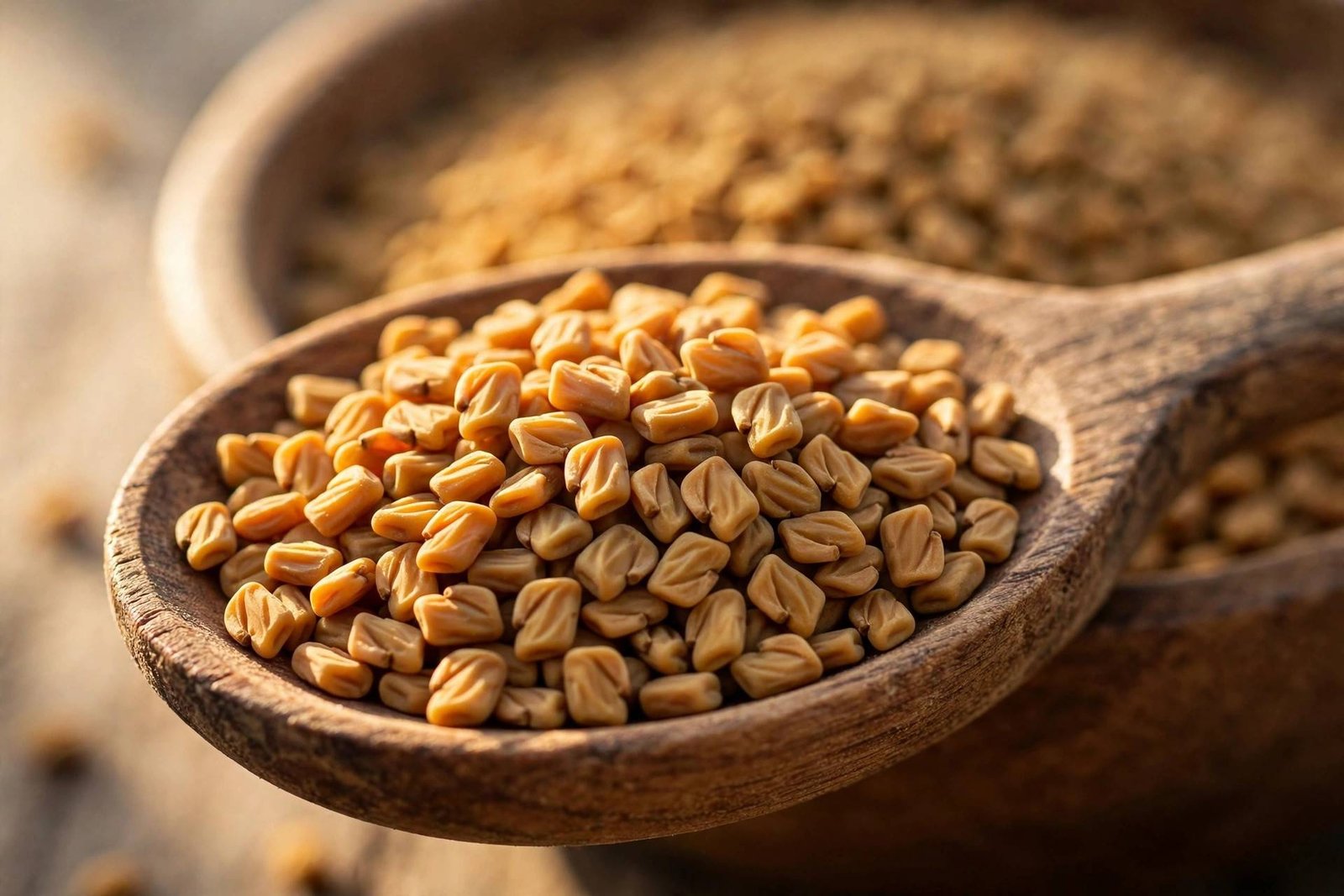
Fenugreek (Trigonella foenum-graecum) is a clover-like herb whose amber seeds smell faintly of maple syrup. Used as both spice and traditional medicine for roughly 6,000 years — as a tonic, a laxative, and a remedy for menstrual cramps — it’s now promoted mainly for blood sugar support and milk production, according to the National Center for Complementary and Integrative Health (NCCIH).
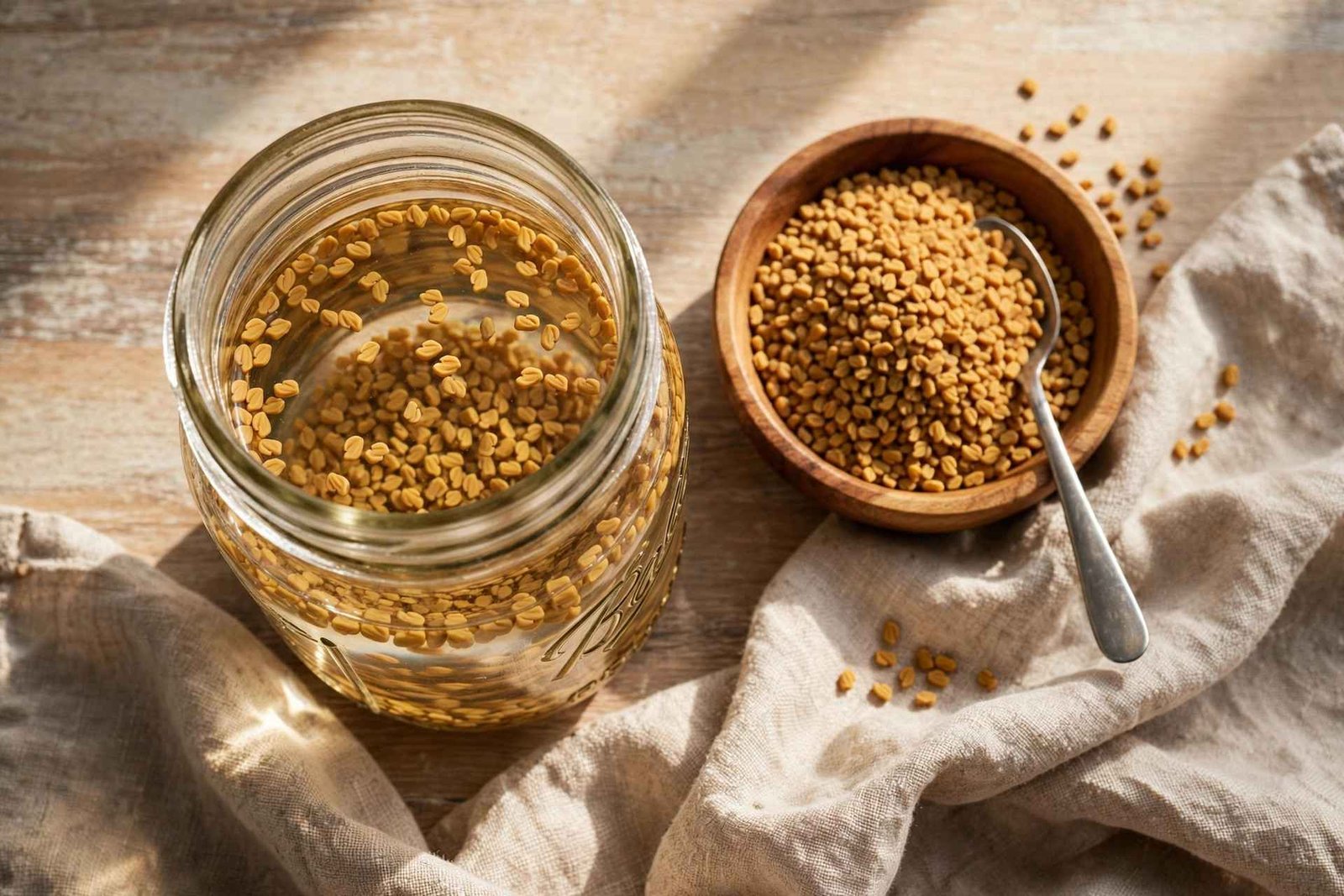
Fenugreek water (methi water) is simply the overnight soak: 1–2 teaspoons of seeds steeped in a glass of water for 8–12 hours, strained, and drunk on an empty stomach. The soak draws out soluble fiber (galactomannan) and plant compounds without heat. If you want the full background on the seed itself, our fenugreek water benefits guide covers the basics — this article is about the 30-day daily-drinking experiment specifically.
7 Things That May Happen After 30 Days
1. Your blood sugar numbers may look steadier — but this isn’t a diabetes treatment
This is fenugreek’s strongest card, and it’s still a modest one. A 2023 systematic review and meta-analysis of 10 randomized controlled trials (706 people) found that fenugreek lowered fasting blood glucose, post-meal glucose, and HbA1c in people with type 2 diabetes — and the NCCIH lists that meta-analysis among its key references while cautioning that many of the underlying studies were not of high quality.
Most striking for this article’s angle: a published 30-day intervention study gave fenugreek water to type 2 diabetes patients and recorded a drop in average random blood glucose from about 196 mg/dL to about 157 mg/dL (p<0.001) — see the full study PDF. That’s a real signal over exactly 30 days — but it was one small study, in people with diabetes, using a measured daily preparation. It does not mean a casual glass will “control” anyone’s blood sugar, and it is absolutely not a replacement for medication. If you take glucose-lowering drugs, the NCCIH’s diabetes and supplements page warns that herbal products can interact with conventional diabetes drugs — talk to your doctor first. Our cinnamon tea for blood sugar guide covers another morning drink in this space, with the same cautions.
2. Digestion may feel easier and more regular
Fenugreek seeds are rich in soluble fiber, which absorbs water and forms a gentle gel — the classic mechanism behind fiber’s support for regular bowel movements. Traditional medicine has used fenugreek as a laxative for millennia, per the NCCIH. Many daily drinkers report less bloating and easier mornings within the first couple of weeks, which lines up with how fiber works — though no trial has tested plain fenugreek water specifically for bloating. If digestion is your main goal, ajwain water for digestion is our stronger-evidenced pick in the overnight-soak family.
3. Cholesterol numbers might nudge in the right direction
Small trials and meta-analyses have reported reductions in total cholesterol, LDL (“bad”) cholesterol, and triglycerides with fenugreek — but the pooled samples are small, preparations vary widely, and no large rigorous trial has settled the question. The NCCIH’s verdict is blunt: for health conditions beyond the studied ones, the evidence is too limited for conclusions. Treat this as a plausible bonus, not a reason to skip a statin your doctor prescribed.
4. You may snack less — but don’t expect the scale to move on its own
Here’s where honesty matters. Some blogs claim you’ll “lose 1–2 kg in a month” just by drinking fenugreek water. There is no solid randomized evidence for that number from fenugreek water. What the fiber can do is slow stomach emptying and promote fullness, which may help you eat a little less at breakfast — a real but modest effect, and only meaningful alongside an overall balanced diet. If a 30-day ritual is what gets you into a healthier morning pattern, that’s the actual win. (Our 30-day lemon water guide makes the same honest distinction.)
5. Menstrual cramps may ease — evidence is thin
Fenugreek has been used traditionally for menstrual cramps, and it’s one of the NCCIH’s listed promoted uses. But only a small number of studies have examined it, the evidence is of low quality, and the effects are uncertain. If cramps are your reason for trying the 30-day experiment, track your symptoms across two cycles and judge for yourself — and don’t drop anything your doctor recommended.
6. Skin and hair perks? Traditional, not proven
You’ll see claims that a month of fenugreek water clears skin and thickens hair. These come from traditional use and the seed’s antioxidant and nutrient content (iron, B vitamins) — not from human trials of drinking the water. Softer skin or less shedding after a month is more likely explained by better hydration and overall routine than by the seeds themselves. Enjoy the ritual; don’t buy it for the glow-up.
7. You might just build a steadier morning
The least hyped benefit is the most reliable: a simple, two-minute morning ritual you actually stick with. Preparing the soak each night creates a small anchor of consistency, and people who keep one healthy habit tend to keep others. No study needed — but no miracle promised either.

What the First 30 Days Honestly Look Like
Let’s be straight: no legitimate study gives you a day-by-day transformation timeline for fenugreek water, so any article promising “day 7: belly fat melts” is inventing it. What the research durations suggest:
- Days 1–7: Mostly adjustment. Some people notice mild digestive gurgling or looser stools as the fiber kicks in — start with 1 teaspoon, not 2.
- Weeks 2–3: The window where the small trials measured changes in blood sugar and where digestive regularity typically settles. Any “I feel lighter” reports usually start here — largely the fiber effect.
- Day 30: The length of the published blood-glucose study above. If you’re tracking fasting glucose (with your doctor’s knowledge), a month is a reasonable checkpoint — not a finish line.
Subtle, building changes over weeks — not dramatic overnight shifts. Anyone selling more than that is selling.
How to Make Fenugreek Water (2 Methods)
Method 1 — Overnight soak (the classic):
- Rinse 1–2 teaspoons of whole fenugreek seeds.
- Add to a glass (about 250 ml) of room-temperature water.
- Cover and leave on the counter for 8–12 hours overnight.
- In the morning, strain out the seeds and drink the golden water on an empty stomach.
- Optional: squeeze in a little lemon to soften the bitterness.
Method 2 — Quick warm version:
- Simmer 1 teaspoon of rinsed seeds in 1½ cups of water for 5–10 minutes.
- Strain and sip warm. Stronger and more bitter — start with the soak if you’re new.
The soaked seeds don’t have to go to waste — some people chew a few or toss them into smoothies. Make it fresh daily; like our cumin water guide, the overnight-soak method is gentlest for beginners.
4 Claims to Take With a Grain of Salt
- “Lose 1–2 kg in a month.” No randomized trial of fenugreek water shows this. Fiber may trim snacking; the scale needs diet and movement.
- “Melts belly fat.” Nothing you drink melts fat from one body part. Spot reduction is a myth.
- “Flushes toxins.” Your liver and kidneys handle detox; no drink “flushes” anything beyond normal digestion and hydration.
- “Replaces diabetes medication.” Dangerous. Fenugreek may lower blood sugar — which is exactly why combining it with diabetes drugs without medical supervision risks hypoglycemia.
Safety First: Who Should Skip It or Check With a Doctor
Fenugreek water is a food-level preparation, but “natural” isn’t “risk-free.” Per the NCCIH:
- Pregnant? Skip it. Fenugreek is not safe during pregnancy in amounts greater than found in food — use has been linked to increased risks of birth defects in both animals and people.
- On diabetes medication? Fenugreek may lower blood sugar further — risk of hypoglycemia. Check with your doctor first, and never adjust medication on your own.
- On blood thinners or before surgery? Discuss with your provider; some herbs interact with clotting medications in harmful ways.
- Allergies: Fenugreek can cause allergic reactions, including serious ones, in some people. It’s a legume — if you’re allergic to peanuts, chickpeas, or soy, be extra cautious.
- Breastfeeding: Fenugreek is traditionally used to support milk supply, but studies are mixed and safety above food amounts is not established. Talk to your provider.
- Children: Not enough information on safety above food amounts — skip the daily-drink experiment for kids.
- Start low: Diarrhea, nausea, and digestive upset are the most common side effects. Begin with 1 teaspoon and stop if your gut protests.
One harmless quirk: fenugreek can make sweat and urine smell faintly of maple syrup. It’s widely reported, harmless, and fades when you stop.
Fenugreek Water vs. Fenugreek Tea vs. Capsules
Quick disambiguation, since the SERPs mix them up: fenugreek water is the cold overnight soak (mildest); fenugreek tea is simmered (stronger, more bitter); capsules/extracts are concentrated supplements — most clinical trials used these, so their results don’t automatically apply to your morning glass. This article is only about the water.
Frequently Asked Questions
Can I drink fenugreek water every day for 30 days straight?
At food-level amounts (1–2 teaspoons of seeds soaked), daily use for a month is the traditional pattern and matches the duration of the published blood-sugar study. Some traditional sources suggest taking a short break after a month before resuming. If you take any medication, check with your provider first.
Should I drink it on an empty stomach?
That’s the traditional way, and it’s how the studies dosed it. If it upsets your stomach, having it after a light breakfast is fine — consistency matters more than timing.
Can I eat the soaked seeds too?
Yes — they’re soft, edible, and contain most of the fiber. They’re bitter, though; most people strain and discard or add them to smoothies.
Does fenugreek water help with weight loss?
Only indirectly, if the fiber helps you feel fuller and snack less. No quality evidence shows meaningful weight loss from the drink alone.
Is fenugreek water safe while breastfeeding?
Traditionally used for milk supply, but studies are mixed and safety above food amounts is not established. Discuss with your healthcare provider rather than self-experimenting.
Why does my sweat smell like maple syrup?
A harmless, commonly reported effect of fenugreek — a compound in the seeds is excreted with a sweet, maple-like odor. It fades after you stop.
The Bottom Line
Drinking fenugreek water every morning for 30 days is a reasonable, low-cost experiment with one genuinely interesting evidence thread (blood sugar), a plausible fiber story (digestion, fullness), and a lot of unproven folklore around it. Go in with honest expectations, start with a small amount, respect the safety fine print — especially around pregnancy and diabetes medication — and let the ritual be the real reward.