

Licorice root tea is brewed from Glycyrrhiza glabra root, and its active compound glycyrrhizin is estimated to be about 50 times sweeter than sugar. That extreme sweetness is exactly why this caffeine-free herbal tea needs more respect than most. Below: 7 possible benefits with honest evidence grading, plus the safety warnings most blogs skip.
What Is Licorice Root Tea?
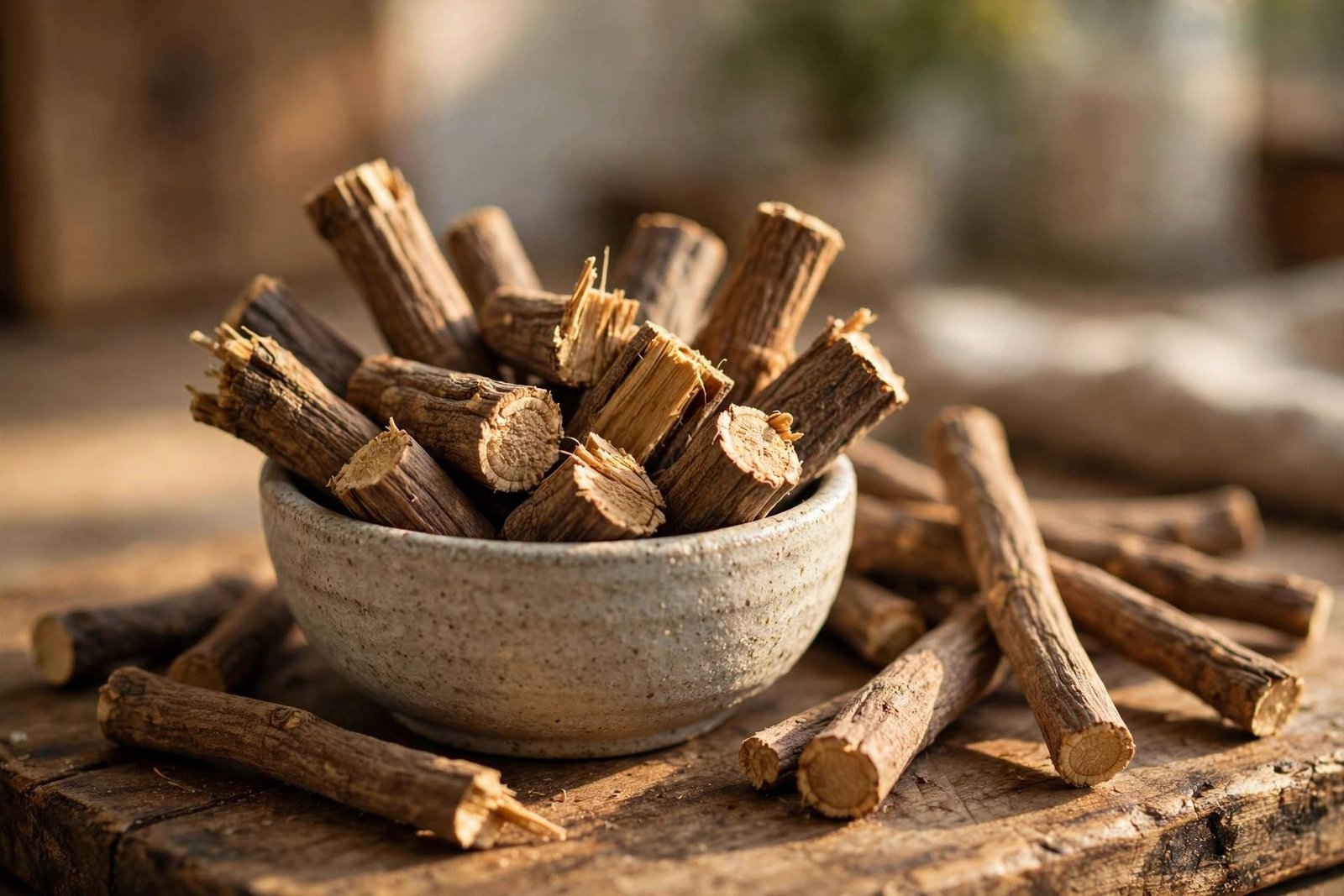
Licorice root tea is brewed from the dried root of the licorice plant (Glycyrrhiza glabra, also G. uralensis and G. inflata) — one of history’s oldest remedies, used by ancient Assyrian, Egyptian, Greek, Arab, Chinese, Tibetan, and Indian cultures for coughs, asthma, and wound healing, per the NCCIH.
Sold as tea bags or dried root pieces. Its active compound, glycyrrhizin, is both the sweetener and the risk; deglycyrrhizinated licorice (DGL) has it removed and behaves quite differently (see below).
7 Possible Benefits of Licorice Root Tea
Graded honestly: “traditional use” = centuries of use, weak evidence; “studied” = trials exist. NCCIH: not enough high-quality evidence to support licorice for any condition yet.
1. A Naturally Sweet, Caffeine-Free Drink
Glycyrrhizin is estimated to be about 50 times sweeter than sucrose, per a peer-reviewed review of licorice chemistry — so the tea tastes sweet with zero added sugar and zero caffeine. Genuinely useful for anyone cutting sugar or avoiding evening caffeine.
2. Traditionally Used to Calm Digestion
A classic digestive herb — Memorial Sloan Kettering’s About Herbs database lists bloating, discomfort, nausea, and burping among its traditional uses. Caveat: NCCIH says it’s unclear whether licorice alone (vs. herbal blends) affects digestive symptoms. Traditionally used, not proven; peppermint tea has stronger backing.
3. Mouth Rinses May Ease Canker Sores
NCCIH reports a licorice mouth rinse or gargle might reduce ulcer size and pain in recurrent canker sores — in one study, extract plus standard medicine beat medicine alone. Rinse-and-spit evidence, not drink-the-tea evidence, but swishing a warm mouthful before swallowing is adjacent to the studied use.
4. Gargling Has Been Studied for Sore Throat
Trials have tested licorice gargles for sore throat after surgery with breathing tubes: gargling before anesthesia significantly reduced post-operative sore throat and coughing versus sugar water, and a 5-trial review (609 patients) found it cut the risk by more than half. That’s gargle evidence — not a cup of tea after dinner. For soothing options with fewer caveats, try chamomile tea or cold-brewed marshmallow root tea.
5. DGL — the Safer Form — Has Been Studied for Ulcer Support
Licorice was explored for stomach ulcers in the 1970s–80s with largely inconclusive results. A randomized study of 120 H. pylori-positive patients found licorice (380 mg twice daily × 2 weeks) added to triple therapy raised negative seroconversion to 83% versus 62.5% alone — significant only in patients with peptic ulcer disease, not non-ulcer dyspepsia. Much ulcer research used DGL (deglycyrrhizinated licorice), with the risky glycyrrhizin removed.
6. Studied for Hot Flashes — With Mixed Results
A 60-woman randomized trial compared licorice (1,140 mg/day, 90 days) with HRT for hot flashes. Within-group reductions in duration and number were significant — but the between-group difference wasn’t, and HRT reduced severity more. Studied, not proven better.
7. Blood Sugar — the Honest (Thin) Evidence
Some blogs link licorice to blood sugar support; the honest version: evidence is essentially limited to animal experiments, with varied results and an unclear mechanism. No human tea trial shows a benefit — firmly “interesting, not established.” For blood sugar, cinnamon tea is better supported.

How to Make Licorice Root Tea
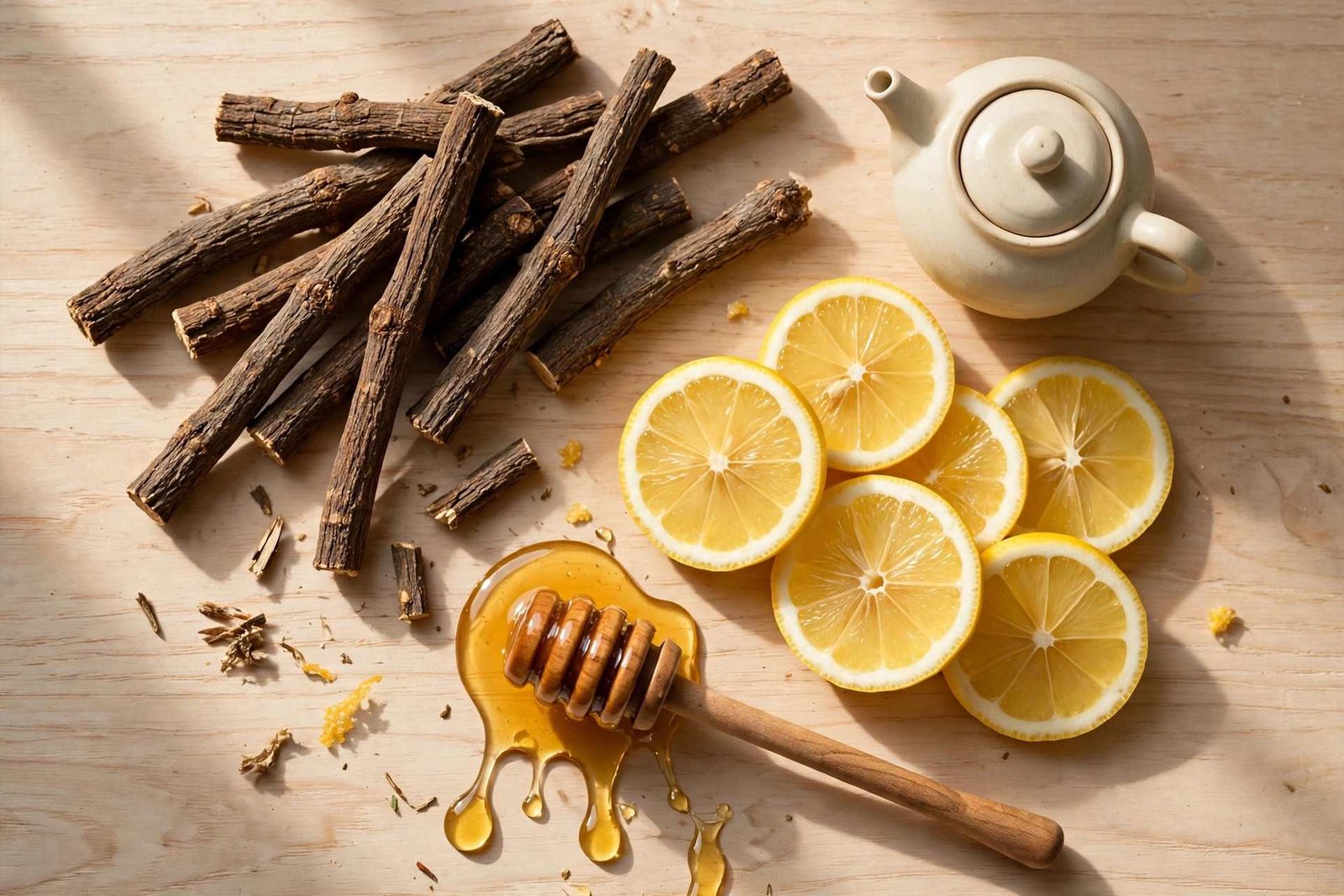
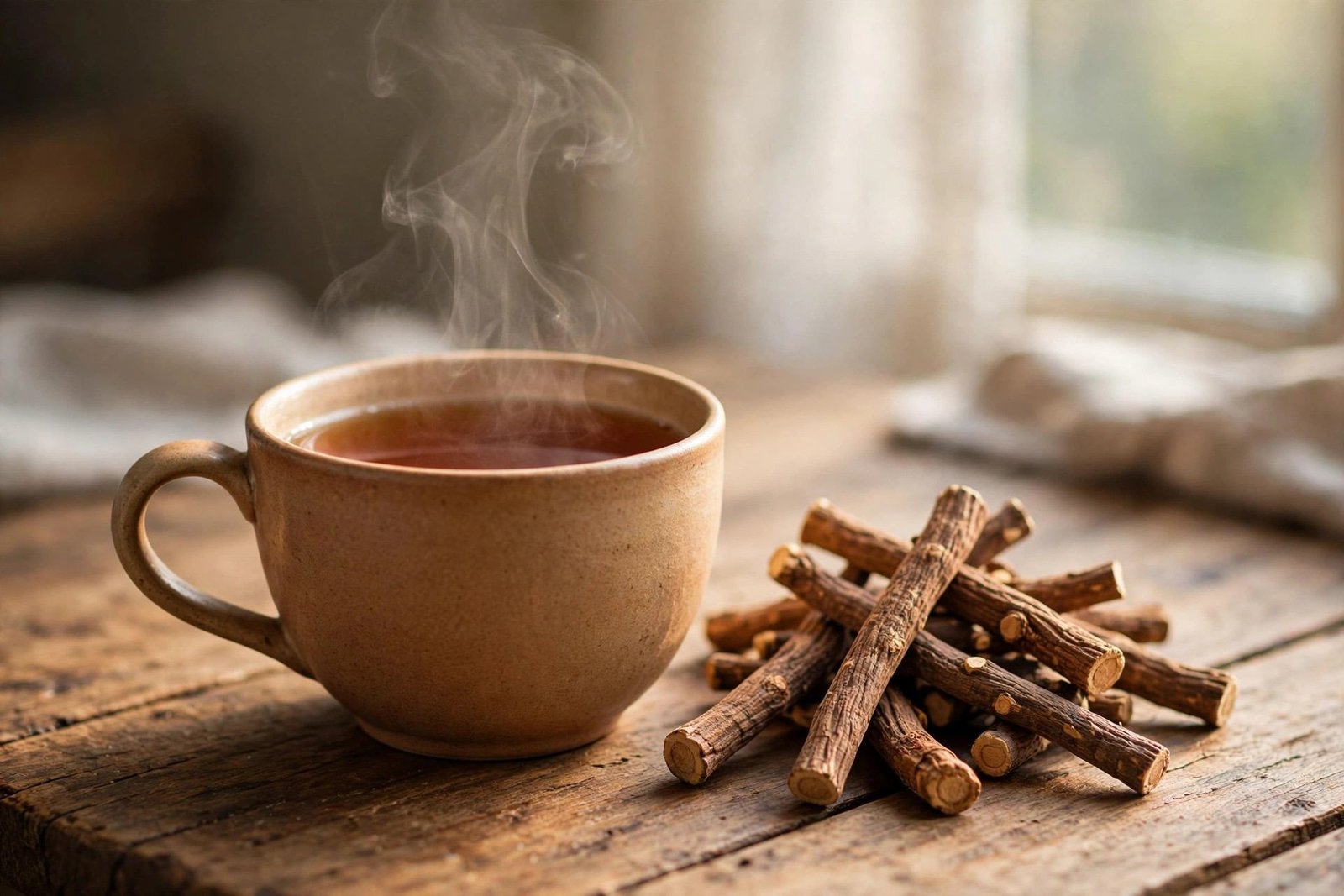
Simmer 1–2 teaspoons of dried, cut root (or one tea bag) in 2 cups of water for 10–15 minutes, then strain — dried root needs simmering, not a quick steep. Blends well with cinnamon or ginger. Keep it occasional, not daily. Full recipe in the card below.
Ingredients
Method
- Add the water to a small saucepan and bring to a gentle boil.
- Add the licorice root (and cinnamon stick, if using). Reduce the heat and simmer for 10–15 minutes.
- Remove from the heat and let stand for 2 minutes.
- Strain into a mug. Sweeten with honey only if needed — the root is already sweet.
The Safety Fine Print: Who Should Be Careful
The most important part of this article — read before you brew:
- High blood pressure and potassium loss. Glycyrrhizin blocks 11-beta-hydroxysteroid dehydrogenase, the enzyme that deactivates cortisol. Excess cortisol then drives sodium retention and potassium loss in the kidneys. NCCIH warns of irregular heartbeat and cardiac arrest — and even small amounts have harmed people with hypertension or heart/kidney disease. Published case (per the Drugs.com licorice monograph): hypertension in a woman drinking up to 6 cups of licorice tea daily for 12 months.
- How much is too much? WHO has suggested 100 mg of glycyrrhizic acid/day is unlikely to harm most adults — but a 2024 randomized trial (28 healthy adults) found that dose raised systolic BP by 3.1 mmHg over 2 weeks, questioning the “safe” limit. Practical rule: small amounts, not daily, not for weeks.
- Pregnancy and breastfeeding. Avoid. Drugs.com cites estrogenic activity and reputed abortifacient effects (the compound crosses the placental barrier in rats). NCCIH: ~250 g of licorice per week is unsafe in pregnancy and can raise preterm-delivery risk. Breastfeeding safety is unknown.
- Heart disease, kidney disease, low potassium. Not for you without a doctor’s okay — MSKCC notes even chronic moderate intake is linked to hypertension and hypokalemia, and warns against combining licorice with blood pressure medication.
- Medication interactions. Ask your doctor if you take: diuretics (worsened potassium loss), digoxin/cardiac glycosides (higher toxicity risk), corticosteroids, blood pressure drugs, or blood thinners like warfarin. Possible insulin-sensitivity effects are rat-data only — but diabetes-medication users should still ask first.
- Surgery. Tell your surgical team well before any procedure — licorice can affect blood pressure and potassium.
- The safer long-term option: DGL. DGL has the glycyrrhizin removed, eliminating most of the risks above; NCCIH notes it might be safe for up to 4 months. For a regular habit, discuss DGL with your doctor.
Claims to Ignore
- “Melts belly fat.” A 26-trial meta-analysis found an average loss of 0.43 kg — less than one pound. Not a fat burner.
- “Detoxes” / “flushes toxins.” No clinical evidence; licorice’s real documented chemistry is mineralocorticoid disruption, not cleansing.
- “Supports your adrenals.” Backwards. Glycyrrhizin inhibits 11-beta-hydroxysteroid dehydrogenase, prolonging cortisol action — that mechanism is the risk behind the blood pressure and potassium warnings, not a benefit.
- “Completely safe because it’s natural.” Licorice has one of the most documented toxicity profiles of any common herb — arrhythmias, hypertensive crises, even cardiac arrest in case reports. Natural is not a safety rating.
- Replaces medication. Not a substitute for blood pressure drugs, ulcer medication, or hormone therapy — and it can interfere with all three.
Frequently Asked Questions
Does licorice root tea have caffeine?
No — it’s brewed from root, not the tea plant. A reasonable evening option on caffeine, though safety matters more for this herb. For a gentler evening ritual, lemon balm tea is another caffeine-free choice.
How often can I drink licorice root tea?
Occasional, not daily. The WHO suggested 100 mg of glycyrrhizic acid per day as unlikely to harm most adults — but a 2024 trial found blood pressure effects at exactly that dose over two weeks. Daily-for-weeks use is where the harm case reports cluster.
What’s the difference between DGL and regular licorice?
DGL (deglycyrrhizinated licorice) has the glycyrrhizin removed — the compound behind both the intense sweetness and the blood pressure/potassium risks. DGL is the form most studied for stomach support, and NCCIH describes it as possibly safe for up to 4 months.
Is licorice candy the same thing?
Not really. NCCIH notes many U.S. “licorice” products contain no actual licorice — anise oil is often used instead. And real licorice candy is mostly sugar with concentrated extract: a very different dose from a brewed cup. Don’t count candy as a health tea.
Who must avoid licorice root tea?
Pregnant/breastfeeding women, anyone with high blood pressure, heart disease, kidney disease, or low potassium, and anyone on diuretics, digoxin, corticosteroids, blood pressure drugs, or blood thinners — unless a doctor explicitly approves. When in doubt, skip it.
Can kids drink licorice root tea?
Be cautious. A published case: a 10-year-old hospitalized with seizures, high blood pressure, and low potassium after about 20 licorice sweets daily for 4 months. Smaller bodies, bigger effects — check with a pediatrician first.
The bottom line: Fascinating herb — intensely sweet, caffeine-free, millennia of traditional use, a few genuinely studied niches — and one of the few herbal teas with a well-documented serious side-effect profile. Enjoy occasionally, respect the dose.


