
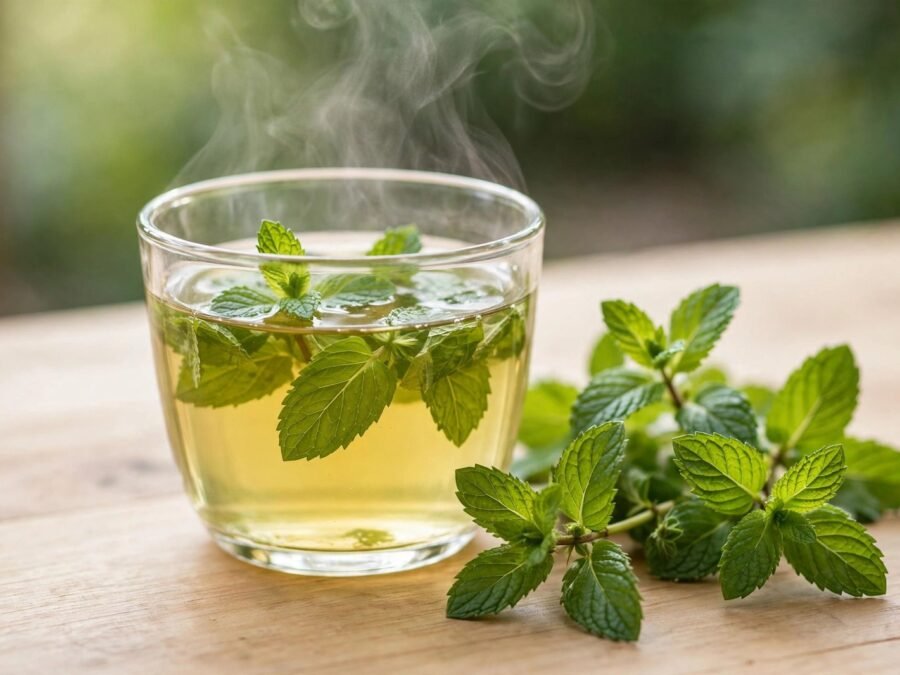
Few drinks earn their place in the kitchen the way peppermint tea does. It’s the cup people reach for after a heavy meal, during a stuffy cold, or when their stomach feels unsettled — a simple brew of peppermint leaves (Mentha × piperita) with a cool, clean flavor and a long folk history as a digestive aid.
But what do peppermint tea benefits actually look like once you separate tea from hype? This guide covers 9 benefits worth knowing, one honest caveat about the research, how to brew it properly, and who should skip it.

What Is Peppermint Tea?
Peppermint tea is an herbal infusion made by steeping dried or fresh peppermint leaves in hot water. Peppermint itself is a natural hybrid of watermint and spearmint, and its signature cooling sensation comes from menthol, the compound responsible for most of its effects on the body.
Like chamomile, peppermint tea is naturally caffeine-free, so it works any time of day — including evenings, when it’s a calm alternative to true teas. (If bedtime drinks are your thing, our chamomile tea for sleep guide covers the classic wind-down cup.)
9 Peppermint Tea Benefits
1. May ease bloating and gas
This is peppermint tea’s headline benefit. Menthol relaxes the smooth muscle of the digestive tract — an antispasmodic effect that can help trapped gas move along instead of building up. Sipping a cup after a heavy or gassy meal is the traditional use, and it’s the one most consistent with how the plant actually works. For more on this angle, see our ginger tea for bloating guide — ginger and peppermint make a good one-two punch.
2. May soothe everyday indigestion
That same muscle-relaxing action may help with the general heaviness and discomfort of indigestion. Some traditions also credit peppermint with supporting healthy bile flow, which plays a role in fat digestion. Keep expectations modest: it’s a gentle, food-level comfort, not a remedy for chronic digestive conditions.
3. May calm mild nausea and stomach upset
Peppermint has long been used for queasy stomachs — the cool aroma alone can feel settling. If nausea is your main issue, though, ginger is the stronger evidence-backed option: our ginger for nausea guide covers that in detail.
4. May help with occasional tension headaches
The cooling sensation of menthol isn’t just a flavor — applied as aroma or steam, it may ease the tight, band-like feeling of a tension headache for some people. A hot cup held under your nose, breathed in slowly, doubles as a mini steam treatment. This is traditional-use territory, so treat it as a comfort measure, not a treatment.
5. Naturally caffeine-free
No caffeine means no jitters, no afternoon crash, and no interference with sleep — a genuine benefit in a world of 3 p.m. coffee refills. It’s one of the few flavorful hot drinks you can have at 9 p.m. without thinking twice.
6. May freshen breath
Menthol’s clean scent masks odor, and peppermint’s mild antibacterial properties may help with the bacteria behind bad breath. It won’t replace brushing, but a cup after garlic-heavy meals is a pleasant reset.
7. May clear a stuffy nose in cold season
Menthol creates a sensation of airflow even though it doesn’t physically decongest — your nose feels clearer. During a winter cold, the combination of hot steam and menthol aroma makes peppermint tea one of the more comforting things you can sip.
8. May ease menstrual cramps
The muscle-relaxing effect of menthol is the plausible mechanism here too: relaxed smooth muscle may mean less intense cramping for some people. Small studies on peppermint (mostly oil or extract, not tea) suggest a benefit, but the tea evidence is thin — consider it a warm, soothing option alongside whatever else works for you, not a replacement.
9. A calorie-free, sugar-free comfort ritual
Plain peppermint tea has essentially zero calories and no sugar — a small daily win if you’re cutting back on sodas or sugary lattes. The warmth and flavor make it feel like a treat, which is half the battle with healthy swaps.
One Honest Note: Tea Isn’t the Same as Peppermint Oil
Here’s the caveat most articles bury: the strongest research on peppermint — including the small studies on IBS symptoms — tested concentrated peppermint oil (often in enteric-coated capsules), not a cup of tea. The U.S. National Center for Complementary and Integrative Health notes that very little research has been done on peppermint leaf itself.
That doesn’t make the tea useless — it makes it milder. Think of tea as the gentle, food-level version of the same plant: reasonable for everyday comfort, not a stand-in for the concentrated extracts used in studies. Any article that cites oil research as proof that tea works is overselling it. (Read the NCCIH’s own summary on peppermint oil: usefulness and safety if you want the primary source.)
How to Brew the Perfect Cup
Good peppermint tea is easy; great peppermint tea needs one trick — cover it while it steeps. Menthol and the other aromatic compounds are volatile, meaning they escape with the steam. A saucer on top of your mug keeps them in your cup.
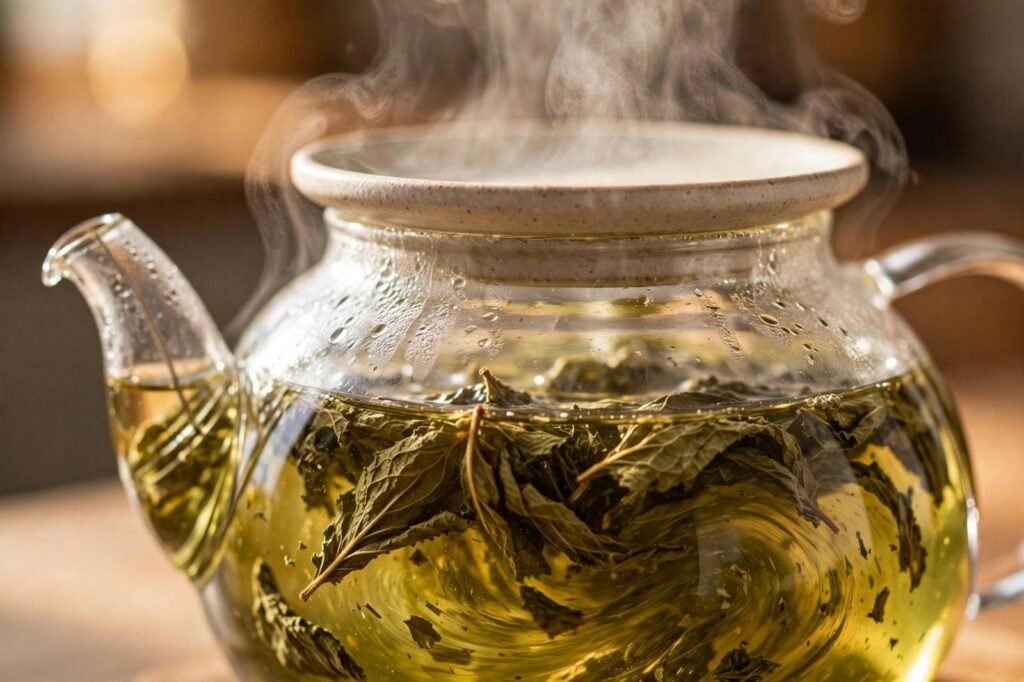
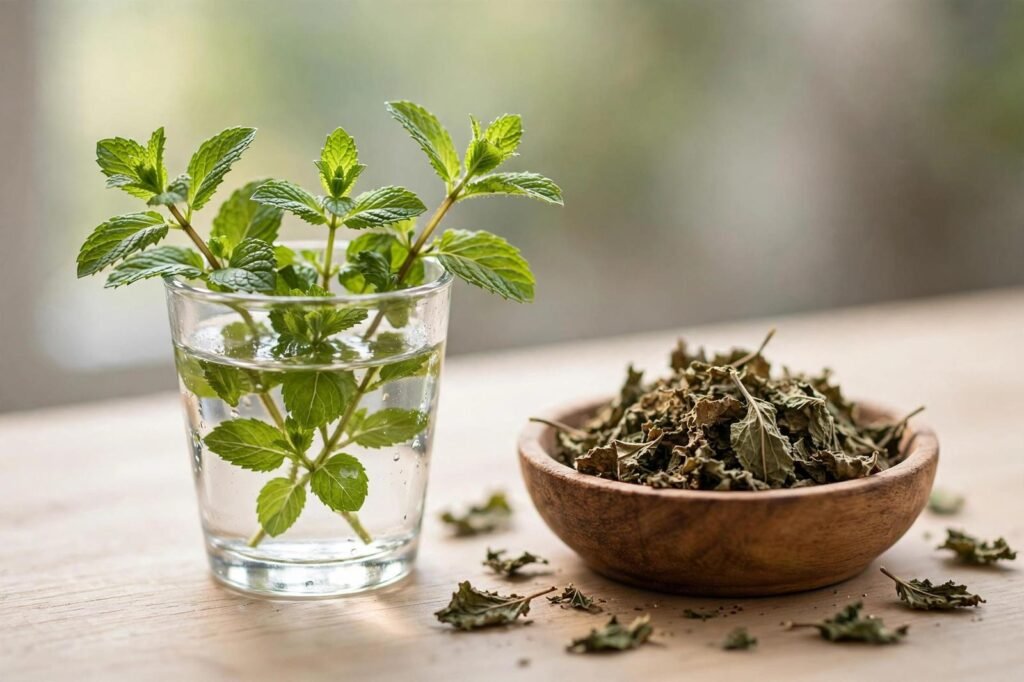
- Measure: 1 teaspoon dried peppermint leaves (or 6–8 fresh leaves, lightly bruised) per 250 ml cup.
- Heat: Water just off a boil — around 90°C / 195°F.
- Steep covered: 5–10 minutes. Longer means stronger and more cooling.
- Strain and sip: Best enjoyed after meals, when the digestive benefits matter most.
How Much Peppermint Tea Per Day?
One to three cups a day is the commonly suggested range. Start with one cup and see how your stomach responds — some people find large amounts too cooling or slightly numbing. Give a cup 30–60 minutes to work before deciding you need another.
Side Effects: Who Should Skip It
Peppermint tea is gentle for most people, but it has one well-documented downside worth taking seriously:
- Acid reflux or GERD: Peppermint relaxes the lower esophageal sphincter — the valve between stomach and esophagus — which can let stomach acid splash upward and worsen heartburn. If you have reflux or a hiatal hernia, peppermint tea may make it worse. This caution is echoed by WebMD and dietitians widely.
- Pregnancy and breastfeeding: Safety hasn’t been well studied, so check with your healthcare provider before making it a habit.
- Certain medications: WebMD notes peppermint may interact with some drugs, including cyclosporine, certain liver-metabolized medications, and acid-reducing drugs. If you take daily prescriptions, ask your pharmacist.
- Kidney stones or gallbladder issues: WebMD lists these as reasons to check with a doctor first.
For the full rundown from an authority source, see WebMD’s mint tea health benefits and cautions page.
Frequently Asked Questions
Is peppermint tea caffeine-free?
Yes — pure peppermint tea contains no caffeine at all. Just check blended products, which occasionally mix in true tea.
What’s the difference between peppermint and spearmint tea?
Both are mint-family caffeine-free herbals, but peppermint contains much more menthol, giving it the stronger cooling punch and most of the digestive reputation. Spearmint is milder and sweeter.
Are tea bags or fresh leaves better?
Fresh leaves give the brightest flavor; good dried leaves or bags are more practical and perfectly fine. Whichever you use, cover the cup while steeping.
Can kids drink peppermint tea?
Peppermint tea hasn’t been well studied in children — check with a pediatrician first. And keep peppermint oil (not tea) away from infants and toddlers, since the concentrated oil can cause breathing issues in very young children.
Will peppermint tea help me sleep?
It’s not a sedative like chamomile — peppermint won’t make you drowsy. But as a caffeine-free warm drink, it’s a perfectly fine evening cup. For actual sleep support, see our chamomile tea for sleep guide.
The Bottom Line
Peppermint tea’s best-supported benefit is digestive comfort — the menthol in the leaves relaxes gut smooth muscle, which is why a cup after meals has been folk wisdom for so long. Enjoy it for the flavor, the ritual, and the gentle support; just remember it’s a milder cousin of the peppermint oil used in studies, and skip it if reflux is your issue.
2 Comments